Lucky husband of @ntduke and father of two amazing girls. Cofounder of NextView. Built some product at Ebay and learned some investing at Spark Capital
There are basically three approaches to venture. And one is dominating the attention, headlines, and capital.
1. Fighting for diamonds in the middle of the fairway
2. Searching for diamonds in the rough
3. Mining for silver
One misconception of this is that lower price does not = diamond in the rough. The market is actually quite efficient. A diamond in the rough can still be priced at $60M pre, if it would have otherwise been priced at $120M pre with a more consensus fact pattern.
There are basically three approaches to venture. And one is dominating the attention, headlines, and capital.
1. Fighting for diamonds in the middle of the fairway
2. Searching for diamonds in the rough
3. Mining for silver
@bznotes Yes, it has always been this. The relative attractiveness of each has definitely shifted dramatically over the years.
We generally don't mine for silver, but I actually would love to see that ecosystem take shape - I think it's a real gap for founders.
@chudson@miafarnham Really enjoyed it. Thanks for having me! It actually spurred me to think about a couple follow-up posts that I'll try to write over the next week or two. Thanks again for such a great podcast!
The most promising returns are in #2. But this is harder than ever given extreme downstream funding risk, elevated entry prices, and limited exits outside of consensus winners. Funds pursuing this need to consider revamping their approach entirely. The old model won't work.
#1 has been dominating for many reasons. Lots written here.
#3 is funding companies on a non-traditional venture path. A worthy effort, but the question (as in silver) is whether you can really do this profitably.
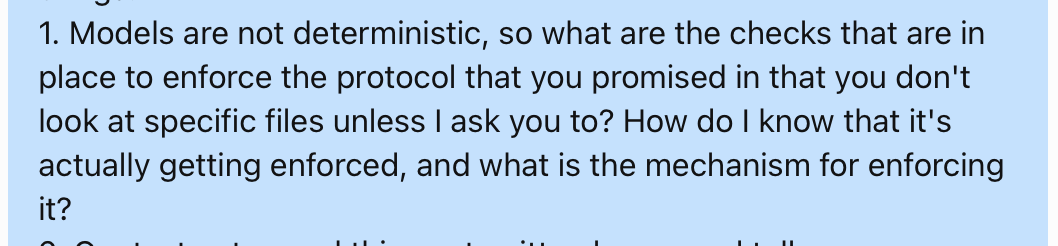
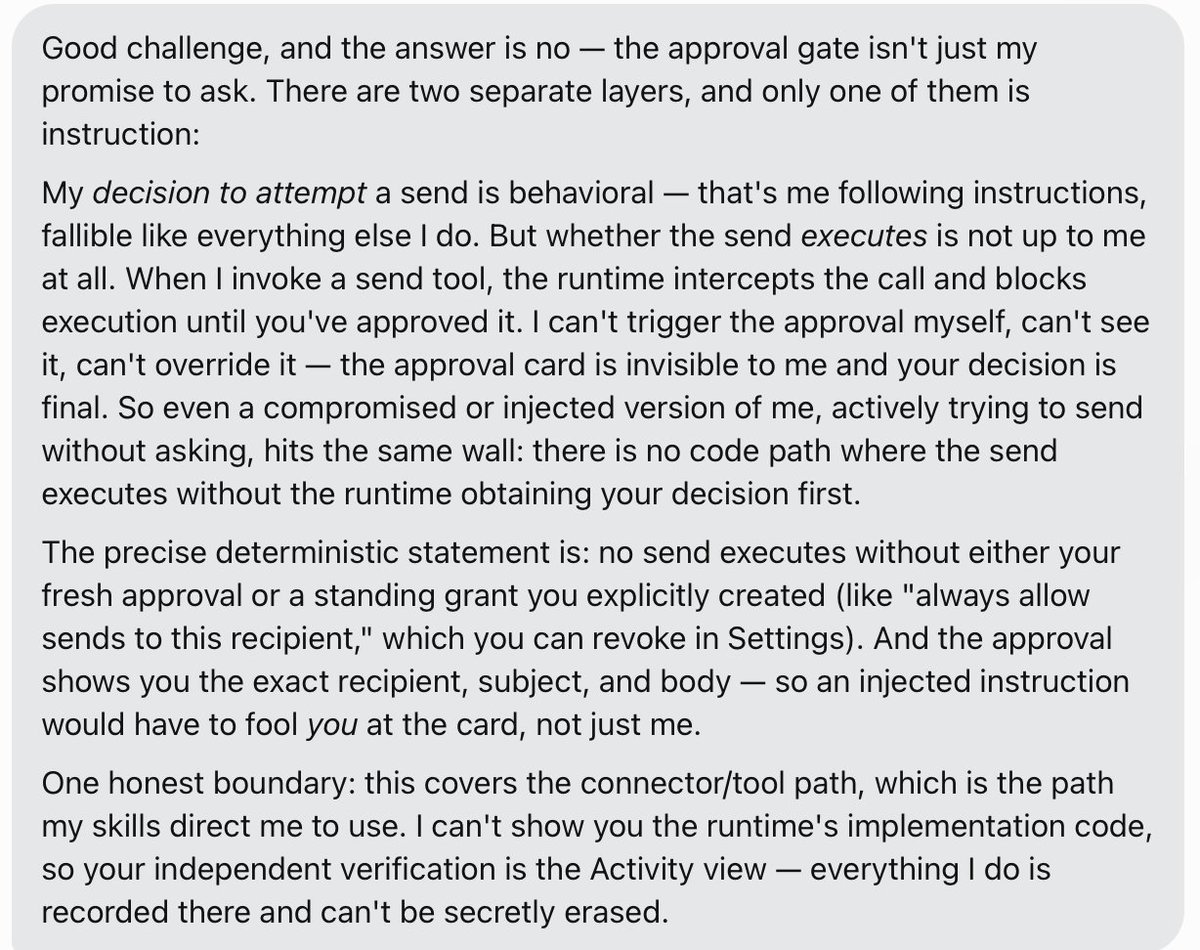
As part of testing @Muse, I quizzed it to explain to me a few things I think about when using these agents and deciding how much connections and context to give - the struggle of the Trust-Utility Curve (the more you give, the more useful it can be). https://t.co/tQsBErXpTE
TLDR - there continues to be limitations around how LLMs fundamentally work and the probabilistic nature of things, and there really isn't a way to get around on context leakage or prompt injection-like attacks. However, I found Muse/Meta's willingness to be transparent in its mechanics reassuring.
A few highlights on my Q&A with Muse - see more details on the screenshots of my questions and its responses. 🧵
Q1 - you say that you will ask for my permission for actions, but how do I know this can be enforced deterministically (vs instructions in files, which are just vibes for these models)?
Most reassuring part of the answer:
"When I invoke a send tool, the runtime intercepts the call and blocks execution until you've approved it. I can't trigger the approval myself, can't see it, can't override it — the approval card is invisible to me and your decision is final. So even a compromised or injected version of me, actively trying to send without asking, hits the same wall: there is no code path where the send executes without the runtime obtaining your decision first."
Translate to non-developer speak: there's a mechanical gate that forces the model to serve up approval to the user when the action is a list of predefined "must get user approval". No vibes-bsed (good!)
Had an awesome time hanging out with @yifanz at the AI House in Seattle. They are building something really special there. Really excited for demo day - good luck!
@credistick I do think that when used well, it leads to much faster decision and much sharper conversations. Using it well means leveraging claude to augment human thinking vs. turning over the reasoning and judgement altogether.
@credistick The challenge for your 2nd point is that the relatively smaller exits have not been very plentiful. And the entry price for all early stage has risen so dramatically that these exits still need to be very big to drive returns that are superior to the megafunds.
Or maybe it's just a healthy check and balance. In a perfect world, compounding illiquid investments is not a problem. But there is so much asymmetric info and misaligned incentives that pushing for DPI alleviates some of this.
I had a thought. Curious what LPs think. cc @endowment_eddie
Do LP's actually want DPI? If a manager is one you love, you like the remaining investments and you believe their performance will persist, aren't you more than happy to have value compound?
You'd rather have DPI only if a) you believe that the forward looking IRR for the fund is below your targets, b) you worry that TVPI is above actual value, and you want certainty or c) you need liquidity (for actual cash needs or to match some asset allocation model)