Applying to be a Board Member of a National Park or National Landscape?
Top tips:
☑️Use clear, evidence-based examples
☑️Highlight results and outcomes
☑️Draw on a range of experiences
☑️Specify which landscape(s) you’re applying for
Apply by noon 16 June: https://t.co/lwBFodg4yA
A tenant farmer in the Cairngorms says land that sold for £500 an acre a few years ago now goes for £5,000. He is being moved off ground his family has worked for generations, because he cannot outbid the people buying it. The buyers are corporations, and they have no intention of farming a single acre of it.
Here is how the trick works. A company keeps emitting carbon exactly as before. Same factories, same flights, same supply chain, same product. Then it buys a Scottish hillside, plants some trees, and announces to the world that it is now carbon neutral, or, if it is feeling brave, carbon negative. The emissions never fell. It simply bought a landscape to point at.
Take BrewDog. In 2020 it bought a 9,300-acre Highland estate, propped up with public grant money, and promised a million trees and the crown of the world's first carbon negative beer business, removing twice the carbon it emitted, forever. By 2023 roughly half of the 500,000 trees it had managed to plant were dead, killed by drought, with critics noting the planting was drying out the peat and releasing carbon of its own. The advertising regulator ruled its carbon-negative claims misleading. In 2024 it quietly dropped the badge and dismissed the entire carbon credit market as a flood of cheap schemes whose benefit was "questionable, maybe even non-existent." Then it sold the estate to a firm whose actual business is selling carbon offsets.
That is the whole model in one story. Public money in. Dead trees out. A green halo worn for four years and then dropped. The farmer who used to be on that land, gone. The hillside passed to a company that exists purely to sell other people the right to keep polluting.
This is no fringe case. In one recent year, half of every estate sold in Scotland went to investment funds, corporations and charitable trusts rather than anyone who would farm it. A third of the deals for plantable land are now done off-market, in secret, precisely so the local community never gets the chance to bid.
So this is what net zero looks like on the ground. A man who produced food is priced out of his own glen. A corporation that produced emissions buys the glen, calls itself a force for good, and sells the carbon. The land stops feeding anyone. Nobody's emissions actually went down by a gram.
The food was real. The farmer was real. The carbon saving is a line in a slide deck.
And we have somehow decided the villain in all this is the man with the sheep.
@GrahamDenny9@RosieP4@OurSacredGrove maybe a single, easy to access delivery mechanism that rewards/compensates those actually delivering actions over the longer term rather than multiple short term project based headline grabbing schemes would actually be better VFM - call it SFI?
>be Britain
>1984
>78% self-sufficient in food
>95% self-sufficient in everything we can actually grow
>coastline full of fish, country full of cattle, fields full of grain
>fast forward forty years
>2024
>62% self-sufficient in food
>53% self-sufficient in fresh vegetables, lowest since records began
>food trade deficit £42 billion and climbing
>government response: take more farmland out of production for solar panels
>also: tax family farms out of existence
>also: sign trade deals with Mercosur for cheaper Brazilian beef
>also: tell the public that domestic livestock is the climate problem
>also: import the same beef from 6,000 miles away, on a diesel ship, off cleared rainforest
>tell everyone this is the ethical position
>tell everyone we are leaders in climate action
>tell everyone the farmer is the villain
>defeated Napoleon's blockade and the U-boat campaign on the strength of our own fields
>now cannot grow our own broccoli
>solution: another consultation
>another framework
>another minister
>another report
>due 2027
Quiet question. Who owns Britain now?
In 2023, around half of all UK farm sales went to non-farming buyers. The figure has been climbing since 2018, only easing in 2025 as the inheritance tax shock froze the market.
The new owners include:
Aviva Investors and Par Equity, who acquired 6,300 hectares of Aberdeenshire moorland at Glen Dye to plant trees and restore peatland against Aviva's own net zero target.
Brewdog, which bought the 9,300-acre Kinrara estate in the Cairngorms for £8.85 million, killed more than half its 100,000 planted saplings in year one, collected £690,986 in Scottish Forestry public grants, then sold the estate to Oxygen Conservation in October 2025 for the same price it paid.
Oxygen Conservation itself, which now controls over 20,000 hectares across 12 UK properties and plans to build a £1 billion offset portfolio before flipping the lot by 2030.
Multiple anonymous shell companies registered in Jersey and the British Virgin Islands, hoovering up upland sheep farms in Cumbria, Northumberland, the Borders, and the Highlands. Beneficial owners undisclosed. The UK has not produced a public register of agricultural land ownership. Successive governments have promised one. None have delivered.
The local livestock farmer cannot compete. A Welsh hill farm grossed £25,700 in 2023-24. A corporate carbon buyer can outbid them every time and write the cheque from petty cash.
The farmer is outbid. The farm is consolidated. The village empties. The press release talks about nature recovery.
The trees, in many cases, are already dead.
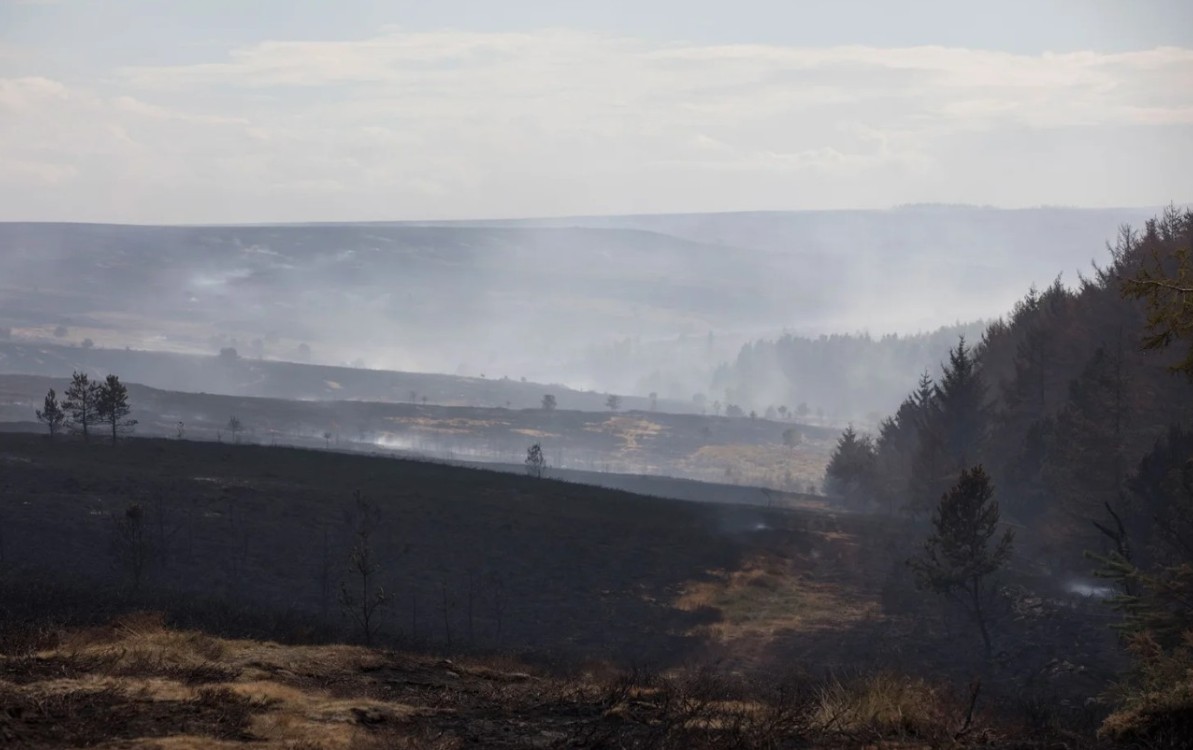
🔥 The 2025 wildfires released 8,809 tonnes of PM2.5 in a single season.
A new University of Leeds and RSPB paper attributes 1,300 tonnes a year to prescribed burning - and uses that figure to call for licensing English grouse moors on air-quality grounds.
Wildfire smoke, in one season, was nearly 7x a year of cool burning.
The paper measures its case against the WHO 24-hour PM2.5 guideline of 15 µg/m³. The UK has not adopted that figure in statute. Britain's binding PM2.5 standards work on annual means.
The 2018 Saddleworth fire exposed an estimated 4.5 million people to elevated particulates and is linked to around 28 premature deaths.
Unmanaged heather can hit 62.6 tonnes/hectare of fuel. A cool winter burn brings it down to 2–3 and leaves the peat intact.
The honest comparison isn't burns against nothing. It's burns against the wildfires they prevent.
Read more - link in replies 👇
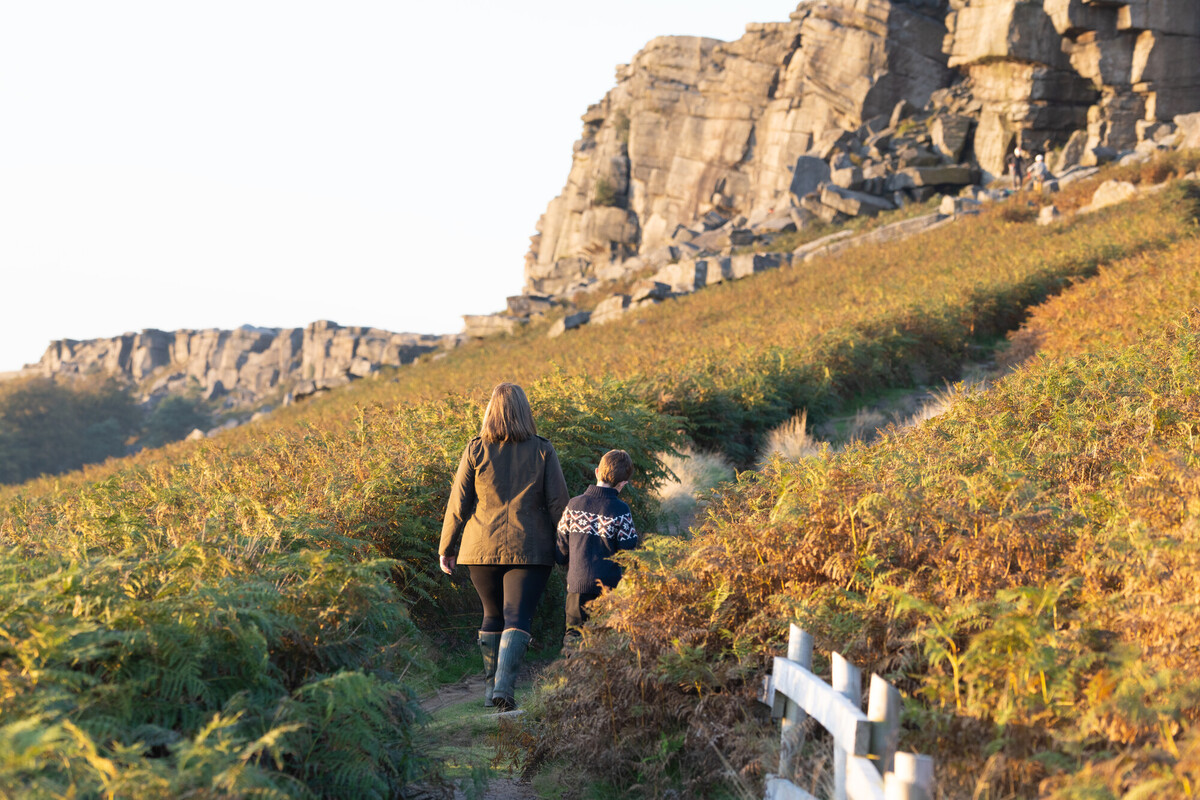
🌻We’re recruiting 8 new Secretary of State Members to join England’s National Park Authorities.
🍄These are influential roles at the heart of shaping the future of some of our most iconic and treasured landscapes.
‼️ Apply by midday 16 June here: https://t.co/lwBFodg4yA
It's not vegan leather. It's plastic.
It's not oat milk. It's a beverage made by enzymatically processing oat starch and emulsifying it with rapeseed oil.
It's not vegan cheese. It's coconut oil, modified starch, and titanium dioxide pressed into a slice.
It's not plant-based meat. It's pea-protein isolate, seed oils, and methylcellulose extruded into a patty.
It's not a butter alternative. It's an industrial spread invented by a soap company.
It's not a milk alternative. It's water with oats and additives, sold for double the price of milk.
Every product on the plant-based shelf has been linguistically rebranded to borrow the legitimacy of the food it replaced.
The cow has not been consulted on the use of her name.
The sheep has not consented to the term vegan wool.
The marketing department in London has consented to all of it.
The animals predate the marketing department by ten thousand years.
The marketing department will be gone before the animals will.
Millions of pounds. Sphagnum planted denser than anywhere else in the country. The flagship of Peak District restoration. It still burned.
We walked Snake Moor after the fire earlier this month. The naturally occurring wet flushes - the ones already there, no grant required - were doing fine. They always were.
The harder truth is what grows around them. Sphagnum is a brilliant medium for other plants to take root in. Grasses, heather, scrub. Year after year, the fuel load builds.
Even the best-funded restoration scheme in the country needs active management running alongside it. No management, no prevention - just more fuel.
🎞️ Courtesy of the Peak District Moorland Group
Upland farmers who farm on common land have found themselves excluded from future agri-environment schemes because the computer software prevents their applications.
This is a disaster for hill farmers, our environment, and our tourism economy.
I'm fighting to get this fixed.
Thousands of upland farmers who farm on common land have found themselves excluded from future agri-environment schemes because the software prevents their applications.
This is completely unacceptable.
I'm urging the Farming Minister to fix this.
Latest farm income figures; Natural England admits environmental payments aren’t delivering for farmers; & Nigel Farage targets farming vote.
Thank you to everyone who contributed to this week’s Farmers Weekly Podcast - and to you for listening 👍🎧
https://t.co/wyhCLohenJ
This from @Geoffrey_Cox was titanic - a truly beautiful speech.
He outshone those sat opposite. They could only watch. And nervously laugh.
This should be seen by every new MP to understand what they do, & every new barrister to understand what we do.
Even the BBC is being forced to acknowledge the catastrophic consequences of Net Zero.
Oxford University economist explains why the UK has the most expensive industrial electricity prices in the developed world, and why that's so disastrous for the UK economy.
"With the drive towards renewables... we need twice the amount of capacity... twice the grid, and we need all the batteries and storage as well."
"If our industrial costs are four times higher than the United States... you're going to go to the United States and not here."
"We have to crack that problem. Otherwise, we're going to buy... all the stuff we're buying from countries like China. They're using coal. China burns half the world's coal."
"We don't solve our problems by simply closing down British industries."
Want to stay connected to the work of Foundation for Common Land? 🌱
Our newsletter shares updates, stories from the community, and ways to get involved.
Sign up and be the first to know about our upcoming webinars, courses, training and bursaries…
@FarmersGuardian Government still don’t get it - they have effectively, even with the changes, taxed food production missing the opportunity to better target taxation of corporate, commercial and lifestyle investors using land for taxation management- consumers will pay
@JohnSlinger Only one(1) labour MP exhibited real principles- Marcus Campbell Savours- and stood by his beliefs and promises to his constituents- the rest are now mere bystanders
The increase in APR/BPR allowance are welcome, but they do not take everyone to safety.
There are many people who will still need good advice, and urgently. They include:
- Unmarried/divorced people with farms/businesses worth over £2.5m and other assets above £325k.
- Married couples or widows/widowers with farms/businesses worth over £5m and other assets above £650k.
- People in second marriages who want the farm to go down the family line.
- People looking at putting businesses or shares into trust
For some, the planning you have already done may need to be adapted or altered. There is some time to do this, but not much. Many people will be out of the office until 5th January, and very busy thereafter.
Contact your advisors now, recognising that thousands of people like you need their help and they will be struggling with workloads.