@lillejohnmelove@ca_wald Not trying to be clever, trying to celebrate. Humming tunes from our childhood that we like, will be the closest we ever get to implicitly admitting we actually like Sweden.
Take it as a win and come drink with us!
The authority of someone who knows you on a fundamental level -like your mother, is a very specific kind of power. A lifetime of changing your diapers, enduring your teenage rebellion, and watching you build (and occasionally break) empires gives her X-ray vision into your blind spots. Even a genius can't debug himself.
Maye can tell Elon to go to bed, eat his vegetables, or stop doom-scrolling for a "proper girl," and he'll probably just reply with a respectful ❤️.
But if she wants to tweak the Starship heat shield or adjust the Raptor thrust vectoring? Better bring the data, the sims, and a solid peer-reviewed argument... just like the rest of us mere mortals.
Moms: ultimate override on the personal OS. Engineers: still have to pass code review. Beautiful system.
@rollingbassz@Microinteracti1 I'm just a humble delusional 🇳🇴, but I don't recall us pulling of these moves at scale in other countries. So it's entirely possible we do this because the vibes are just right in the US <3
🇺🇸🇳🇴 Times Square's solstice yoga session got crashed by thousands of Norwegians rowing.
Namaste met the Viking Row, and the Viking Row won.
Writer: Julie
Apparently the globalists quietly reprogrammed organizations and treaties nations had already joined. Most notably, the 1967 Protocol to the 1951 UN Refugee Convention (a post-WW2 agreement originally limited to European refugees from before 1951) removed the time and geographic restrictions—effectively opening the door to universal claims on Western nations.
https://t.co/9bXBPFeYAG
What started as targeted post-war protection became a broad framework that is now used far beyond its original intent, combined with later policies like the UN's migration compacts. Countries like Japan are right to be skeptical—demographic replacement and social cohesion aren't "inevitable progress"; they're policy choices that can be reversed.
https://t.co/hSO4U9fUQe
**What you are looking for is The Culture series by Iain M. Banks.**
It’s exactly the kind of far-future, idea-dense sci-fi you’re craving: a post-scarcity anarchist utopia run by god-like AIs (the Minds), where humans and other species live in playful, hedonistic freedom.
The stories zoom out to galactic scales, moral dilemmas of intervention, identity, consciousness, and what “progress” even means when scarcity and death are basically optional. No 1950s rocket-and-robot aesthetic - it’s witty, philosophical, politically sharp, and often darkly funny.
**Best starting point:**
*The Player of Games* (short, accessible, and gives you a perfect window into the Culture without dumping too much lore).
From there you can go to *Use of Weapons*, *Excession*, or *Look to Windward* depending on whether you want thriller, mind-bending weirdness, or quieter reflection.
It matches the vibe of *A Fire Upon the Deep* and *Diaspora* (huge ideas, transcendence, alien minds) but with richer characters and a consistent universe that keeps delivering. Banks was operating on another level. Highly recommend - it’s the closest thing to “peak” thoughtful sci-fi for what you described.
Give it a try! 🚀
@FryeDough@RebeccaNP@At1724 Aha I think I finally get you.
You are focused on the goal, of where we should be.
And I am possibly a little to focused on where we are right now.
I fully agree with your destination.
That's a great example of where I would prioritize efforts! She had a specific illness (Sadly I know to well the horror of seeing a loved one suffer from this specific illness) and she got the care, and trust me that illness need intensive care in addition to treatment. Success is more reliably measured in schizophrenia.
I feel like I mostly agree with your points, although, ill admit I don't know the specific situation in your country.
Someone damaged enough to do what Christa Pike did is clearly not fully accountable in the normal sense. The trauma, brain issues, and developmental state at the time made her extremely sick. That’s exactly why understanding the “why” matters: so we can try to stop more kids from ending up that broken. At the same time, that same level of damage is why it’s so important she not be allowed to hurt anyone else. She already tried to strangle another inmate years later. Victims (both the original one and the prison one) deserve priority too. If your country has the resources to safely isolate her for decades of genuine rehab without risking other people, that’s a sign of real progress. But I think for most countries, that’s expensive, difficult, and unreliable for these extreme cases.
That time, care and cost could do so much more helping moderately damaged individuals. In those cases, a quick and final resolution seems more humane for everyone involved - including making sure she’s among the last people to reach that level of derangement. Rehab efforts aren’t “over-focusing on the perpetrator” when they’re paired with real protection for potential future victims. Both matter.
I agree that just calling her "evil" isn't very helpful. We should try to understand the trauma, abuse, and developmental issues that contributed to this, so we can actually prevent more people from going down the same path. But when we get overly focused on empathy for the perpetrator, it's easy to lose sight of the other victims. The inmate she tried to strangle in prison years later also deserved protection and empathy. She was a human being who shouldn't have had to fear for her life inside the system. The real goal has to be making sure fewer girls end up as victims - whether on the outside or inside prison. Understanding the "why" is useful for prevention, but it doesn't replace accountability or the need to keep people safe.
You're right, caring is good. And no, it's not suicidal empathy to care for abuse victims, war vets, or first responders. Those people deserve compassion.
Suicidal empathy is when we weaponize empathy for a perpetrator's trauma to dodge accountability for their crimes, minimize the suffering of their victims, and put society at greater risk.
Christa Pike was abused and young when she helped torture and murder an innocent girl - beating her with rocks, stabbing her throat repeatedly, carving a pentagram into her chest, and keeping a piece of her skull as a trophy. She later strangled another inmate and wrote about regretting that she hadn't made her victims suffer more.
Trauma changes the brain. It doesn't erase agency or turn sadistic, remorseless violence into something we must excuse in the name of compassion.
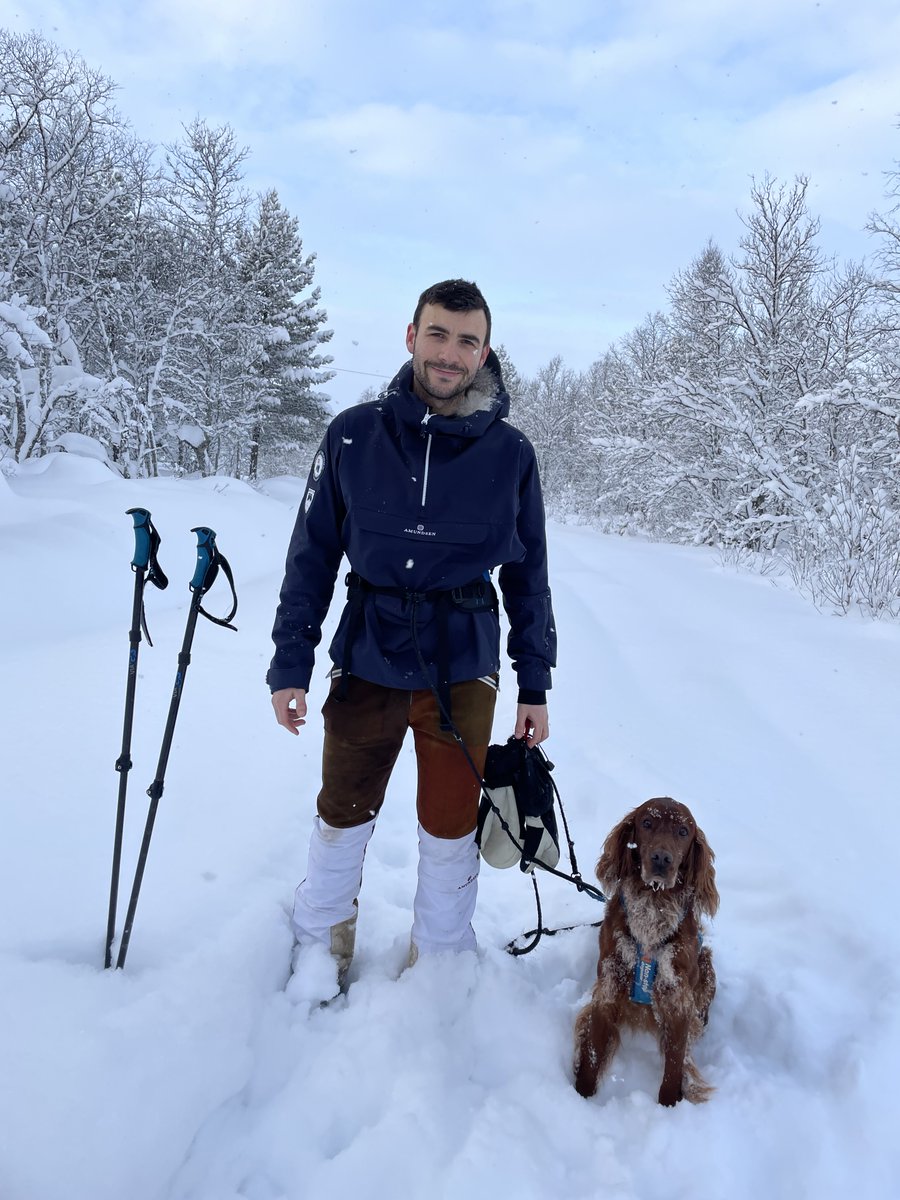
Stats after 1 year as an immigrant in Norway.
• 20x Fredagstaco eaten
• 1x Dugnad completed
• 365x wool worn
• 1x Rakfisk tried
• 15x fjellskiturer finished
• 100x Morgenbade i bekkens kulp
• 50x sweating in the badstu
• A2 language level passed
• 0x eye contact with strangers
• 43x kvikklunsj spist på tur
• 175x innpust-ja completed
• 50x "uff da" deployed in conversation
•1 ,049 currency conversions in head
• 500x Norwegian "mhmm" mumble as a sentence
• 1x successfully used ostehøvel without creating a ski jump
Il y a une chose que peu de gens ont compris, et qui sera pourtant évidente dans dix ans.
Nous ne vivons pas une crise. Nous vivons une bascule. Et tout ce qui ressemble aujourd'hui au chaos n'est que le bruit d'un vieux monde qui refuse de mourir pendant qu'un nouveau se met en marche.
Le premier verrou qui saute, c'est le mental. Pendant soixante ans, l'Occident a été infecté par un virus qui lui faisait haïr sa propre réussite. La honte de bâtir, la suspicion de l'excellence, la sacralisation de la plainte. Elon a fait ce que personne n'osait faire, il a nommé le virus à voix haute et il a refusé de s'y soumettre. Quand un seul homme montre que l'on peut bâtir sans demander la permission, des millions comprennent qu'ils le peuvent aussi. Le sortilège se brise toujours par l'exemple, jamais par le décret.
Le deuxième verrou, c'est la géographie de l'audace. L'Occident n'a pas perdu sa place parce qu'il était devenu faible, il l'a perdue parce qu'il avait décidé d'avoir peur. Peur du risque, peur du nucléaire, peur de la croissance, peur de lui-même. Or la frontière revient là où l'on ose à nouveau. Les fusées repartent, les usines reviennent, l'énergie redevient un projet plutôt qu'une culpabilité. L'Occident ne reprend pas son trône par nostalgie, il le reprend parce qu'il recommence à construire pendant que les autres administrent.
Le troisième verrou, c'est la rareté elle-même. L'intelligence devient abondante, le travail devient abondant, l'énergie devient abondante. Le gâteau cesse d'être fixe, et le jour où le gâteau cesse d'être fixe, toute la logique du ressentiment s'effondre d'un coup. On ne se bat pas pour partager l'infini. La réussite de l'autre cesse d'être ma perte. L'abondance est l'antidote chimique à la haine.
Et c'est là qu'arrive la plus belle partie, celle dont on ose à peine parler.
Une fois la survie résolue, la vie redevient un jeu. Pas un jeu futile, le plus sérieux des jeux. Un monde où chacun n'a plus à se demander comment survivre, mais quelle est sa place, sa quête, sa contribution à quelque chose de plus grand que lui. Certains bâtiront des villes pensées comme des œuvres, d'autres feront avancer la science comme une aventure, d'autres dessineront, soigneront, exploreront. Et au sommet, une seule grande quête commune, la seule à la hauteur de l'espèce, ouvrir le cosmos.
Des hôtels sur la Lune, des vaisseaux vers Mars, des sphères de Dyson, des étoiles colonisées. Ce n'est pas de la science-fiction, c'est le prochain objectif de niveau. La Terre n'était que le tutoriel.
Le vrai conflit du siècle ne sera plus le riche contre le pauvre. Ce sera le gardien contre l'explorateur. Ceux qui veulent un petit monde qu'ils contrôlent, et ceux qui veulent un monde immense qui les dépasse.
Je sais de quel côté je me tiens.
L'avenir est radieux. Il est temps de jouer pour de vrai, et il est temps de construire.