I still own 214,000 points in an app that shut down in March. They were never money. They were a promise with no end line, and I kept completing tasks for two years because the promise never closed and never had to.
Since that winter I read every points program through two sentences before I join. The zero line: what earns nothing here. The end line: when does this stop.
The @2FactorFinance Points Program passes both readings, which is why I joined it.
Zero line first. Nothing you buy, deposit or hold earns a single Mark. Marks come only from verified actions, and Season 1 accepts three kinds: social activity, education and referrals. A wallet cannot farm this board. Only a person who shows up and does the work can.
End line second. Season 1 freezes the moment 2Factor Finance launches, and the leaderboard closes with it. No silent extension, no endless season diluting early work into noise.
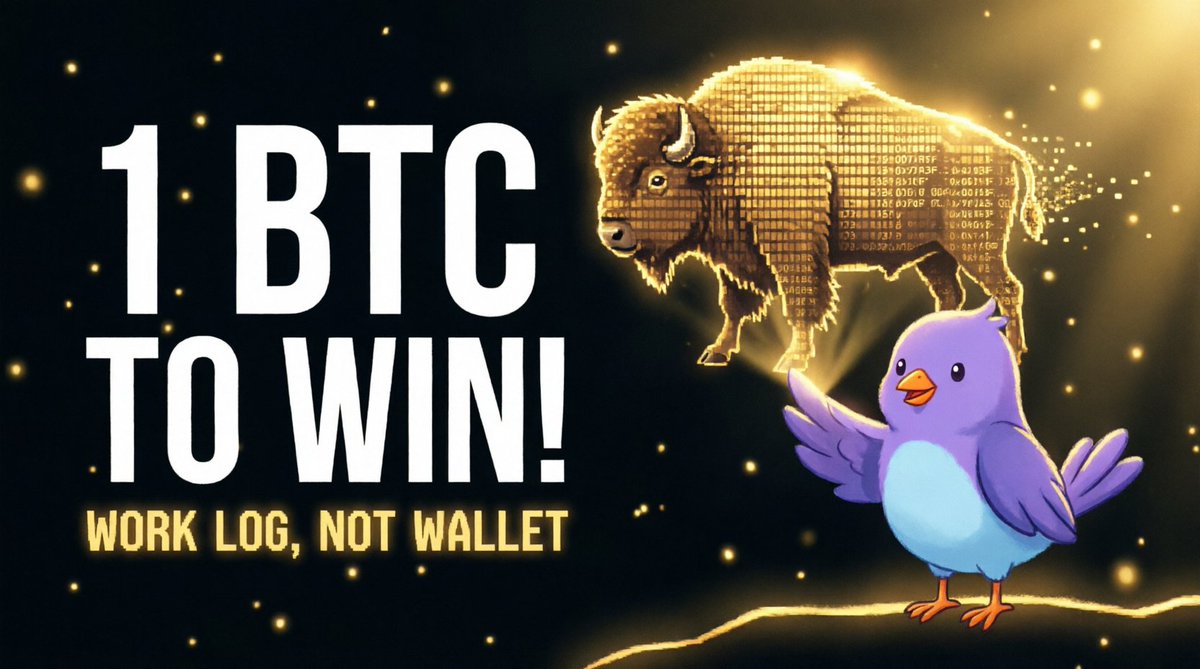
When Season 1 ends at launch, the top 10 of the leaderboard is rewarded 1 BTC, paid in cbBTC, on a curve printed in advance: 18.2 percent at rank one down to 1.8 percent at rank ten. You can compute the entire contest before entering it. That is rarer than it sounds.
Marks have no cash value, cannot be transferred, and are not a claim on any token or asset. They do one job: they decide who is standing in the top ten when the board freezes.
If you have ever farmed a program that never ended, you know the difference between a contest and a treadmill. This one prints its rules, its curve and its closing time before you take a single step.
I am in it for Season 1, racing on work instead of wallet. Tell me the last points program you quit, and the exact month you left. Best stories get a reply.
https://t.co/VaBRMqwTfY
@Zerin242551@2FactorFinance Marks only from verified actions, never from deposits or holdings, is a clean rule. It also means the leaderboard is pure activity. The freeze at launch will lock whatever ranking exists that day.
@Zenox242551@2FactorFinance Marks from verified actions only keeps the program simple. It also means someone who never touches the product can still rank. That is a feature until the freeze, and a question after it.
@Battry_eth@RallyOnChain A lot of creators put hours into research and writing without knowing whether their effort will reach anyone. That uncertainty is real.
@Rausyan1995 Is this the end of oracles or will they coexist? I have built infrastructure on Chainlink for three years and wondering if I need to pivot.
🚨 𝐎𝐍𝐃𝐎 × 𝐆𝐀𝐓𝐄: 𝟑𝟎,𝟒𝟎𝟎 𝐁𝐋𝐊𝐇𝐈𝐎𝐍 𝐔𝐏 𝐅𝐎𝐑 𝐆𝐑𝐀𝐁𝐒 𝐀𝐂𝐑𝐎𝐒𝐒 𝐓𝐇𝐄 𝐋𝐀𝐔𝐍𝐂𝐇𝐏𝐎𝐎𝐋!
Half the campaigns I check out only give you one way in, stake this, wait, hope it works out.
This one's different. @Gate and @Ondo teamed up on a BLKHION campaign with four separate Launchpool options plus a soft-staking track through Ondo Intelligent Portfolios.
Here's how it breaks down. ⬇️
💸 𝐀. 𝐅𝐎𝐔𝐑 𝐋𝐀𝐔𝐍𝐂𝐇𝐏𝐎𝐎𝐋 𝐎𝐏𝐓𝐈𝐎𝐍𝐒
▸ USDT Pool
▸ BLKGRWON Pool
▸ MAG7XON Pool
▸ BLKHION Pool
Each pool runs on hourly reward distribution with its own caps and staking limits. The USDT pool carries the heaviest allocation, while the other three are built for holders of those specific assets.
🔋 𝐁. 𝐒𝐎𝐅𝐓 𝐒𝐓𝐀𝐊𝐈𝐍𝐆 𝐕𝐈𝐀 𝐎𝐍𝐃𝐎 𝐈𝐍𝐓𝐄𝐋𝐋𝐈𝐆𝐄𝐍𝐓 𝐏𝐎𝐑𝐓𝐅𝐎𝐋𝐈𝐎𝐒
✔️ 8% advertised APR
✔️ No lock-up required
✔️ Subject to eligibility and conditions
Worth remembering, APR is an annualized figure, not a locked-in outcome. Read the terms before putting anything in.
🗓️ 𝐂. 𝐓𝐈𝐌𝐈𝐍𝐆
Launchpool runs October 6 to 20, 2026. OIP soft staking opens October 10, 2026.
🏁 𝐃. 𝐆𝐄𝐓𝐓𝐈𝐍𝐆 𝐒𝐓𝐀𝐑𝐓𝐄𝐃
① Log into Gate
② Head to the campaign page
③ Pick the pool that fits your holdings
④ Check caps, rewards and conditions before staking
🔗 https://t.co/GeLPdTu7YV
What actually caught my attention is the spread, four separate pools plus a flexible staking option, all under one campaign instead of forcing everyone into a single path.
Look into the terms yourself and pick whatever actually fits your position.
#GateBooster #OndoIntelligentPortfolios #BLKHION
@hey_zenn I would set the rule to "failure mode is gone" but with a strict time window. If the engine starts misfiring again within 500 miles, the original repair verdict should be reverted. GenLayer allows us to code that kind of conditional acceptance directly into the agreement.
@plex_VR My doctor and my mother described the same hospital visit with totally different vocabularies. My mother said "the kind nurse with the blue hijab." My doctor said "Nurse Rahman from Ward 3." Same person, zero overlap in words, both correct.
@Zenox242551 I would reply "flu" and "influenza" as the same. I would not reply "flu" and "cold."
The principle only works if the contract already knows which pair is allowed.
@Web3Boss311 Had something similar happen with my car. One mechanic called it a suspension issue, another said a worn control arm. Different wording, same underlying problem. The tricky part is knowing when two explanations are genuinely equivalent.
Two doctors examine the same patient. One says sharp pain in lower right abdomen with fever and nausea. The other says tenderness at McBurney's point, elevated temperature, vomiting. Different words, same diagnosis: appendicitis.
If both doctors had recited the same sentence word for word, the hospital would investigate. Identical medical notes look copied, not corroborated.
Blockchains spent fifteen years demanding identical testimony from every node. The rule worked for math and it killed every AI answer because two honest models never phrase the same truth with the same words.
@GenLayer rewrote the test the way medicine already runs it. Validators act as consulting physicians: each reads the leader's proposed diagnosis with its own model and asks whether the clinical facts line up, not whether the sentences copy.
The definition of "same diagnosis" is written into the Intelligent Contract before anyone examines. A surgical contract needs the exact procedure code, while a triage contract only needs the conclusion that this is an emergency.
The part I keep coming back to: corroboration from different diagnostic frameworks is stronger evidence than identical output from cloned machines. Matching words proved the machines were copies. Matching diagnosis proves the answer came from the patient.
When two doctors independently describe the same illness in different clinical vocabularies, what is the detail that finally confirms the diagnosis? Tell me in one sentence.
Ask a million AIs the same question and you'll get a million different answers, most of them right.
Meet the Equivalence Principle, how GenLayer gets them to agree anyway.
@Akhil3921793144 Why one leader instead of everyone proposing? My guess is that a single proposal gives every validator one thing to judge, rather than a pile of different answers to reconcile. Is that the main reason, or is there more to it?
@Zerin242551 Two reports that support the same state change for different reasons still clear. That is the feature. It is also the place a human might want a second look.
@MizanT46912 I like the distinction between identical outputs and equivalent meaning, but the contract author carries real responsibility here. Vague criteria just move the ambiguity somewhere else.
@EClock24@xomarket Wait you created a market in 30 seconds with $10? That's wild. That creator loop is what Polymarket is missing. No wonder 1900+ markets already.
@luis_usaa The risk with "close enough" is that it can be gamed if the threshold is too loose. The security of the Equivalence Principle depends entirely on the validators running truly independent and diverse AI models to catch edge cases.