So very pleased, that my short story, “Shooting for the Stars,“ is included in this terrific anthology. Thanks to @BarrieSummy and @novelmom1 for all their hard work putting it together, and to @coylem, @gasagasagirl, and @tkaehler for editing the stories!
I don’t want to post the video. You’ve all seen it. But I do want to write a love letter…
Dear everyone in Britain, ( even you illegals)
Just so you understand. The poppy is for the boys who never got to grow old. For the boys who were still somebody’s baby, brother, uncle or father. More than 600,000 of them.
It doesn’t matter if you support war, hate your country, think you are a woman (even though you are a man). It doesn’t matter which God you pray to, or if you pray to none at all.
It doesn’t matter who you vote for, what climate narrative you believe, or whether you believe Israel should exist or not!
The poppy isn’t for you!
It’s for those who came before. Those who fought for your right to be weird, annoying or even foreign.
The poppy is how we say thank you. Thank you for giving us time, peace and choice.
And attempting to ban our poppy by declaring it politically divisive isn’t a move towards freedom. It is an act of suppression. Understand that.
The poppy is about love and loss. For you!
So stick your rainbow flags and every other flag where the sun doesn’t shine and just wear your poppy. Those boys did not die as symbols. They died for you!
Did you know that poppies grew across the battlefields where so many fell? As though even the land refused to forget the blood once given to defend it.
So the poppy is for them. For those who came before us and paid in youth, in hope, in breath, in blood, so that we might have the freedom to be arseholes.
So that we might even have the freedom to fight over the ridiculous, the inconsequential and the insane.
Revere it, celebrate it and wear it. The very least you can do is that.
Best
The ordinary people.
@HermanPHunter1 Good for you! Always best to look forward. Hard not to lick the wounds sometimes. But moving on produces better results. Congratulations on your new lease on life!
This is uncomfortable viewing for me. Takes me back to when I was attacked by a mob of some 200 men in Tahrir Square in Cairo, when I was reporting for 60 Minutes and I was gang-raped, sodomized & beaten. Mob violence is a call to the worst of humanity because it is cover for cowards.
Caitlin Clark brought millions of new eyes to the WNBA. They came for basketball and discovered something far more disturbing: double standards, selective accountability, and a culture that demands inclusion while resisting scrutiny.
THE CURTAIN IS DOWN. https://t.co/I09444KPiy
As many times as I’ve seen this video, I still can’t get past how much has changed in such a short period of time. History will not be kind to those people and organizations that caused this dramatic change.
The 4 olds
Old Ways: manners, social norms i.e no coffee at an interview, shaking hands when meeting someone, don’t show up work with wt hair, professional dress codes <it really is that deep>
Old History: taking down statues of people who shaped the nation, subverting and twisting national history in museums, omitting things in children’s history classes that are foundation
Old People: all the relentless grabbing and envy over Boomers and the property they own. Wishing they were dead because they own the most amount of assets and are the the “people in charge”. Countries like Canada that offer and push State euthanasia to its old people
This is NOT normal behavior.
But this is type behavior we should expect under sharia law.
@realDonaldTrump must demand that Congress send him a bill immediately outlawing any other law other than our very own U.S. constitution.
I’m not kidding.
@AmyMek@SusieWiles@SpeakerJohnson
I’m too shocked, disgusted and angry to really even be commenting at this point, but I will anyway. Andrew was a fan who became a friend. Cam and I just had lunch with him in Forth Worth in June, when he drove from Austin to see my return to the stage after my father’s sudden death in May.
Andrew was a rare person: Genuinely kind just for the sake of it; it quite clearly never occurred to him to expect anything in return. I am haunted and horrified thinking of his final moments, and beyond furious that this was the end the world gave him, the same world that he’d always gone out of his way to make a better place.
We all love you Andrew, and we always will. Your kindness made you a legend.
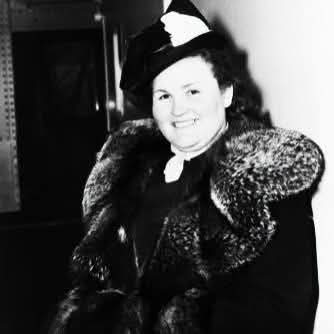
In the dead of night at Bergen-Belsen concentration camp, a garbage truck stopped behind a women’s barracks. Its cargo was not trash.
One by one, 54 children were dumped into the freezing mud before the truck drove away, leaving them crying in the darkness.
Inside the barracks, 26-year-old Luba Tryszynska heard the commotion through the thin walls. A former nurse from Kamenets-Litovsk, she had arrived at Bergen-Belsen only weeks earlier. When she stepped outside, she found terrified children between the ages of four and twelve.
Earlier that day, their mothers had been separated from them and transported to another camp near Hamburg. The children had been loaded onto a different vehicle, driven around for hours while officials decided their fate, and ultimately abandoned like unwanted cargo.
For Luba, the sight was unbearable.
Two years earlier, at Auschwitz, she had been forced to watch her own family disappear. During the selection process, an SS guard noticed her young son, Isaac. Knowing mothers with small children were often sent directly to the gas chambers, Luba’s mother-in-law pulled the boy from her arms in a desperate attempt to save her life.
Isaac, her husband Hersch, and her mother-in-law were all taken away. None returned.
Luba survived, but the loss haunted her every day. She often wondered why she had been spared when the people she loved most had not.
That night at Bergen-Belsen, standing before dozens of abandoned children, she finally found a purpose for her survival.
Without hesitation, she gathered the children and brought them inside. The other prisoners were terrified. Sheltering children could have resulted in severe punishment or death for everyone in the barracks.
Luba did it anyway.
She arranged bunks for them, tucked the youngest children into the safest corners, and reassured them with quiet words:
“You’re safe now. Stay quiet, and I’ll take care of you.”
Then she took an even greater risk.
Luba approached Fritz Klein, an SS doctor at the camp, and told him directly that she intended to keep the children hidden and under her care. Against all expectations, Klein agreed and allowed her to use a separate wooden hut.
Why he consented remains unclear.
With that small concession, Luba created something almost unimaginable inside one of the most horrific places on earth: a refuge for children.
Over the next four months, she and a handful of other women worked tirelessly to keep them alive. Hermina Krantz, a Slovak prisoner, helped clean and prepare whatever scraps of food could be found. Dr. Ada Bimko, another prisoner, cared for the sick and injured.
Luba became the heart of the operation.
Every day she searched for food, traded possessions, begged for supplies, and sometimes stole whatever was necessary to feed the children. Bread, water, bits of soup, and occasionally milk became precious treasures.
Remarkably, some German guards even began assisting her. They quietly provided firewood, extra bread, and on one occasion, an entire bucket of fresh milk.
As the months passed, more orphaned children arrived.
By April 1945, Luba was caring for 94 children, including an infant less than a year old.
Then, on April 15, British troops liberated Bergen-Belsen.
The soldiers entered a camp filled with death, disease, and starvation. Everywhere they looked were bodies and prisoners barely clinging to life.
But when they opened the door to Luba’s hut, they encountered something extraordinary.
Inside were dozens of children who had survived.
A British officer reportedly asked who was responsible for them.
Luba stepped forward and answered simply:
“I am.”
Thanks to her determination, nearly all of those children lived through the war.
After liberation, she personally helped return many of the children to their home countries. Some were escorted back to the Netherlands, while others were taken to safety in Sweden.
Eventually, Luba married fellow survivor Sol Frederick and settled in Washington, D.C., where she built a new life far from the horrors she had endured.
Yet the children never forgot her.
In 1995, fifty years after the war, many of those she had saved gathered in Amsterdam for a reunion. They arrived as adults—doctors, teachers, engineers, parents, and grandparents.
One after another, they embraced the woman who had protected them when no one else would.
The child Luba lost at Auschwitz could never be replaced. The pain of that loss stayed with her forever.
But through her courage, compassion, and refusal to look away, nearly one hundred other children were given the chance to grow up, build families, and live full lives.
Luba Tryszynska passed away in 2009 at the age of 91.
Her story remains one of the most powerful reminders that even in humanity’s darkest moments, a single act of love can become a lifeline for countless others.
More Venom:
Di'jonai Carrington Caught Begging Caitlin Clark for Attention & Ignored!! DJ Thuggington Mad!!
More Venom analyzes footage from a recent basketball game, focusing on the interactions between Dijonai Carrington and Caitlin Clark. The commentary evaluates the on-court conduct of the athletes and the dynamics during various plays throughout the match.
Source:
More Venom
Youtube:
https://t.co/Uix6Wx5MsH
Instagram:
https://t.co/Pftk93i6Kt
Twitch:
https://t.co/hjgZ1eEp5q
Twitter:
https://t.co/p0QW98yYpF
Link: https://t.co/VervrhnF7F
#CC22 #CaitlinClark #FeverRising #NowYouKnow #FromAnywhere #IndianaFever #WNBA