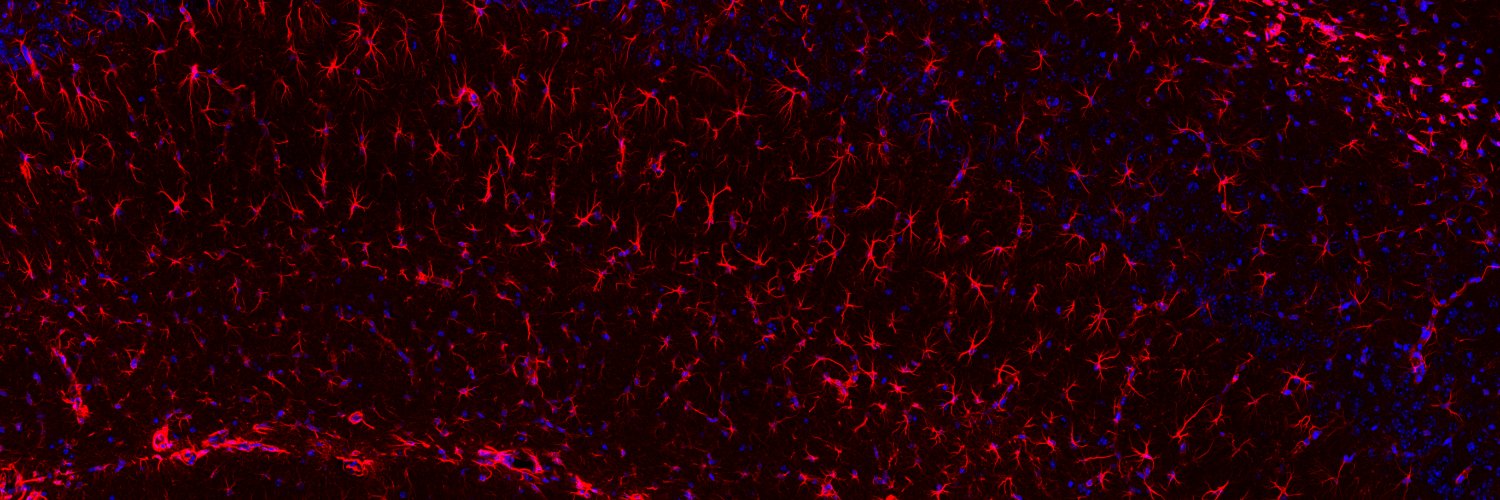
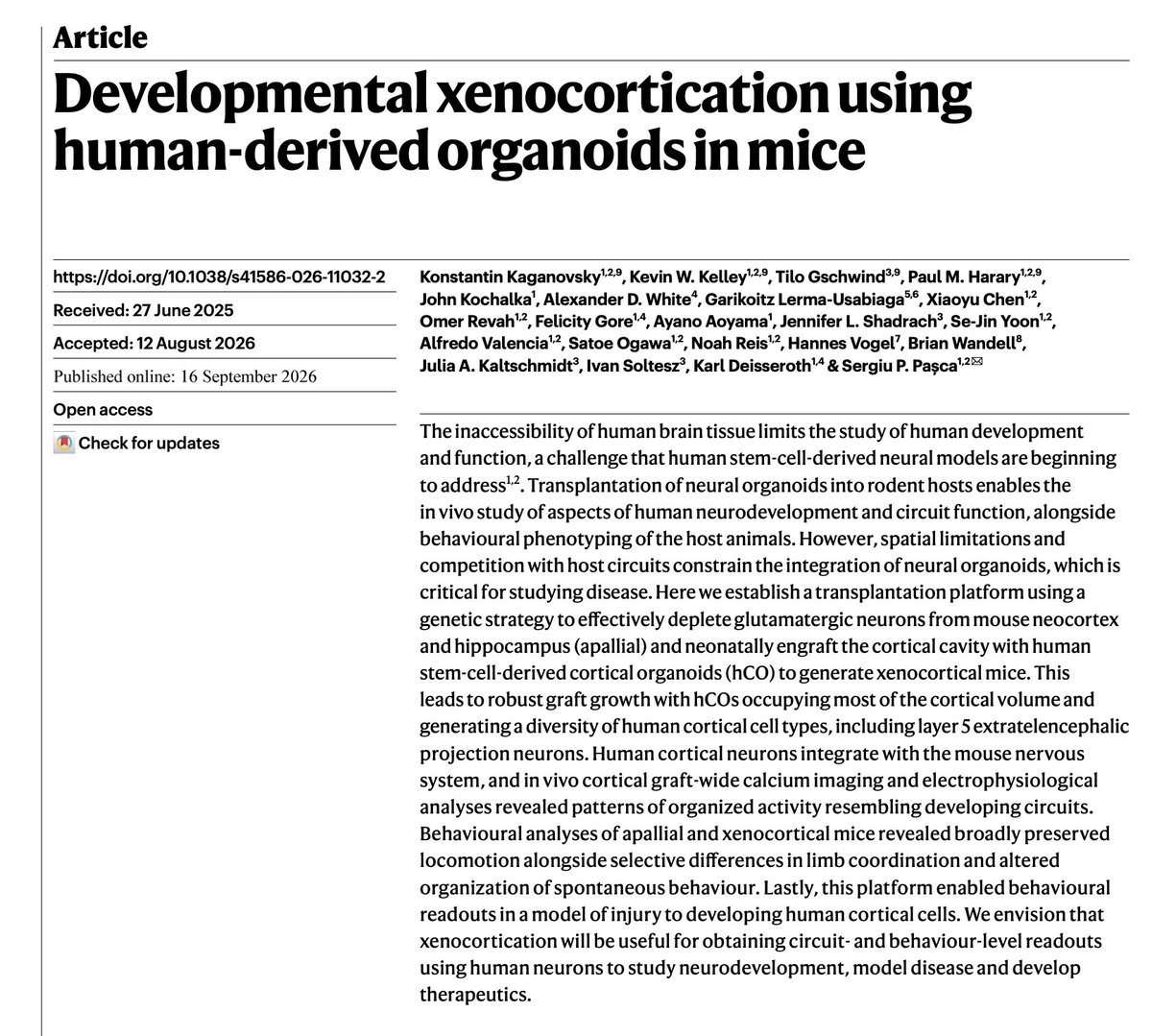
An extraordinary @Nature paper has just landed from the lab of @Sergiu_P_Pasca at @Stanford - led by Konstantin Kaganovsky. They have found a way to create "xenocortical mice" which have ~92% of their cortex occupied by a cortical organoid derived from human stem cells. This human-derived cortical graft integrates deeply with the host nervous system, supporting organised neural activity and behaviour.
This study is a milestone in synthetic biology and chimera research. It has the potential to generate multiple medical breakthroughs by providing an enhanced biological model of human brain tissue that allows behavioural as well as neural and genetic assays.
The Stanford team have been exceptionally thorough and proactive in addressing ethical concerns that comes from this frontier work. But their pioneering work nonetheless raises many open questions: are the xenocortical mice conscious? Do they have any human-like properties of consciousness or cognition?
@NitaFarahany and I will be addressing some of these questions in a forthcoming commentary - where we'll also offer an ethically-informed roadmap to guide this important research as it progresses. In this context, "pacing the frontier" really does make sense 😉
Read the Stanford @nature paper here, and buckle up. It's wild. https://t.co/Ky9HFb9nYI
OBS Neuroimmunology Webinar — Monthly on the 3rd Thu at 12 PM ET
SPEAKER HIGHLIGHT
Hao Hu, Postdoc fellow at the Holtzman Lab @WashUNeurology@WUSTLImmuno
*Zoom: https://t.co/HUh9eGl74q
Brasil. Deutschland. Italia. 🇧🇷🇩🇪🇮🇹
13 World Cups between us. The 3 biggest football nations in history. We are all shit now. But don‘t worry. We will be back. We will rise again.
@dudelbem Concordo totalmente, digo isso pois vejo uma serie de coisas departamentos que passariam a funcionar so pelo fato de ter um responsável técnico para o equipamento ou setor. Sao coisas q estao para alem do aluno de ppg .