"Polling" before you Cold Call students can make the technique feel even more natural and conversational.
Here's what that looks like:
https://t.co/Sgb2slvjsF
Take the next step in your leadership journey with @bwcet
As a delivery partner with @bestpracticenet, @CforTeaching and @L4NE25 offer expert facilitation with a strong track record of success.
📩 Get in touch to find out more: https://t.co/izM0bKT5a1
#NPQ#CPD#leadership
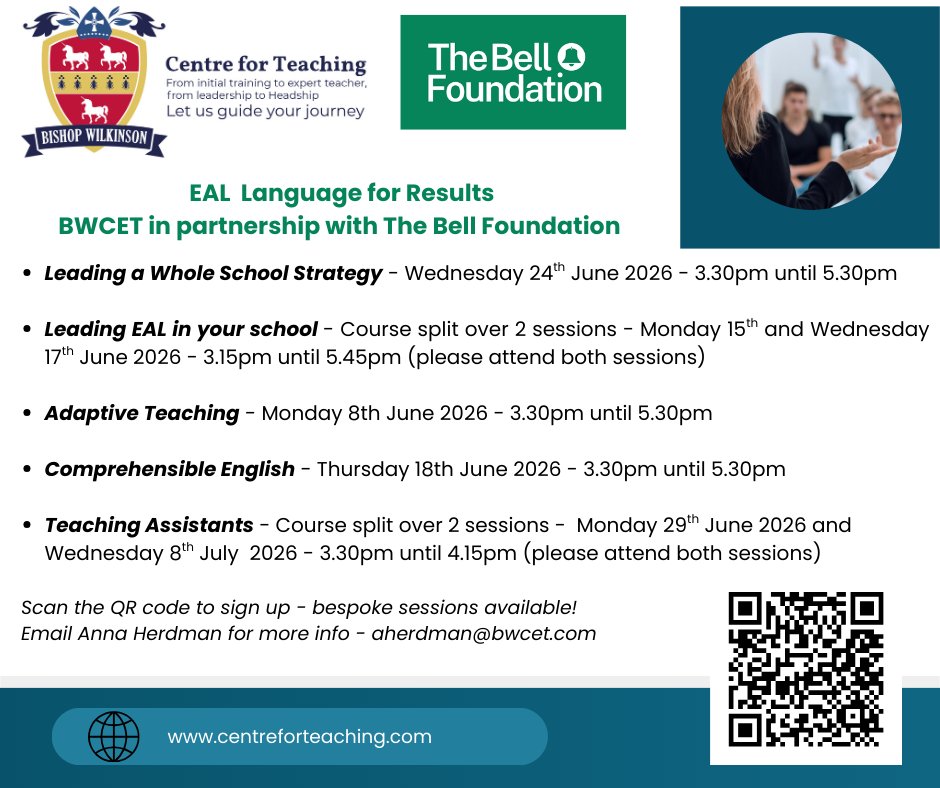
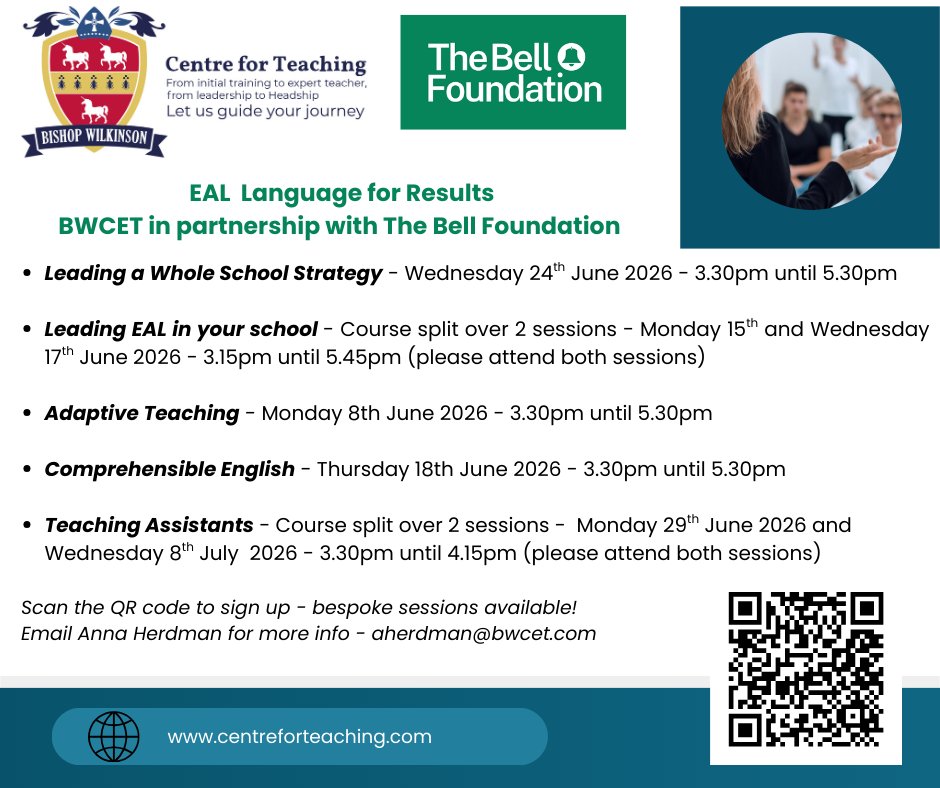
Don't forget to sign up for our next #EAL course *Adaptive Teaching* on Monday 8th June, 3.30pm until 5.30pm - online session via zoom.
Scan the QR code below to reserve a place!
Happy half term when it arrives everyone - enjoy the sunshine!
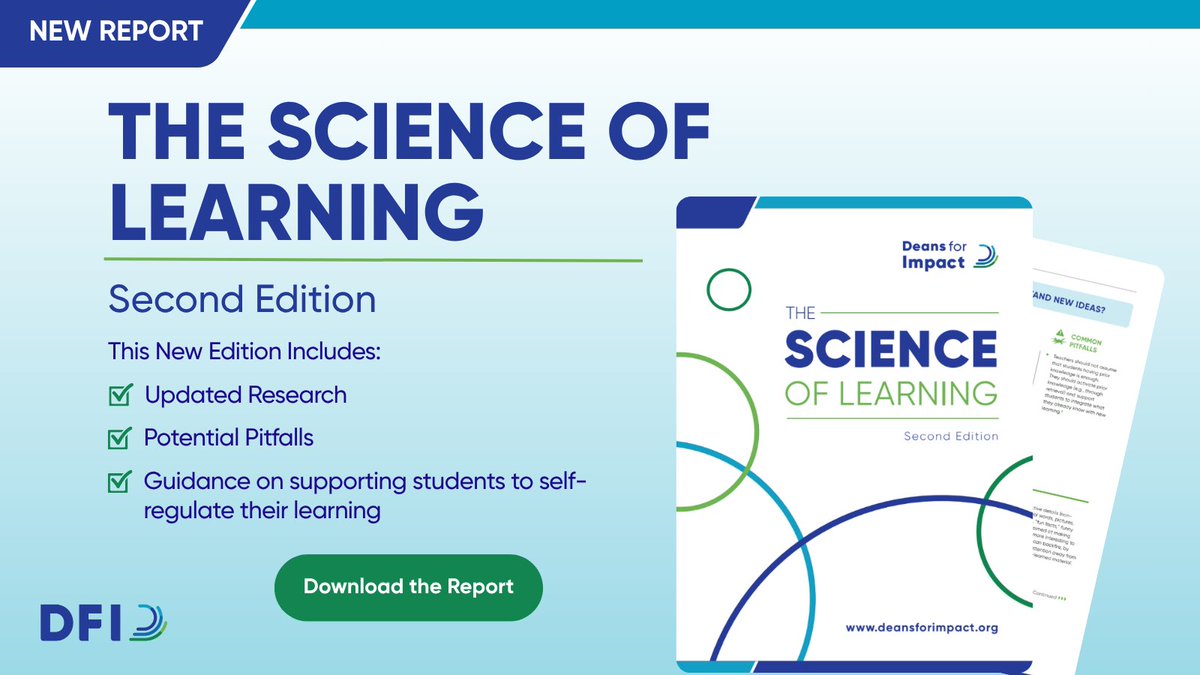
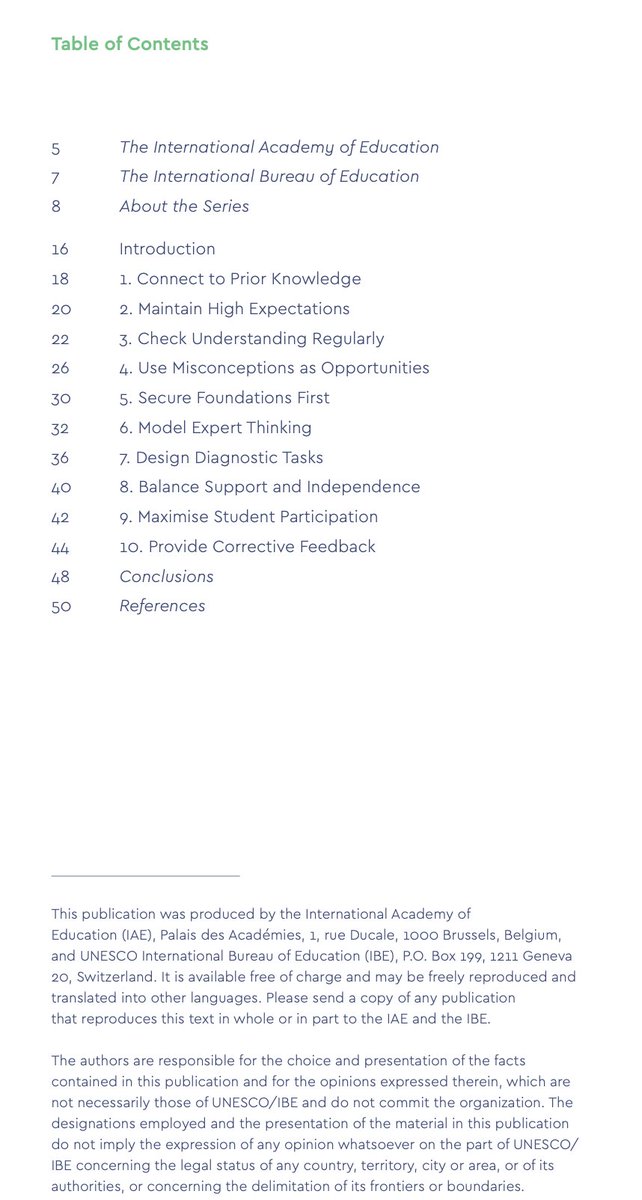
Our colleagues at @deansforimpact just released The Science of Learning, 2nd ed!
#TheScienceOfLearning2 includes updated research, pitfalls to avoid, and more, grounded in our best scientific understanding of how students learn. https://t.co/KTxsRUiDlq
Summer term #EAL – Language for Results 🌍
Courses with @bwcet in partnership with The Bell Foundation.
📌 Scan the QR code to reserve a=your place
📘 Bespoke courses available upon request
📩 For more information, email [email protected]#EAL#LanguageForResults#TeacherCPD
A great start to our morning, welcoming our ECT induction year 1 cohort.
A valuable opportunity to demonstrate progress against the Teacher Standards and to engage, reflect and share practice with peers.
#ECTE#getintoteaching
Great afternoon meeting prospective Interns for summer ‘26!
Still time to apply - 3 wk paid internship in a secondary setting!
Observing and working with highly experienced teachers, offering the chance to sample life in school before you apply for ITT!
https://t.co/Db0WMrVGkB
BREAKING: I stopped wasting hours reading textbooks cover to cover.
NotebookLM now teaches me directly from PDFs and notes.
Here are 9 prompts that turned documents into lessons:
🚨 Ofsted research priorities are clear:
Attendance is not a metric… it’s an outcome.
👉 Inclusion
👉 Family context
👉 Transitions
👉 Participation
👉 Workforce expertise
🎓 Evidence-informed professional learning matters:
Not awareness-expertise
🔗 https://t.co/pNGwIbXNzs
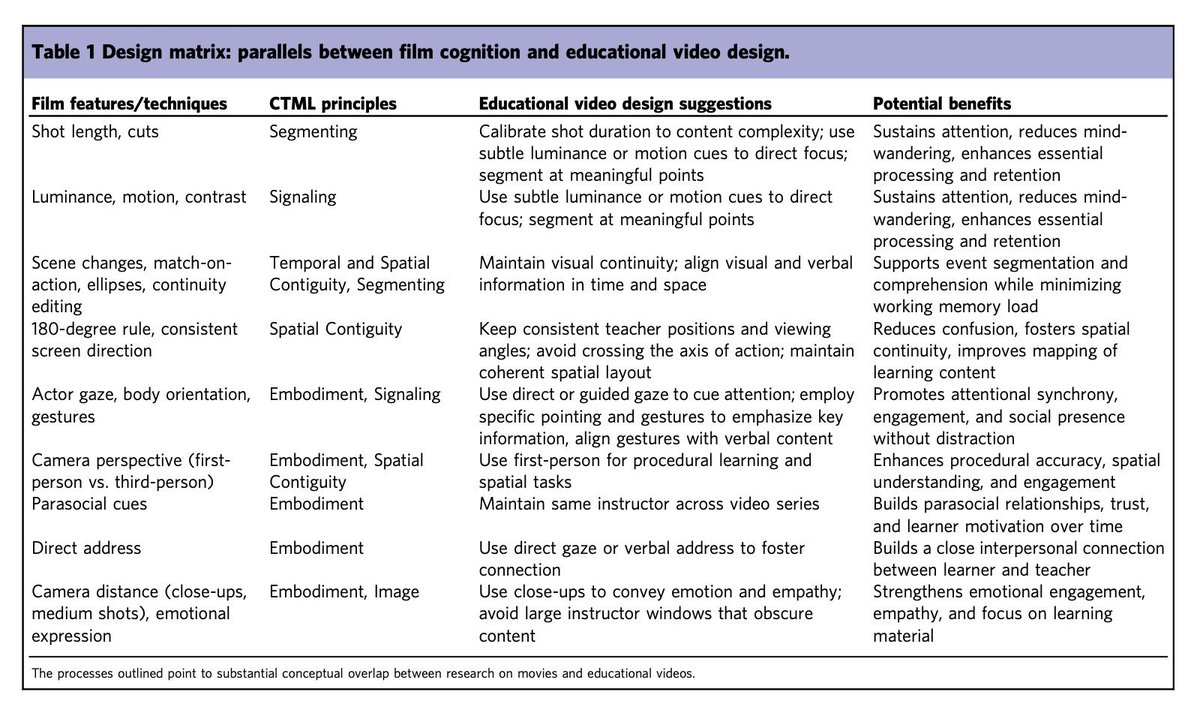
What can Hollywood cinema teach us about the design of educational videos? Just read this really interesting paper which maps classic film techniques onto Mayer's Cognitive Theory of Multimedia Learning.
Takeaways:
1. Shorter shots sustain attention: engagement drops after 6 mins; frequent cuts create event boundaries that reset attention and reduce mind-wandering
2. Arrows, circles, and highlights are the video equivalent of underlining every word in a textbook. Research on film shows that luminance shifts, motion cues, and contrast guide attention without adding extraneous load. (Basically, the best signal is one the learner doesn't consciously notice.)
3. Continuity editing is spatial contiguity: The 180-degree rule means the camera always stays on the same side of those two people, so they stay in the same positions. If the camera suddenly jumps to the other side, Person A is now on the right and Person B is on the left, and your brain has to throw away its map and build a new one. That costs working memory.
4. First-person POV wins for procedural tasks: when the task is "do this with your hands," show what the learner's hands would see not an instructor explaining it.
5. Instructor presence is a trade-off: small retention benefit, but large instructor windows occlude content and can reduce transfer; show the face strategically, not by default
Super intereting that having a teacher's face visible on screen during a video or app gives learners a small boost in remembering things it feels more human, more connected. But if that face takes up too much of the screen, it literally covers the stuff the learner is supposed to be looking at. And worse, it can actually make it harder for learners to apply what they've learned to new situations.
full paper here: https://t.co/gTeFNiVjYN
In the latest episode of my AI in Education series, @C_Hendrick explains why AI will fundamentally change how students learn and the role of teachers. Listen to the full episode on the Mr Barton Maths Podcast.
Mini-white boards are great. I genuinely love them. But as with any means of participation, they have benefits and limitations and teachers should be aware of both and use accordingly.
On the upside, they offer maximum observational efficiency. When everyone writes i can see the full data set—everyone’s answer—and when they hold them up I can scan and review with maximum speed. That’s a big win.
Plus they feel low stakes to students and therefore low-risk… if it’s wrong I just erase it. Ideal for settings like retrieval practice.
And when the routine is installed well they are fast and engaging.
Some limitations to consider though.
There’s a downslide to disposable writing that disappears. It’s harder to go back to it: to study and revise it later or to improve it. The answers are not in your notes!
By the way we have a video of a chemistry teacher, Abi Mincer of Totteridge Academy in London who writes the answer on her smart board after students erase so there’s a list of the answers permanently visible. Love that.
MWBs can also socialize hasty or even sloppy writing- with the sloppy referring to the production or to the thinking. The goal can easily become speed of response. The marker slips easily across the board and this just maybe makes it so that students don’t write as slowly and thoughtfully as they might on paper. Slow, deliberate thinking leads to careful word choice, the inclusion of new ideas and assists with encoding.
MWBs can be a crutch. It’s an easy way to engage students. A bit easier than other also important ways to engage them such as cold call and stop and jot. That means there’s a risk of over relying on it. It’s a great tool for some situations. But a craftsperson needs lots of tools.
I’m sure you can think of other benefits and limitations. Just wanted to share a few so that teachers are more likely to use a great tool for maximum gain.
New studies on retrieval practice, seductive details, engagement myths, reading instruction, and the cognitive costs of modern technology. Link in reply ⬇️
Get a head start on your teaching career with our @bwcet PAID TEACHING INTERNSHIPS this June/July!
Explore the world of education, gain real classroom experience and build confidence alongside experienced mentors!
Apply via the QR code or the link ⬇️
https://t.co/Db0WMrVGkB
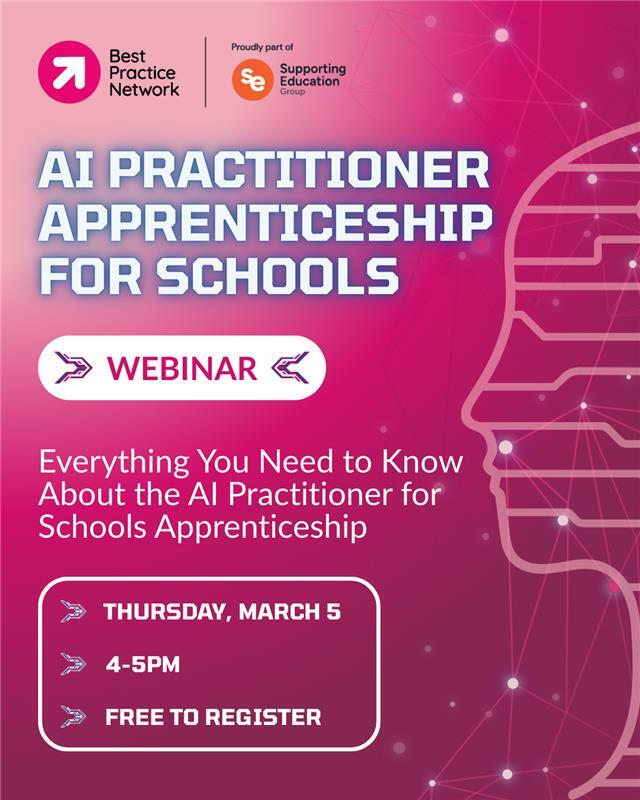
Free webinar: Are you the person everyone turns to when AI comes up at school? We will show how the AI Practitioner Apprenticeship builds safe, GDPR aware AI and automation skills, plus a live workplace project from month 6. Levy funded. Real impact. Join us: https://t.co/PRdp49fhMq
Year 6 Teachers & Writing Leads!
Secure top writing outcomes with this FREE 3-session online programme from Town End Research School.
We will explore practical strategies for: ✅ Expected Standard ✅ Greater Depth ✅ Meaningful Editing
📅 Starts March 30th 💻 Online via Teams
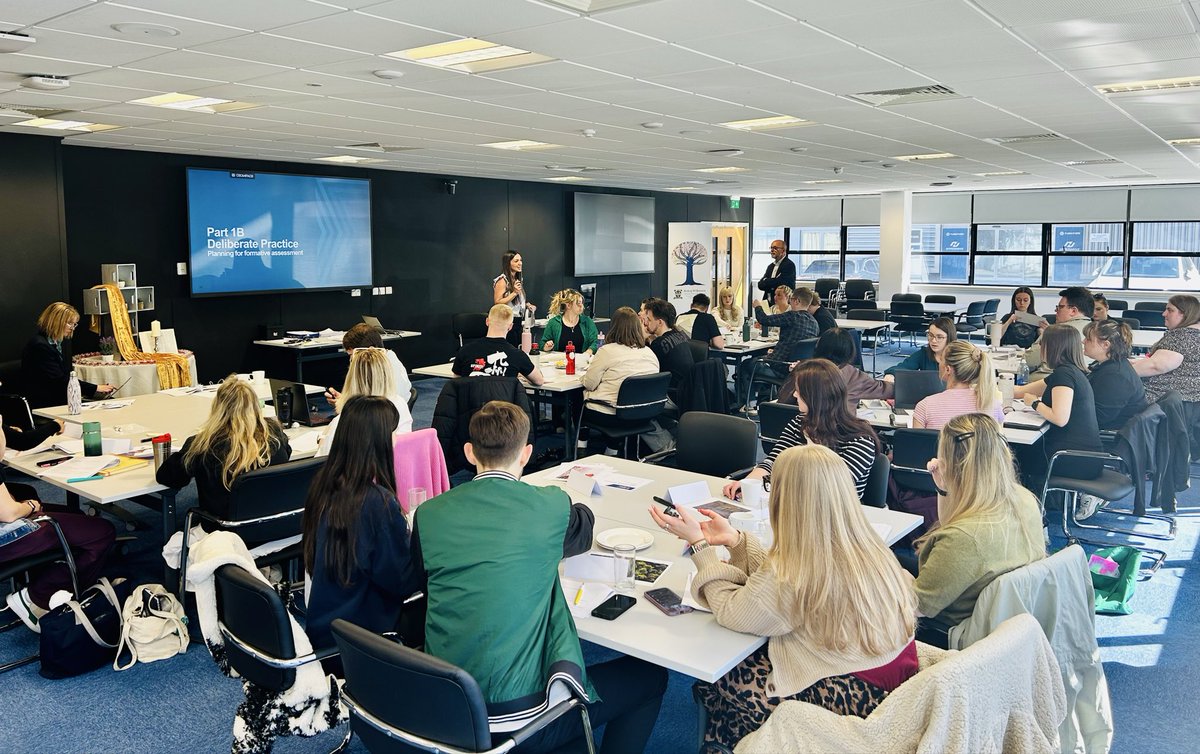
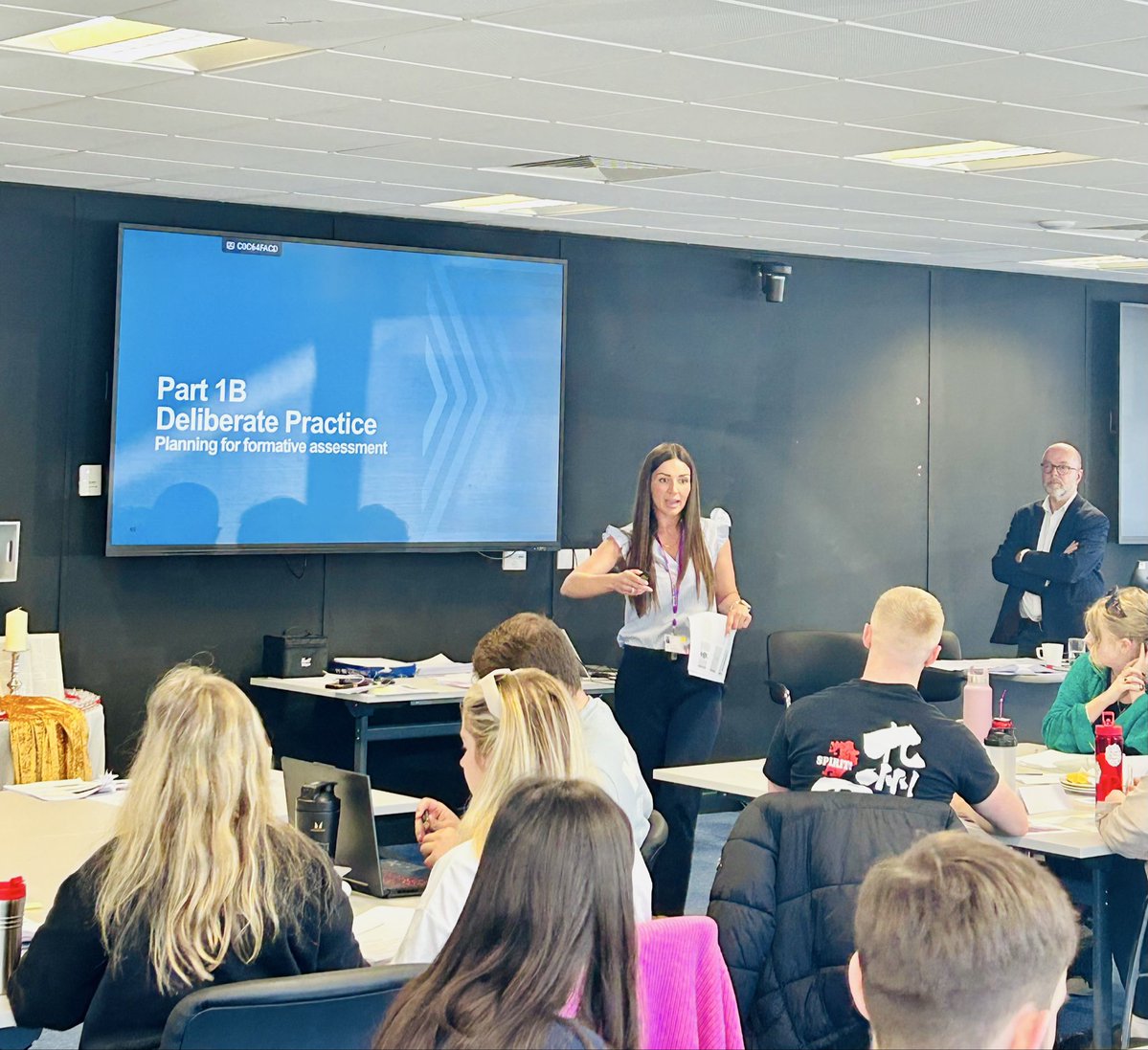
It was lovely to see all of our #ECTP ECT's this wk for their Spring event!
Great collaborative session discussing Deliberate practice, Evidence deep-dive and Application in context.
As always, thanks to our fabulous facilitation team for delivering such an enjoyable session!