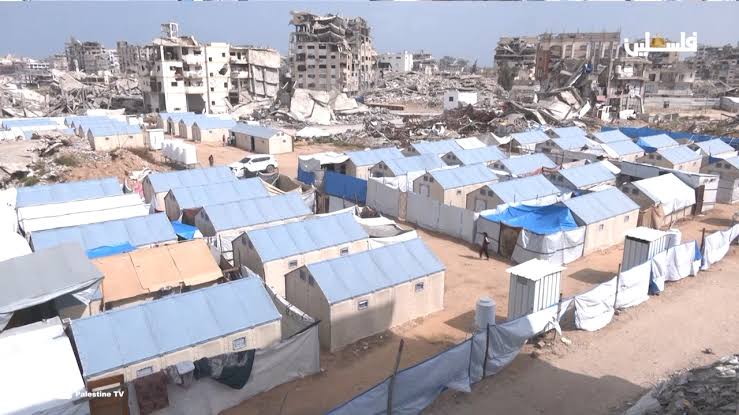
REVEALED: The scandal surrounding Gaza's failed winterization efforts lays bare a grim reality: Hamas obstructed attempts to protect Palestinian civilians before the devastating winter storms that flooded tens of thousands of tents.
Palestinian Authority employees inside Gaza have reported that professionals from the Ministries of Public Works and Relief Affairs were intimidated, summoned, and coerced by Hamas into signing pledges not to undertake humanitarian projects without the group's approval. According to their accounts, those who defied Hamas risked so-called "field justice," including beatings and worse.
Several officials, including Najla Hammad, Ihab Al-Bahtiti, Khaled Abu Safiya, Wiam Aboul-Nasr, Dr. Adnan Hamouda, and Ahmed Abu Zaiter, have publicly stated that efforts to build more durable fiberglass housing and improve conditions for displaced civilians were blocked.
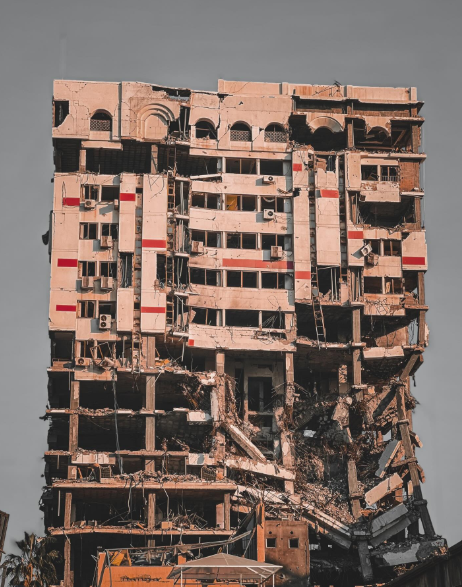
Another example was a proposal that was put forward to demolish several heavily damaged towers which were at risk of collapse from rainwater after extensive bombardment. According to those involved, Hamas blocked the removal of the “Bank of Palestine Tower” in Gaza City's Rimal neighborhood, reportedly arguing that it would "collapse from the rain anyway." The terrorist group did not show any concern for the civilian lives that would be lost when the tower eventually collapses on its own, because it wants dead Palestinians and news of tragedy to keep Gaza in the news cycle and to gain global sympathy, hoping for more incoming resources and donations for the Strip’s humanitarian and reconstruction needs that it could siphon.
Additionally, Hamas has also been accused of obstructing construction projects intended to create safer communities for displaced Gazans in southern Gaza, prioritizing political control over humanitarian relief.
This is a reminder that Gaza's suffering is not only a consequence of war. It is also the result of a fascist and ruthless governing power that repeatedly places its own interests above the welfare of the people it claims to represent. The same terror group that helped bring catastrophe upon Gaza continues to obstruct efforts to mitigate its consequences.
As floodwaters sweep through displacement camps and families endure another winter in misery, the question is unavoidable: how many Palestinian lives could have been spared had Hamas allowed humanitarian, housing, and reconstruction efforts to proceed unimpeded?
Trump is right. It’s hard to deport someone who has worked hard for 15 years and broken no laws beyond entering the country illegally.
I spent over a decade teaching in a community with many illegal immigrants and their children. I knew genuinely good people, wonderful families, and incredible kids. They weren't abstractions to me. They were people I cared about and wanted to see succeed.
I understand the emotional difficulty of enforcing immigration law. I've experienced it firsthand.
But there's a fundamental difference between judging an individual through the lens of personal experience and governing a nation through the rule of law.
It's easy to make exceptions when we're confronted with a sympathetic story. We see a hardworking father, a devoted mother, or an innocent child, and naturally want to spare them hardship.
But my personal feelings about those individuals cannot determine whether the law applies to them. Nor can anyone else's.
And with immigration, the consequences extend far beyond any individual case. We're deciding who may enter our country, remain here, and become part of our national community. If those decisions are ultimately determined by who manages to get here and whose story moves us most, the consent of the governed becomes increasingly meaningless.
The hardest cases are precisely when our principles matter most, because the entire purpose of having laws is to establish rules that transcend our individual sympathies, prejudices, and emotions.
If enforcing the law depends on our sympathy for those who break it, we no longer have the rule of law. We have a collection of suggestions subject to the whims of our emotions.
@Friended4Ever I think I disagree. Woke “liberal” women seem more likely to vote for policies that hurt their security (open borders, soft on crime).
I think the distinction is that liberalism stands for freedom, while wokeness stands for nothing except virtue signaling.