A pregnant student, Melissa Essomba, has died in Yaoundé after hospital staff reportedly refused to treat her unless she first paid 8,000 CFA.
Melissa was writing the Baccalaureate exam when she suddenly developed complications. She was rushed to the Nkoldongo District Hospital for emergency care.
According to accounts, staff at the hospital insisted that she deposit 8,000 CFA before any medical procedure could begin. Melissa, who was already close to her due date, reportedly had only 2,000 CFA on her at the time.
The young woman is said to have offered her phone as collateral while pleading for care, but the offer was rejected, with staff insisting on cash payment.
Still in pain, Melissa reportedly returned home to look for the remaining 6,000 CFA. By the time she came back with the money, her condition had worsened. She later collapsed, and attempts to revive her were unsuccessful.
She was pronounced dead moments later.
The incident has caused outrage, with many questioning how a pregnant student in distress could be denied urgent medical attention over 8,000 CFA.
#MMINews
@MimiMefoInfo This is such a terrible thing to happen. That women are still dying due to pregnancy related issues is not acceptable. Where's all the UHC and "free" care for pregnant women and children? #MinSanté
Emmanuel Eseme, the unsung hero!
The 24th African Championships in Athletics are happening right now in Accra, Ghana, running from May 12 to May 17, 2026, at the University of Ghana Stadium in Legon.
Cameroonian born Sprinter, Emmanuel Eseme , did not disappoint as he clinched the gold medal in 100M men.
Emmanuel Eseme is Cameroon’s premier sprinter and the current reigning continental champion in the men’s 100m.
Born on August 17, 1993, he has established himself as one of the fastest men in African history, holding three Cameroonian national records:
$6.52$ seconds in the indoor 60m, a personal best of $20.23$ seconds in the 200m, and a blistering $9.96$ seconds in the 100m, making him the first Cameroonian to ever break the 10-second barrier.
On the global stage, Eseme served as Cameroon’s official Olympic flag bearer at the Paris 2024 Games, where he advanced to the men's 100m semifinals after running a $9.98$-second heat .
He has also excelled on the elite world circuit, securing marquee 100m victories at both the Marrakech and Stockholm Diamond League meetings in 2024 and famously defeating seven-time Olympic medalist Andre De Grasse at the Simbine Classic in April 2026.
His extensive medal record, or palmarès, spans multiple major international championships. At the African Senior Athletics Championships, Eseme captured the 100m gold medal at the 2026 games in Accra ( ongoing)
He has also won a 100m silver and 200m bronze on home soil in Douala in 2024 and a 200m silver in Mauritius in 2022.
He also claimed the 100m gold medal at the delayed 2023 African Games held in Accra in March 2024.
Beyond continental tournaments, his gold-medal pedigree includes a 100m championship title at the 2023 Jeux de la Francophonie in Kinshasa alongside a dominant legacy at the Islamic Solidarity Games, where he won 200m gold in Konya in 2022, 200m gold in Riyadh in 2025, and a 100m bronze medal in Riyadh in 2025.
#CNAsports
WE WANT YOUTH IN POWER… BUT NOT THE ONES WHO STEP FORWARD!
We say we want youth in leadership.
But when young Cameroonians step forward to serve, we are the first to tear them down.
You cannot demand change and destroy those willing to carry it.
If we keep pulling down our own, we will soon be left with silence where leadership should stand.
#GenerationalCourage #SupportOurYouth #Cameroon
⸻
Let me speak plainly.
In Cameroon today, young men and women are taking the bold decision to run for office; municipal councils, parliament, professional bodies, civil society leadership, political platforms.
It is not easy.
The moment you declare your interest, your life changes.
Your family becomes exposed.
Your past is dragged into public space.
Every rumour becomes a weapon.
Every mistake even from years ago is resurrected.
And what do we do?
Instead of encouraging them, we dissect them.
Instead of mentoring them, we mock them.
Instead of strengthening them, we attack them.
Yet tomorrow, we are the same people complaining:
“The older generation does not want to give the youth a chance.”
But when the youth step forward, we are the first to pull them down.
⸻
The Cameroonian Reality
In our context, public office is already difficult. The terrain is tough. The scrutiny is intense. The political space is complex.
But beyond those structural challenges, we add something else; hostility from within.
To some naysayers, no one is ever fit and proper to lead.
If you are bold, you are called arrogant.
If you are calm, you are labelled weak.
If you speak clearly, you are accused of over-ambition.
If you stay quiet, you are accused of lacking courage.
For some, it is either them or the highway.
This mindset does not strengthen democracy. It suffocates it.
⸻
We Are Killing Vision Before It Matures
Cameroon has visionary young leaders. We see them.
Young lawyers trying to reform institutions.
Young councillors pushing local development.
Young professionals entering politics for the right reasons.
Young women breaking barriers in public life.
But instead of debating their ideas, we attack their character.
We insult.
We speculate.
We spread negativity.
We drag families into conversations that should remain civil.
And slowly, dreams die.
Some withdraw quietly.
Some decide private life is safer.
Some relocate.
Then we complain about a leadership vacuum.
⸻
Let Us Be Honest With Ourselves
We cannot demand generational change while discouraging generational courage.
Encouragement does not mean blind loyalty.
Support does not mean silence in the face of wrongdoing.
But it does mean fairness.
It does mean civility.
It does mean proportionality.
If we truly want renewal in this country in our councils, our parliament, our professional bodies, our political movements, we must create an environment where stepping forward does not mean being destroyed.
⸻
A Personal Appeal
Leadership requires courage.
But it also requires community.
Let us disagree without destroying.
Let us critique without humiliating.
Let us correct without crushing.
Because if we continue pulling down those who are willing to face the bull and enter public office, one day we will look around and ask:
“Where are the young leaders?”
They will not be absent because they lacked vision.
They will be absent because we killed their dreams before they had the chance to grow.
⸻
Nkongho Felix Agbor “Agbor Balla”
Barrister-at-Law | Human Rights Advocate
President, CHRDA
(Repost if you’re Graffi🇨🇲)
WE ARE GRAFFI PEOPLE!🌟
A People RICH in Culture!
A People with High Self-Esteem!
A People filled with Class, Dignity, and Utmost HONOR!
We Are the GRASSFIELDS of CAMEROON!🇨🇲
#Graffi#Bamenda#Bamileke#Bamoun#Cameroon
Au Cameroun le Cérélac contient 6fois plus de sucre qu’en suisse
-
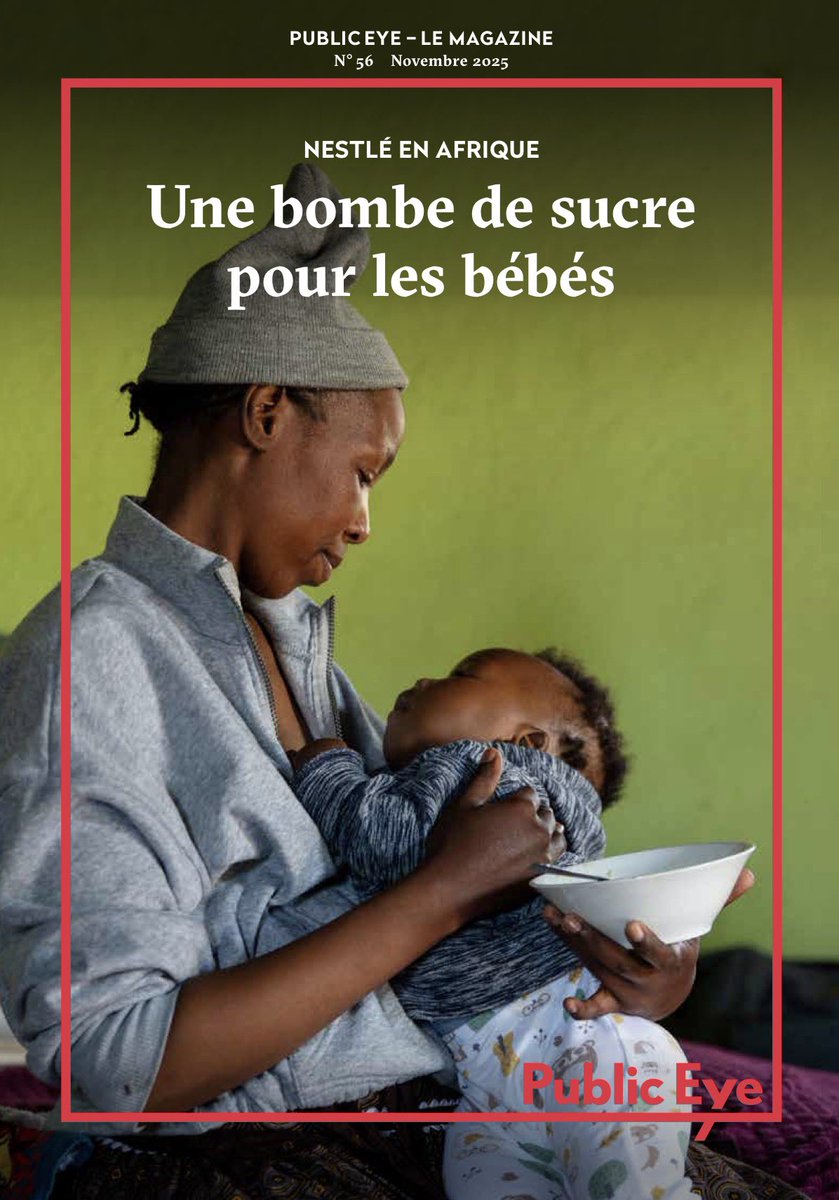
L’obésité et le diabète explosent sur notre continent. Que fait la multinationale agroalimentaire suisse Nestlé? Elle aggrave la situation en gavant nos bébés de plus de sucre à travers son célèbre #CÉRÉLAC. Tandis qu’en suisse ce produit ne contient pas de sucre, chez nous au Cameroun il en contient 6fois plus (p.11). Téléchargez l’étude de @publiceye_ch en version pdf ici: https://t.co/9Prig2SA5I
Nicolas Ti dans "Les mêmes gens" : Qui avait surnommé les nordistes de moutons du nord? Qui avait dit que le Bamenda réfléchit à gauche? Qui avait transformé le mot Bamiléké en injure? Qui avait dit que les maquisards etaient l’affaire des Bassa? Qui avait dit les Bulu/Betis ne nomment que leurs frères ?… C’est les mêmes gens…
VIDEO. #Ebola, #Bulape, #Kasaï. Montée en puissance de la réponse contre l'épidémie:
▪️Acheminement des 1ières doses de vaccin par voie aérienne
▪️Mobilisation des équipes conjointes de gestion de l'incident — en synergie avec @WHO, @MinSanteRDC, @AfricaCDC & leurs partenaires.
Field epidemiologists are the backbone of outbreak detection & response!
On #WorldFieldEpidemiologyDay, I celebrate @WHO’s work with the Global Field Epidemiology Partnership #GFEP & FETPs worldwide as we collectively build skilled, connected workforces to keep communities safe
✈ Today, @WHO shipped 12 tonnes of emergency medical supplies and equipment from its Emergency Response and Preparedness hub in #Nairobi 🇰🇪 to support the #DRC 🇨🇩 Ebola outbreak response. The consignment includes personal protective equipment able to serve 120 frontline workers for one month, patient isolation materials, water sanitation and hygiene supplies. Thank you to @ELMAPhilanthro for vital support.
Every time someone tells me, “Farida, forget about democracy, it’s a Western concept and it can’t work for Africa” I am offended, not just offended, but aggravated by the level of acculturation and alienation that statement reveals.
This claim is a distortion of history. It is the product of centuries of colonial propaganda, reinforced by our own elites, to make us forget who we are and what we once had. Before colonization, countless African societies already had sophisticated democratic systems with checks, balances, and real accountability. Democracy was NOT imported to Africa. If anything, it was destroyed here by colonization.
Take the Empire of Mali under rulers like Mansa Musa and Mansa Sakura. It had a structured government with ministers responsible for justice, the army, foreign relations, trade, and agriculture. The Gbara, a great assembly of clans, had the power to advise and even challenge the mansa. A ruler who lost the trust of the assembly and the clans risked removal. Power was never absolute.
Among the Ashanti in today’s Ghana, the Asantehene could be removed by the council of elders if he betrayed the people. This was marked by the symbolic withdrawal of the Golden Stool, the ultimate seat of power. Among the Yoruba in Nigeria, a tyrannical Oba would receive a ritual message, often in the form of an empty calabash or parrot eggs, instructing him to step down or take his own life to preserve the honor of the community. Among the Buganda in Uganda, the Kabaka’s reign depended on the confidence of the Lukiiko, the council. Losing that confidence could end his rule, sometimes abruptly and violently. Among the Igbo in Nigeria, abusive leaders could be stripped of their land, titles, and social standing, effectively ending their influence.
Elections existed in some precolonial societies. Among the Sena of Mozambique and the Shona of Zimbabwe, chiefs could be chosen through consensus-building assemblies involving elders and representatives of different clans. Among the Somali, leaders known as Ugases were elected by councils of elders representing different lineages and could be removed if they acted against the will of the people. In the Oromo Gadaa system of Ethiopia, leadership rotated every eight years through a highly organized electoral process involving public debates and community votes.
These were not primitive customs. They were structured, legitimate systems ensuring that power served the people. In many cases, our models of accountability were stronger than those in Europe at the same time. So when people say “democracy is Western” or “Africa isn’t ready for democracy,” they are parroting colonial lies. They are insulting our ancestors and excusing modern-day tyrants.
Our problem today is not that democracy doesn’t fit Africa. Our problem is that we live with two chains around our necks: foreign powers that still control our economies and politics, and local feudal elites who exploit us like the colonizers did, sometimes worse. Some say, “Let’s fight the foreign powers first, then our local dictators later.” Others say, “Let’s remove our dictators first, then we’ll deal with the West.” I believe both approaches are wrong.
It’s like a patient with an infection and a high fever. Treat only the fever, and the patient dies. Treat only the bacteria, and the patient can also die. You give anti-inflammatories and antibiotics at the same time, or you lose the patient. Likewise, we must fight both oppressors at once. We must restore our sovereignty and rebuild our values. We must dismantle foreign domination and remove local tyrants.
The real African democracy entails justice for all; leaders who serve the people and lose their throne the moment they betray them. Africa will not be free by choosing which master to fight first. We will be free only when we break all our chains, foreign and domestic, and put human dignity above all power.
Farida Bemba Nabourema
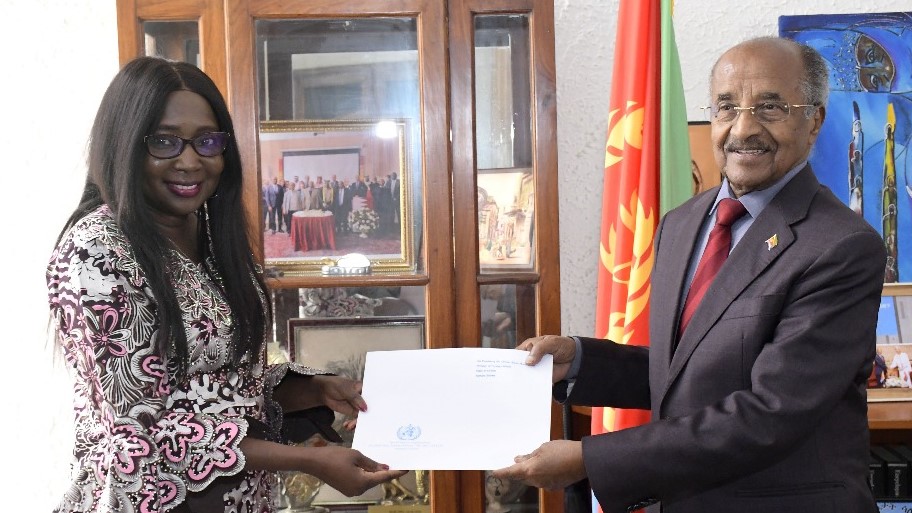
Dr Mary Stephen has officially assumed duties as @WHO Representative to Eritrea🇪🇷 after presenting her credentials to H.E. Osman Saleh Mohammed, Minister of Foreign Affairs.
WHO remains committed to supporting health priorities in Eritrea & advancing #HealthForAll across Africa.
Dr Mary Stephen has officially assumed duties as @WHO Representative to Eritrea🇪🇷 after presenting her credentials to H.E. Osman Saleh Mohammed, Minister of Foreign Affairs.
WHO remains committed to supporting health priorities in Eritrea & advancing #HealthForAll across Africa.
Dr. @soce_fall officially takes office as CEO of @PasteurDakar this July 1st!
A new chapter begins under his leadership, at a pivotal time for research, diagnostics & vaccine production in Africa.
𝐖𝐞𝐥𝐜𝐨𝐦𝐞, 𝐃𝐫. 𝐅𝐚𝐥𝐥!
#Leadership#HealthInAfrica
Putting innovation at the service of public health.
Drawing lessons from the COVID-19 pandemic, #Lesotho is pioneering a novel influenza surveillance system to strengthen outbreak preparedness & response.
Proud to see this @WHO-developed platform supporting national action.
Congratulations, my brother Dr Mohamed Janabi, on your nomination as
@WHOAFRO Regional Director
Our continent is good hands and I look forward to supporting you as you serve our Member States
On behalf of the @WHOAFRO family, I wish you every success in this important role
In too many places, pregnancy and childbirth are still life-threatening events.
It doesn’t have to be this way.
Let’s act together & decisively to build a future where no woman dies while giving life, and every child has a chance to grow and thrive.
#WorldHealthDay2025