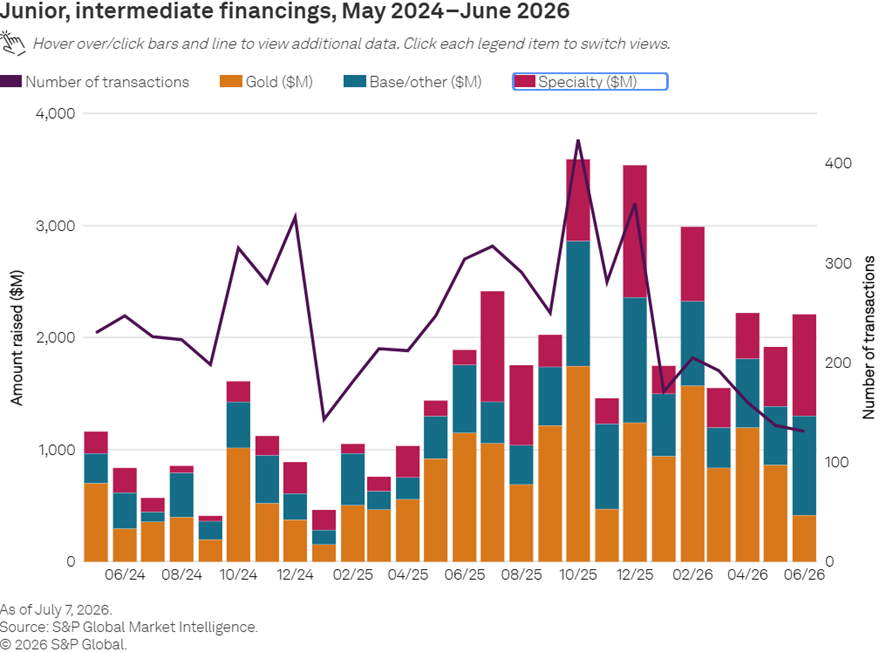
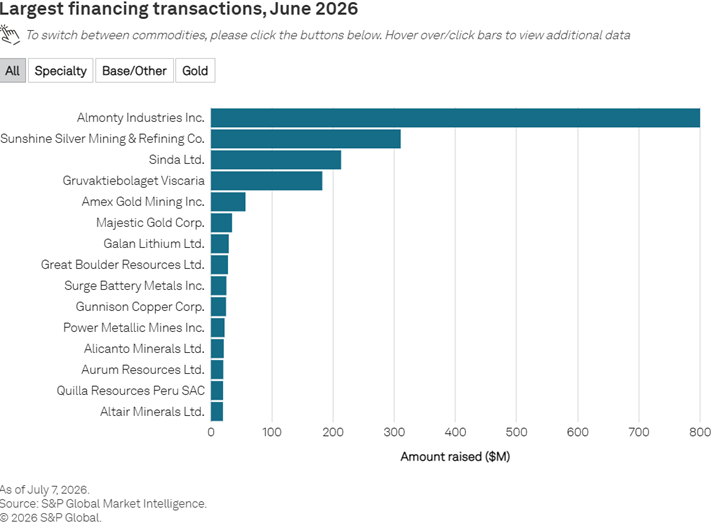
Junior & intermediate financings, June 2026 (ht SPGlobal): ~$2.2bn raised, but across the fewest transactions since late 2024, down from ~415 deals at last October's peak.
Fewer, bigger cheques. One deal alone (Almonty, ~$800M) was over a third of the month.
Capital is getting selective.
We think the affordability debate asks the wrong question. Not "why is everything so expensive," but "expensive measured in what."
One ounce of gold: 2,232 pounds of bread, 705 Big Macs, 254 movie tickets.
How do the numbers in your own budget look once you reprice them in gold?
Data: @Monetary_Metals
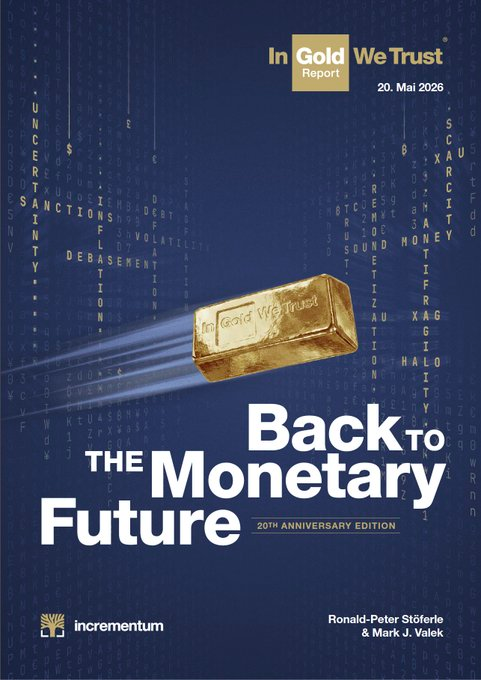
You don't need a DeLorean at 88 miles per hour to get Back to the Monetary Future.
The move back to monetary principles is already underway.
On September 10, @RonStoeferle and @MarkValek show what it means for a portfolio.
Held in German.
S&P Global's monthly drilling update: holes drilled up m/m, and gold drilling YTD is the highest in four years.
Miners are finally spending the money they raised and a good chunk of it on earlier-stage projects.
Exploration is back. Discovery, as always, will take a little longer.
The 60/40 Portfolio Was Built for a World That No Longer Exists
1/8: The 60/40 portfolio was built for a world of falling inflation, declining yields and negative stock-bond correlation.
That world is fading. And the portfolio anchor of the past four decades is starting to look less reliable.
7/8: The mainstream is catching up.
Ray Dalio has suggested 15% in gold. Morgan Stanley proposed a 60/20/20 portfolio. Jeffrey Gundlach and Bank of America have discussed 25% allocations.
Institutional portfolios are beginning to rethink the old playbook.
8/8: Gold is not a substitute for every bond. But it is becoming an increasingly necessary counterweight to a bond market that is more politicized, more inflation-sensitive and less reliable as an automatic hedge.
Read “The Renaissance of Gold Allocation” (https://t.co/5sV3BkvrlX) and explore our actively managed gold investment solution at https://t.co/WYWRbLsPwa
Gold miners are valued near a decade low against the S&P 500, while earning more than they have in years.
The S&P 500 to GDX ratio fell to around 76 by April 2026, a level last seen in early 2016, and well below its 200-day moving average.
At the end of the last major gold cycle it bottomed near 18.
The chart runs to April 2026. Miners had regained ground on the index for the first time in years, and were still priced at a fraction of the last cycle's extreme.
Important ChatGPT summary on Warsh and the Fed Balance sheet a 🧵
LL Question
Did Kevin Warsh indicate that there was the possibility that the Fed would expand its balance sheet in conditions which were not normal or if any kind of an emergency were to exist?
Yes. In fact, that was one of the more interesting clarifications Warsh made during the Senate hearing.
He drew a distinction between the normal operating size of the Fed’s balance sheet and what the Fed might do during a genuine financial emergency.
His framework was essentially:
Under normal conditions: the Fed’s balance sheet should be “as small as practicable” to conduct monetary operations. He reiterated his longstanding view that interest-rate policy—not the balance sheet—should be the primary instrument of monetary policy.
During a crisis or liquidity event: Warsh explicitly acknowledged that the balance sheet can expand. He said it can do so “when there is a crisis or if an institution needs liquidity,” but emphasized that “that shouldn’t be the norm.”
He also made a distinction between:
the “architecture” of monetary policy (which should be driven by the FOMC through interest rates), and
the Fed’s “plumbing” (its operational tools, including the balance sheet).
As he put it:
“I want the architecture to drive the plumbing, not the plumbing to drive the architecture.”
In other words, he does not want the Fed maintaining a permanently large balance sheet simply because that has become operationally convenient. But he does believe the balance sheet remains an appropriate emergency tool when financial markets require liquidity or during a systemic crisis.
This is broadly consistent with views Warsh expressed before becoming Fed Chair. He has repeatedly argued that:
a large balance sheet should not be the normal state of affairs because it begins to blur the line between monetary and fiscal policy,
emergency asset purchases and liquidity facilities have a legitimate role during crises,
and any future changes to balance-sheet policy should be deliberate, transparent, and well communicated in advance to Congress and financial markets.
So the answer to your question is yes: Warsh specifically left open the possibility of temporary balance-sheet expansion during abnormal or emergency conditions, while making clear that he wants the Fed to return to a much smaller balance sheet once those conditions have passed.