Making more money should not automatically justify more capital.
The harder question is how that profit was produced.
Stable risk, controlled drawdown and repeatable execution should matter when traders scale.
Growth without stability is just larger exposure.
A payout tells you what happened once. It doesn’t tell you how consistently someone trades, how they manage risk, or whether they can repeat the result over time.
There’s a much bigger story behind the number.
One thing about prop trading has always felt strange:
Blowing a funded account is often treated as just part of the game.
Even profitable traders often accept that eventually losing the account is normal.
Is that just the reality of present-day prop trading, or has the industry normalised something that probably shouldn’t be normal?
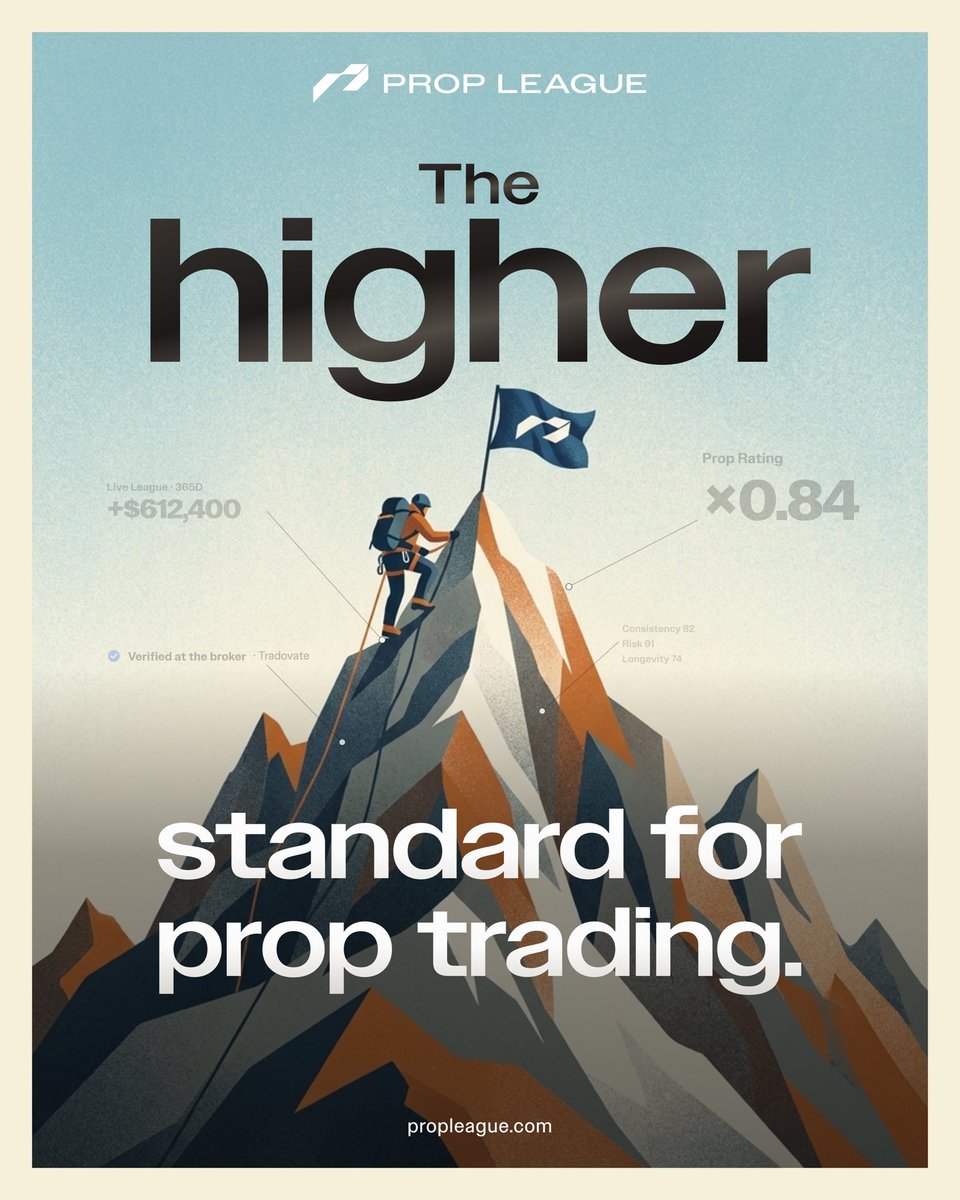
The higher standard for prop trading isn't based on short-term success.
It's built on sustained performance: what you achieved, how you achieved it, and whether it can be verified.
On Prop League, that performance builds your rating. Your rating unlocks tournaments. And tournaments give you the chance to earn more capital to take into the official leagues.
Not one good day. A record that takes you further.
I am less interested in the strategy a trader uses than in what happens after their first loss.
That reaction usually tells me more than the winning screenshots.
@_AJTech Usually, execution should be audited before the broker gets blamed. Sometimes the infrastructure is the issue, but it shouldn’t be the default explanation.
Trading X is funny.
A trader can break six rules, make money and call it intuition.
The same trade loses tomorrow and suddenly the broker is the problem 😅
@jadecap_ Scaling changes the objective. At some point the question stops being “how much can this edge make?” and becomes “how much capital deserves to be exposed to it?”