We walked Hadrian’s Wall coast to coast. Our favourite fort was free.
My partner and I had spent days following the Roman frontier, so by our last day I thought I knew what a fort would feel like: low stone foundations, information boards, and your imagination doing most of the work.
Then we crossed the Tyne by ferry, walked into South Shields and found Arbeia.
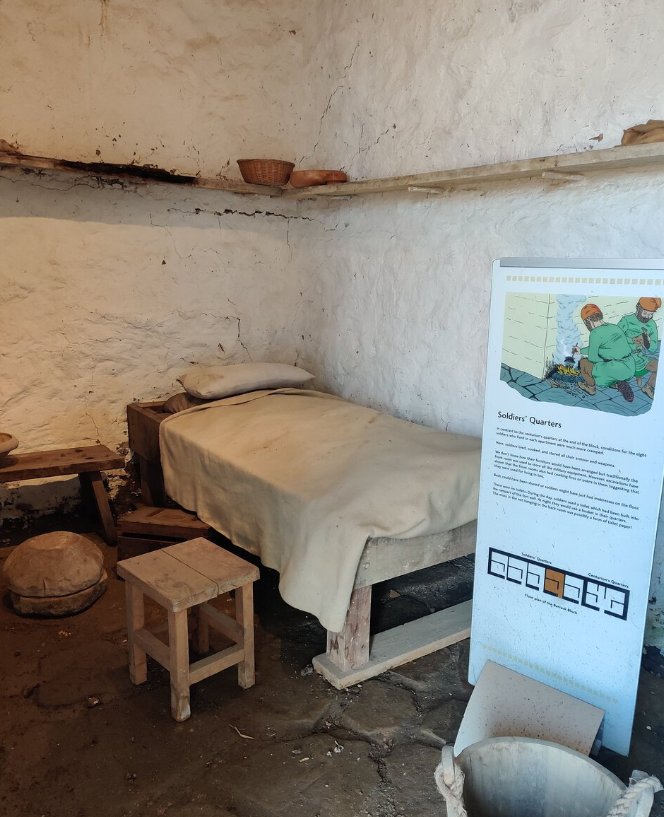
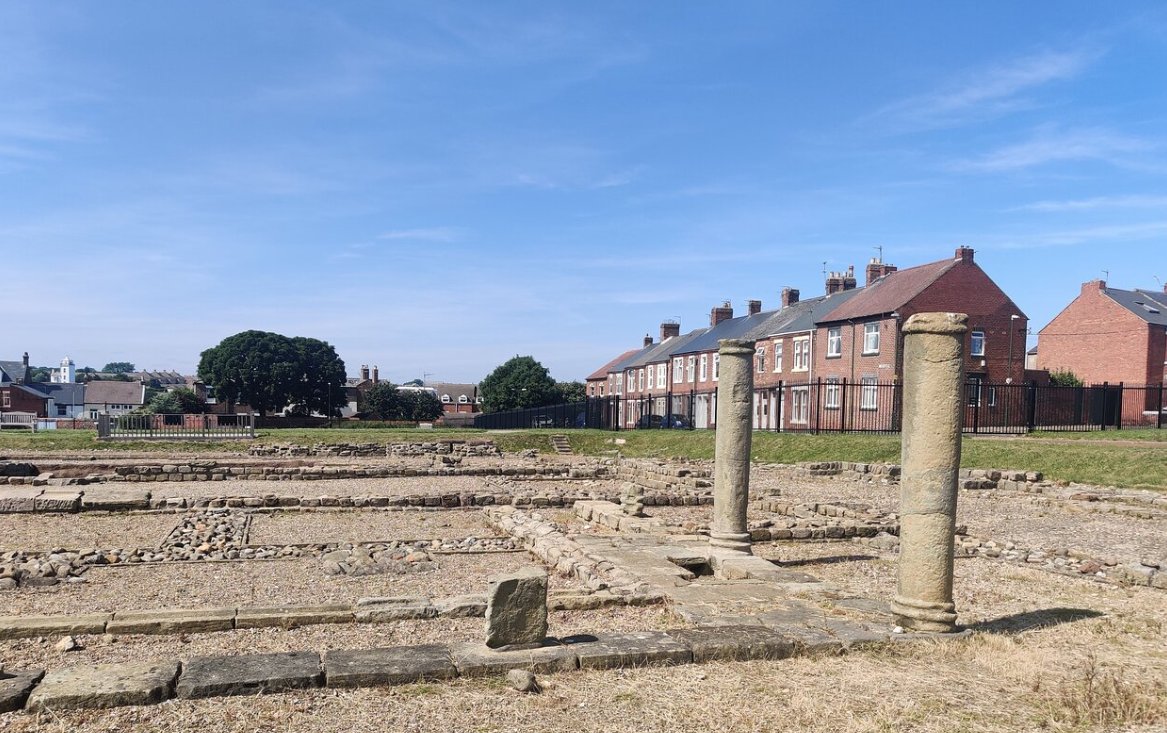
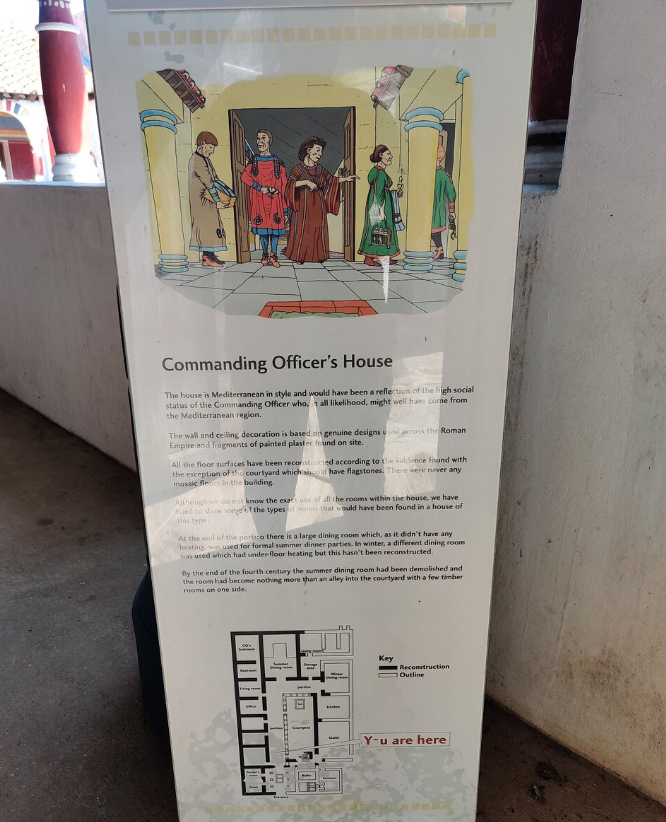
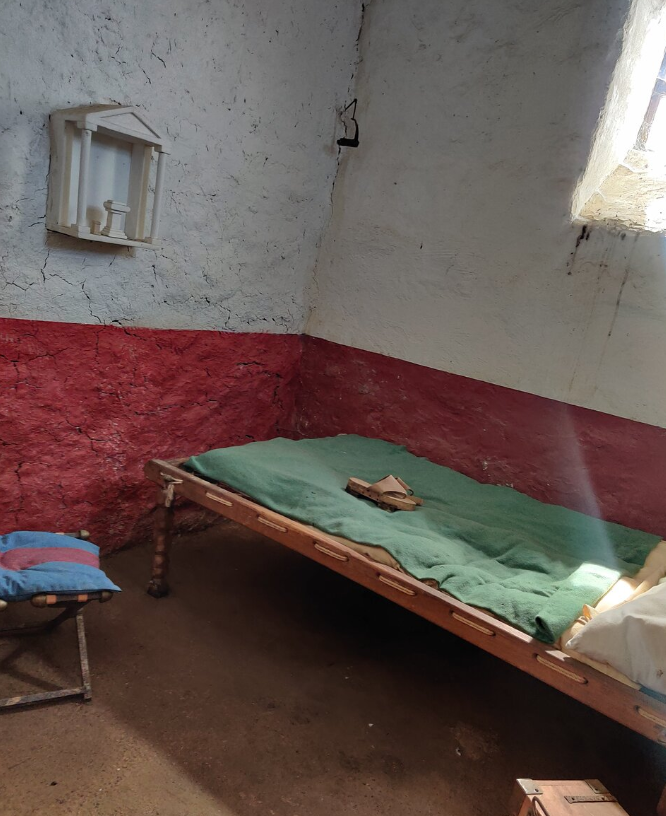
The first shock was the reconstructed West Gate. Not a little model. A full-size Roman gateway you can actually walk into. Beyond it were reconstructed living quarters too, including a barrack block and the Commanding Officer’s house. After days of looking down at ruins, suddenly we were walking through rooms. I absolutely loved it.
That was the moment the whole place clicked for me.
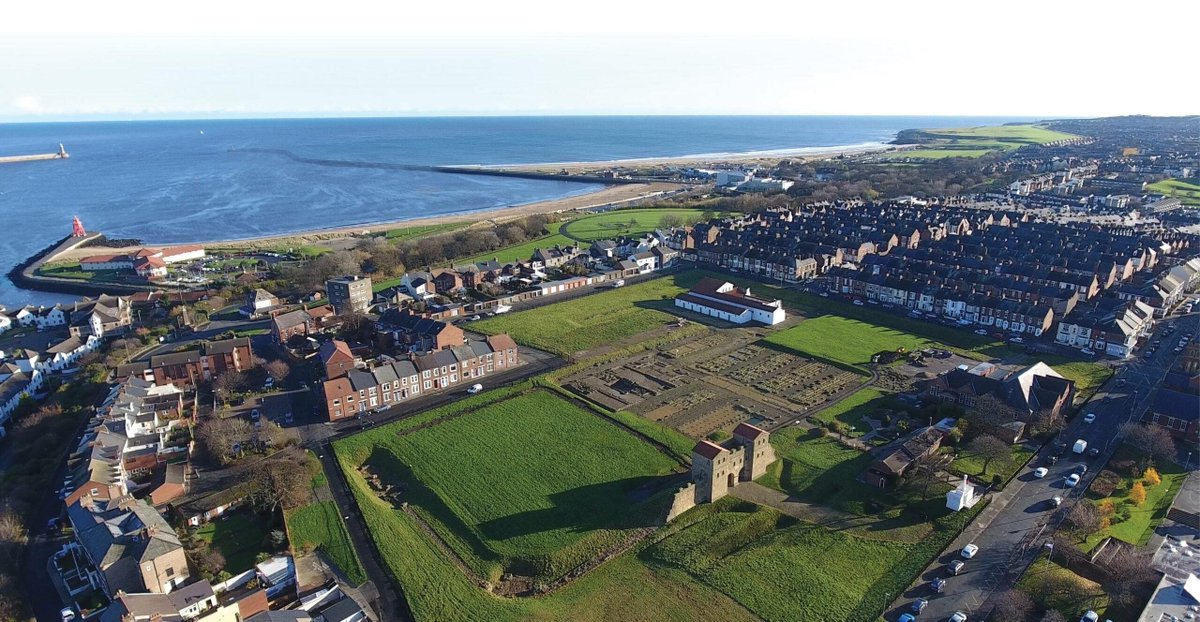
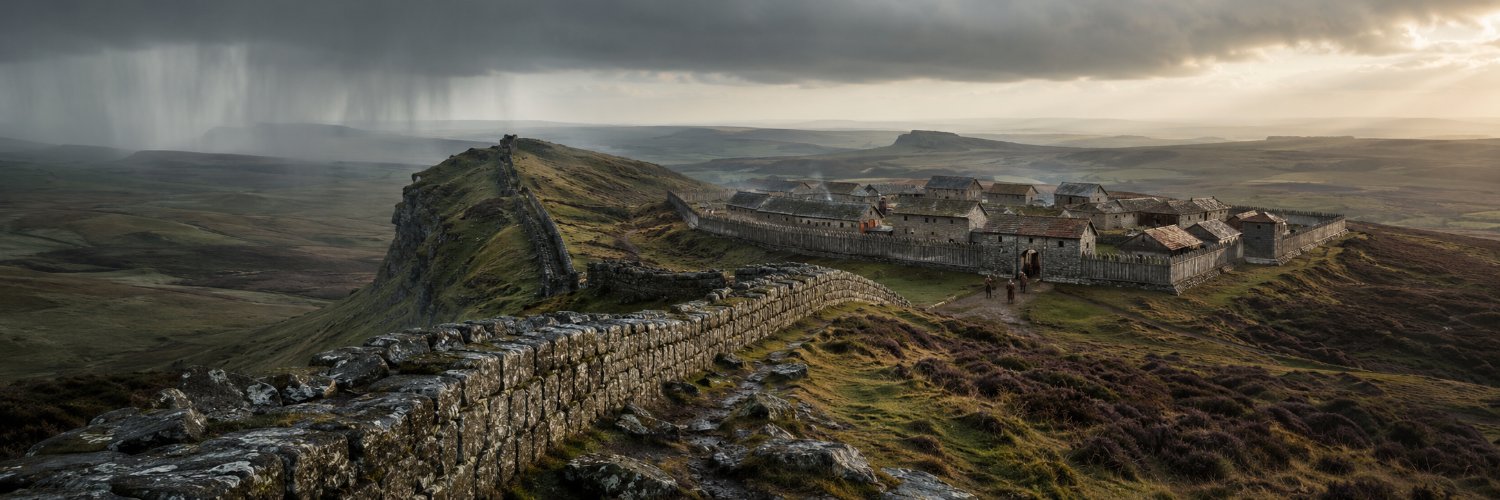
Arbeia wasn’t actually built on the stone line of Hadrian’s Wall. It stood above the mouth of the Tyne and controlled the port serving the frontier. It became an important military supply base, helping keep the Roman system farther west functioning. The beautiful gateway wasn’t just decoration either: Roman fort gates controlled access while making a very deliberate show of imperial power.
We’d expected this to be a quick final stop when our legs were already finished. Instead we kept wandering back through the reconstructions, looking across the foundations and trying to picture the soldiers, supplies and constant movement that once filled this patch of modern South Shields.
And the ridiculous bit?
Entry is still free. Donations are welcome, but you don’t even need to book.
After an entire coast-to-coast Roman trip, the place that surprised me most cost nothing to enter.
For me, Arbeia was the perfect ending. It did something ruins alone sometimes can’t: it turned the walls back into rooms and made Roman Britain feel inhabited again.
Over £40 for three of us — and we could barely read the signs.
I’m fine with ruins. I actually love that moment when a few low walls start making sense because the interpretation tells you what once stood there.
That was exactly what I expected at Birdoswald. Instead, after a long drive and spending more than £40 between three of us, we found outdoor information boards so battered that some were barely readable. One even had mud smeared across its face. I stood there thinking: this is the bit that’s supposed to make the Roman fort come alive.
Inside didn’t rescue it for me. The exhibition felt tiny and overwhelmingly aimed at young children. The short film was genuinely useful — but it lasted about two minutes. Then we were back outside trying to understand the site through those battered boards.
That’s what really wound me up. Birdoswald is a Roman fort on Hadrian’s Wall, and English Heritage itself describes the visitor centre as a place where displays explain how the Wall was built and who lived there. I wanted that story. Instead, I felt like I’d paid museum money and then been left to do half the explaining myself.
I can forgive rain, mud and low stonework. I can’t forgive leaving a Roman site feeling less informed than when I arrived.
For us, this was a rotten history day.
Those Roman Xs may not be numbers at all.
When the light caught the scratches on this Thames pot base, I wanted them to become a message. Following that tiny clue changed the person I could see.
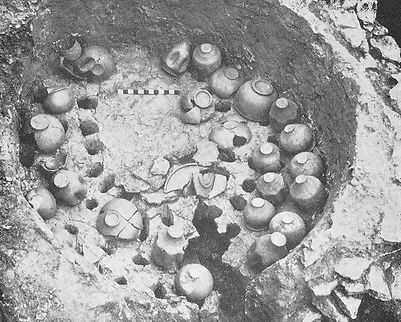
Britain’s record of writing on everyday Roman pottery contains hundreds of marks. An X might be a number, an owner’s sign, a workshop batch mark or something we still cannot explain.
These cuts appear to have been made while the clay was soft. I was thrilled by that shift. The hand behind them may not belong to the Londoner who used the jar, but to someone working at the pottery before it was fired.
A specialist would compare the clay, vessel shape, scratches, wear and the exact layer in which it was found. Here, the loose foreshore find has no sealed excavation layer to preserve that story.
That missing context frustrates me. Yet I find the limit haunting: we can see a real hand moving through wet clay, but we cannot honestly say why.
Numeral, batch mark or accident—which clue would you test first?
This British woman was enslaved, freed — then mourned in two languages.
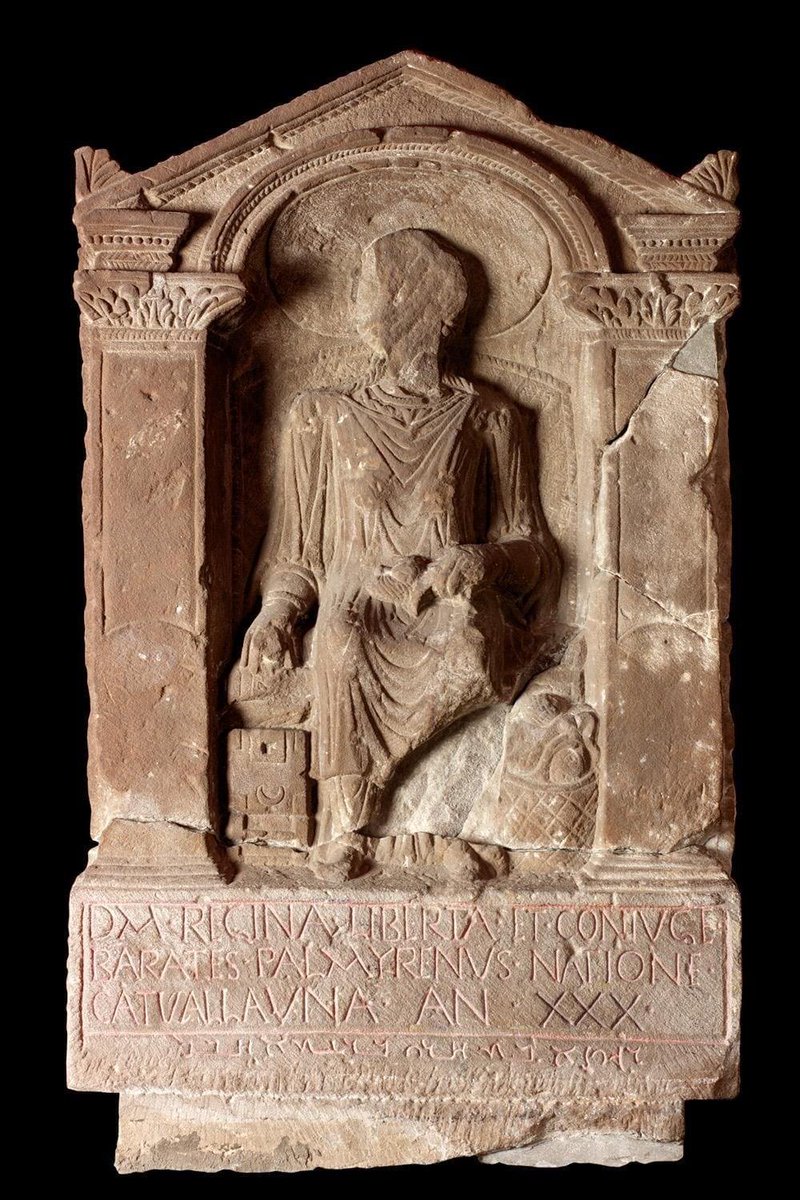
Regina’s grave monument stands at South Shields, but the few words cut into it place her life across an extraordinary stretch of the Roman world.
She was a Catuvellaunian, from the people whose territory centred around what is now St Albans. At some point she was enslaved by Barates, a man from Palmyra in Roman Syria.
The stone does not tell us how Regina became enslaved, how the two met or what that unequal beginning meant for their relationship. What it does say is that Barates later freed her and called her his wife.
They ended up near Arbeia, the Roman fort at South Shields. Regina died there aged just 30.
Barates then had an unusually elaborate memorial made.
Regina is shown seated in a high-backed wicker chair. She wears jewellery and holds spinning equipment in her lap, while a basket of wool sits beside her and she opens a locked box for valuables.
Those details are not a photograph of her daily life. They were carefully chosen signs of status, prosperity and the Roman ideal of a respectable wife. Even the carving mixes worlds: the monument has familiar Romano-British features, while other details echo Palmyrene art.
Then come the words.
The main inscription is in Latin. It names Regina, calls her Barates’s freedwoman and wife, identifies her as a Catuvellaunian and gives her age.
But beneath it the mason cut another line, this time in Palmyrene Aramaic, the language of Barates’s homeland.
“Regina, the freedwoman of Barates, alas.”
That final word feels startlingly intimate, but even here the evidence needs care. This kind of lament was a recognised funerary formula at Palmyra, not proof of a private sentence spoken in grief.
There is another clue in the carving itself. The Palmyrene lettering is more confident than the Latin, where the mason even corrected part of the word for Regina’s tribe. Specialists have argued that the sculptor may also have come from Palmyra.
So one monument at the edge of Roman Britain preserves a British woman, a Syrian man and perhaps a Syrian stone-carver in the same piece of stone.
It is not a tidy Roman love story. Regina had first been Barates’s slave, and the monument cannot tell us what their marriage was like.
What survives is stranger and more human than that: her name, her age, the distance both lives had travelled — and one word carried from Syria to South Shields.
Alas.
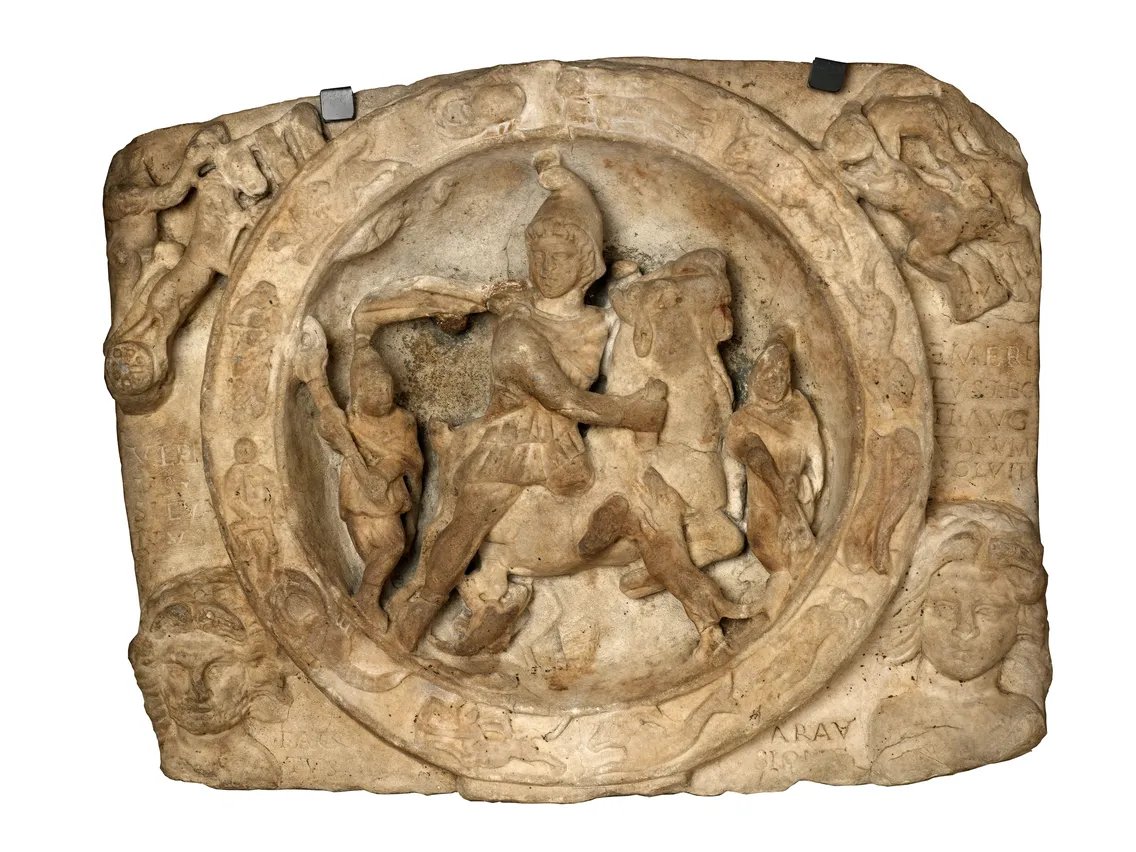
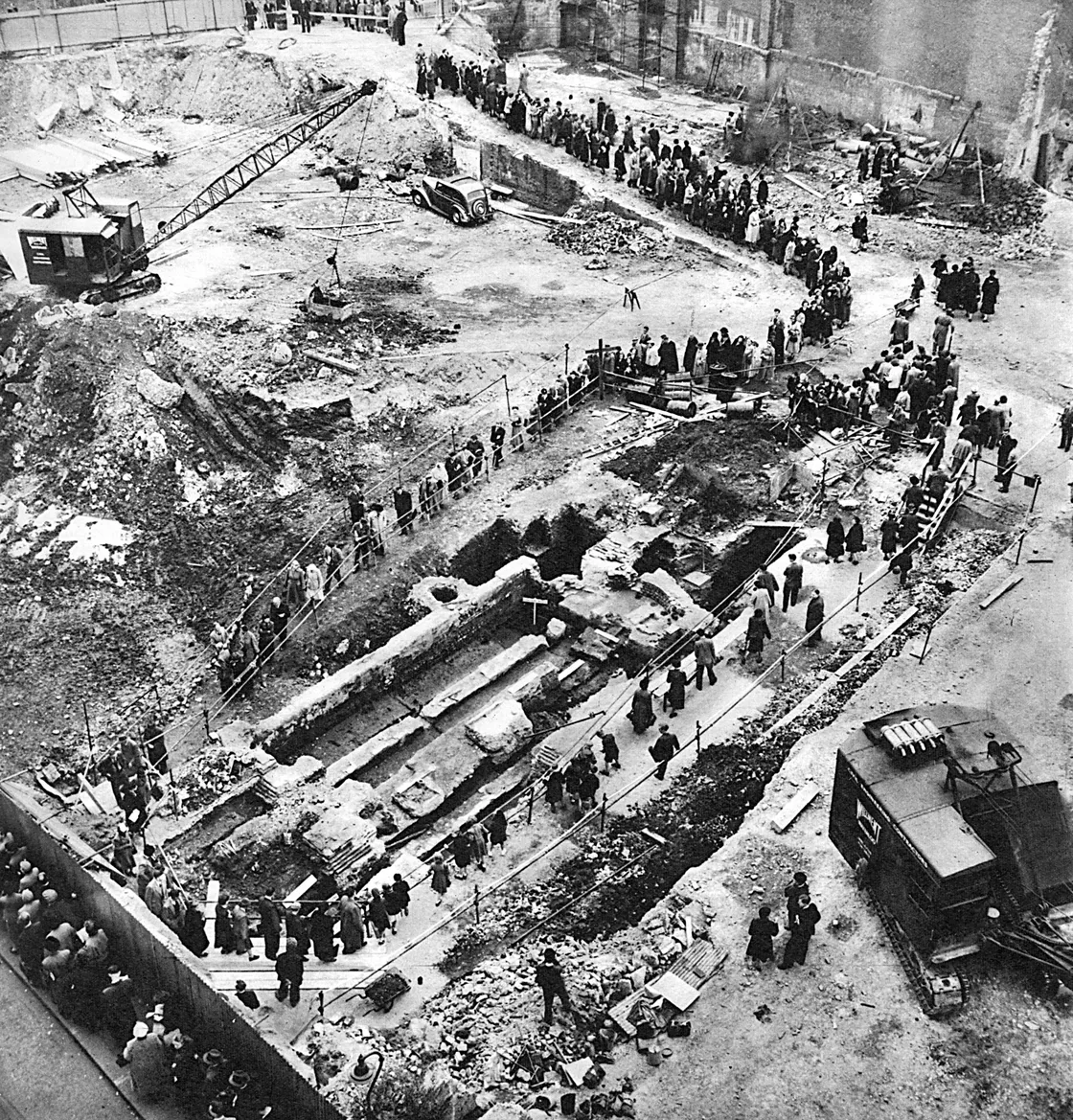
This marble head appeared on the final day — then London queued
The archaeologists at Walbrook had reached the end of their dig.
Beneath the bomb-damaged City of London, they had uncovered a substantial Roman stone building. An altar suggested religion, but they still could not say exactly what the place had been. New offices were due to rise above it, and the excavation was almost over.
Then, on the final day in 1954, a marble head came out of the rubble.
The youthful face had thick curls and the distinctive cap associated with Mithras. Suddenly the building had an identity. This was a mithraeum, a temple used by followers of the mysterious Roman god Mithras.
The timing could hardly have been more dramatic. The dig was meant to finish. The modern development still had to go ahead.
But photographs of the discovery reached the Sunday newspapers, and the buried temple became a public sensation.
Tens of thousands of people queued to see it. In a London still marked by wartime destruction, crowds waited for the chance to peer down at Roman walls exposed between modern buildings. The pressure became political, and Winston Churchill backed extra time for the excavation.
The temple had probably been built around AD 240, close to the Walbrook stream. Its followers left no surviving handbook explaining exactly what happened inside. The sculptures and the building tell us that Mithras mattered here, but much about the worship itself remains uncertain.
The marble head was only part of the surprise. Archaeologists also recovered an exceptional group of Roman sculptures from the site, including images of other gods.
The public campaign did not freeze the temple in place forever. Its remains were lifted and reconstructed about 100 metres away. Decades later, when the Bloomberg development brought archaeologists back to Walbrook, the stones were moved again and the temple was reconstructed underground, close to where Roman Londoners had used it.
That is what makes the 1954 moment so extraordinary.
A building nobody could yet name was close to being dismantled for the next London development. Then, on the very last day, one marble face emerged from the ground — and tens of thousands of people queued to see what it had revealed.
A lion probably bit this man — in Roman York.
Skeleton 6DT19 carried a clue archaeologists could not explain away: small, deep punctures on both sides of his pelvis.
He was about 26 to 35 when he died, probably in the middle or later third century. He was buried at Driffield Terrace outside Eboracum, Roman York, with two other adults. A single cut from behind had severed his neck, yet his head was placed back roughly where it belonged.
The cemetery was stranger still. Archaeologists recovered 82 skeletons from the site. Almost all the adults were men aged 18 to 45. Decapitation was extraordinarily common, and many bodies carried healed injuries consistent with repeated violence.
That pattern has fuelled a long argument. Were these gladiators? Soldiers? Criminals or captives? The gladiator idea fits some of the evidence, but there is no inscription that settles it.
Skeleton 6DT19 held something different.
Earlier analysis suspected that the marks on his hips were animal bites. Researchers later made detailed 3D scans and compared their shape, depth and pattern with modern bite and scavenging damage from large carnivores.
Dogs did not fit. Bear attacks usually leave a different pattern. Boars injure with tusks. Weapon damage did not explain the clustered punctures either.
The best explanation was a large cat, probably a lion.
Even that does not mean a lion killed him. The bites are concentrated on his pelvis, not the neck or upper body where big cats often attack. Researchers think scavenging or dragging an already incapacitated man around the time of death may fit better. A large canine such as a wolf cannot be ruled out completely.
Nor do the bones prove that he was a gladiator. The encounter could have happened during an arena show or an execution involving an animal.
What they do provide is direct physical evidence for the sort of human-and-big-cat spectacle previously known mainly from Roman texts and images. The study calls it the first physical evidence of human-animal gladiatorial combat found anywhere in Roman-period Europe.
York was a legionary fortress and major Roman centre, yet its amphitheatre has never been found. If the animal really was a lion, getting it there also meant a long chain of cages, transport, handlers and food reaching northern Britain.
The arena is still missing.
The bite marks are not.
The ground that preserved Magna’s Roman shoes is drying out.
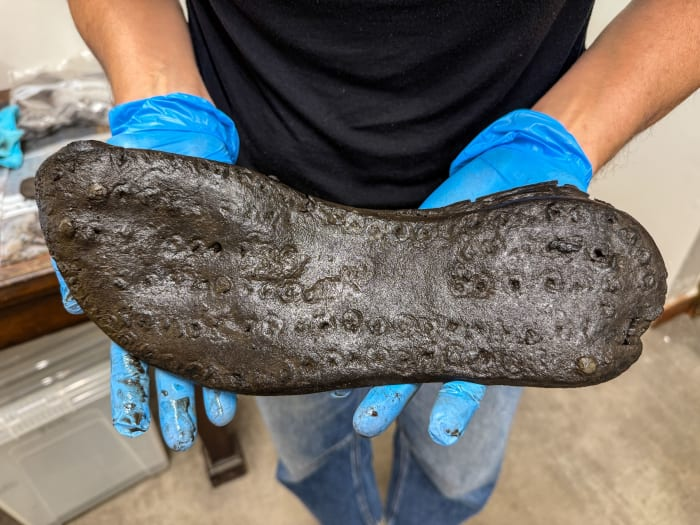
This leather shoe from Magna Roman Fort on Hadrian’s Wall survived in a low-oxygen ditch. But parts of the waterlogged ground that protected fragile organic remains are drying and becoming exposed to more oxygen.
I find that genuinely unnerving. Once oxygen reaches these deposits, microbes and fungi can start breaking down leather, wood and other organic evidence again.
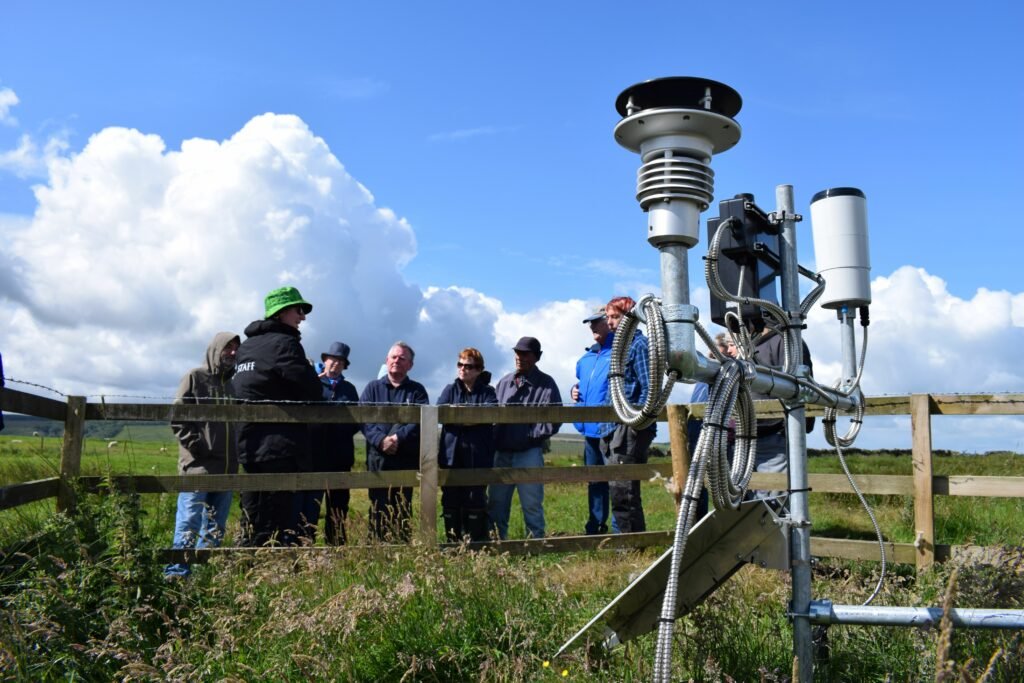
The Vindolanda Trust made a decision I really admire: don’t simply race to dig. Measure the ground.
Its Wall-E probe array records moisture, temperature, acidity and oxygen conditions every 15 minutes. Geoarchaeologist Franki Gillis and Dr Gillian Taylor are among the specialists turning those readings into preservation strategies.
The warning is visible in the trench. Some shoes have survived with uppers and decoration. Other leather has come out dry and brittle, or decayed until only a dark fibrous trace remained.
That contrast is what I can’t stop thinking about.
Crucially, the team is not claiming every damaged object proves modern climate change. The latest monitoring shows a repeating seasonal swing between oxygen-rich and low-oxygen soil, and the cause of that pattern is still not pinned down.
Nearly 250 volunteers are helping excavate Magna this season. The project’s real end point is not a trophy case, but a management plan for what can safely stay buried and what needs intervention.
I love that. The rescue is keeping Roman Britain readable before the evidence disappears.
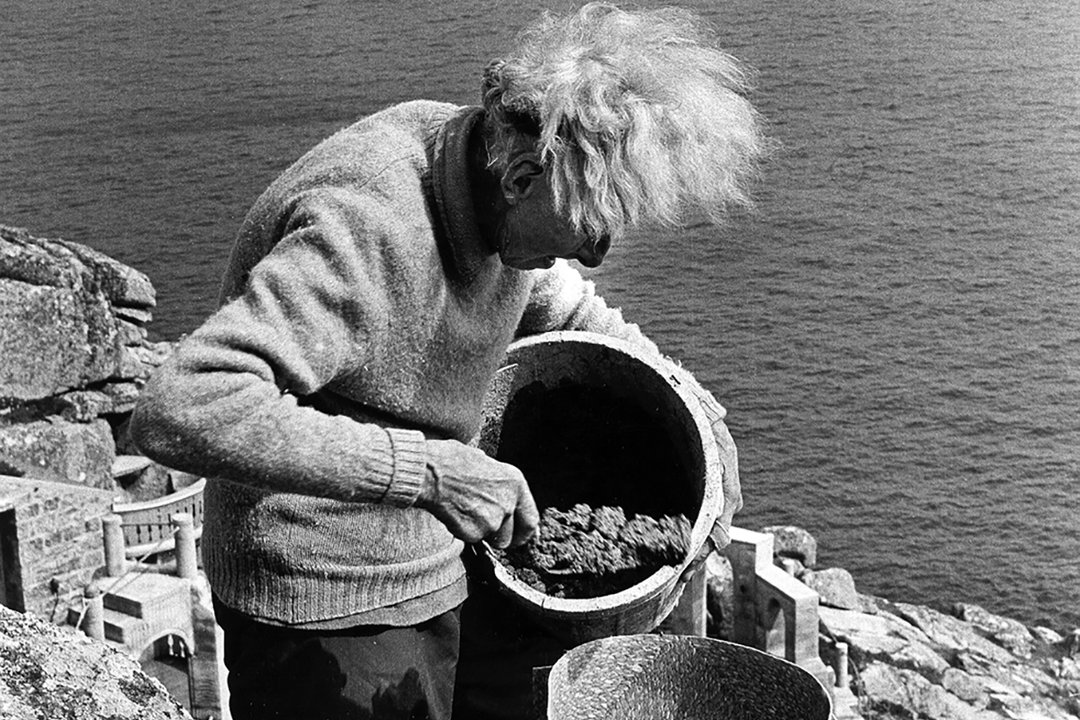
Cornwall’s Minack Theatre looks as if it has been carved into the cliffs for centuries. In 1931, it was still a rough gully of gorse and granite above a 90-foot drop to the sea.
The change began because Rowena Cade wanted somewhere for a local group to perform Shakespeare.
She had moved to Cornwall after the First World War and bought the Minack headland for £100. In 1929 she helped with an outdoor production of A Midsummer Night’s Dream in a nearby valley. When the group decided to stage The Tempest next, Rowena offered the cliff at the bottom of her garden.
There was one problem. There was no theatre.
So Rowena and her helpers started making one.
Her gardener Billy Rawlings and another local man cut huge granite boulders by hand. They worked with bars, hand tools and, sometimes, dynamite on a slope where one bad step could have meant a fall into the sea.
Rowena filled the gaps with earth and stone. She carried sacks of sand up from the beach to mix into concrete. The first audience arrived for The Tempest in 1932, with the young theatre lit by battery lamps and car headlights.
That could have been the end of it.
Instead, she kept building.
Year after year, Rowena added terraces, steps, seats and strange little details that made the place hers. She pressed patterns into wet concrete with an old screwdriver. Many of the seats still carry the names and dates of productions performed there.
She continued working on the Minack well into her eighties.
I assembled these images because the finished theatre can hide the hardest part of its story. What looks like an ancient amphitheatre was shaped, altered and cared for across one woman’s lifetime, with a few helpers, simple tools and a cliff that never became any less steep.
The Minack is still a working theatre. It welcomes more than 200,000 visitors a year and stages more than 200 live performances, from plays and opera to music and children’s shows.
That is why this place is worth remembering. It was not inherited complete from some distant age. It was made because one woman looked at an awkward Cornish cliff and decided it could become a stage.
The sea is still behind it. The granite is still under it. And every time an audience takes its seats, Rowena Cade’s unlikely theatre does exactly what she built it to do.
Nigel Farage is branded “ratty” by Sky News while its reporting at the home where his daughter lives is under formal Ofcom scrutiny.
A friend rang after seeing the headline and asked why Sky did not tell readers that. I think that omission is shameful.
I checked the record: Sky accepts that a reporter approached the property, but says there was no contact with his daughter. Ofcom is examining a fairness and privacy complaint; no verdict has been reached. I am appalled that a family home entered this political row, then Farage was reduced to a sneer.
This is why I back Reform UK. Nigel Farage has the nerve to challenge powerful institutions when they mark their own homework. Britain needs that leadership.
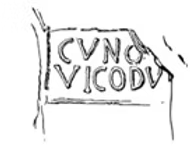
Cunoarda’s name reached South Shields on a Roman grinding bowl. A fragment of the stamp survived at the military port, far from Durobrivae where Cunoarda worked.
I love this because one chipped sherd turns a huge supply network back into a worker’s mark. I assembled these images around that clue, and the journey behind it is extraordinary.
The stamp links Cunoarda directly with the vicus of Durobrivae — the small Roman town around Water Newton, beside the River Nene.
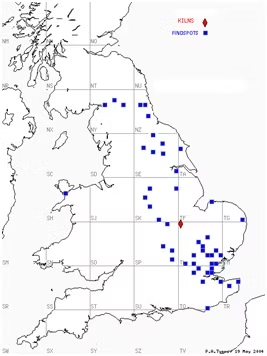
The bowl was a mortarium, a gritty kitchen vessel for grinding and mixing food. Durobrivae’s potteries clustered beside the river and near Ermine Street, but fragile bulk pottery was expensive to move overland.
The wider finds make the likely route clearer: water transport out of the Nene Valley, then north along the east coast towards South Shields. (That little stamp is carrying an enormous story.)
We cannot prove the exact voyage of this one bowl, and I think that uncertainty matters. What survives is a chain linking a named potter, boat crews, porters and frontier cooks.
I’m amazed that Rome’s northern military machine comes into focus through something so ordinary: a battered kitchen bowl.
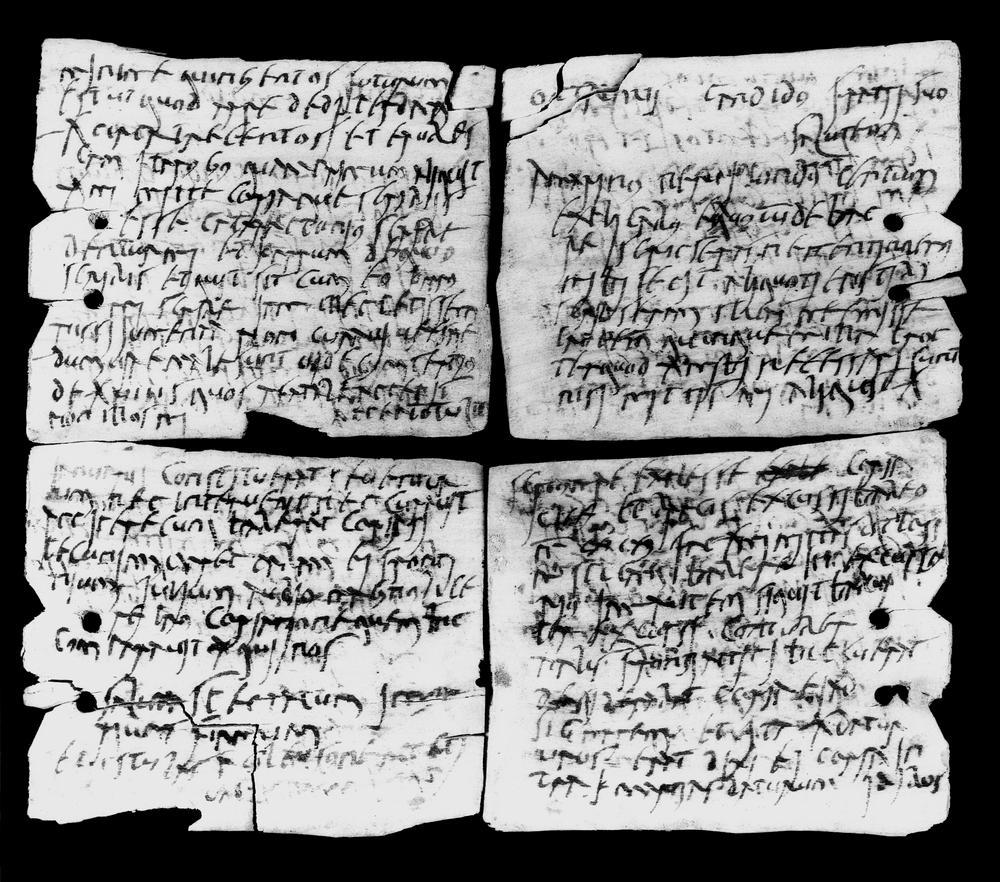
Octavius wrote this wooden letter with one urgent problem: send 500 denarii, or he would lose a 300-denarius deposit — about a common soldier’s yearly pay.
I assembled these views because the wood itself carries part of the story. The tablet was folded while its ink was still wet, leaving transferred writing across the surfaces.
I love how un-grand that feels (the pressure is almost painfully familiar). Rome’s northern frontier suddenly becomes a man chasing cash because a deal is about to go wrong.
One line moves me even more. Octavius says he had not gone to collect hides and a wagon from Catterick because the roads were bad and he did not want to hurt the animals.
The hard evidence gives us cash, thousands of measures of grain, 170 hides, bad roads and a wagon. The interpretation begins with Octavius’s job.
The scale strongly points towards army supply, but the tablet cannot tell us whether he was a civilian merchant or a military officer organising it.
I’m amazed that one thin wooden letter can preserve both a frontier supply network and one man’s very ordinary fear of losing money.
Two scraps of Roman wall plaster from Southwark preserve a tiny Greek alphabet and what may be Britain’s first known Roman painter’s signature.
A friend looked at the alphabet and asked why anyone in Roman London would scratch that into a smart painted wall. I love that question because the obvious answer — writing practice — may not be the strongest one.
The fragments had been dumped in pits after the building was demolished. MOLA specialist Han Li spent months piecing thousands of pieces back together, then examined the scratches under magnification.
On the surviving alphabet, the letters run from alpha to tau. Jagged chips along the cuts make it more likely they were scratched after the plaster had dried, although the microscopic check was not decisive. The tiny, controlled strokes look more like the hand of a practised writer than a beginner.
Comparisons with alphabets from Herculaneum and elsewhere leave another possibility open: a checklist, tally or reference for Greek letters on imported goods. I find that astonishing — a richly painted Roman wall may also have doubled as a working tool.
But the broken context matters. The building stood in busy Southwark near the Thames and may have had a commercial role, yet neither that use nor the alphabet’s purpose can be proved. A lesson or practice exercise still survives as the rival explanation.
Then there is the red fragment. Inside a framed panel it carries FECIT — “has made this” — and the fine letters appear to have been cut while the plaster was still soft. That is why Li argues it may be a painter’s signature.
The name is gone, and it may even have represented a whole painting team. I find that strangely moving: Roman Britain’s walls were made by real workers, and sometimes their own marks nearly survive.
Working reference or writing practice — which explanation convinces you more?
James Rebanks and his son Isaac were on the Matterdale fells at 4am, gathering sheep before the heat became too much for the dogs.
I love that the answer wasn’t to abandon an old way of working, but to change the hour. Rebanks’s family have farmed around Matterdale for more than 600 years, yet this gather still depends on shepherds from different farms working together.
That really moves me. Village life survives when knowledge like this is still being used and passed on, not simply remembered. Matterdale needs working farms and the people who know these fells protected alongside the landscape.
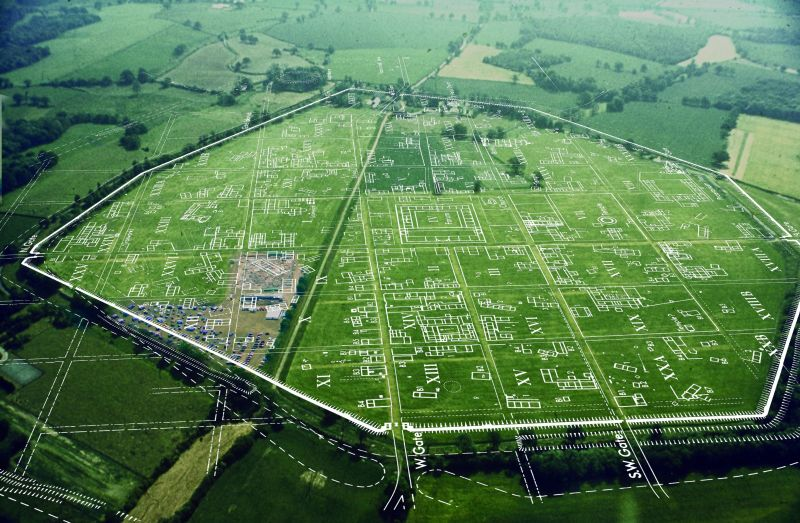
Rome redrew Silchester’s streets — but one household rebuilt at a 45-degree angle to the new grid.
I researched and selected this aerial because I love what the excavation beneath it does to the tidy idea that Roman rule simply swept the old town away.
Before the conquest, Calleva already had its own streets and plots. In Insula IX, the new Roman grid cut across that older layout, yet the property boundaries survived. Builders put up a kitchen, town-house and roundhouse on the old line, while a shop faced the new street.
That amazes me more than a perfectly straight Roman road. Rome changed how this household met the town, but it did not wipe its older way of organising home and work clean.
Peter Whatling had lost a hammer in a Suffolk field. He asked his friend Eric Lawes, who had a metal detector, to help find it. Lawes got a strong signal, dug into the soil and began pulling out silver spoons, gold jewellery and Roman coins instead.
He removed enough to fill two carrier bags, then stopped. That mattered. Rather than emptying the hole himself, Lawes reported what he had found. The next day, Judith Plouviez and the Suffolk Archaeological Unit carried out an emergency excavation. The treasure had not been turned into a heap of beautiful objects with the clues around them lost.
What came out of that patch of earth was extraordinary: roughly 15,000 Roman coins, gold necklaces and bracelets, silver tableware, pepper pots, spoons and personal objects. Much of it had been packed into a wooden container. The latest coins place its burial in the early fifth century, as Roman rule in Britain was coming apart.
But the hoard is not anonymous. One pierced gold bracelet wishes good fortune to “Lady Juliane”. Ten silver spoons carry the name Aurelius Ursicinus. Those names are real, but they do not solve the mystery. Even Aurelius cannot simply be called the owner of the whole treasure. Several names appear, and nobody can say with confidence who buried it or why it was never recovered.
I researched and selected this image because the ordinary hammer is the part of the sequence I keep coming back to. The hoard shows enormous wealth. The hammer shows how close the whole story came to remaining under a farm field.
The latest coins were struck under Constantine III in 407–408. That gives the hiding a hard lower limit, but not an explanation. A family fortune buried during insecurity is possible. So is property belonging to more than one person. The evidence lets us see the wealth clearly, while the reason it went underground remains out of reach.
And the hammer? It was found too. Peter Whatling donated it to the British Museum, where it has its own catalogue number, though it is not on display. Britain’s richest Roman treasure find was uncovered because two men went into a field looking for something far less valuable: one battered modern hammer.
Silchester’s Roman street grid was laid straight across a thriving Iron Age town — but one rebuilt property still kept the older alignment.
I love this aerial because the white lines make the Roman plan look neat. The archaeology underneath is much messier: the new streets cut through existing plots, taking up roughly two hectares of an already busy settlement.
What amazes me is one excavated block. A rebuilt timber property — a house, kitchen, round building and shop — still followed the older Iron Age alignment inside the new Roman grid. That feels wonderfully human: the town changed, but not everything changed at once.
I researched this aerial because I think that clash matters. Roman rule reorganised how people moved through Calleva, but the evidence does not show a clean wipe of what came before.
Scattered human bones at Brading Roman Villa have reopened one disturbing question: did something violent happen here in the mid-fourth century?
I researched and assembled the evidence behind this plan. I find the pattern deeply unsettling. Four radiocarbon-dated bones overlap closely enough to fit one event, or several in a short spell; cut marks were also recorded on two bones.
What changed the picture for me is the coin evidence. Brading lacks the usual coin-loss peak seen at many rural sites, then later recovers. Fulford and Hamilton argue that a violent break in the 340s or 350s is plausible, perhaps connected with reprisals after Magnentius’ defeat.
I admire that restraint, because a massacre is still not proven. Piracy, disease or another violent event cannot be ruled out, and the bones cannot tell us who died or who was responsible. But the dating has turned old scattered finds into evidence for a possible crisis, abandonment and recovery at a major Roman villa.
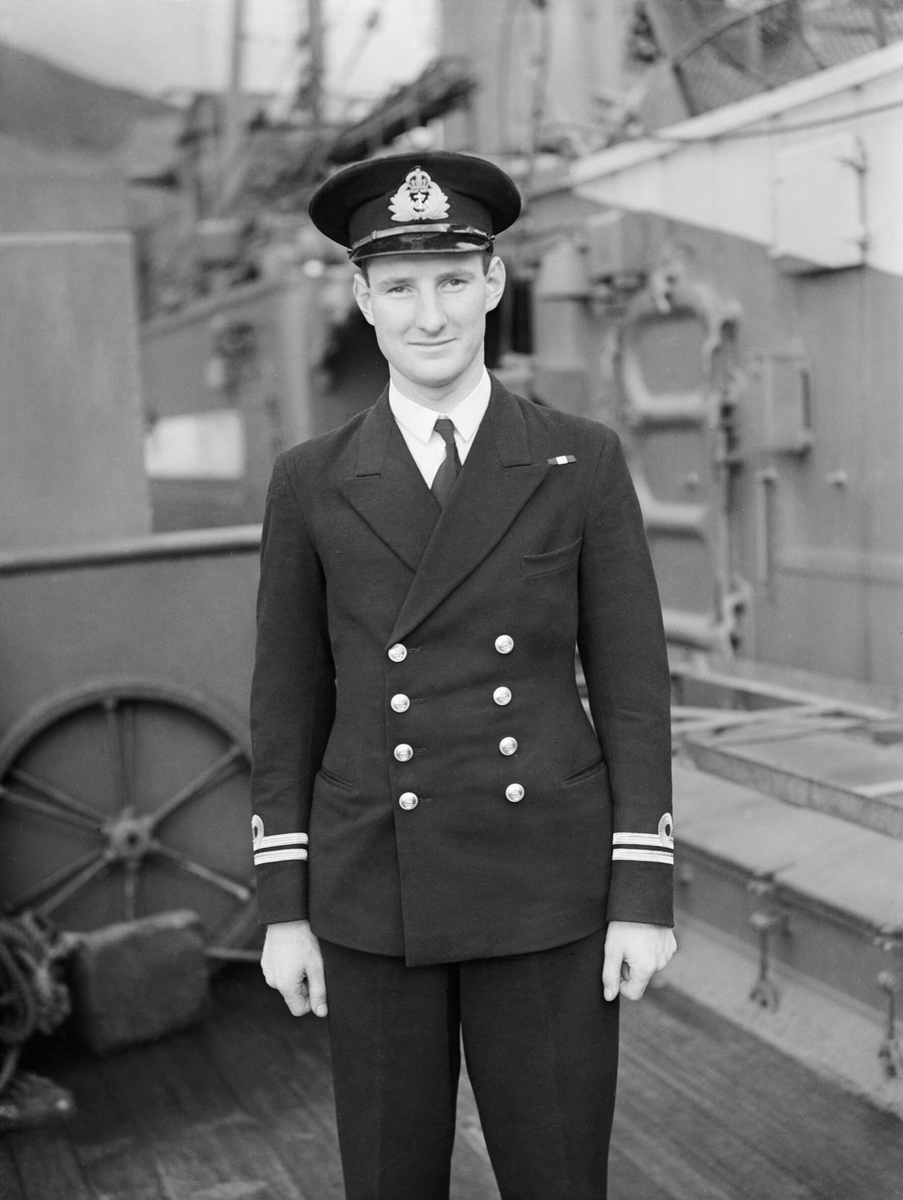
Lieutenant Jimmy Launders was 25 when he tried something no submarine commander had ever achieved: sink an enemy submarine while both boats remained hidden beneath the sea. If his first salvo missed, HMS Venturer could expose herself with no way to steer the torpedoes after launch.
The target was U-864, commanded by Ralf-Reimar Wolfram. It was carrying Messerschmitt jet-engine parts, V-2 guidance systems and 64 tonnes of mercury to Japan under Operation Caesar. British intelligence had read German radio traffic and sent Venturer to wait off Fedje, north of Bergen.
On 9 February 1945, Venturer’s hydrophones picked up an engine beneath the water. Launders and his crew followed the sound for three hours. U-864 did not hold a straight course. It zigzagged and changed its position, making the normal flat torpedo calculation almost useless.
Launders chose not to wait for the U-boat to surface. His team kept taking bearings and estimated its course through three dimensions: forward, sideways and down. Venturer’s torpedoes were “fire and forget.” Once they left the tubes, no cable linked them to the submarine and no late correction was possible.
He ordered four fired at intervals of 17½ seconds, spreading them across the places U-864 might turn or dive. The German crew heard them and evaded the first three. In escaping those tracks, U-864 moved into the path of the fourth. The hit tore the boat in two. Everyone aboard died.
I recovered this photograph of Launders aboard Venturer before the patrol. The face is young; the record behind it is not. He had placed his boat in the best possible firing position, trusted a solution built from sound and judgement, and ended a secret attempt to move advanced German weapons technology to the Far East. He received a Bar to his Distinguished Service Order for gallantry, judgement and skill.
Venturer was later sold to Norway and eventually broken up. The result of that submerged duel has never been repeated. The Royal Navy still teaches the method Launders used, and the old submarine’s bell has been passed to the crew of the new HMS Venturer. The steel disappeared; the calculation did not.