FastJAM, a rapid, graph-based method that drastically reduces the computational complexity of joint alignment tasks. FastJAM leverages pairwise matches computed by an off-the-shelf image matcher, together with a rapid nonparametric clustering, to construct a graph representing intra- and inter-image keypoint relations. A graph neural network propagates and aggregates these correspondences, efficiently predicting per-image homography parameters via image-level pooling. Utilizing an inverse-compositional loss, that eliminates the need for a regularization term over the predicted transformations (and thus also obviates the hyperparameter tuning associated with such terms), FastJAM performs image JA quickly and effectively
Paper Title: FastJAM: a Fast Joint Alignment Model for Images
Project: https://t.co/TN3TABRD3l
Link: https://t.co/TN3TABRD3l
#AI #AIイラスト #vision
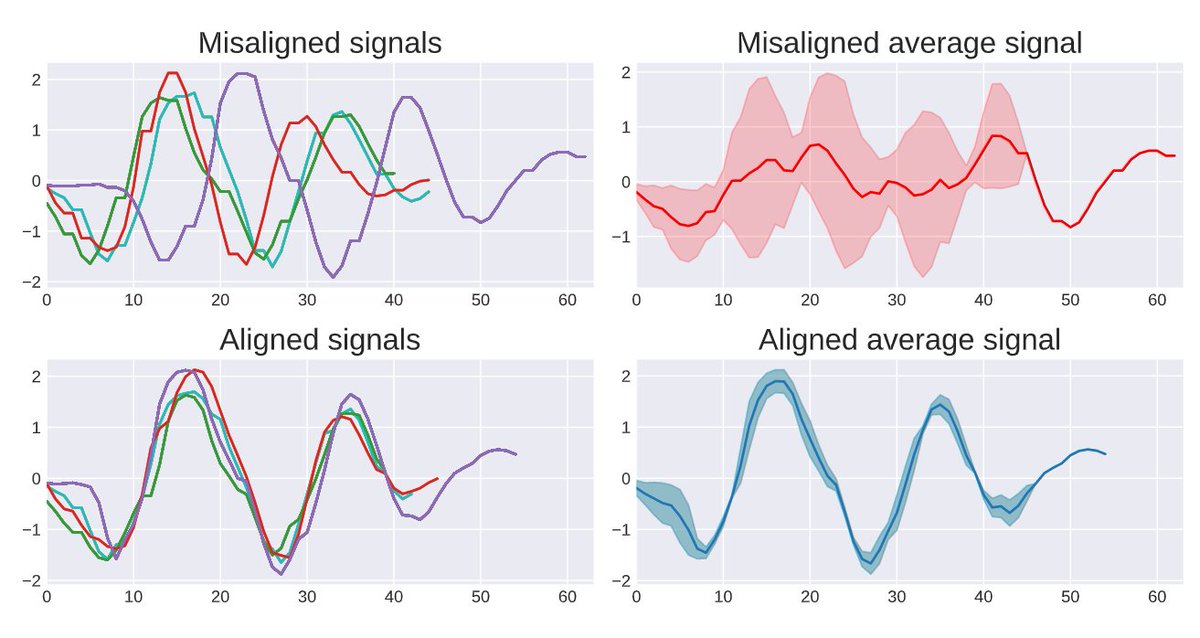
Presenting TimePoint at #ICML2025!
A self-supervised framework for keypoint detection and descriptor learning in time series.
📍 Poster: Tue Jul 15, 11am–1:30pm | West Hall B2-B3 #W-403
🛠 Also at FMSD Workshop (Fri Jul 18)
📄 https://t.co/tMuGCBoOKm
💻 https://t.co/UPdO6faPjv
The 3rd of our 3 #ECCV2024 papers, titled "SpaceJAM: a Lightweight and Regularization-free Method for Fast Joint Alignment of Images", is now available.
Project page: https://t.co/lgvPUgavBF
Nie Barel @RonShapiraWeber@shahaffind Nir Muaelm
#deeplearning#computervision
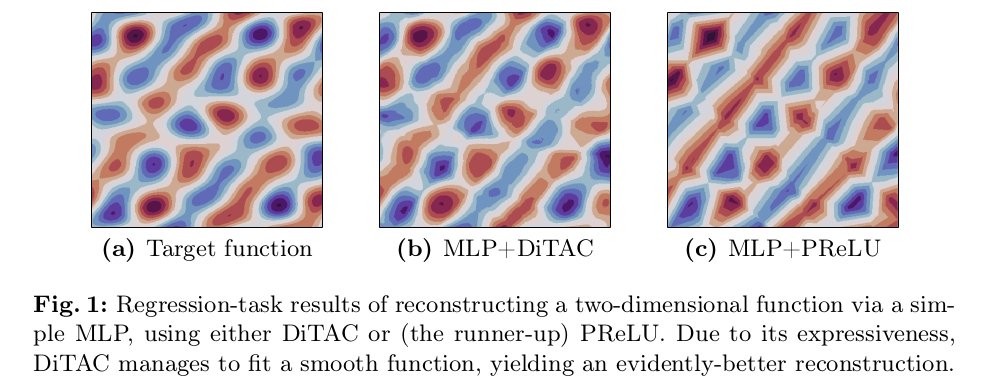
The 2nd of our 3 #ECCV2024 papers, Trainable Highly-expressive Activation Functions, is now available: https://t.co/5aQhUzwhCq
@shahaffind@irit_chelly Shira Ifergane #deeplearning#computervision
The proposed function, DiTAC, is based on efficient diffeomorphisms (called CPAB).
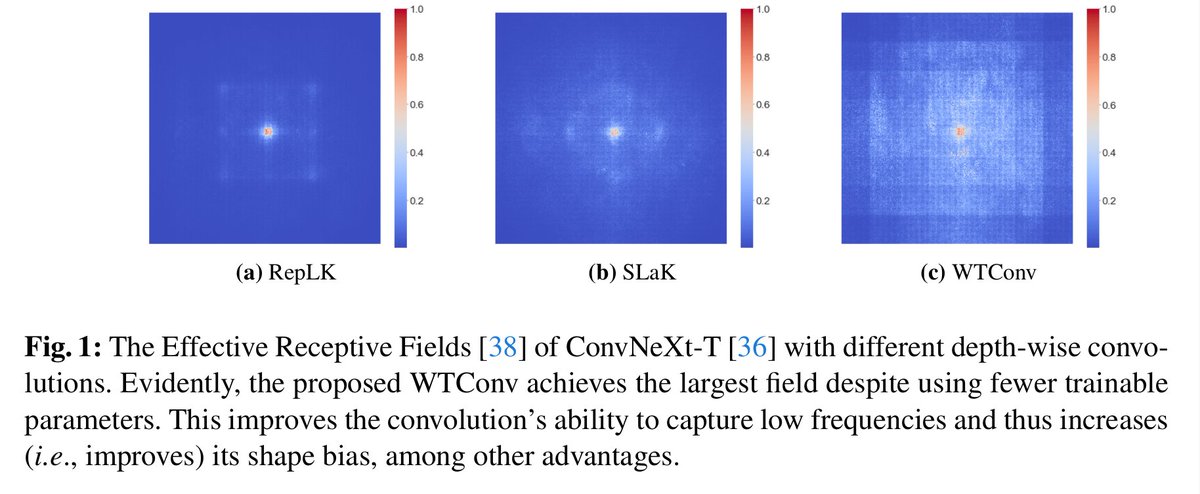
I'm happy to share that our paper was accepted to #ECCV2024.
In it, we show how wavelet transforms (WT) can be used to achieve CNNs with unprecedented receptive fields and an increased response to low frequencies in the input.
The paper is available at https://t.co/SXsjBMrpmB
Our #eccv2022 paper, A Deep Moving-camera Background Model, is now availble. Videos show example results of the unsupervised method (top: input; bottom: estimated background).
Paper: https://t.co/n90q3jXVNh
Code & visual comparisons: https://t.co/VDt6Ee65IP
#computervision