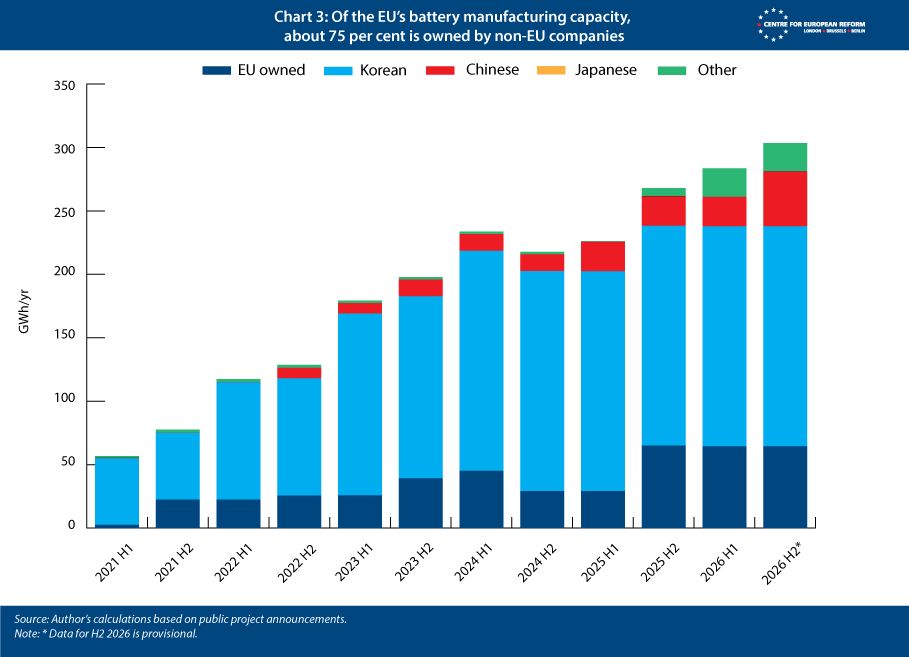
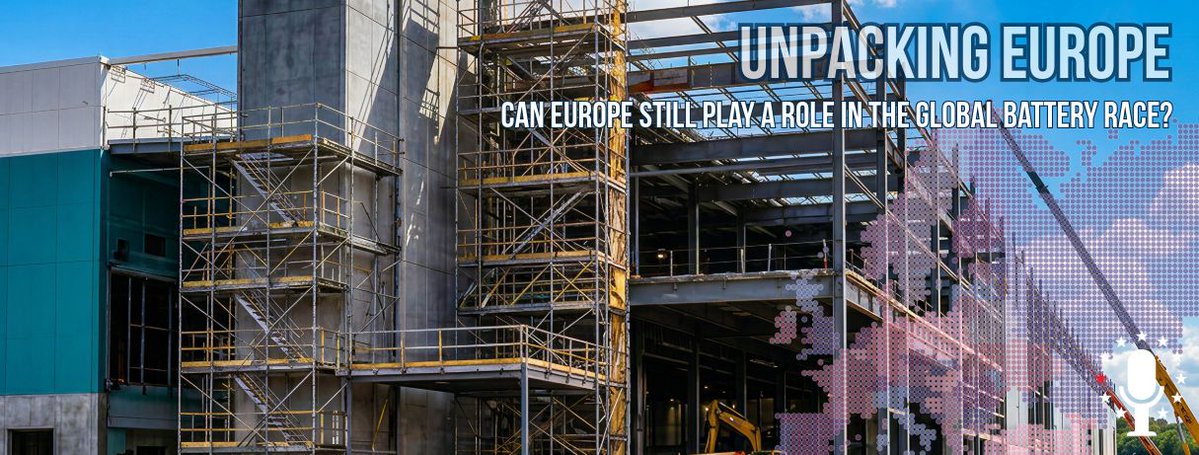
About 75% of EU battery manufacturing capacity is owned by non-EU firms. The EU should stay open to trusted partners like South Korea, Japan & India, but also invest in EU-owned #battery capacity.
New @CER_EU insight by @RonStoop1
Read here: https://t.co/fzmm2ZUJ1p
Based on my analysis of the sector I’ve written a piece that sketches a way out for the European battery industry. But it requires courageous political action.
/3.
“We should not make the same mistake as in semicon & end up with less than 10% of cell production in Europe. The companies here have their headquarters in other countries & they can turn the switch off overnight.”
@MustafaAmhaouch told @RonStoop1 https://t.co/daOWWf6ufZ
@visaskn In a way pretty much every comparison between industry in the EU and China is not a fair one, agreed. But China allowed its companies to become race horses. Europe lacks such patience.
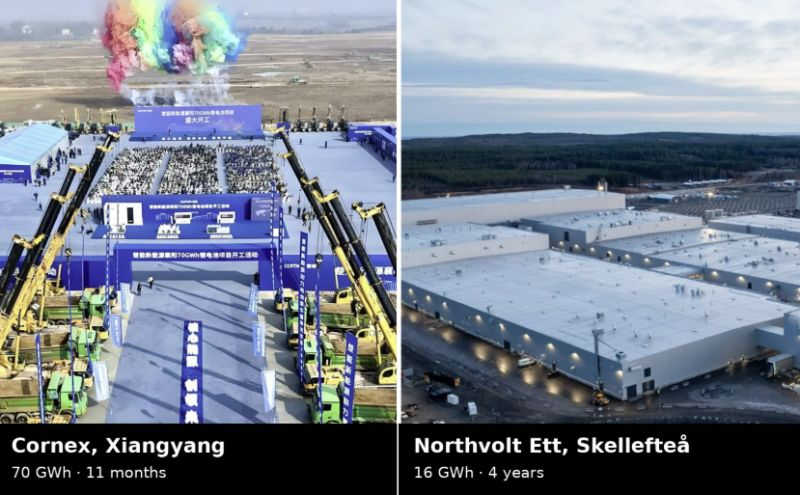
We need to talk about China speed vs. Euro speed.
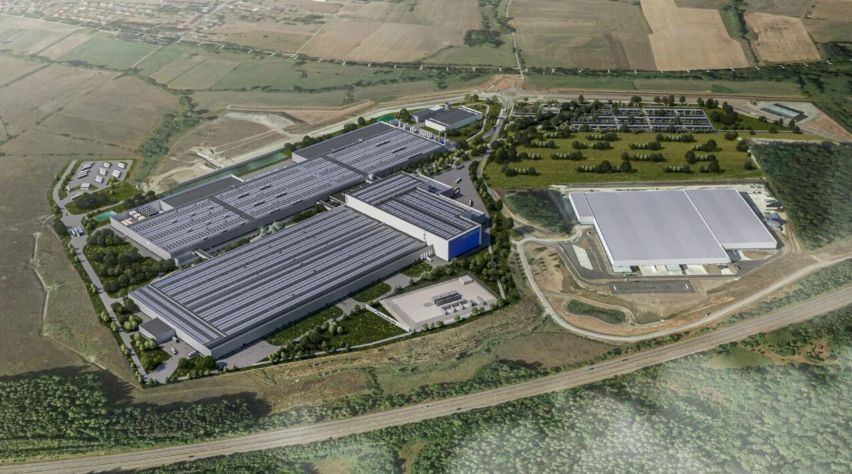
On the left: Cornex’s 70 GWh battery plant in Xiangyang, which went from signed deal to production in 11 months.
On the right: Northvolt Ett in Skellefteå, Europe’s flagship battery plant, which took four years /1.🧵
The Net Zero Industry Act aims for 550 GWh of EU #battery production. Current capacity is 285 GWh. Stalled & unfinished projects could close the gap, but only with local content rules in public procurement & temp production subsidies.
New by @RonStoop1 https://t.co/fzmm2ZUJ1p
Cornex built a plant more than four times Northvolt’s capacity in a quarter of the time. If Europe wants a battery industry (or any industry for that matter), speed of execution has to become an absolute policy priority. /4.
China is far more than subsidies and cheaper labour: it has implementation speed.
Permits, land, grid connection and construction happen at the same time: local authorities had the site cleared and permitted within 44 days of signing.
NEW SUBSTACK: A small change in the Industrial Accelerator Act might have large consequences for Europe's battery sector.
Local content requirements have been weakened under the Franco-German proposal.
If not amended, many battery projects in Europe will be at risk.
“Producing #batteries in Europe is something else than producing European batteries, with our own technology and our own value chain.”
@MustafaAmhaouch told @RonStoop1 in the latest #CERpodcast Unpacking Europe.
Listen here: https://t.co/daOWWf6ufZ
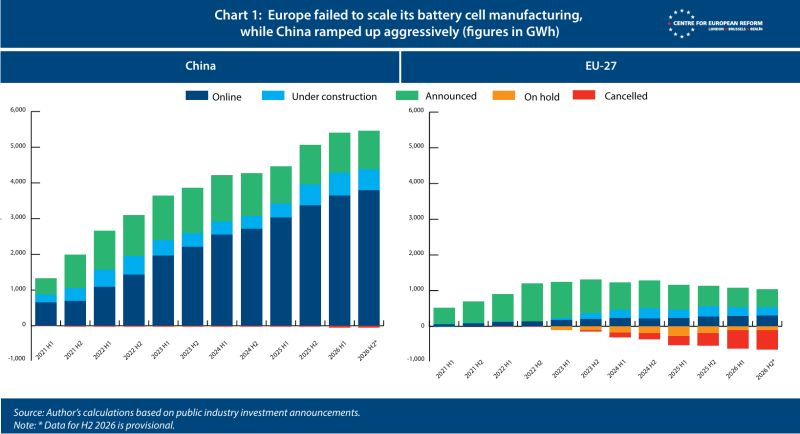
In 2022, European firms announced huge new battery factories. Since 2024, 559 GWh of projects have been cancelled and Northvolt has gone bankrupt, while China ramped up aggressively.
Read why Europe’s batteries risk following its solar panels: from 40% of global capacity in 2008 to about 1% today in @RonStoop1's new @CER_EU insight: https://t.co/fzmm2ZUJ1p
China makes more than 80% of the world’s #battery cells & the EU risks total dependence. Europe can still keep a foothold by supporting existing manufacturers, partnering with trusted middle powers & investing in next-generation storage.
New by @RonStoop1 https://t.co/fzmm2ZUJ1p
6/ The EU sorely needs module and cell capacity, and in the future it also will need wafer and polysilicon production capacity in order to become less dependent on China-dominated supply chains.