For nearly ten years, he walked into the same pharmacy every month. He took out a folded $100 bill, placed it on the counter, and walked away. Nobody was supposed to know why.
His name was Hody Childress. He lived in the small town of Geraldine, Alabama, with a population of fewer than a thousand people. Around 2012, Hody walked into the local pharmacy, Geraldine Drugs, and asked its owner and pharmacist, Brooke Walker, a simple question: “Do people ever come here to pick up their medications but leave without them because they can't afford to pay?” She answered, “Yes.”
Hody then handed her $100 and asked her to use the money for people who couldn't afford their prescription medications. But he had two conditions: he didn't want to know whom he helped, and the people receiving the assistance were never supposed to know his name. If anyone asked where the money came from, Brooke was instructed to say only: “It's a blessing from God.”
The following month, Hody returned and brought another $100. Then he came back again. And again. Month after month, year after year, for nearly a decade.
He wasn't a millionaire. Hody was a farmer, a U.S. Air Force veteran, and a retiree. He lived primarily on his savings and Social Security benefits. Yet every month, he found that same $100 for someone who might need it more than he did.
The pharmacy used this small, secret fund to help people without insurance or those whose medications their insurance companies refused to cover. According to the pharmacist, the money was often enough to help approximately two people each month. Over the years, hundreds of people benefited.
Some received the essential medications they needed. Others had prescriptions paid for when their insurance wouldn't cover them. For one family, the assistance made it possible to purchase an expensive EpiPen for their child. And almost nobody knew whom to thank.
In late 2022, Hody's health deteriorated significantly. Because of a chronic lung condition, he could no longer make his regular visits to the pharmacy. That was when he finally had to reveal his secret to at least one person: his daughter, Tania. He told her about the $100 and asked her to continue delivering the money on his behalf.
On January 1, 2023, Hody Childress passed away. He was 80 years old. It was only at his funeral that his daughter told people what her father had been doing all those years. And the little town finally discovered who had been behind those mysterious acts of generosity.
People who had once received their medications despite not having enough money learned the name of their anonymous benefactor for the first time.
Then something happened that Hody would never live to see. Other people began coming into the pharmacy. Some brought $20, others brought $50, and some brought their own $100. Among them were neighbors, relatives, and even people whom Hody himself had once helped.
The pharmacy established the Hody Childress Fund so that his small tradition could continue paying for medications for people who couldn't afford them.
For nearly ten years, Hody did everything he could to make sure nobody knew his name. And after his death, that name became the name of a fund.
All he had done was leave a folded $100 bill on a pharmacy counter every month. But it turned out that he had left behind something far greater.
Sometimes kindness needs no cameras, no applause, and not even a thank-you. Sometimes it simply waits quietly behind a pharmacy counter, at the exact moment someone needs it most. ❤️
Prince was asked to do a solo on a cover of While My Guitar Gently Weeps and he showed up to the rehearsal and barely played anything. Didn’t have any solo ready at all and didn’t play one. They asked what he was going to play and he just said “Don’t worry about it.”
Then, on the night of the performance he just looms out of the shadows and plays this. The way he pivots off that F# root note into Dorian mode is so good. Massively underrated guitarist.
Een groot onderzoek over het gebruik van en het oordeel over AI in Nederland via https://t.co/wrEVPeydMu. Er zijn ook vergelijkingen gemaakt met de cijfers van begin 2024 waarbij de enorme groei zichtbaar wordt (factor 5x zo snel als internet toen). https://t.co/IvxbVKBX6j
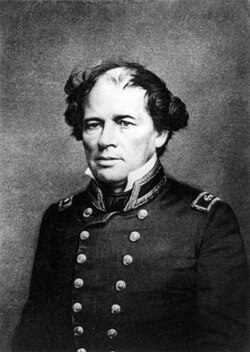
1/x In the 1840s, a lame American naval officer, grounded at a desk in Washington, cut weeks off the world's ocean voyages without inventing a single machine. His raw material: a warehouse of logbooks nobody had ever read. Matthew Fontaine Maury, Pathfinder of the Seas. A 🧵
1/x The widest ships in the world are not tankers or aircraft carriers. They are four Norwegian survey vessels, 104 metres long and 70 metres across the stern, shaped like slices of pie. They exist for one purpose: to listen to rocks. This is the Ramform Titan class.
Voor iedereen met LinkedIn: Herkenbaar? Je opent de App en iedereen struikelt over elkaar met dure bewoordingen voor hun functies of behaalde resultaten op een project
In 1939, a graduate student named George Dantzig arrived late to his statistics class at UC Berkeley. Two problems were already written on the blackboard when he walked in.
Assuming they were the night’s homework, he copied them down and went home to work through them. It took him several days longer than usual, and he apologized to his professor for the delay.
His professor, Jerzy Neyman — one of the most respected statisticians of his time — didn’t scold him. He was stunned into silence. The two problems Dantzig had casually solved as homework were actually famous unsolved theorems in statistics, ones that had stumped professional mathematicians for years.
One of Dantzig’s solutions was prepared for publication almost immediately. He later admitted that if he’d known those problems were supposed to be impossible, he probably never would have attempted them at all.
Sometimes the only thing standing between a person and the impossible is simply not being told it can’t be done.
- Everyday Magic
Global icon and humanitarian, Dolly Parton, known to the world as a beloved singer, songwriter, philanthropist, actress, playwright, and author died peacefully today in Nashville, Tennessee. She was 80 years old.
Dolly is preceded in death by her beloved husband of 59 years Carl Thomas Dean (1942 – 2025), her mother Avie Lee Caroline Owens (1923 – 2003), and father, Robert Lee Parton, Sr. (1921 – 2000).
A rhinestone life that shone bright enough for the world to see, Dolly will forever stand as an inspiration not only through her timeless music and prolific songwriting, but also her wit, warmth, and kindness that made us all feel like family. Dolly Parton’s legacy is one of love, compassion, and resilience. With a seven-decade career, she inspired multiple generations of artists and fans with her music and an unwavering commitment to making the world a better place. Her songs will continue to resonate with people of all ages, and her philanthropic work will have a lasting impact.
At Dolly’s request, a small, private service will be held for immediate family. Dolly’s fans and friends from around the world are encouraged to pay tribute to Dolly on social media by tagging @DollyParton or by leaving a message at https://t.co/cLu9I7M2wC
In lieu of flowers the family asks for donations to be made to Dolly Parton’s Imagination Library at https://t.co/arzrqInqJA
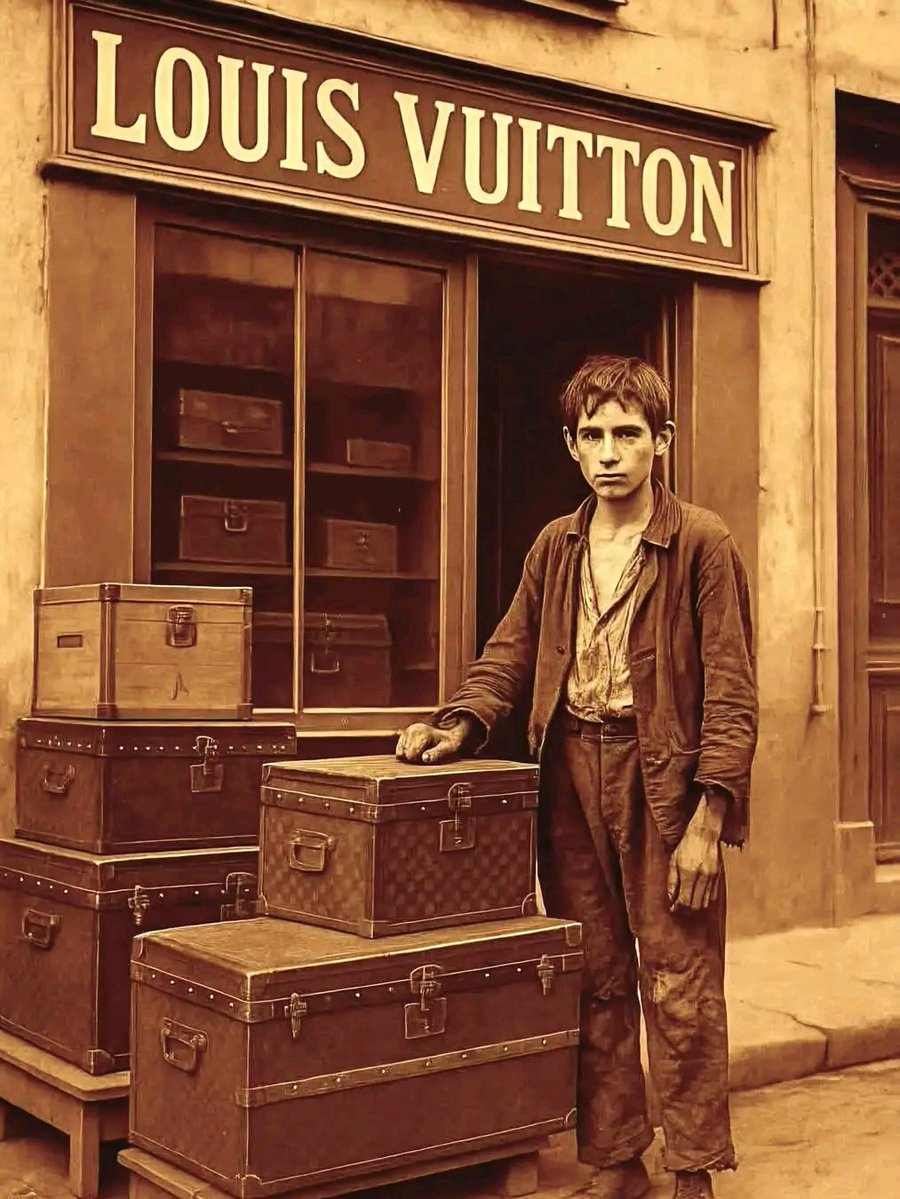
Louis Vuitton was born in 1821 in a small village in eastern France. When he was just 13 years old, he ran away from home and walked more than 400 kilometers to Paris. The journey took him nearly two years. Along the way, he survived by taking small jobs, sleeping wherever he could, and learning how to adapt. By the time he arrived in Paris, he had almost nothing — but he had determination.
In Paris, Vuitton became an apprentice to a box-maker and packer. This was an important job in the 19th century. Wealthy people traveled with many belongings, and everything had to be packed carefully by hand. Vuitton learned how to build strong wooden trunks and how to pack clothes so they would not wrinkle or get damaged during long trips.
His skills made him stand out. In 1854, he opened his own workshop in Paris. At the time, most trunks had rounded tops, which made them hard to stack. Vuitton introduced a flat-top trunk that was lighter, stronger, and easier to transport. This simple idea changed travel forever.
As his trunks became popular, copies appeared quickly. To fight this, Vuitton created special patterns and materials to make his trunks easier to recognize and harder to fake. This is how the famous Louis Vuitton designs began — not as decoration, but as protection against counterfeits.
Louis Vuitton died in 1892, but his work did not stop there. His son, Georges Vuitton, expanded the business and turned it into an international brand. Over time, the company moved from travel trunks to handbags, fashion, and accessories.
What makes Vuitton’s story interesting is that it did not start with luxury. It started with hard work, craftsmanship, and practical solutions to real problems.