I'm so excited to share that our paper "EmoGist: Efficient In-Context Learning for Visual Emotion Understanding", has been accepted to #emnlp2025 Findings! @emnlpmeeting
Read the pre-print from arXiv: https://t.co/UiUg2BzWhd
#emogist#multimodal#visionlanguage#icl
Excited to share that I’m joining the University of Arizona's College of Information Science🌵 as an Assistant Professor.
I'm recruiting a Ph.D. student to start Fall 2027. If you are interested in LLMs, apply here: https://t.co/pQWDDi4HKZ
#hiringPhD#UniversityofArizona
I will be presenting this paper at #EMNLP2025 Findings 3 Poster Session today! (paper 321; 12:30PM-1:30PM) Please drop by to check out our work 😎 https://t.co/fAEOSZH6xm
I'm so excited to share that our paper "EmoGist: Efficient In-Context Learning for Visual Emotion Understanding", has been accepted to #emnlp2025 Findings! @emnlpmeeting
Read the pre-print from arXiv: https://t.co/UiUg2BzWhd
#emogist#multimodal#visionlanguage#icl
on my way back to NYC, i met wise Leon Bottou in the airport. we talked. then i told him "you should tweet that!"
and, he delivered much more than a tweet: a blog post with thoughts and insights on AI research only he can deliver this clearly and succinctly.
I received a review like this five years ago. It’s probably the right time now to share it with everyone who wrote or got random discouraging reviews from ICML/ACL.
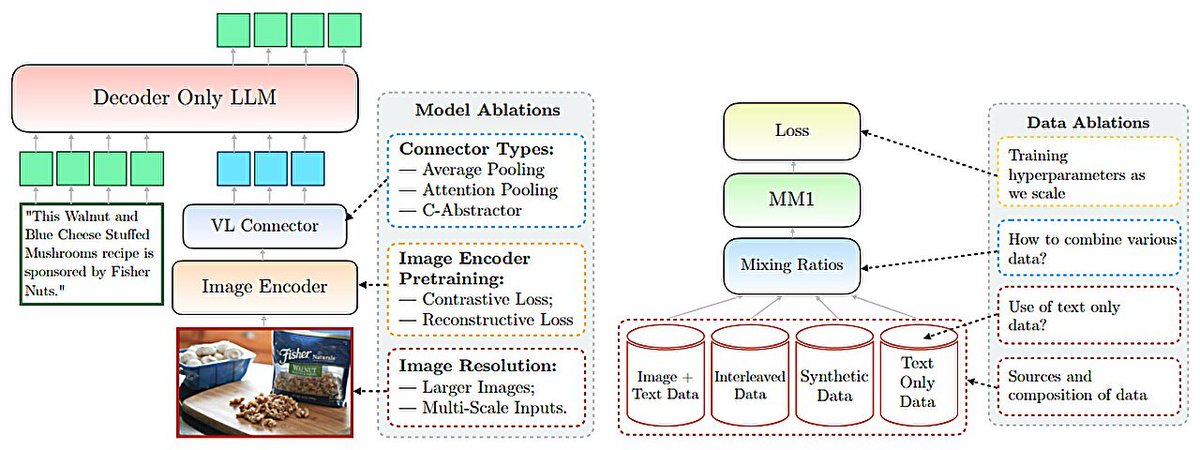
There appears to be a mismatch between publishing criteria in AI conferences and "what actually works". It is easy to publish new mathematical constructs (e.g. new models, new layers, new modules, new losses), but as Apple's MM1 paper concludes:
1. Encoder Lesson: Image resolution has the highest impact, followed by model size and training data composition.
2. Vision-Language (VL) Connector Lesson: Number of visual tokens and image resolution matters most, while the type of VL connector has little effect.
3. Data Lesson 1: Interleaved data is instrumental for few-shot and text only performance, while captioning data lifts zero-shot performance.
4. Data Lesson 2: Text-only data helps with few-shot and text-only performance.
5. Data Lesson 3: Careful mixture of image and text data can yield optimal multimodal performance and retain strong text performance.
6. Data Lesson 4: Synthetic (caption) data helps with few-shot learning.
I suspect it would be very hard to publish a paper that says "we made the images bigger and got better results".
There is great value in careful ablations, scaling studies (as this paper shows when determining learning rates), data science, data engineering and engineering in general. Huge work goes into constructing the data pipelines.
Engineering for a long time had a poor reputation in AI conferences - many papers were rejected with "this is just engineering! ". In the end, just engineering is working beautifully. There is room for scientific invention, but just engineering also allows for an incredible amount of innovation.
https://t.co/dWZBwLfMnG
GPT-4 and Gemini are systems and products, not models. There must be lots of engineering tricks and hard-coded rules, and we would never know how many models are inside the systems before open-sourcing. Requesting comparison with them is unfair in scientific research.
I don’t get the obsession with making LLMs do math. It’s not what they’re good at or why they’re amazing. Sure, math could be a test case for symbolic logic, but most of what I see is turning 10 billion parameter LLMs into an unreliable 1987 Casio calculator watch.
Multi-CLS BERT not only improves the scores in NLU benchmarks but also the scientific paper embedding!
🚨 We should aggregate the contextualized word embeddings in multi-domain scientific papers using multiple CLS tokens. 🧵[1/N]
📜 https://t.co/T9rBTrkg6Z
Do you know the softmax bottleneck could force LM to hallucinate and a pointer network could alleviate the problem?
🚨We propose softmax-CPR❤️🩹, which unifies the ideas of the pointer network, reranker, and mixture of softmax (MoS). 🧵[1/N]
📜https://t.co/hWA6XutzED
Language models “making things up” is the wrong framing. LMs predict what people are likely to say. We interpret them as saying true things because people tend to say true things, or at least say true things more consistently. Which is a nice thought, really.
Excited to announce our Deep Learning Tuning Playbook, a writeup of tips & tricks we employ when designing DL experiments. We use these techniques to deploy numerous large-scale model improvements and hope formalizing them helps the community do the same! https://t.co/vDhSwZyHJm
A major issue with ML conference reviewing is it favours unnatural "highly novel" methods that are almost never adopted in practice, because similar performance can be achieved by simpler harder-to-publish alternatives. Often interesting work is not even proposing a method.
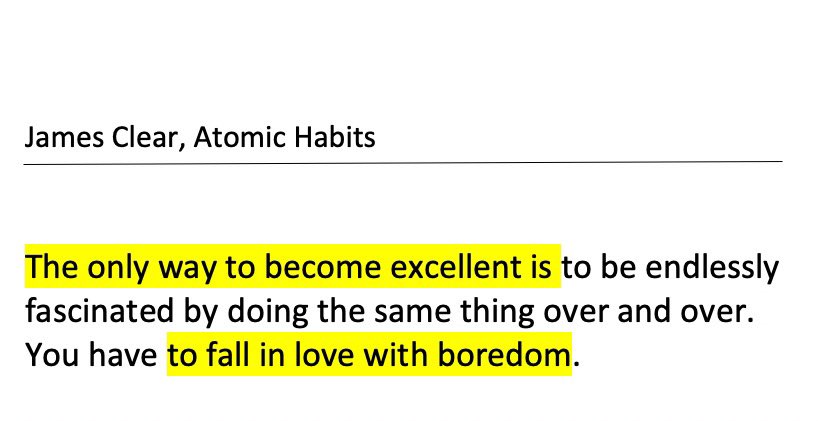
Success eventually comes down to who can handle the boredom:
—of running one more experiment
—revising one more paper
—handling one more rejection
—…
We like to believe it’s all coming from an endless source of passion, but the truth is resistance to boredom plays a major role.
💯! Simplicity is a strength.
In a recent paper submission:
Reviewer 1: "the proposed methods are simple yet effective in outperforming existing methods" (accept)
Reviewer 2: "the method is too simple, almost like a trick" (reject) 🤷♂️
simpler solutions are preferred as they are easier to deploy or maintain. The fresh memory of the experience of trying to deploy a plethora of fancy models from the top conferences and getting frustrated with a lack of reproducibility, experiencing overfitting, (4/6)
Did anyone else refer to graduate school as “work” or was it just me? When people asked me “How is school going?” I would correct them and say, “I’m not really in school learning. I’m working a job in a lab doing research.” Did it feel that way to anyone else?





![Haw_Shiuan's tweet photo. Do you know the softmax bottleneck could force LM to hallucinate and a pointer network could alleviate the problem?
🚨We propose softmax-CPR❤️🩹, which unifies the ideas of the pointer network, reranker, and mixture of softmax (MoS). 🧵[1/N]
📜https://t.co/hWA6XutzED https://t.co/Mw7T1nyzyL](https://pbs.twimg.com/media/Fw_JHZkaYAE6hoM.jpg)