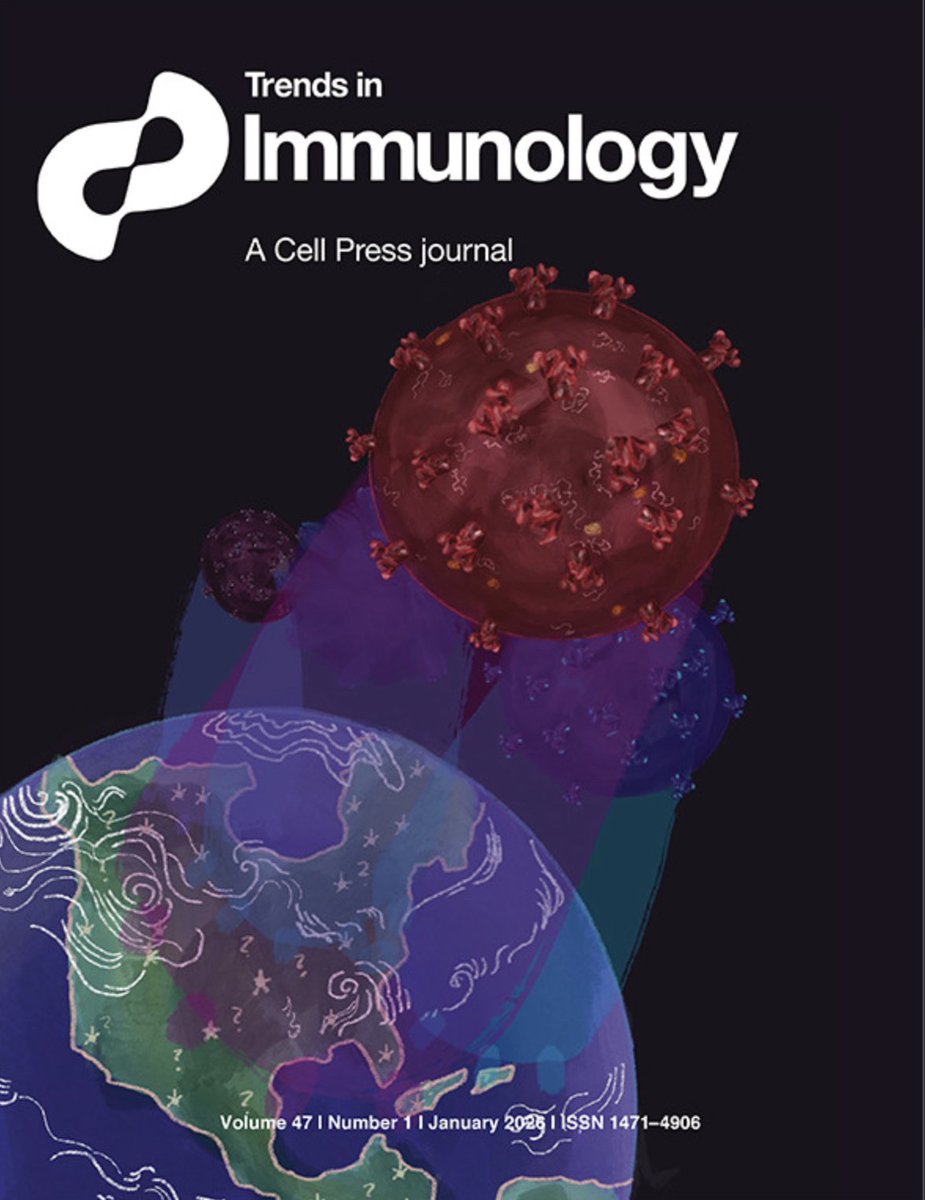
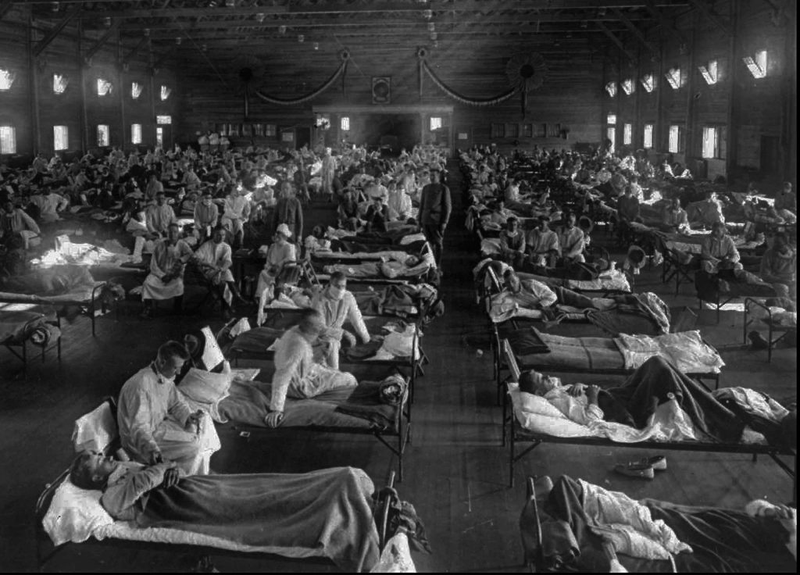
Our review is highlighted by the cover of the current issue of @TrendsImmuno -The lingering shadow of epidemics: post-acute sequelae across history by Christine Miller and @jannamoen.
Please read (open access)👇🏼
https://t.co/gCS7nmVKUW
1/ Thrilled to share our DNA-Diffusion paper, co-led by @bioinfolucas & @srsenan , is now out in @NatureGenet! New experimental results: STARR-Seq validation across 3 cell types (episomal) and EXTRA-Seq for endogenous activation of AXIN2, a leukemia protective gene!
In our initial preprint, we showed that we could use Ledidi to design regulatory DNA in silico and validated the designs using external models.
In this preprint, we have designed actual enhancers and experimentally verified them.
https://t.co/Afh9AUDgzG
To effectively treat long #COVID, we must learn from historical chronic illnesses, medical researchers say. https://t.co/f2MhdA322x
Akiko Iwasaki, Christine Miller, Janna Moen
@TrendsImmuno
Check out our new review, "The lingering shadow of epidemics: post-acute sequelae across history" by Drs. Christine Miller and @jannamoen. We highlight historical accounts of post-acute infection syndromes (PAIS) through the centuries 👇🏼 #LongCOVID
https://t.co/gCS7nmVKUW
Excited to share Nona: a unifying multimodal masking framework for functional genomics.
Models for DNA have evolved along separate paths: sequence-to-function (AlphaGenome), language models (Evo2), and generative models (DDSM).
Can these be unified under a single paradigm? 1/15
@EmilSutovsky Yeah all of us non close friends with Danyas phone number should have just texted him support is what you meant. Right. People with good character should be leaders. That’s not you. You can’t even apologize correctly. Resign.
@vsbuffalo Baseball is the best game to have on when you sr doing other things because it has very simple states so you can only partially pay attention and also catch everything. Perfect radio game.
How do you use a virtual cell to do something actually useful? (2/3)
In this second case study, we explore how our research at @NOETIK_ai suggests better inclusion criteria for a real-world, 2024 cancer clinical trial. Link below!
As we mentioned in our last essay, the inclusion criteria for many cancer therapies are shockingly simplistic. They routinely exclude patients who might benefit, while enrolling others who have almost no chance at response. Oncologists are not unaware of this complexity. The real barrier is that designing new biomarkers is nearly impossible under today's system. It requires years of planning, the right samples, and the foresight to measure the exact markers in advance. The result is grim: almost no new predictive cancer biomarkers have reached the clinic in the last 30 years.
Virtual cells change the starting point. By training a model on an extremely high-fidelity atlas of human tumor heterogeneity, we can explore cancer biology in silico, ideating on far better inclusion criteria entirely through the models embedding space. The essay contains one example of this, but the framework is extremely generalizable, and we are already extending it across other therapeutic areas.
If you're working on trial design, biomarkers, or translational oncology and want to explore what's possible, we'd love to hear from you! Reach out at [email protected]
Link: https://t.co/N37pOZxc8N
In the next, and final, case study coming next Friday, we'll finally turn to the prototypical utility of virtual cells: perturbations.
For the new kids in back: If you hate statistics, you'll love my free lectures. Putting science before statistics, from basics of inference & causal modeling to multilevel models & dynamic state space models. It's all free, made with love and sympathy. https://t.co/GnOYGex9Yg
Started a substack with my favorite person to argue and solve problems with, @mbeisen. If you love science as much as we do and want to see it reach its potential, come follow along and join the conversation
Our first post below 👇
@vsbuffalo@nathanfielder I have the same hobby— seeing how all of the holes in the Swiss cheese line up to make a disaster happen is instructional. I have a related thing you may also enjoy. https://t.co/TijoMakBT3
@vsbuffalo There is actually incentive to do poor quality work, as long as it isn’t easily catchable by a reviewer— you’re more likely to get a strong result if you are sloppy, which is more likely to get noticed and published in a top tier journal. It’s also quicker to be sloppy.