For the ninth(!) year in a row, I will be releasing 25 programming puzzles over the first 25 days of December over on https://t.co/yUcqHAUbop! It's completely free thanks to AoC++ supporters and thanks to sponsors. If you want to check it out early, all past puzzles are still up!
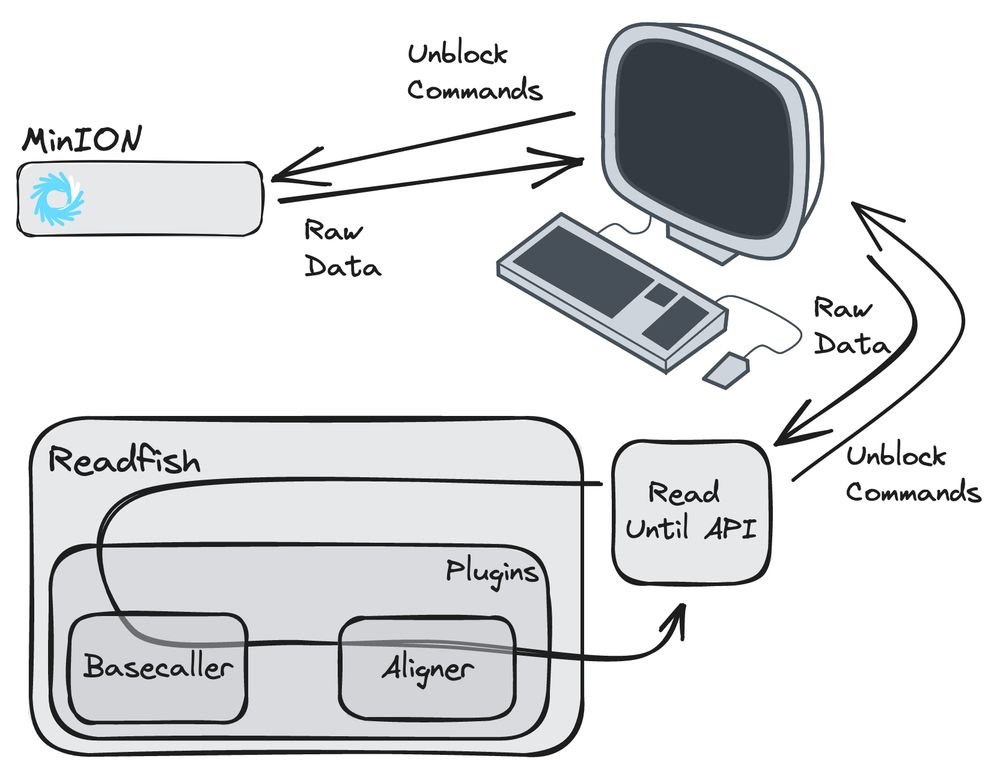
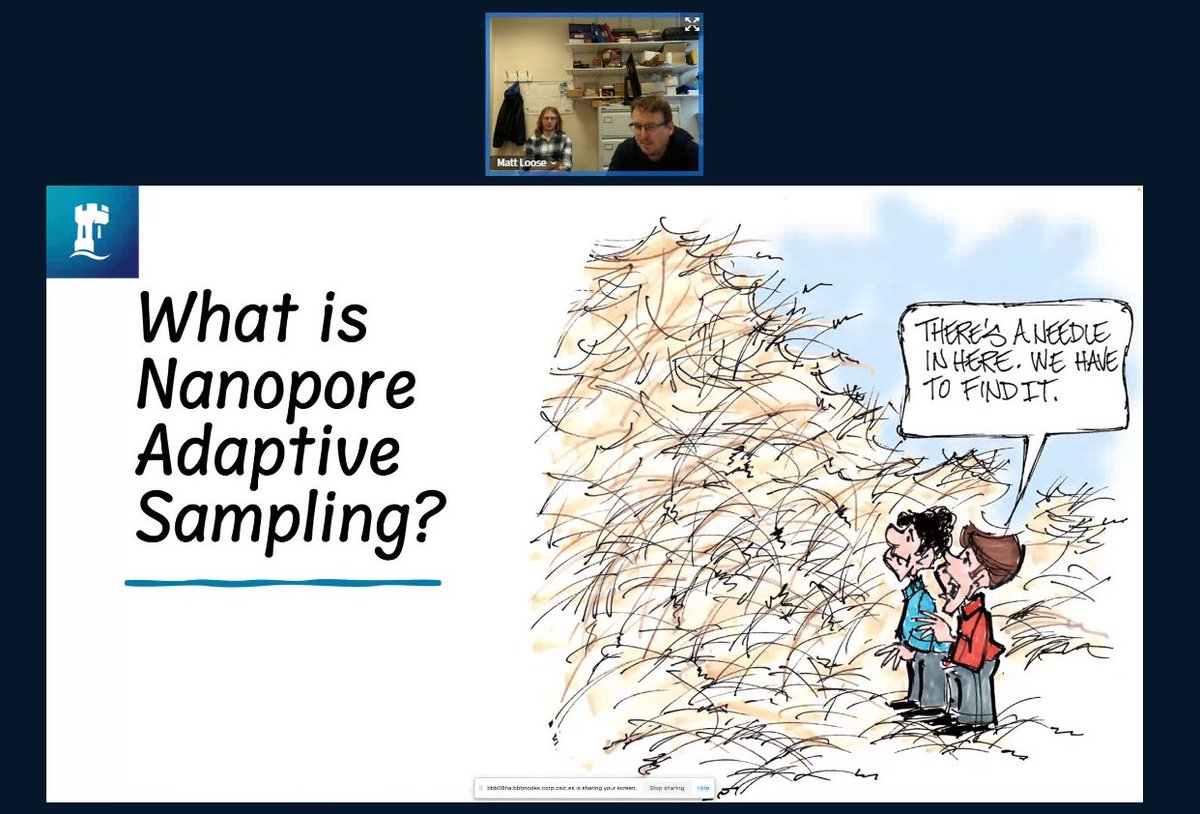
We've put out a new version of readfish, our tool for @nanopore adaptive sampling. This is our v1.0 release and has a lot of improvements, tweaks and stability issues addressed. It has been in testing for a long time and works with all ONT platforms - https://t.co/HNY5XTSA96
To safeguard the critically endangered kakapo – a unique New Zealand parrot – the genomes of nearly all remaining individuals have been sequenced, providing vital information for conservation management. https://t.co/IYpXQIlleA
Minimap2 Rust bindings updated to 0.1.15. Aarch64 compilation, better static builds, and reduced dependencies. See the full announcement here: https://t.co/pqINEF7AZ2
#rust#rustlang#bioinformatics#genomics#pacbio#nanopore
The August issue is live https://t.co/qzVJ2v7K2Z
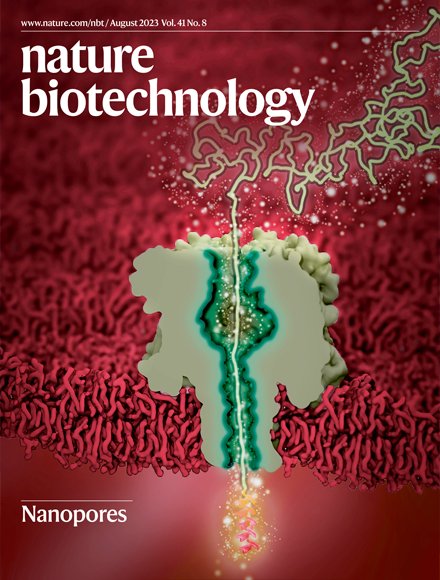
On the cover, an artist’s impression of a protein translocating through a nanopore. Yu et al. identify conditions allowing proteins to translocate through a nanopore when driven by an electroosmotic effect https://t.co/i2FWncjxdY
Day 16 of great biology papers.
"Expression of a Gene Cluster kaiABC as a Circadian Feedback Process in Cyanobacteria." Ishiura M. et al. (1998).
Three genes — kaiA, kaiB, and kaiC — encode a clock that oscillates almost perfectly in a 24-hour period.
My favorite biology story of all time.
*****
In 1998, two Americans and a Japanese professor (Takao Kondo) discovered a gene cluster in a cyanobacterium. This cluster encoded three genes that seemed to make proteins that act as a sort of clock. They named the cluster "kai," which means "cycle" in Japanese.
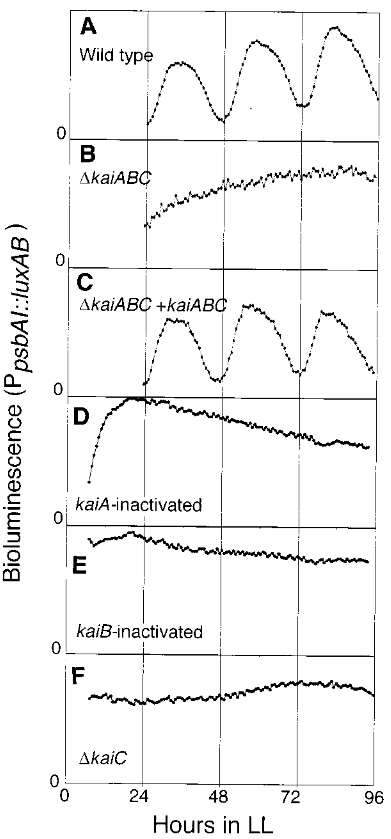
For their first study, the scientists fused a luciferase gene — which encodes a protein that emits light in fireflies — to one of these clock proteins. They were then able to watch the cells literally dim and brighten throughout the day.
They made a series of mutations in the kaiA, B, and C genes and studied how each alteration changed the timing of the cycles. The wildtype genes oscillated with a period of 25 hours.
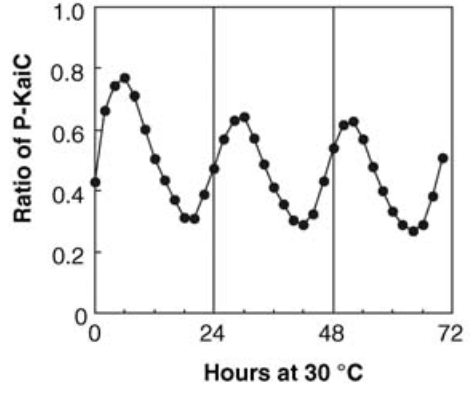
A few years later, in 2005, Kondo's group stripped the three Kai genes from cyanobacteria and expressed them in vitro, in a test tube. They also added a bit of ATP.
Remarkably, the Kai clock continued to oscillate with a nearly perfect, 24-hour period. These oscillations were "stable despite temperature change."
Later work showed:
- The KaiC gene is the oldest circadian gene ever found in prokaryotes.
- Cells use this clock to regulate photosynthesis, and time other cellular processes with the rising and setting sun.
- KaiABC interact with each other like a feed-forward loop; KaiA phosphorylates KaiC, whereas KaiB dephosphorylates KaiC. KaiA activates the expression of KaiBC, and KaiC represses it. (See: https://t.co/XyzUHGEW0r)
Original Paper (1998): https://t.co/3zyej4Gs8y
In Vitro Paper (2005): https://t.co/E1imRoz3TJ
(Sorry, I can't find full-text versions.)
Image #1: Oscillations in cyanobacterial cells, as measured by luminescence, for wildtype genes and mutated versions of those genes.
Image #2: In vitro oscillations of kaiC phosphorylation, from the 2005 paper.
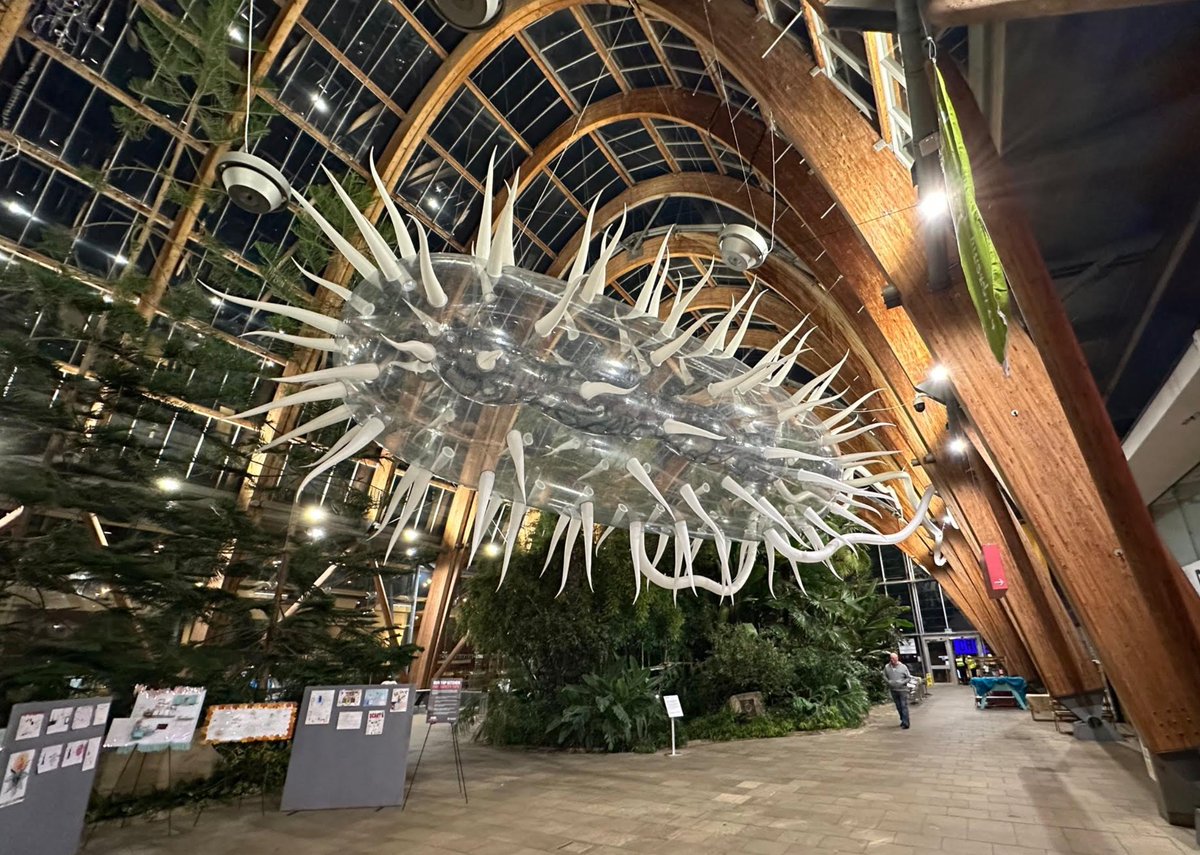
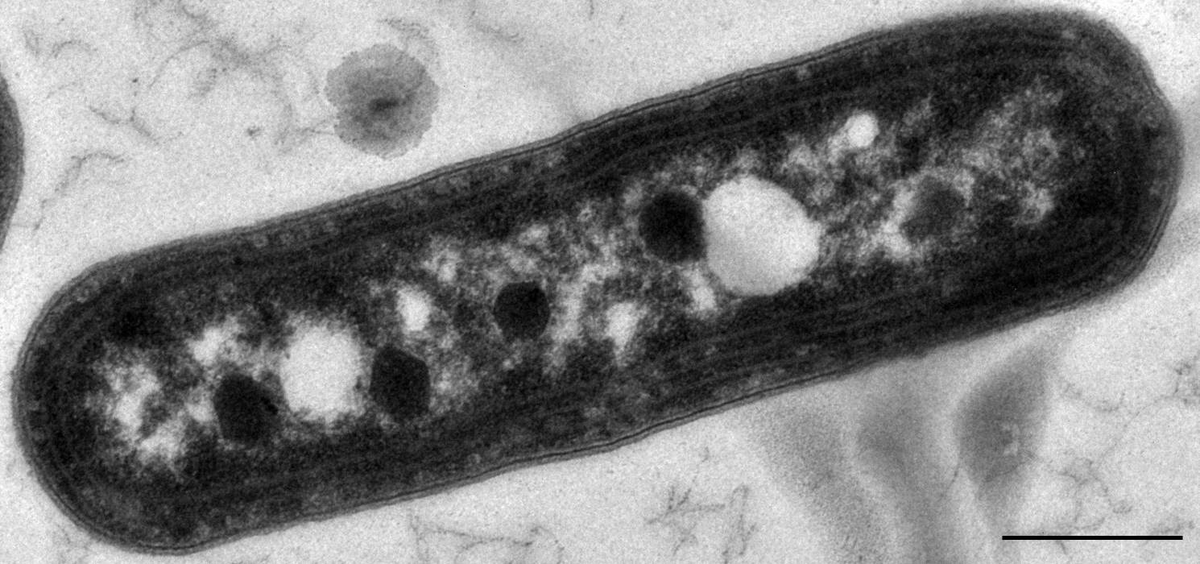
Image #3: A Synechococcus elongatus (cyanobacterium) cell.