NEW WEBINAR 🌟
🗣️ @ross_jeffs — ”Classifying Chaos: A new framework for plyometrics”
📅 Sunday 14 June, 5pm BST
Ross will be exploring a modern approach to understanding and organising plyometric training beyond traditional models
Secure your seat:
🔗 https://t.co/OhkLCQOnkl
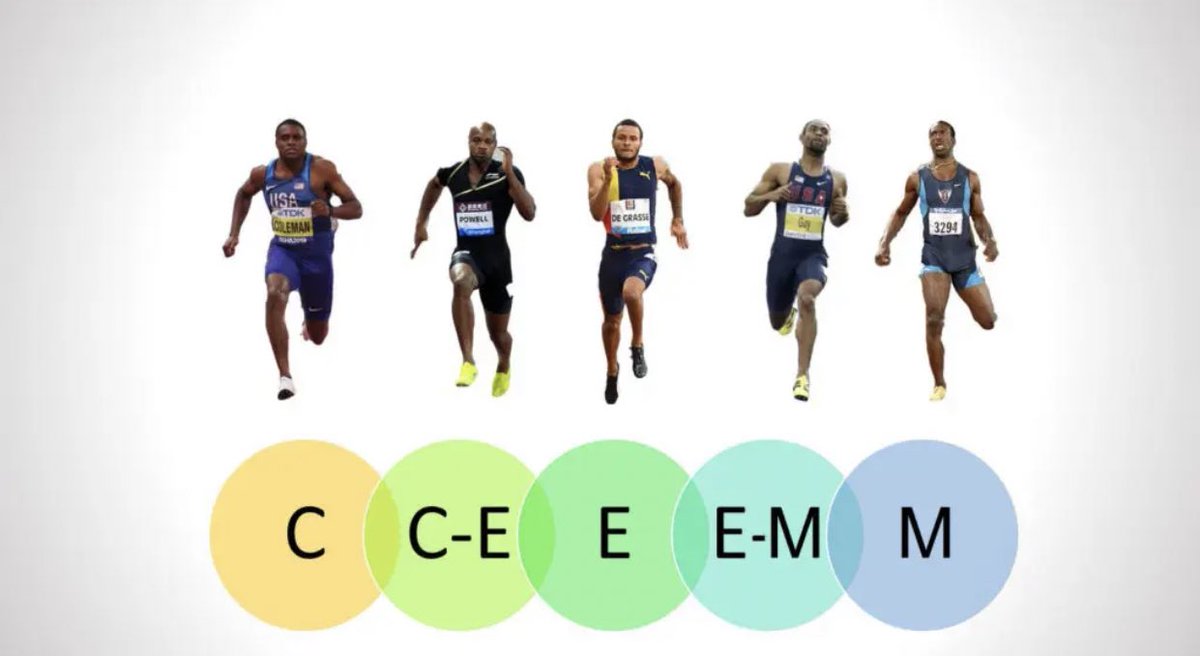
For years coaches and scientists have used terminology to describe the different types of runners.
Step Length vs Frequency
Pushers vs Pullers
Concentric - Elastic - Metabolic
Our friend and former employee @ross_jeffs does a good job discussing this with @JustFlySports
@PierreSamozino@bigk28 Sure if you are talking about the whole 30m effort.
But at that point in the run where the highest net horizontal force value was "worse" (∼0m) the velocity behaviour at that point would also have to have been "worse" as well, no?
@bigk28 My concern is with the net force and power numbers it is dressing up velocity and overcomplicating it.
Without force plates and seeing step to step kinetic values they are pretty meaningless.
@bigk28 For sure it was a simple example, essentially I am trying to understand what is the difference between using a velocity time/distance graph and calculating the slope of a FV curve, how does the latter provide more value?
@bigk28 Of course is doesn't but all these metrics are just reflecting the behaviour of velocity.
Ultimately if someone runs a faster 0-5m split/ has a greater velocity at 5m and all else stays equal in the 30m run we know their slope has shifted.
@lahti_johan@bigk28 "And that can either take place by the max velocity component improving and/or the force improving."
In this instance with net force being calculated from velocity surely there is no way Power can improve from just force increasing and not velocity.