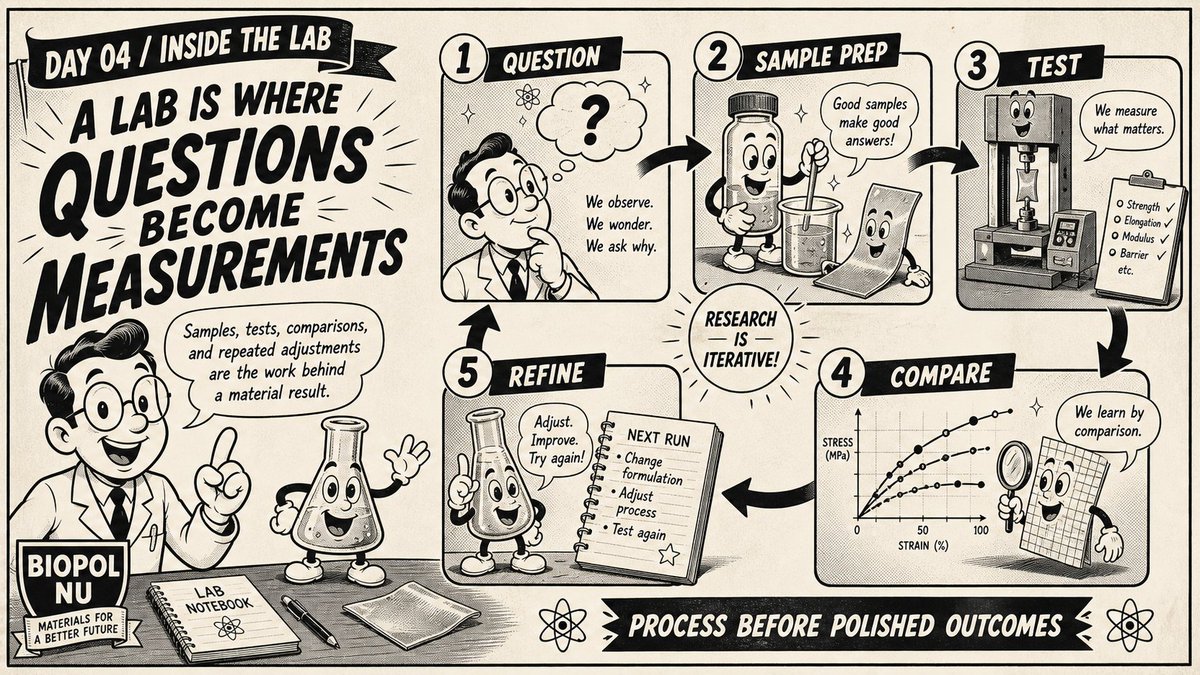
A lab is not just where results appear.
It is where questions become samples, samples become tests, tests become comparisons, and comparisons tell us what to refine next.
The process matters as much as the polished outcome.
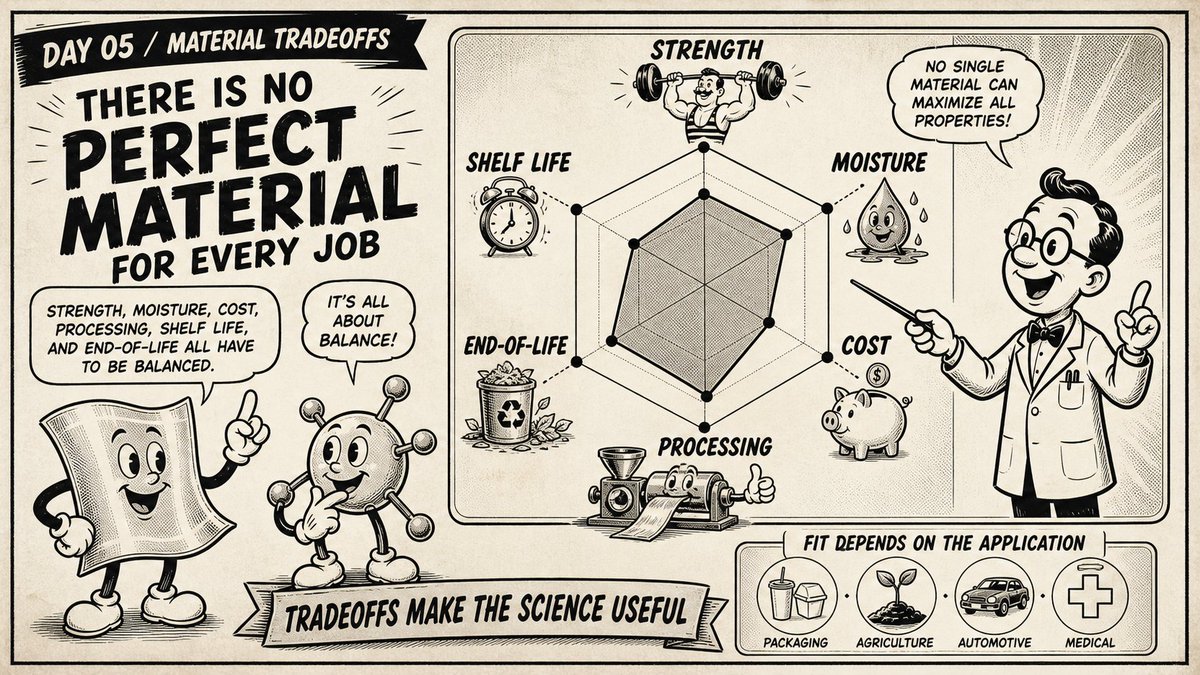
There is no perfect material for every job.
Strength, moisture behavior, shelf life, processing, cost, and end-of-life all have to be balanced.
The useful question is not “best material?” It is “best fit for this application?”
Cassava can be more than a raw material.
The research challenge is turning a local biological source into useful performance: processability, strength, moisture behavior, and application fit.
That is where biopolymer science begins to matter.
Biodegradable does not mean the same thing in every place.
Temperature, moisture, microbes, time, and testing conditions all change what happens.
Good materials claims should tell you the conditions, not just the label.
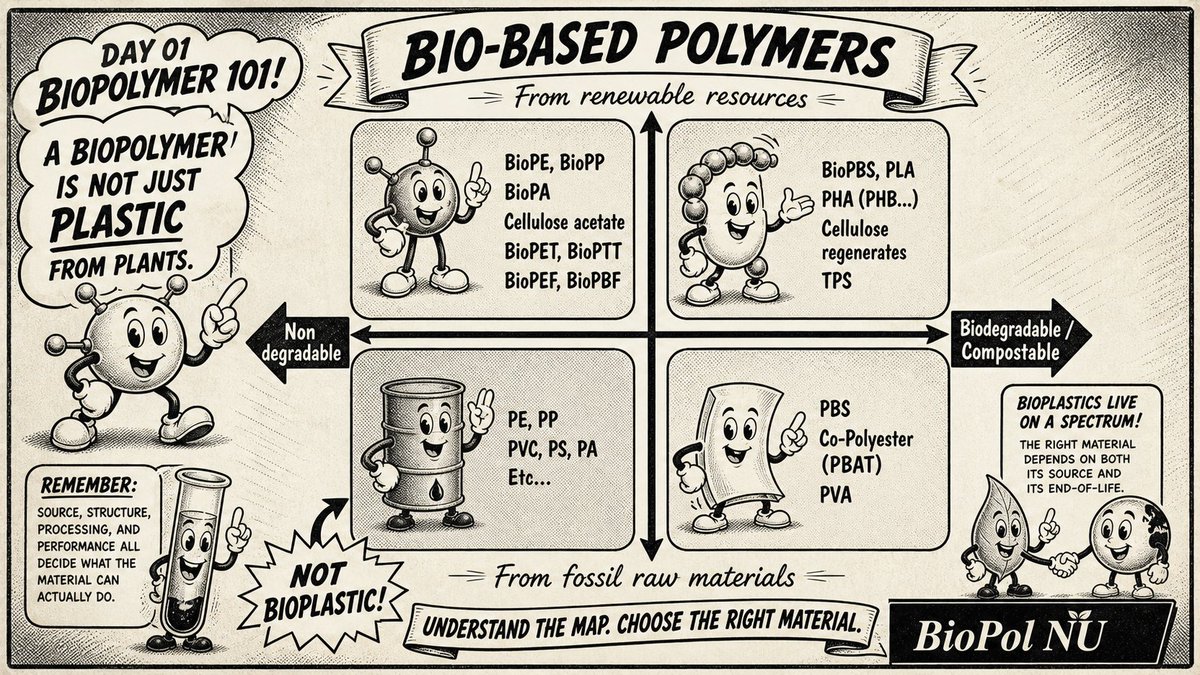
Bioplastic is not one box.
Some are bio-based. Some are biodegradable. Some are both. Some are neither.
The first step is separating source from end-of-life, then asking what the material is actually designed to do.
This cube extrusion fractal was made using Blender. At the end of the iterations, it has 2,691,544 faces and interestingly, you can see the Sierpinski triangle pattern in it
[📹 u/TheDarksideofSnow]
https://t.co/rUPWtjoZMq
It’s kind of weird that we were all at the Big Bang. Like the matter and energy in our bodies was all there. Then we floated in space, we were part of different stars, we exploded in supernovae, we came together as part of a planet, and at the moment, we’re a bunch of people.










![Rainmaker1973's tweet photo. It's okay to feel stupid, especially doing science.
[source: https://t.co/MSeb4c9HEk] https://t.co/3VY9OKIqbR](https://pbs.twimg.com/media/F1vZBggXoAU8f6A.png)





