Ex Co-Head of Macro at Bridgewater (joined in 1998, left 2023)
Cyclical macro. Very interested in random micro. Investor.
Brazilian-ish. Introvert/lurker.
@DsrPrivate Do you have a view on the Treasury reaction function here? I.e. what would happen for them to act again say next week? Do they wait for the quarterly review? Do I think of this as a BOJ style intervention regime where they may come in at any time to scare the shorts?
Updated deep-dive on US inflation. Wage growth has been somewhat tame, but that is probably a lagging measure of the recent cyclical upswing. Inflation looks more of a problem now late last year. 3% inflation isn’t an emergency, but a monetary diet is long overdue. Policy is too easy, contributing to an acceleration that makes it more likely that inflation stays sticky or rises from here.
Core services: Demand has increased, employment has accelerated, and businesses have successfully passed price increases to consumers. The primary disinflationary factor is the surprising upside in AI capabilities, but it is far from clear that significant disinflationary effects are imminent.
Core goods: While recent inceases are partly a function of last year’s tariff increases, more importantly, the inflation dynamics of hyper-globalization were, at a minimum, undergoing a reversal. China’s industrial policy push, is if anything likely to consolidate a developed world backlash. These secular forces remain unchanged; in fact, global supply chains have experienced, and continue to experience, another major disruption, further underscoring the need to rethink trade routes and supply chains. This points to an inflationary environment.
Housing: It is currently at 3.2%, representing the sole area that has seen some cooling. On the rental side, higher wage growth compared to the COVID period and less negative supply-demand dynamics should support solid increases. We are a bit further along in the rental supply rebalancing. Home prices, though not part of measured inflation, are also buoyed by rising wages, increasing wealth (supporting down payments), and mortgage rates that have remained relatively stable over the past five years. Affordability is a constraint, and home prices may face pressure if rates rise and equity prices fall. But that is not where we are. For now the direction of travel looks to be for stabilization.
@hbkazemi33 Capex impact on growth will peak, probably in he next year as the rate of change slows. Too early to call it based on the early funding tremors. It isnt slowing yet. Supply is lagging demand. Maybe a 2028 story.
A synthesis (my read of macro conditions, market pricing, macro market views), then a lot of charts with hopefully fewer words.
Growth is strong (upper end of the COVID expansion) and likely to remain strong. A very strong wealth effect is the main driver, which should continue to push savings rates lower. Rates that have been range-bound for five years are not big drivers. Strong CapEx from the AI build continues to add to growth. Weaker immigration lowers potential growth but not the trajectory of growth versus potential. The energy shock so far is modest (maybe a third as big as the support from rising equity prices). The “K”-shaped economy may have political effects, but a dollar of spending is a dollar of spending, so it doesn’t matter all that much for cyclical macro or what the Fed should do.
Unemployment is low and likely headed lower. Mostly a function of the above. The acceleration in growth after the “uncertainty” shock of last year and a fast equity market rebound has led to the pick-up in employment growth in recent months. The swing from strong illegal immigration to a fascist crackdown leading to an exodus means that the supply of workers is flat. So rising demand into weak supply results in falling unemployment. AI adoption, productivity gains, and the likely economic impairment of the bottom third of white-collar workers are slower-moving (i.e., it will likely happen over 0.5–3 years versus 0–3 months).
Underlying inflation has stabilized somewhat above target; it is more likely to rise than fall. Inflation has been more subdued than I would have expected. Wage inflation has continued to moderate, but I suspect that cyclical strength will pause or reverse that slowdown as it usually lags growth/employment. AI adoption may lead to some hiring at first (I am certainly getting a lot more out of a small team using those tools, and others will feel the same). Goods inflation is moderate and has the flow-through from tariffs fading but will experience another negative shock from energy and supply disruptions. Chinese exported deflation remains strong. Rent disinflation will reverse due to a lack of supply of apartments. Ultimately, rising incomes and wealth support home prices and rents. Five years of inflation overshoot and new shocks have changed inflation psychology (prices and wages can be adjusted), and I think the risks are still to the upside. A full revisit of inflation dynamics is overdue and is for another day. I may learn that I am missing something on why it has been more subdued than I expected.
@hbkazemi33 Thanks Kazemi. I agree the wealth effect is ultimately not a sustainable force. The inflation of this bubble creates a.big vulnerability You are probably right that the frothy stocks have a greater effect dollar for dollar. Id guess the impact isnt huge, but I not sure.
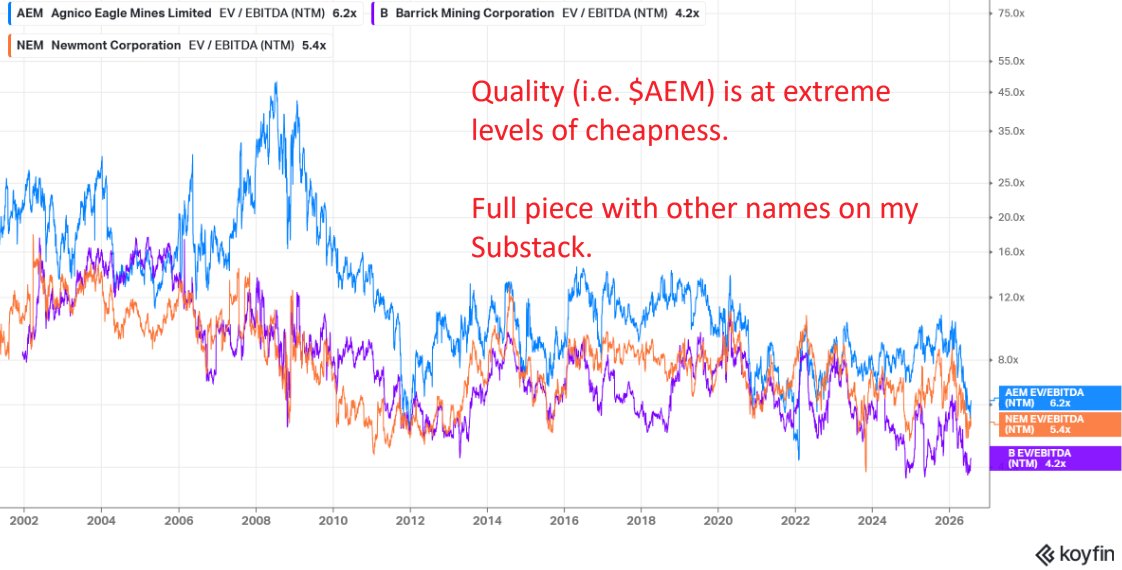
The best-in-class, safest, most anti-fragile gold mining names have never been of higher quality. Unlike most of their history, production profiles are very diversified, margins are high, debt is negligible or negative, and no exposure to riskier jurisdictions is needed. You can buy the companies with the strongest management teams and impressive track records. In a few cases, they have had very minor operational hiccups recently, adding to the opportunity. But nothing on the quality side appears broken. They also have solid organic growth prospects and the ability to expand through M&A by rolling up the sector (smaller names are even cheaper).
These companies are also at extreme levels of cheapness. When I say cheap, I mean the cheapness at current gold prices - I am not making a gold price forecast or making a case for gold. These stocks are low beta and produce something that isn’t cyclical. They don’t add a lot of risk to most long portfolios.
Darren McLean reckons if you'd described today's market to him three years ago, he'd have fallen off his chair begging you to fast-forward him to it.
Development-stage miners, he says, are the cheapest he's seen in his entire career.
He joins us to explain why so many projects suddenly "just work on paper" and why he thinks the real money is in a construction cycle, not the M&A everyone's waiting for.
YT → https://t.co/IB3XMqHQ7H
Spotify → https://t.co/Ruhfl2nbSt
Focus → https://t.co/OtwDID7Xbm
Full piece here (ask to Subscribe for free). Including current macro views. 60+ long-form articles on macro and micro over the last 2 years. https://t.co/p77Qqzcok4
@DsrPrivate I also don't do beta much, don't really understand why you think a modest drop in equity prices really changes the valuation much. Or why 3500 gold means anything. Agree that it is discount rate that makes all other assets worse.
Excecp for taxable investors when inflation is a percent higher than the good old days. You may get a real yield after tax of 1pct (less if you think break evens are too low). I get the risk parity appeal. And I get the beta appeal of locking in a return for ever and never needing alpha again. But I still cant get out of bed for this. Here the equity pickers have something over the passive beta crowd. If I had to I would find a basket of long hold stocks over ILs/gold. But I am just not a buy and hold and beta guy. The only bonds I have owned are some saving bond ILs. Mostly bought in 1998-2000.