Quick intro for those who don't know me yet. I've been working in commercial real estate since 2006. I started with appraisal, moved to CRE lending with Wells Fargo, and then into debt and equity brokerage in 2012 with HFF who eventually was acquired by JLL in 2019.
I joined IPA today to focus on debt and equity placement across the country and will be based out of their office in Palo Alto, CA.
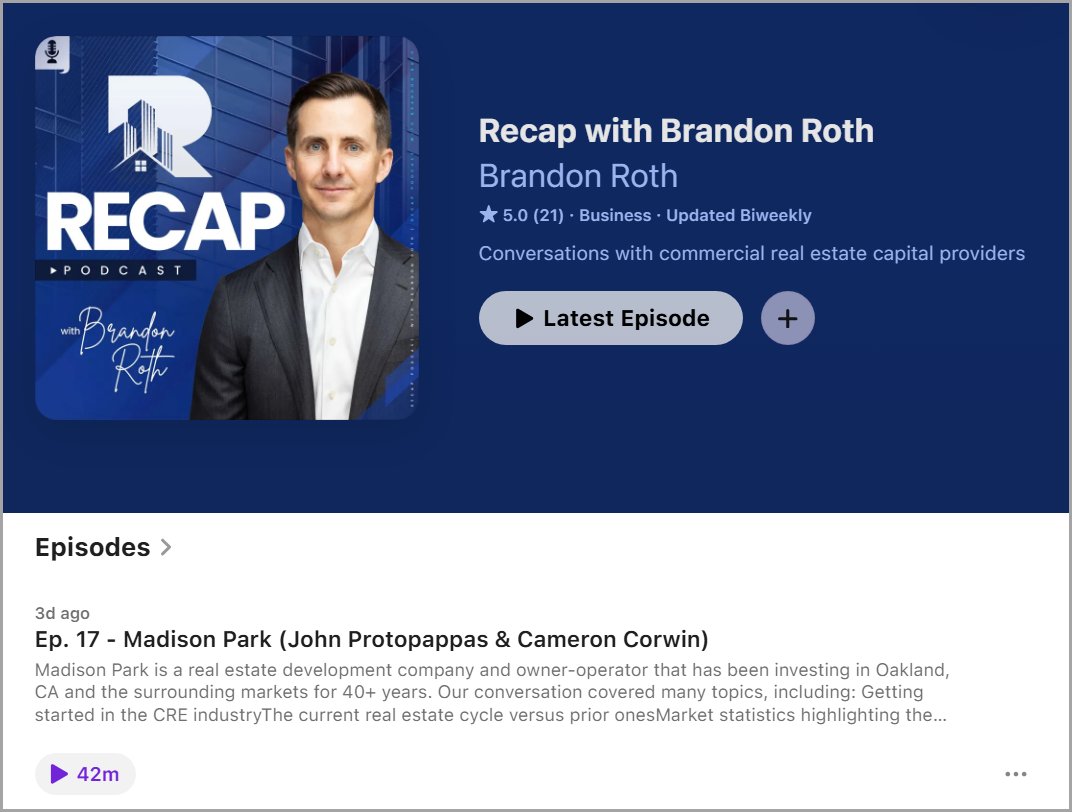
In February, I started a podcast called "Recap with Brandon Roth" where I interview CRE capital providers about their company, buckets of capital, how they're sizing and pricing deals, market outlook, etc. You can find it here:
Spotify - https://t.co/tf4SM8GE5v
Apple - https://t.co/8rRnFWAR8D
Lastly, I've been writing a capital markets email every ~3 weeks where I talk about the latest changes to interest rates and why, recent quotes, lender conversations, etc. If you're interested in checking it out, you can subscribe at https://t.co/S8SFWQK3gQ.
Multifamily bridge loan spreads have widened over the past couple of months, especially for those lenders using a CLO securitization as their back-leverage. Here’s why:
Many bridge lenders will close a loan for their borrower (e.g. 75% LTV at SOFR + 2.40%), and then fund ~20% of that loan with their own capital (debt fund or balance sheet) and ~80% via a warehouse line from their own banking relationship at a much lower cost (e.g. SOFR + 1.45%).
Once their warehouse line reaches a significant amount (e.g. $700M+), they’ll package these loans into a Collateralized Loan Obligation (CLO), and sell bonds to investors similar to a CMBS execution. The CLO typically provides lenders much more leverage (~88%) than a warehouse line (~80%) and improves the levered returns to their fund.
The challenge with any securitization is that the spreads for the bonds are uncertain and subject to change based on what’s happening in the market.
The table below compares Benefit Street’s CLO execution in July versus October. You’ll see that in July the blended cost of the bonds was SOFR + 1.51% at an 88.9% advance rate, which widened to SOFR + 1.77% in October at an 88.3% advance rate. That means, if BSP offered a borrower SOFR + 2.40% in July, they’d need to increase pricing to SOFR + 2.68% to maintain a similar levered return given the widening CLO spreads and slightly lower advance rate.
That’s exactly what has been happening over the past couple of months. I had a bridge lender quote SOFR + 2.40% in September, which increased to SOFR + 2.50% in early October after Bridge Investment Group pulled its CLO from the market because investors wanted wider pricing on the AAA bonds, and then to 2.60% as spreads continued to widen for Benefit Street's CLO.
Data via @GreenStreet_CRE and @cred_iq
Here's a quick recap of the major events this week that resulted in the 5-year UST jumping ~30 bps since Monday's close:
𝗠𝗼𝗻𝗱𝗮𝘆 (𝟭𝟭/𝟵)
The 5-year UST closed at 4.66%.
𝗧𝘂𝗲𝘀𝗱𝗮𝘆 (𝟭𝟭/𝟭𝟬)
At 4am ET, Fed Governor Chris Waller's prepared speech was released where he said if October core CPI came in "around 0.3 percent or even higher," then "...a stronger policy move may be needed. In that case, I believe a 50 basis point hike in the policy rate should be considered at the December meeting." The 5-year UST rose 6 bps before the CPI data came out.
At 8:30am ET, CPI data was released showing core inflation at 0.3% (versus 0.2% expected), the level Waller said would put a 50-bp hike on the table. The 5-year UST rose another 5 bps within 5 minutes and 12 bps by noon.
𝗧𝗵𝘂𝗿𝘀𝗱𝗮𝘆 (𝟭𝟭/𝟭𝟮)
At 8:07am ET, President Trump posted "We don't need a deal with Iran. Those days have long since passed." Oil jumped (Brent closed up 3.3%) and the 5-year UST rose 9 bps by the close on renewed inflation concerns.
If you'd like to learn about the current state of the East Bay from a real estate development company with 40+ years of experience, check out the latest episode of the podcast. The guests were John Protopappas and Cameron Corwin with Madison Park.
Our conversation covered many topics, including:
- Getting started in the CRE industry
- The current real estate cycle versus prior ones
- Market statistics highlighting the current recovery underway
- East Bay fundamentals and demand drivers
- The future of the East Bay
- Their strategic investment focus
You can find the episode by searching for "Recap with Brandon Roth" on Apple or Spotify.
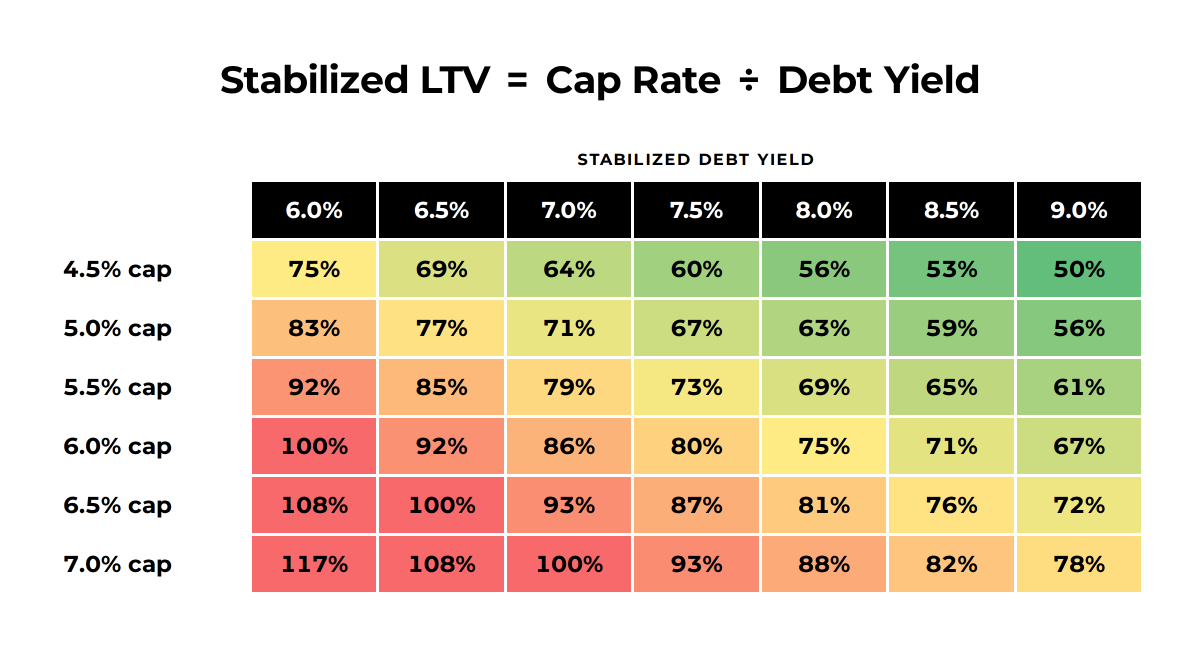
Stabilized Debt Yield is a lender's break-even stabilized cap rate. It tells a lender how much cap rates can rise before the building's value no longer covers the loan amount. This is why debt yield sizing metrics vary by market.
For example, sizing to a 7% stabilized debt yield would equate to 71% LTV in a 5-cap market and 86% LTV in a 6-cap market.
The biggest underwriting change post-rate hike has been wider stabilized debt yields to account for potentially higher cap rates over the next 1 to 3 years.
Today's Fed rate decision will be announced at 11am PT / 2pm ET. The market is currently projecting a 93% probability that there's a 25-bp rate hike. One other place this probability shows up is with 1-Month Term SOFR.
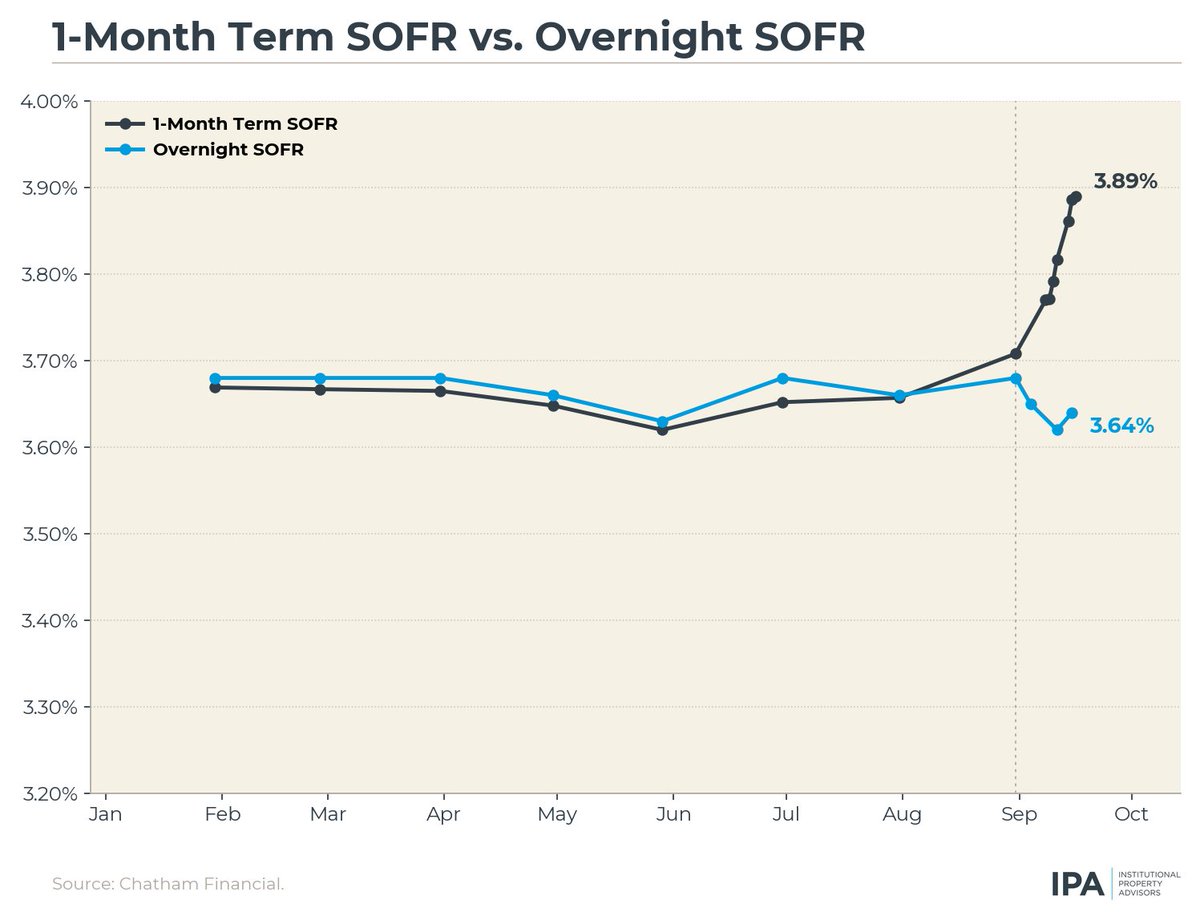
We simplify loan pricing by saying "SOFR + 2.50%", but the reality is almost every lender is using 1-Month Term SOFR which is based on futures contracts and reflects market expectations for SOFR over the coming month.
For most of 2026, overnight SOFR and 1-Month Term SOFR tracked in the 3.60s. However, these rates started to diverge at the beginning of September when the market began repricing the probability of a Fed rate hike on September 16th (today).
1-Month Term SOFR has already increased 25 bps to 3.89% this morning, while overnight SOFR is still 3.64%.
For those that have floating rate agency loans, it's worth noting that the agencies do not use 1-Month Term SOFR, but 30-day Average SOFR which is backwards looking. So the impact of today's hike will be reflected gradually in your interest expense over the following 30 days, rather than immediately.
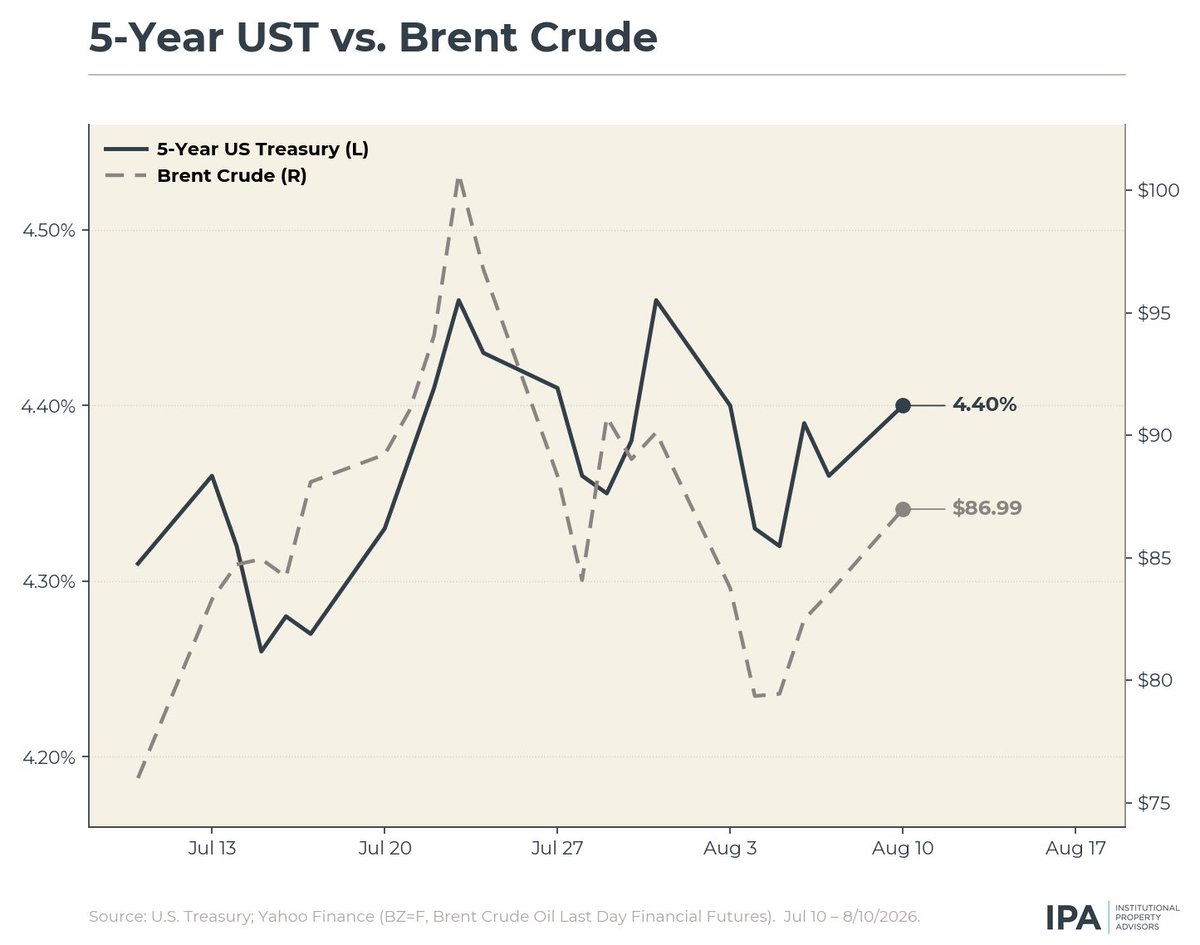
I feel like a broken record writing about how closely the 5-year Treasury has been tracking oil prices lately, so I created a chart to highlight the relationship. This is happening because investors believe higher oil prices will lead to higher inflation, which makes the Fed more likely to respond by raising short-term rates. And vice versa.
The latest podcast episode is available for download. The guest is the CEO & Founder of PACE Loan Group - Rafi Golberstein. Our conversation answers many questions, including:
- How did Rafi get started in CRE and what was his path to eventually starting PLG?
- What is C-PACE and how has it evolved over the past 10 years?
- What are the sizing constraints?
- What are the typical terms today? (pricing, prepayment, etc.)
- What are the most common deal/asset types they're financing?
- Where is the C-PACE industry going over the next 12 months?
- How does the decision-making process work at PLG?
You can listen to the episode on Apple or Spotify - thank you!
I had a great conversation with the CEO of Genesis Capital. The company is one of the top construction lenders in the country and is on pace to close ~$6.5 billion in loan volume this year.
You can check it out by searching for "Recap with Brandon Roth" on Apple or Spotify.
Over the past few days, lenders shared 72 quotes they issued in April and I aggregated the data into a filterable table. The example below shows the construction financing quotes that were received. I'll share a download link for the full Excel table in Monday's newsletter.
This week JV equity investors shared 29 deals they closed in Q1. I'll share an overview in Monday's capital markets newsletter. If you're interested in joining, you can subscribe using the link on my profile.
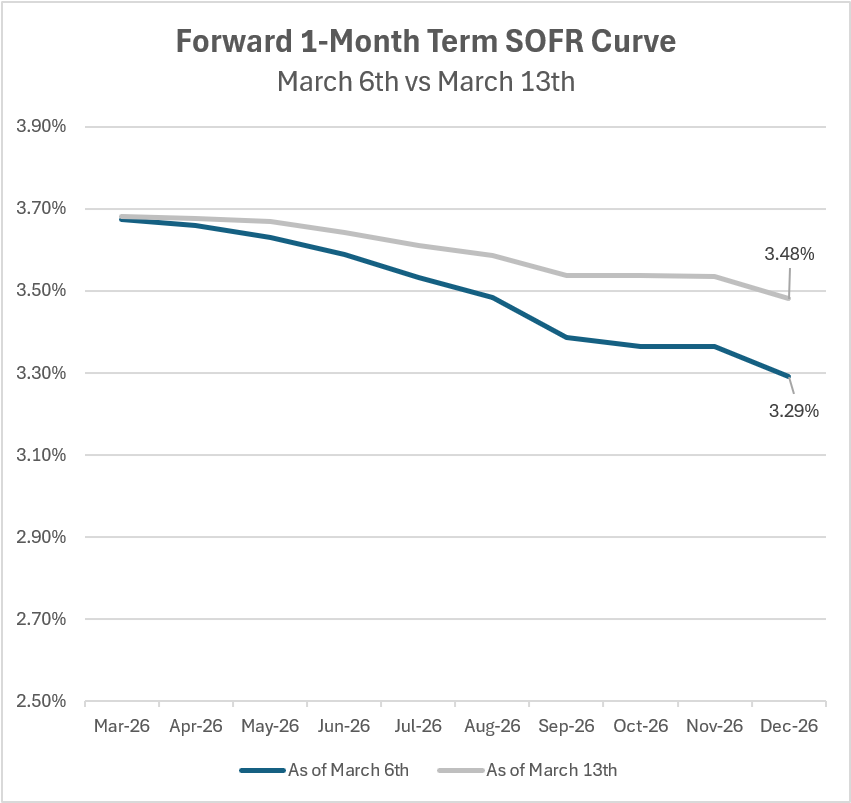
Don't shoot the messenger, but it's important to be aware that the forward SOFR curve has meaningfully shifted over the past week. The market is now projecting 1-month Term SOFR to end the year at 3.48%, which is 19 bps higher than last week.
The likelihood the Fed holds rates unchanged through the end of July has increased from 18% a month ago to 62% today.
This is largely being driven by rising oil prices and concerns about inflation. Just an anecdote, but gas is $6+ in my town.
Last week lenders shared 102 examples of quotes they issued in February. Here are the top 5:
- $40M construction loan for a spec industrial development. 63% LTC priced at SOFR + 2.50%. (Insurance)
- $90M bridge loan for a new industrial project in lease-up and 40% occupied. 65% LTV priced at SOFR + 2.60%. (Insurance)
- $85M construction loan for multifamily development. 63% LTC priced at SOFR + 2.35% burning down to SOFR + 1.95% at stabilization. (Bank)
- $100M construction loan for multifamily development. 74% LTC priced at SOFR + 3.50%. (Foreign pension fund)
- $99M bridge loan for a near-stabilized MF property. Going-in at a 7% debt yield stabilizing to 8%. Priced at SOFR + 2.15%. (Debt fund)
It's also worth noting that there were a few very cheap agency quotes with spreads ranging from 1.25% to 1.39% with no buydown.
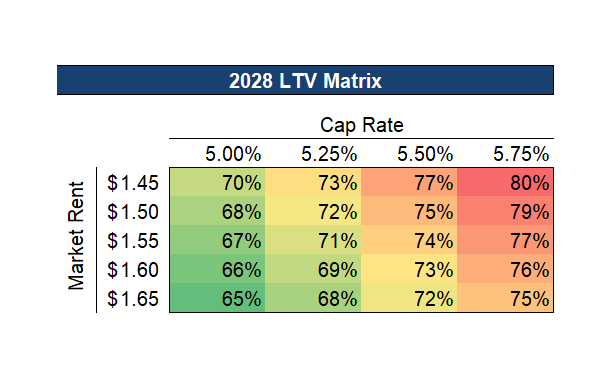
When working on bridge or construction deals where you're projecting a future stabilized LTV, I recommend creating a matrix showing the range of potential outcomes based on various rents and cap rates.
The reality is the future is uncertain, and it's far easier for lenders to get comfortable if they can see they're still protected in a downside scenario.
If it'd be helpful to see a video showing how to create this in Excel, please let me know and I'll pull it together.
When a business owes you funds but they can't find you for a long time, they transfer those funds to the state, which holds them as a custodian until the rightful owner claims them. This can include:
- Utility refunds or deposits
- Uncashed checks
- Old bank accounts
- Overpayments
I just checked the database and had 4 claims dating back 10-20 years that totaled to $400+.
I checked for each of my family members and they all had $200+. My sister had $970.
The database is managed by the National Association of State Treasurers and you can check it out at https://t.co/fBM22hFKga. It's a bit of a hokey name that sounds like a scam, but it's legit.
After you claim the various accounts that are yours, you receive an email from your state government with an official form to submit to get the cash.
Good luck!
P.S. Even if you don't care about this for yourself, check for your friends and family - especially the ones not quite as tech-savvy as you.
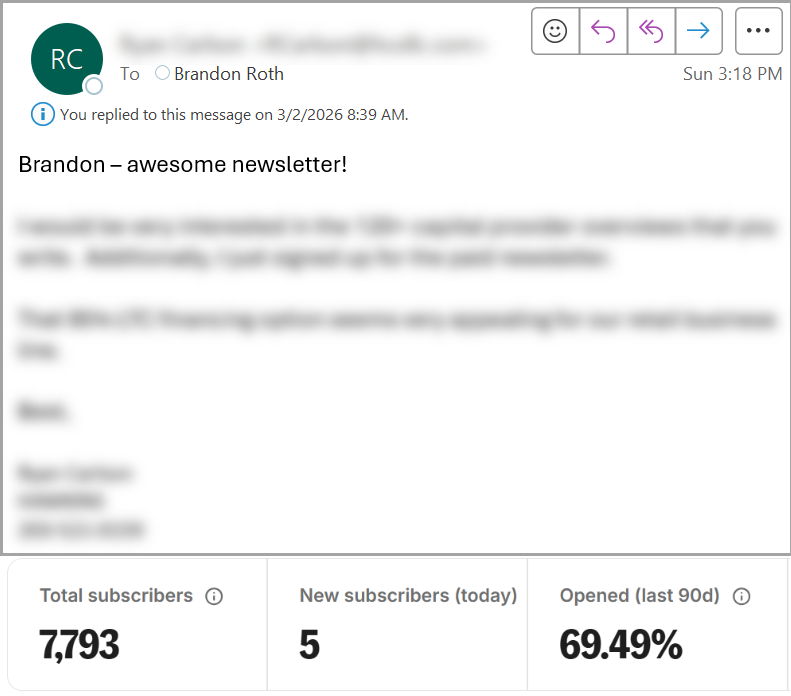
Every Monday I send out a capital markets update based on my firsthand experience and conversations with capital providers. I think it's a decent way to stay informed on new lenders and equity investors in the market, changes to loan programs, recent quotes, etc.
If you're interested in checking it out, you can subscribe using the link on my profile. The next one will go out today around 11am PT. Thank you!
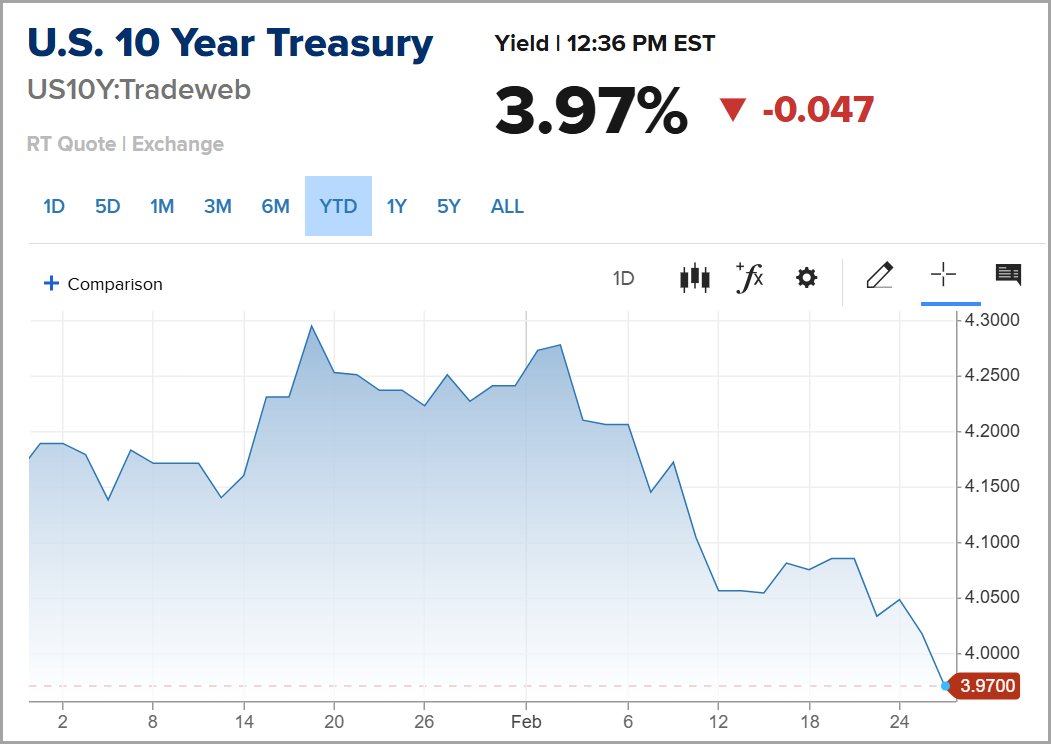
The 10-year Treasury yield just dipped below 4% for the first time this year.
Investors are moving capital to Treasuries as a safe haven. Here are two major reasons:
1) Concerns about AI disrupting entire industries, job losses, etc. See Jack Dorsey's post from yesterday about laying off nearly half their workforce.
2) Concerns about a conflict between the US and Iran. On Polymarket, the odds of a US strike on Iran before March 31st has increased from 30% two weeks ago to 66% today.