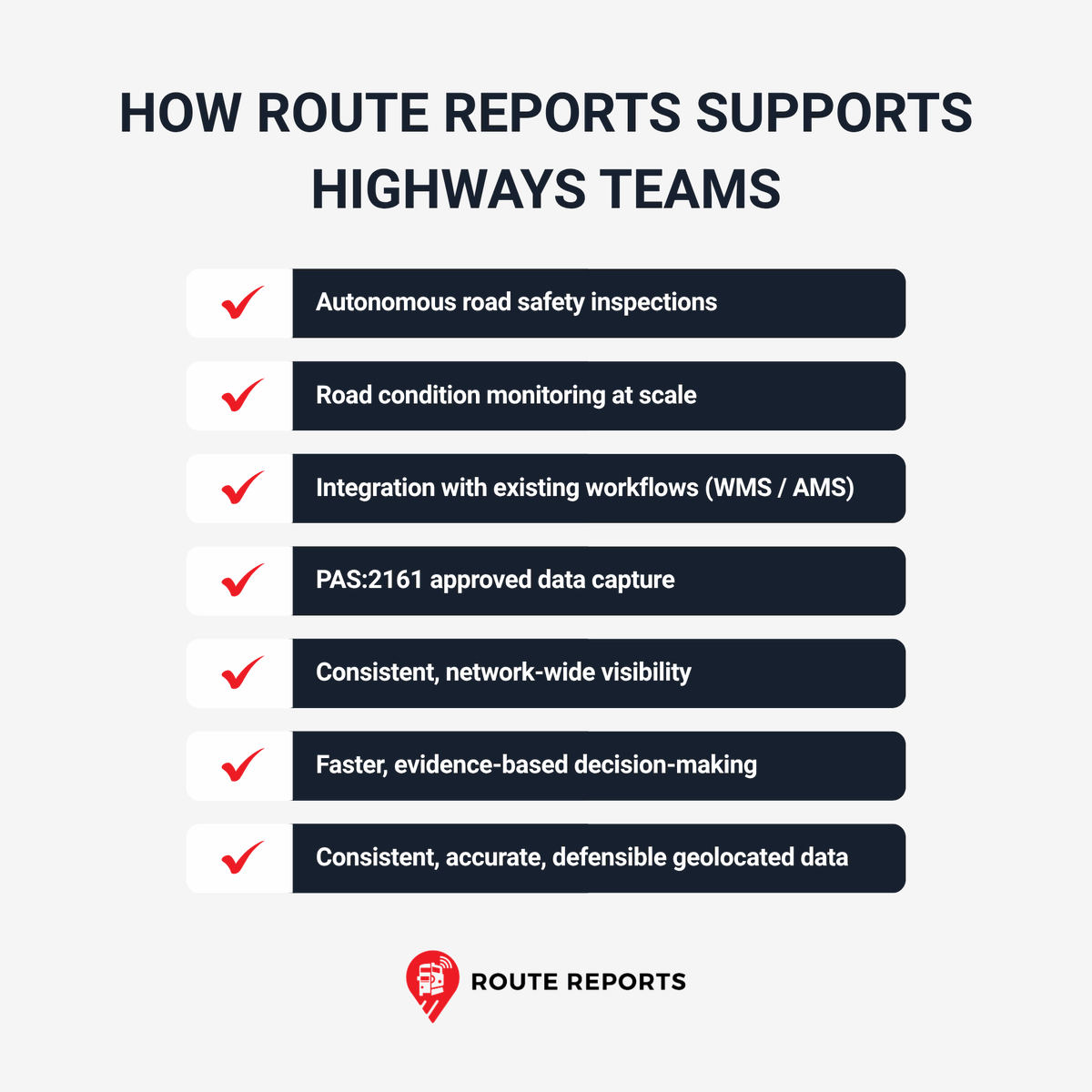
Highways management is shifting.
It’s no longer just about repairs completed. It’s about proving why decisions were made.
In 2026, evidence matters as much as activity.
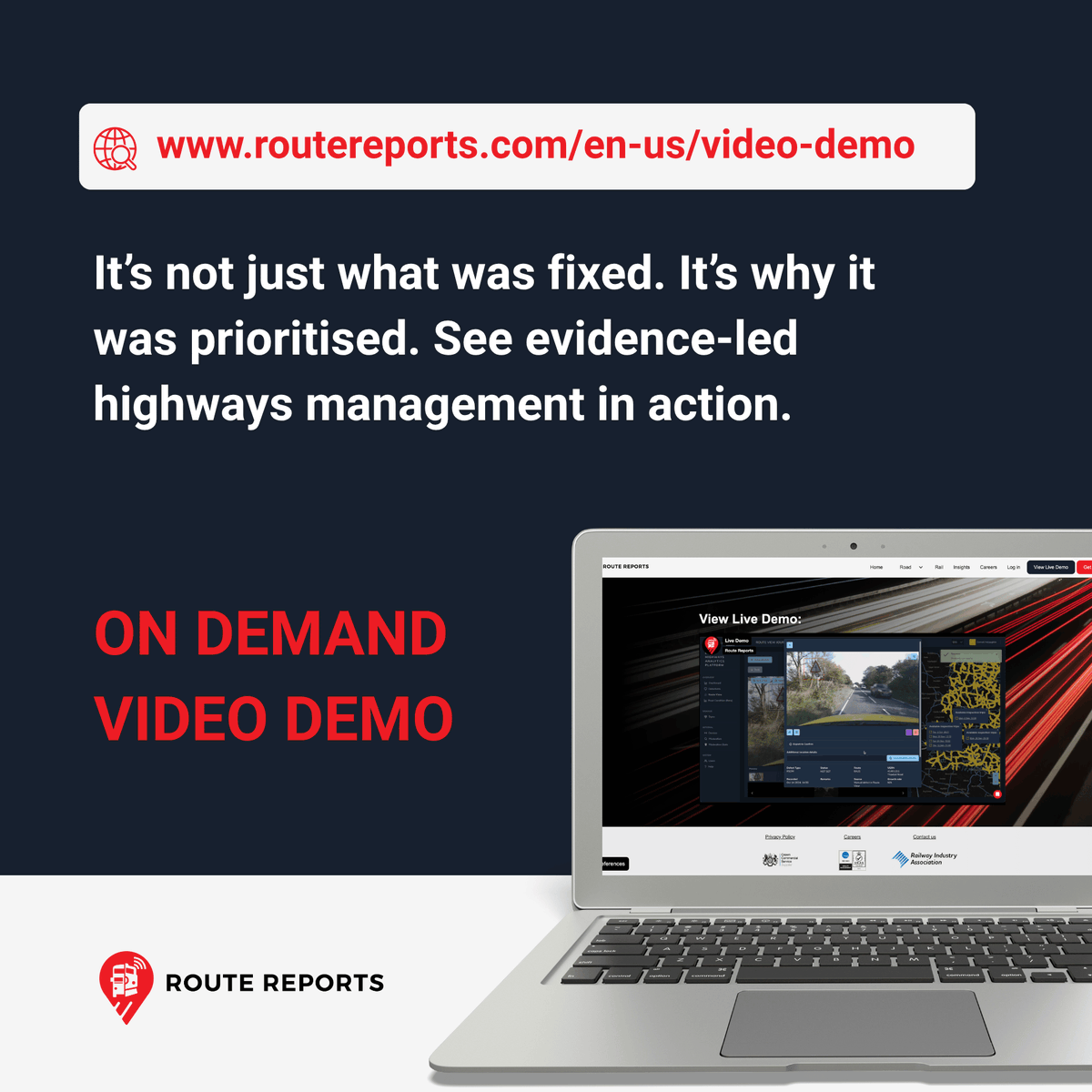
See @RouteReports evidence-led highways management in action: https://t.co/Io7VPYez33
#Highways#AI
The highways conversation is moving fast, and we’re excited to be part of it at @LCRIGnetwork Innovation & Learning Festival 2026 this June.💡
AI, smarter data, and proactive network management have never mattered more for councils under pressure.
Attending? Let’s connect.
The @AIA_Asphalt Survey highlights the funding challenge in highways.
But the real question is: are limited budgets being directed to the right places?
Smarter decisions start with better data.
https://t.co/Q316zA1NmB
#Highways#AI
Skills pressure in highways is real.
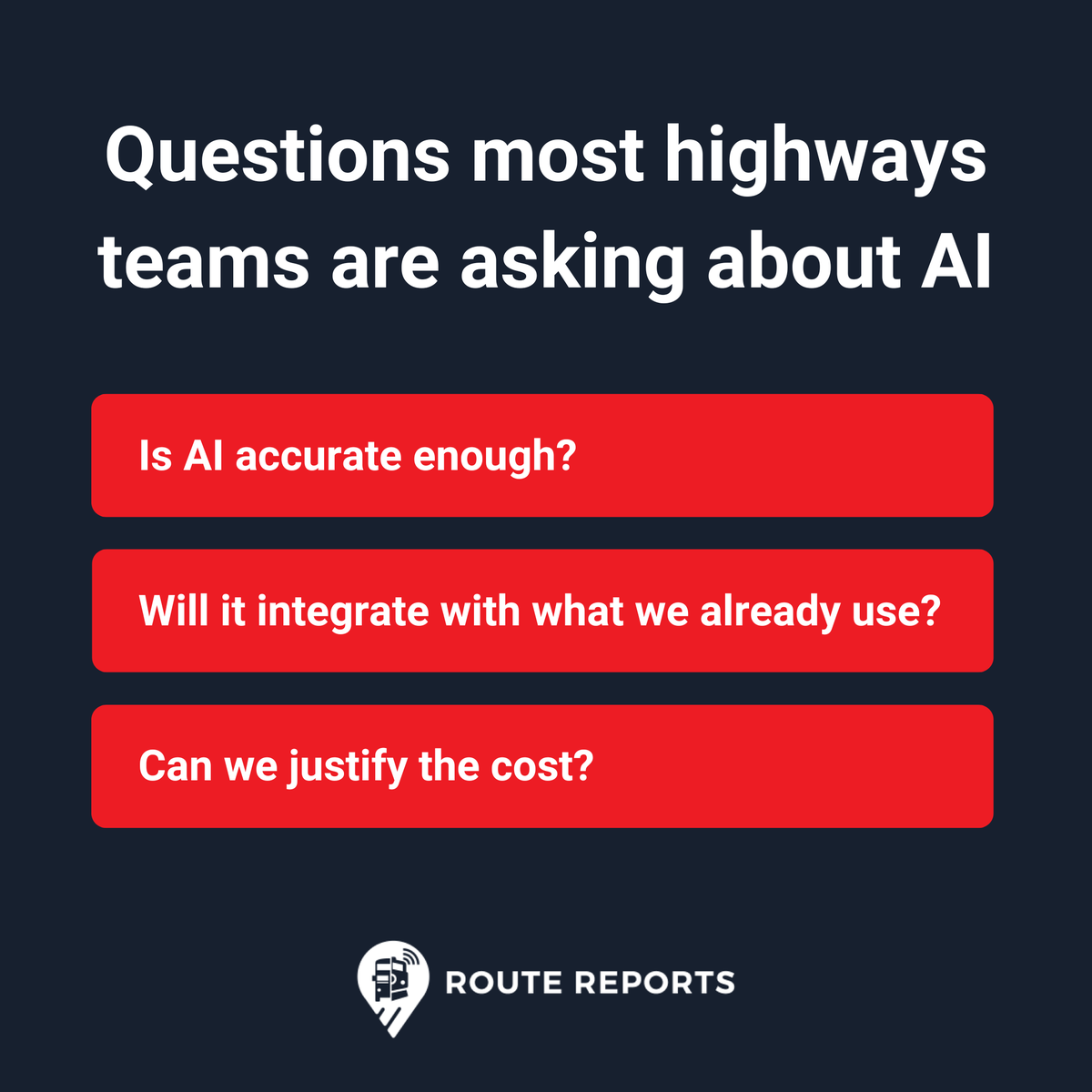
AI isn’t about replacing people. It’s about helping stretched teams cover more ground, improve consistency, and make faster decisions.
Technology should reduce pressure—not add to it.
Find out more --> https://t.co/w8IaMqYVsK
#Highways#AI
3 myths about AI in highways:
❌ It replaces inspectors
❌ It's too hard to integrate
❌ It's only for large authorities
The reality? None of the above. AI tools strengthen teams, improves visibility, and supports better decisions. Try it out ⬇️
https://t.co/2WSZF1UVmS
Highways teams are being pushed to be proactive.
But without network-wide visibility, that’s difficult.
So decisions default to what’s visible.
Proactive starts with better data.
Find out more or contact us --> https://t.co/8FiW3Y0XaC
The ALARM Survey highlights the funding gap.
But with limited budgets, the focus shifts to:
👉 prioritisation
👉 impact
👉 evidence
That’s where data becomes critical.
It’s no longer “Did we inspect this road?”
It’s “Can we prove it?”
In highways claims, process isn’t enough.
Proof is what stands up.
Find out more --> https://t.co/lXYfyBlBf4
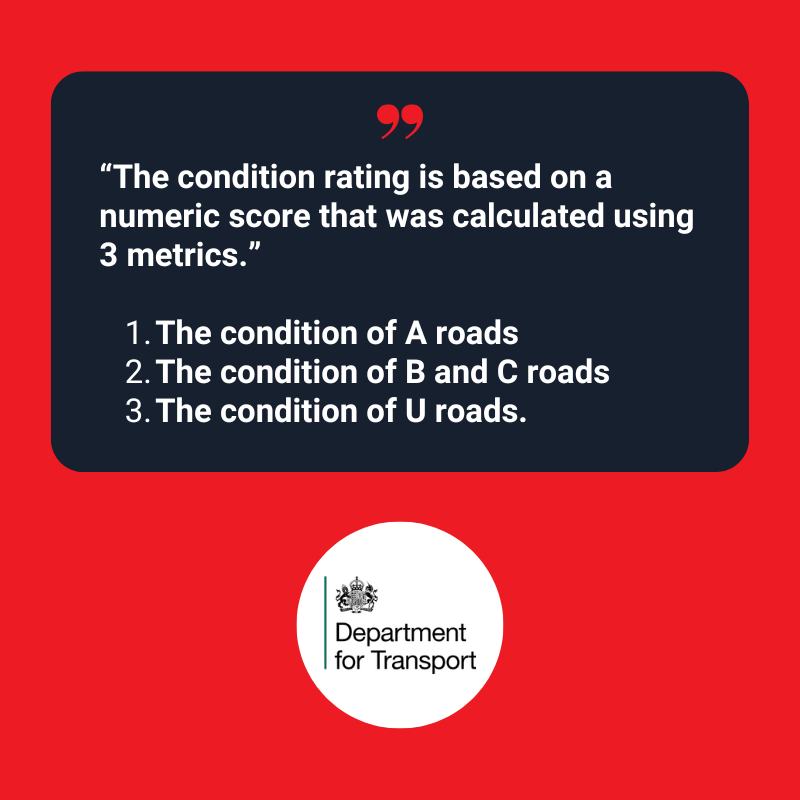
DfT road ratings are raising the bar on transparency.
But are councils being judged on equally robust data?
Performance is only as strong as the data behind it.
👉 https://t.co/1SwCQOCnXh
DfT’s new “traffic light” ratings show road maintenance is now judged on more than pothole counts.
Condition, spend and best practice (including tech use) all matter.
Stronger accountability means stronger evidence loops:
capture → prioritise → intervene → prove → repeat.
Lane rental isn’t the issue.
Visibility is.
If overruns aren’t consistently seen, they can’t be enforced.
Here’s where AI is changing the game 👇
https://t.co/IOX3Q5i3FN
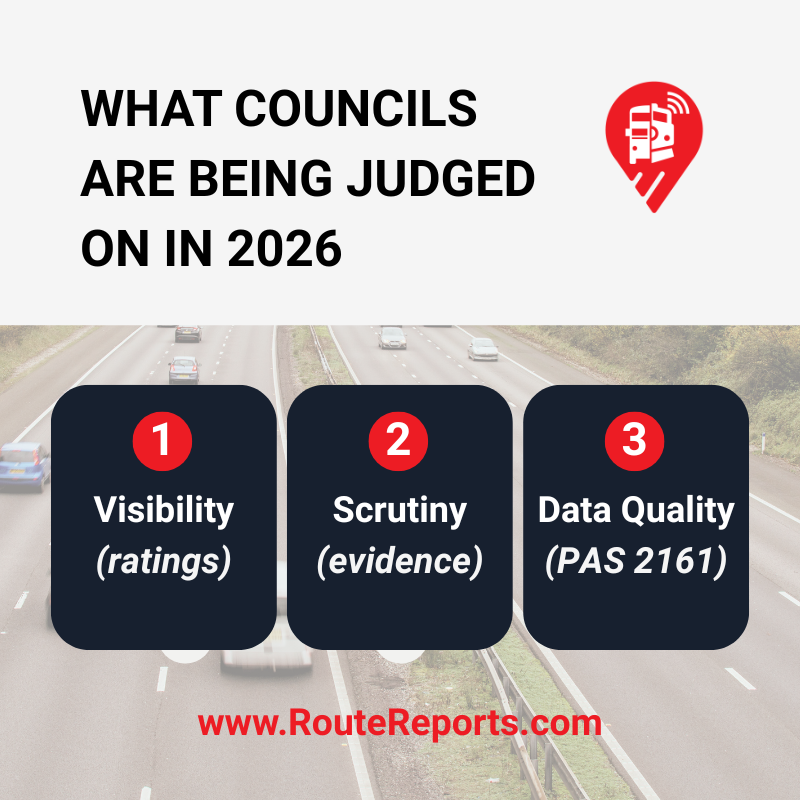
A shift is happening in local roads: not just how many defects are fixed, but how well condition and investment can be evidenced.
In 2026 the focus is on visibility, scrutiny and data quality (PAS 2161).
Defensible, repeatable monitoring matters.
👉 https://t.co/29d1hIt3nS
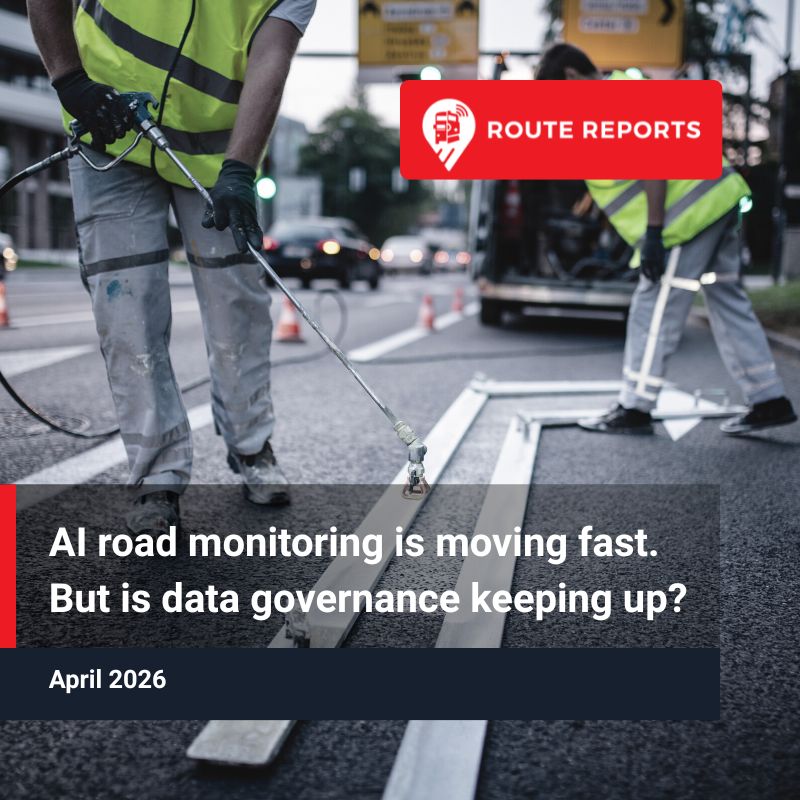
AI road monitoring isn’t just about finding defects faster, it’s about managing data responsibly.
UK GDPR & ICO surveillance guidance apply to road imagery too.
As AI grows, trust becomes a performance measure.
Find out more --> https://t.co/NQKNi7bMW0
What if you could see real AI-driven condition data from your own roads?
Free drive-by survey. Structured mapped outputs. Clear evidence to present.
For many councils, that’s when the shift happens.
Get in touch to see your network differently.
https://t.co/cIpChS1B6R
Local road maintenance isn’t just cost — it’s investment.
DfT finds £1 spent can return at least £2.20 (up to £9+ in wider benefits).
Better data means better targeting — and more of that value realised.
Read more:
https://t.co/nGcTJ9V2Iz
@transportgovuk
PAS 2161 transition starts now.
From Apr 2026, councils must collect classified condition data using approved tech.
When procuring, ask:
• Is it certified?
• Is data comparable over time?
• Does it deliver usable insight?
More here 👇https://t.co/WSHFtX3oy8
Road defects aren’t just cost and complaints, they show up in safety data too.
Injury collisions linked to poor road surfaces rose from 1,092 (2022) to 1,378 (2024).
Early visibility helps teams act before risks escalate.
Learn more 👇
https://t.co/K51TRRmyLk