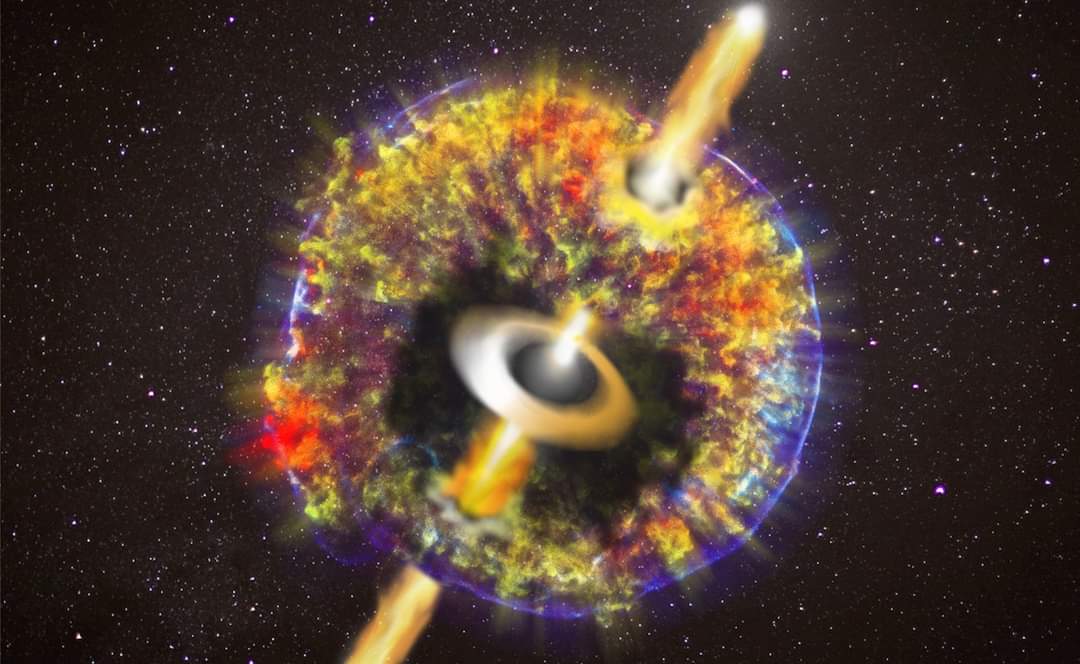
The @LIGO – Virgo – KAGRA Collaboration published today a new catalog of gravitational wave events that adds 161 events to the collection, bringing the total number of gravitational wave signals detected to date to 390 🤯
Today we celebrate the eight-year anniversary of a discovery that changed astronomy forever: on this day eight years ago @LIGO and Virgo detected their first ever neutron star merger, GW170817 💥
Exactly 7 years ago @LIGO and Virgo detected a signal that would become one of the most influential discoveries in the history of modern astronomy: GW170817, a binary neutron star coalescence
se fossimo ancora una monarchia sarebbe stato annullato sanremo per lutto nazionale e INVECE PER FORTUNA SIAMO UNA REPUBBLICA DEMOCRATICA FONDATA SU SANREMO
@cplberry@ego_virgo@NatureAstronomy@LIGO@_nikhef@INFN_ Our study provides an estimate of the rates needed for p(quasi-circular)/p(dynamic) to balance the high-likelihood of the capture hypothesis, and our Bayes factors can be easily updated once the community will compute these numbers.
@cplberry@ego_virgo@NatureAstronomy@LIGO@_nikhef@INFN_ Hi @cplberry , we do not assume that this is head on (=zero orbital angular momentum), just that it is a capture (=unbound initial orbit).
Captures rates predictions are highly uncertain and non-existing for GW190521-like systems
A new paper published in @NatureAstronomy suggests that one of the most interesting signals ever observed by @LIGO and Virgo, GW190521, may have been generated by the ‘instantaneous’ collision of two black holes in a very dense and crowded environment https://t.co/ZVBTSFqHfK
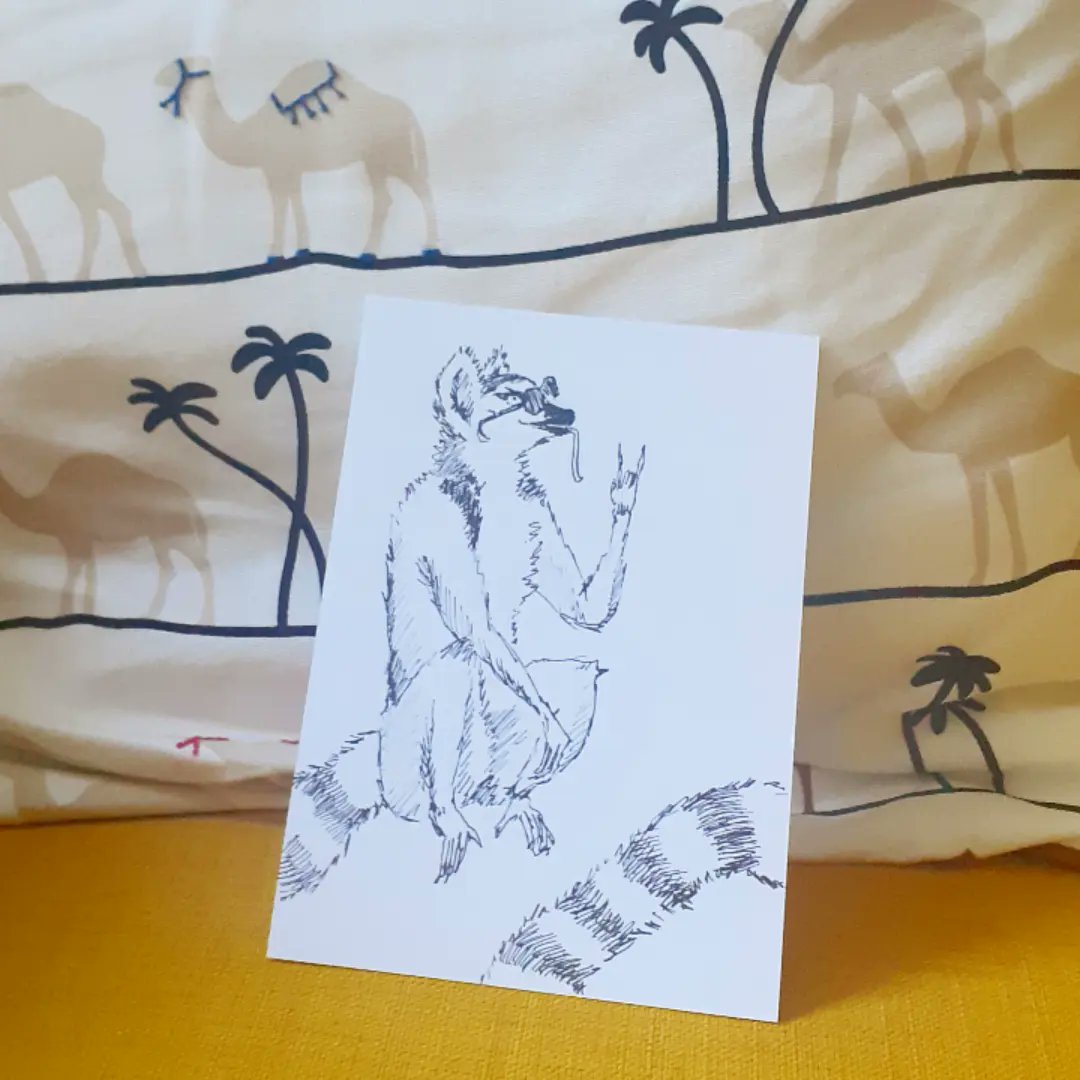
Punk is not dead, but it is endangered🥺. This #lemur found its home with their new rightful owner! You can also own one of these guys, by sending me proof of donation to 🌱 @eden_reforest