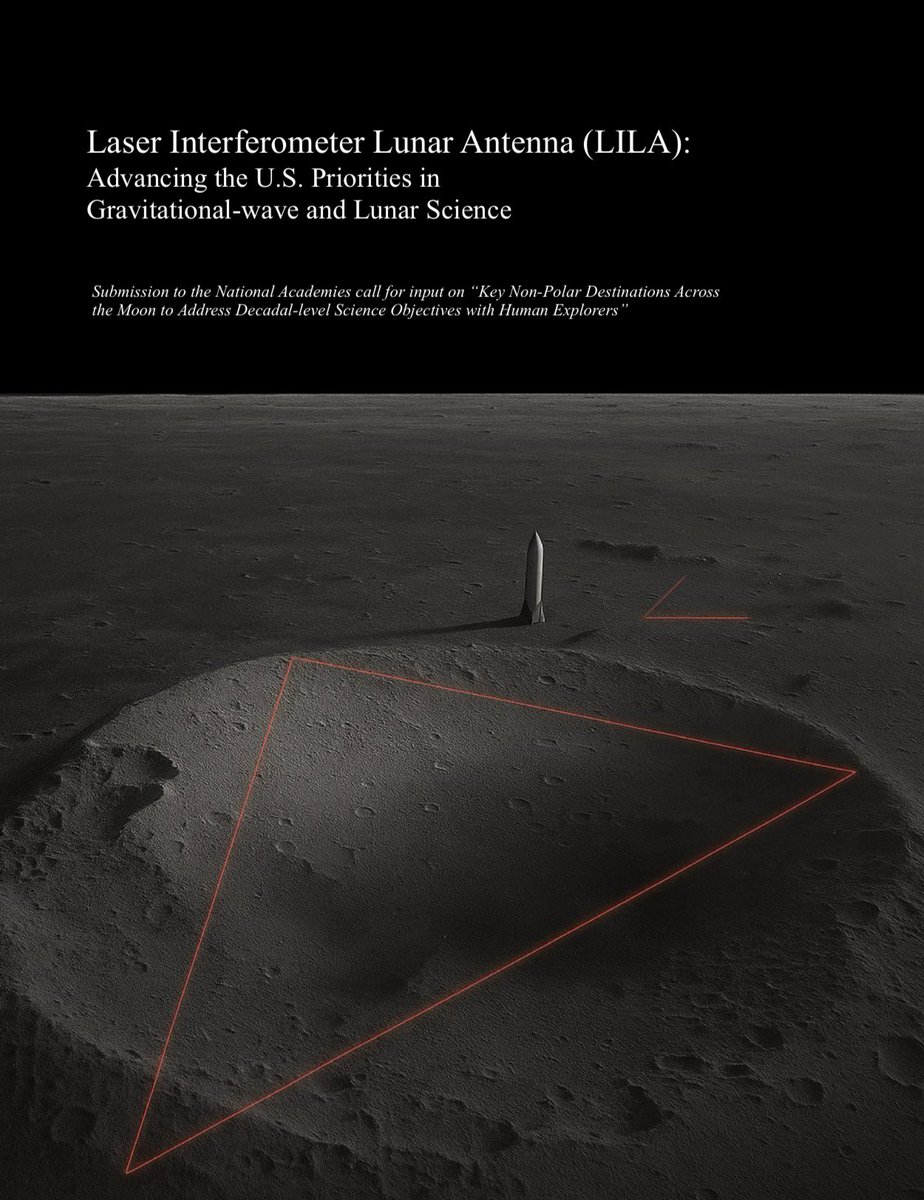
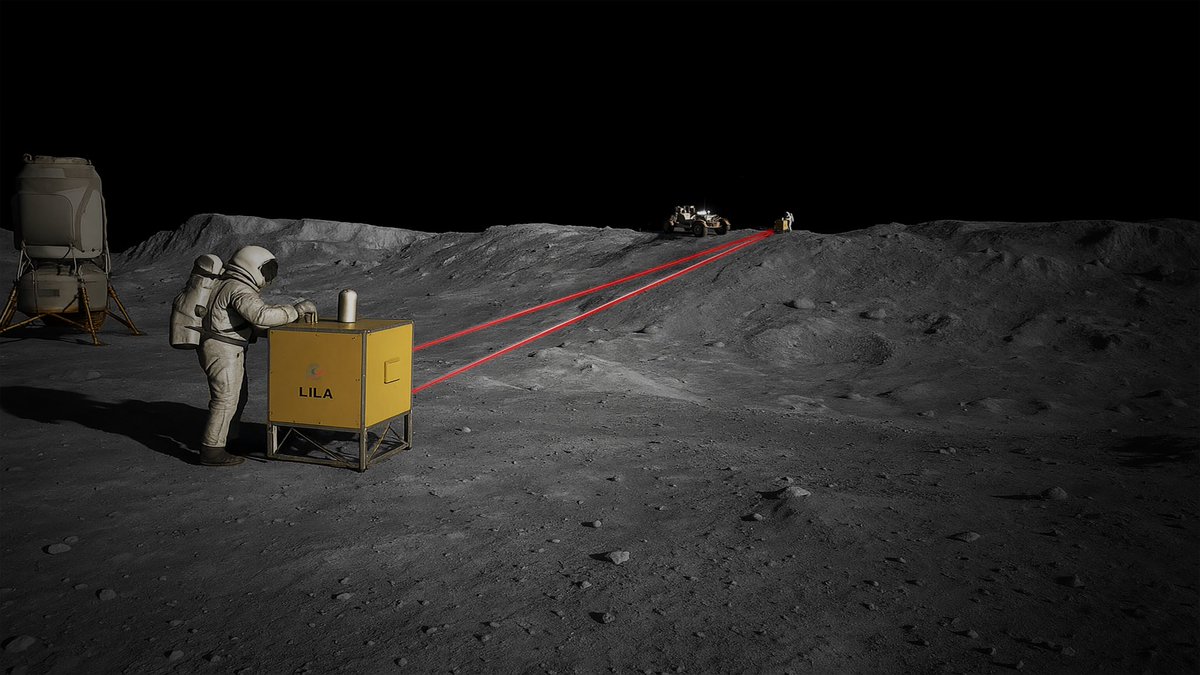
Laser Interferometer Lunar Antenna (LILA): Advancing the U.S. Priorities in Gravitational-wave and Lunar Science
Very proud of our new paper out today. An early tribute to the 10th anniversary of the historic discovery of gravitational waves.
https://t.co/wajYidGBKU
Although Subrahmanyan Chandrasekhar himself had to contend with hostile referees in his early days, when he assumed a position of authority - as an Editor of the Astrophysical Journal - he used his power with generosity.
A very well known story (see link in thread below) concerns Eugene Parker's prediction of the existence of the solar plasma wind. Referees ridiculed and rejected the paper; Parker appealed to Chandra, who, not finding any technical mistake in the work, overruled the referee and had the paper published.
Within a few years of the theoretical prediction, the first satellites discovered the existence of the solar wind. Today NASA has a US$1.5 billion space mission named "Parker Probe" that is exploring the solar wind to understand it's origins, evolution and impact on Earth.
There is something personal for me at the end of this story separated by three decades.
Prof. Eugene Parker was the external thesis examiner for my PhD thesis "Modeling the Sun's Magnetic Cycle". He sent in his review neatly typed, a copy of which is one of my most cherished collections.
Attention @arxiv authors: Our Code of Conduct states that by signing your name as an author of a paper, each author takes full responsibility for all its contents, irrespective of how the contents were generated. 1/
A reminder to our media friends that 100% of the Apollo material released today has been public for decades. The "shocking" audio "released" from Apollo 17 is literally in a Daft Punk song. The document below is from the Apollo 11 technical crew debriefing, made public in 1977.
Only one chance in this lifetime…
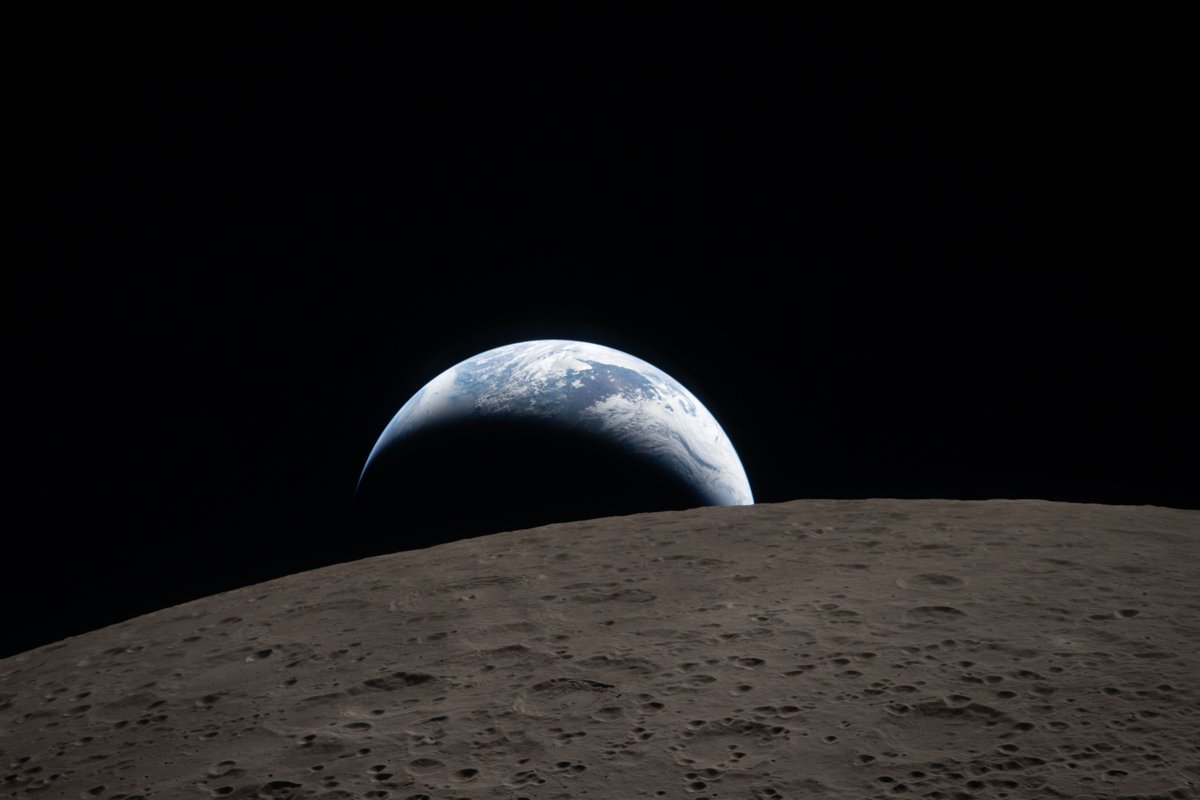
Like watching sunset at the beach from the most foreign seat in the cosmos, I couldn’t resist a cell phone video of Earthset. You can hear the shutter on the Nikon as @Astro_Christina is hammering away on 3-shot brackets and capturing those exceptional Earthset photos through the 400mm lens. @AstroVicGlover was in window 3 watching with @Astro_Jeremy next to him.
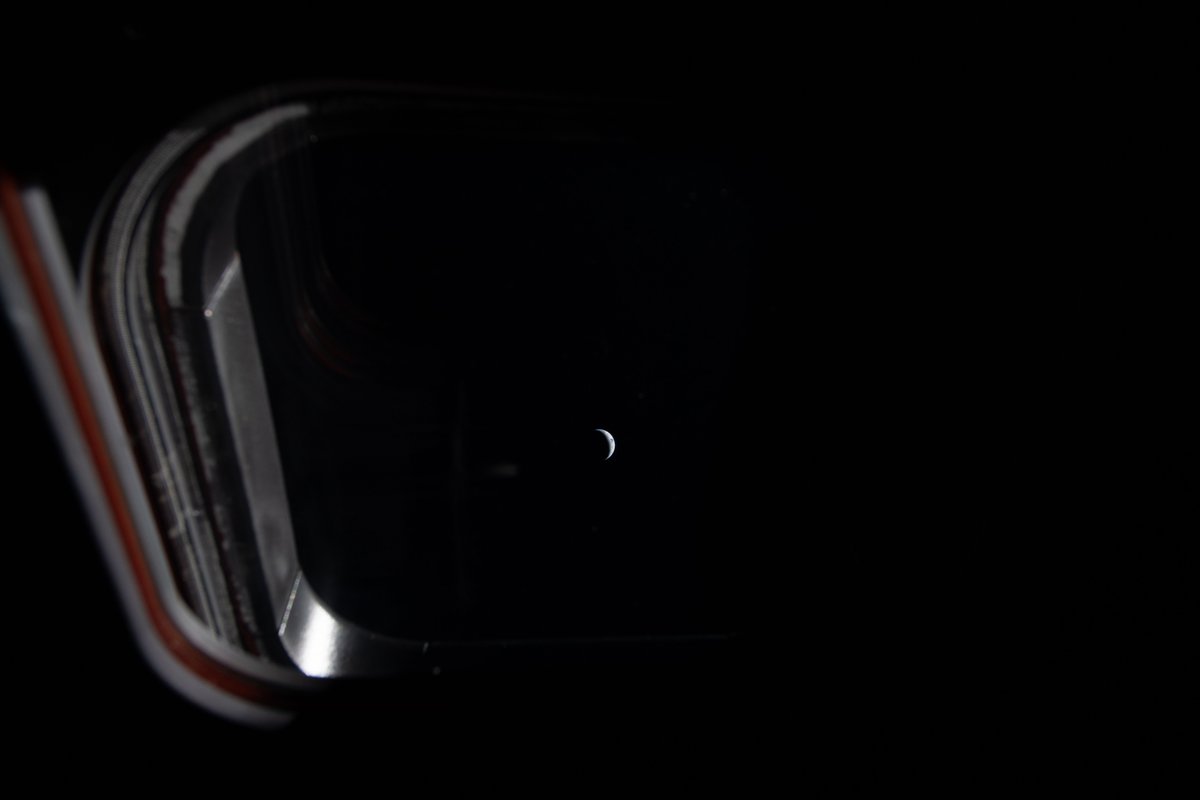
I could barely see the Moon through the docking hatch window but the iPhone was the perfect size to catch the view…this is uncropped, uncut with 8x zoom which is quite comparable to the view of the human eye. Enjoy.
Hello, Moon. It’s great to be back.
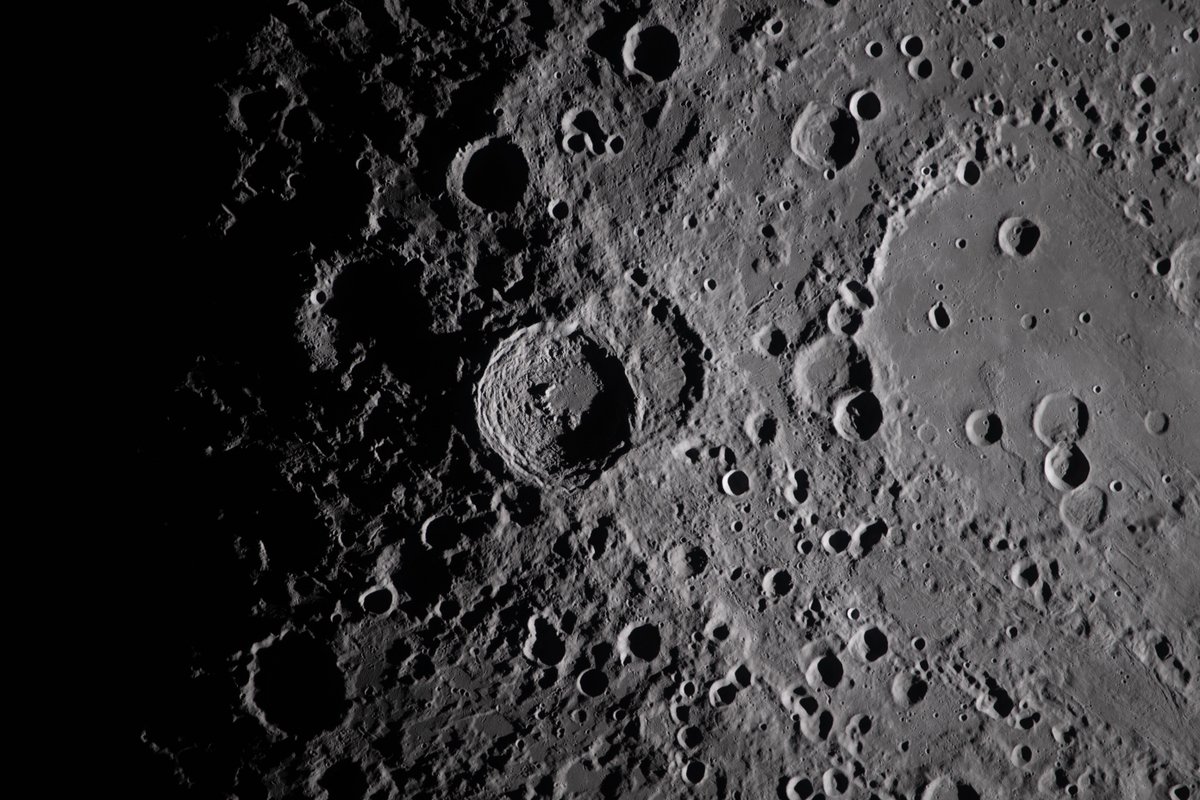
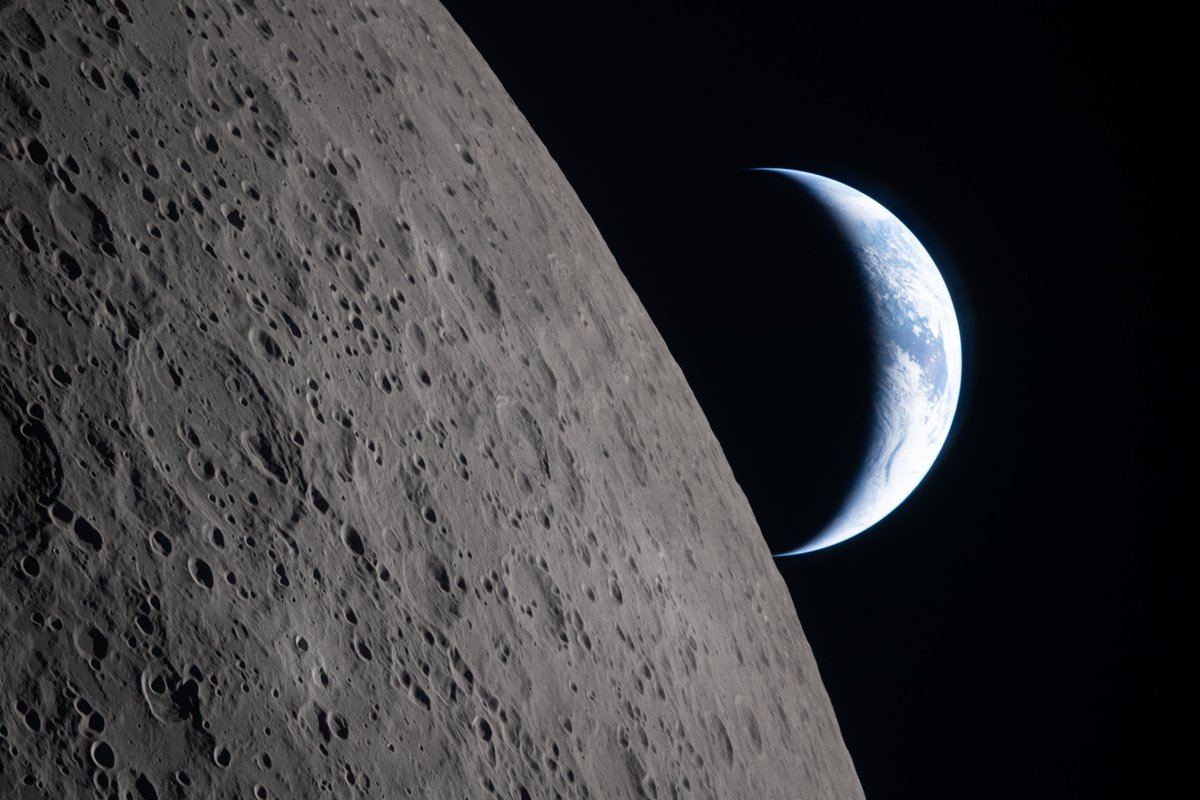
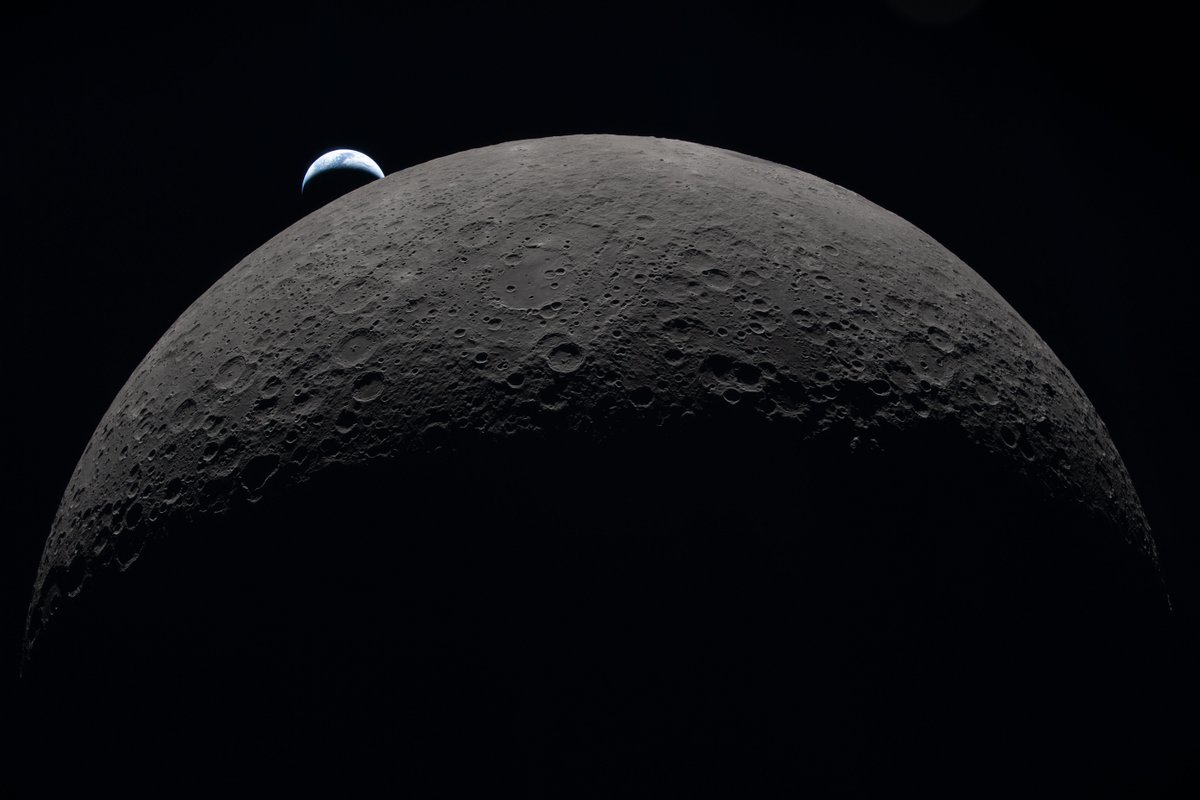
Here’s a taste of what the Artemis II astronauts photographed during their flight around the Moon. Check out more photos from the mission: https://t.co/rzM1P0QbOl
One last look at Earth before we reach the Moon.
This view of the Earth was captured on April 5, the fourth day of the Artemis II mission, from inside the Orion spacecraft. The four astronauts will reach their closest approach of the Moon tomorrow, April 6.
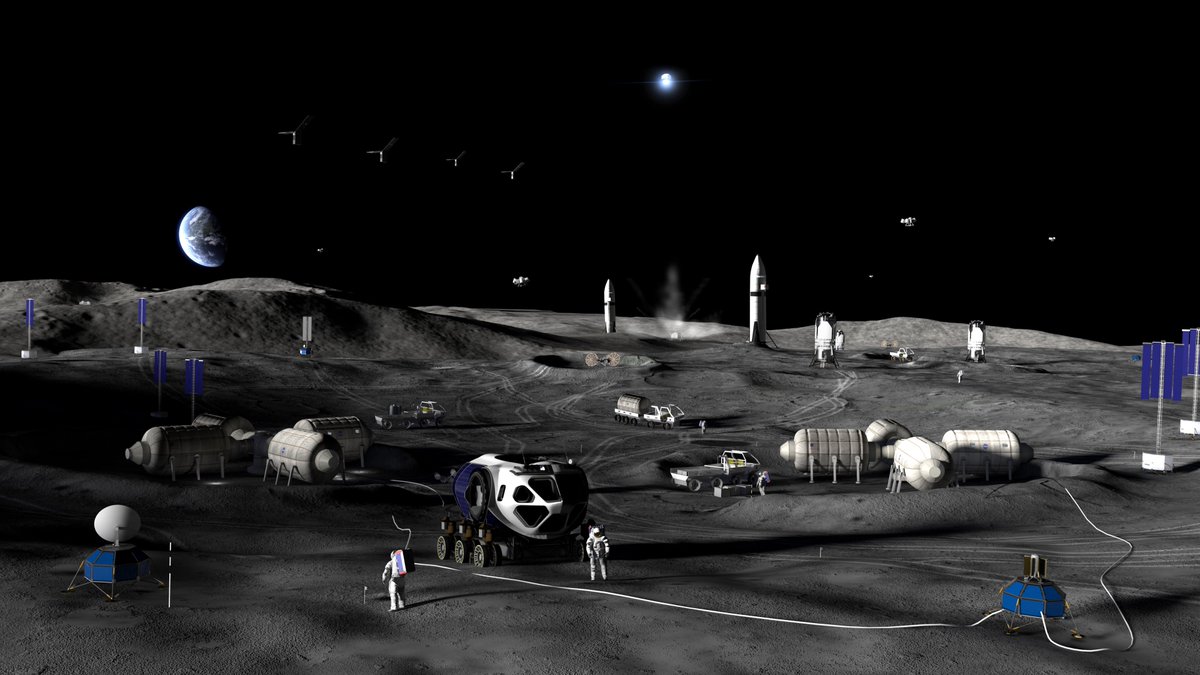
To build a sustained human presence on the Moon, we are building @NASAMoonBase, prioritizing surface operations and scalable infrastructure.
- Frequent robotic landings and mobility testing including MoonFall drones
- Starting in 2027 nearly monthly cadence of equipment and rovers with scientific payloads landing on the Moon.
- Investments in power, communications, and surface mobility
- Scalable infrastructure to support long-term human presence
The objective is clear: build the foundation for an enduring lunar base and take the next step toward Mars.
Hugo Duminil-Copin, French mathematician and 2022 Field Medalist told me he never participated in math competition and was very bad at it.
Innovative mathematics requires creativity, intuition, intense concentration, and long reflections, sometimes spread over several years.
Good performance at a math olympiad merely tests fast problem solving abilities. AI can do that nowadays.
One of the big activities of a researcher, in mathematics and elsewhere, is not to answer questions but to ask the right questions.
According to https://t.co/E8mEs7ZzBQ, as of 3:40 p.m. CT today:
- 985,035 TOTAL power outages in U.S.
- 316,661 power outages in Tennessee
- 206,387 power outages in Davidson Co.
@WKRN
New exciting result - entropy budget of the universe from merging black holes.
Work led by my former honors student @VanderbiltU and now PhD student at Harvard @CenterForAstro, Siyuan Chen.
https://t.co/KsFp1i5Yc2
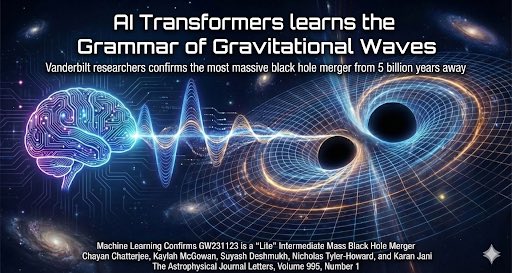
Large language models and audio transformers are known for mastering human speech and tackling complex tasks. But can they learn the grammar of spacetime (gravitational waves) and the elusive ragas of black holes?
I’m excited to share my lab’s latest breakthrough, now published in The Astrophysical Journal Letters (@AAS_Office), where we adapted OpenAI's audio transformer to analyze gravitational-wave data from a rare black hole and learn signal structure directly from spacetime itself.
By treating gravitational-wave data like an audio “language,” we applied our in-house machine-learning architecture to listen directly to @LIGO data. We found that GW231123 is indeed a rare “Lite” intermediate-mass black hole merger whose signals show hint of some unaccounted physics.
More broadly, this work demonstrates how foundation models developed for human communication can be repurposed to probe the laws of nature. This marks the beginning of a new era of gaining deep insights into the General Theory of Relativity with AI.
Big kudos to my team led by Dr. Chayan Chatterjee, PhD students Kaylah McGowan, Suyash Deshmukh, and master's student Nicholas-Tyler Howard for this breakthrough work.
2025 has been one of the most satisfying and productive academic year. All credit to my amazing group of students and postdocs @VanderbiltU, collaborators from across the gravitational-wave spectrum (LILA, LIGO, LISA) and new partners in lunar geoscience.
@demishassabis Perhaps on a similar spectrum to chess, how our brain has evolved to do mathematics that transcend any evolutionary needs, especially by the likes of Ramanujan, is as great a mystery as the origin of spacetime itself.
@NASAWatch@NSF@NASA@uw_icecube@rookisaacman Icecube has been the inspiration to envision a gravitational wave detector on the lunar surface. Need similar mindset to solve the greatest problems in modern physics.
This is a defining moment for NASA’s leadership. Congratulations to @rookisaacman on appointment as @NASAAdmin.
Looking ahead to the next phase of Artemis-era science and exploration.
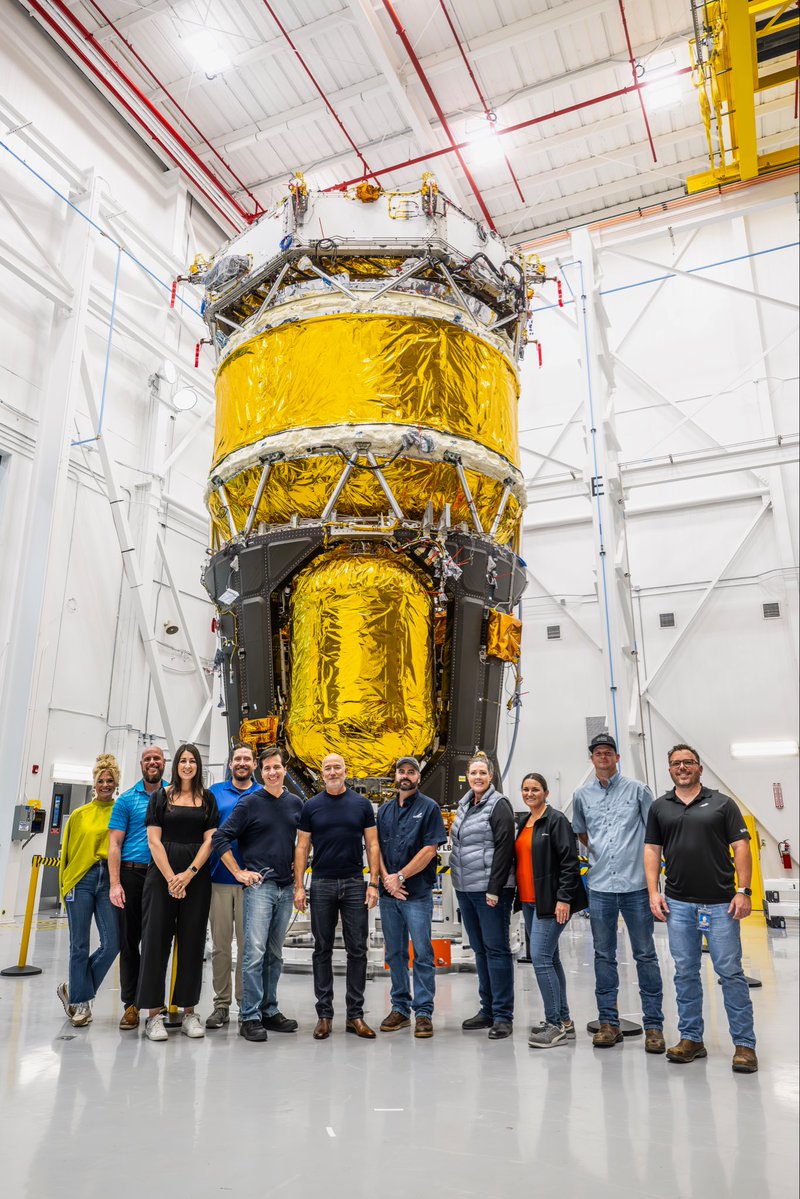
The Blue Moon MK1 flight vehicle that will land near Shackleton crater. We’ll soon be doing fully integrated checkout tests. At over 26 feet tall (8 meters), it’s smaller than our MK2 human lander but larger than the historic Apollo lander.