While @NASAAdmin talks about a future @NASAMoonbase at Lunar South Pole a research base at Earth's South Pole is being set up TODAY to conduct #astrobiology research: Astrobiologist Dale Andersen’s Antarctic Field Report: 7 November 2026: Building Up Our Research Base Infrastructure
https://t.co/Phd8vApBrV #Antarctica @DaleAndersen@SETIInstitute@ExplorersClub
NASA Administrator Jared Isaacman breaks down the agency’s plans to accelerate the Artemis program, advancing toward the Artemis III test flight in 2027 and the Artemis IV Moon landing mission in 2028. @lauraingle
MORE: https://t.co/AlvrBGSl8I
NASA Awards Moon Base Transportation, Technology, Science Projects
NASA announced a suite of awards and mission updates on Saturday to expand the agency’s Moon Base exploration, science, and infrastructure capabilities. The investments will advance commercial robotic deliveries, a nuclear-powered rover named PROMISE, launch and orbital transfer services, and surface infrastructure as the agency works with American industry to establish a sustained presence on the Moon’s South Pole.
The agency shared the news at the MAX POWER aerospace expo and air show at NASA’s Kennedy Space Center in Florida.
“We are building the Moon Base mission by mission,” said NASA Administrator Jared Isaacman. “Today’s announcements expand nearly every part of that campaign, using the playbook that carried NASA through its greatest eras: fly often, learn, apply those lessons, and get more better and more capable with every mission. When our astronauts return to the Moon, they will arrive with the first elements of the Moon Base already waiting for them on the surface.”
“In the eight months since Ignition, we’ve made incredible strides in accomplishing the near impossible: establishing a permanent outpost on the lunar surface,” said Carlos García-Galán, manager, Moon Base Program. “We’ve consolidated numerous efforts into a streamlined program, evolving our human exploration architecture into an iterative and sustained campaign for Moon Base technology development and implementation. Most importantly, we’ve taken action, awarding new contracts and forging new partnerships to accelerate development.”
Moon Base cargo landers
To strengthen the cargo lander network needed to support the Moon Base, NASA selected eight companies for the next phase of its CLPS (Commercial Lunar Payload Services) initiative. The companies are eligible to compete for future lunar surface delivery missions under the new CLPS 2 contract:
Blue Origin
Firefly Aerospace
Intuitive Machines
iSpace US
Lockheed Martin Space
Northrop Grumman Space Systems
SpaceX
Voyager Technologies
Under the CLPS 2 framework, the companies will provide lunar delivery services, including managing, building, and operating landers that transport NASA science, technology, and infrastructure payloads to the Moon.
The CLPS 2 framework is a 10-year, multiple-award, indefinite-delivery/indefinite-quantity master contract with a combined maximum value of $10 billion. NASA increased the value of the current CLPS 1.0 contract from $2.6 billion to $4.2 billion to support initial Phase One Moon Base objectives. The original CLPS contract will remain in place through November 2028, with an additional five-year period to complete awarded lunar deliveries through November 2033.
Nuclear-powered Moon rover
NASA also announced it is moving forward with development of PROMISE (Polar Rover for Observation, Mapping, and In-Situ Exploration). Carrying science instruments and technology demonstrations, the six-wheeled rover will land at the Moon’s South Pole to characterize the surface and subsurface, assess resource potential, and provide data to enable landing site selection, as well as future infrastructure and exploration activities. The nuclear-powered rover can operate during long lunar nights and within permanently shadowed regions thought to harbor ice, which is crucial for a sustained human presence on the Moon.
The agency’s Jet Propulsion Laboratory in Southern California, a division of Caltech, will manage the mission and build the rover from a combination of spare flight components and engineering test models for NASA’s Curiosity and Perseverance Mars rovers. Using proven hardware, software, and Mars rover operation approaches significantly reduces cost and enables integration and testing of the complex PROMISE rover on a shorter timeline. NASA has assessed the compatibility of the hardware with the lunar environment and determined it can tolerate the harsh conditions found near the Moon’s South Pole.
The PROMISE rover will carry a drill to extract regolith, or lunar dust, to characterize ice and other resources from approximately 3 feet (1 meter) below the surface, spectrometers for analyzing the chemical composition of surface material, temperature and radiation sensors, and visible-light cameras. It will demonstrate a next-generation, radiation-tolerant computing system, NASA’s High Performance Spaceflight Computing, and advanced autonomy sensors and algorithms. NASA is targeting late 2028 to launch PROMISE and planning an 18-month mission for the rover.
NASA awarded Blue Origin a $94 million base contract, with an option period worth an additional $140 million based on performance to deliver PROMISE to the lunar South Pole. The award expands the task order awarded in May 2026 to deliver two lunar terrain vehicles to the Moon. Blue Origin will use its Mark 1 lander to deliver and deploy the rover as part of the Moon Base’s first phase.
Launch, transportation awards
Delivering Moon Base infrastructure will require a robust transportation network between Earth and the Moon. Orbital Transfer Vehicles (OTVs) act like long-distance freight trucks, carrying large loads across space. Lunar landers handle the final delivery, bringing supplies, equipment, and infrastructure safely down to the Moon’s surface.
To demonstrate those capabilities, NASA awarded six task orders as part of the agency’s Venture-Class Acquisition of Dedicated and Rideshare (VADR) launch services contract. The awards were given to Arrow Science and Technology, Blue Origin, and Impulse Space to integrate and transport Moon Base cargo.
Three mission types will allow NASA flexibility to fly science and technology demonstrations when they are ready.
The first will include missions to reduce risks of future long-term human spaceflight for lunar exploration. The missions will verify that communication and navigation methods work properly during the journey from Earth orbit to the Moon, and OTV capability to support delivery of a CLPS lunar lander to a desired orbit. This mission type will deliver the CAPSTONE 02 spacecraft to deep space to test proximity maneuvers, navigation, and communications around the Moon.
The second category of missions will prepare the lunar South Pole for human exploration by sending a group of highly mobile drones to survey the surface before astronauts arrive, enabling safer, more informed human missions while demonstrating advanced robotic capabilities. Such missions will include the agency’s MoonFall drones, designed to scout areas beyond the reach of traditional rovers, as well as delivery of additional Moon Base assets necessary to support Phase One objectives.
To reduce risk for future missions, the third mission type will test navigation technologies and demonstrate operations in multiple cislunar orbits, between Earth and the Moon. This mission type will demonstrate commercial orbital transfer capabilities intended to increase the amount of cargo that future landers can deliver to the lunar surface.
The task orders have a value of approximately $1.3 billion combined and fall under the 10-year VADR indefinite-delivery/indefinite-quantity contract, which has a maximum total value of $5 billion across all contracts. The VADR contracts are managed by NASA’s Launch Services Program Office at the agency’s Kennedy Space Center as part of the agency’s Commercial Access to Space Program. By procuring multiple launch and in-space transportation services together, NASA provides industry with a more predictable set of mission opportunities while gaining access to a broader range of commercial capabilities for future lunar exploration.
Some missions will launch aboard Blue Origin’s New Glenn, Relativity Space’s Terran R, and SpaceX’s Falcon 9 rockets. In-space transportation spacecraft for these missions will be provided by Blue Origin, Firefly Aerospace, Impulse Space, and Quantum Space.
Complementing those in-space transportation demonstrations, NASA selected SpaceX for the Cislunar Communications Deployment Demonstration under an existing lunar logistics contract. Through a Specialized Delivery Mission task order, SpaceX will launch communications satellites aboard a Starship to cislunar space in 2028. The demonstration will help inform the development of future lunar communications networks that keep astronauts, mission controllers, and the Moon Base connected.
Lunar architecture, infrastructure
To extend infrastructure capabilities on the lunar surface, NASA plans to purchase commercial components for a Mini-Communications and Solar Tower (miniCAST), including solar arrays, batteries, and wireless power-transfer hardware. The agency awarded Honeybee Robotics, a Blue Origin company, for energy storage capability, Redwire for power generation, and Yank Technologies, Inc., for wireless power transfer in support of miniCAST.
The miniCAST will combine power and communications capabilities to support future Moon Base activities. Engineers at NASA’s Marshall Space Flight Center in Huntsville, Alabama, will assemble and test the systems before they are delivered to the lunar surface.
NASA expects work to begin within months, and the initial effort will involve components rather than a major integrated system. The agency also plans a separate solicitation for fully integrated power systems, which is anticipated in early 2027.
NASA intends to release a directed call under its Next Space Technologies for Exploration Partnerships, or NextSTEP-3 B, solicitation to help close architecture-driven, high-priority data gaps for Moon Base development. The effort will help NASA gather information it needs to plan future missions, reduce risk, and support technologies and infrastructure for sustained operations on the Moon’s South Pole. The work could include small spacecraft missions, payloads on future Moon Base flights, or the purchase of data collected by commercial partners.
As part of a Golden Age of innovation and exploration, NASA will send Artemis astronauts on increasingly difficult missions to the lunar South Pole to explore more of the Moon than ever before. In addition to providing economic benefits and advancing scientific discovery through its Moon missions, NASA will establish an enduring human presence on the lunar surface and build on this foundation for the first crewed mission to Mars.
To learn more about the Moon Base, visit:
https://t.co/OAhVKJ2R5M
@NASAMoonbase
While @NASAAdmin talks about a Moonbase at the Lunar South Pole a research base at Earth's South Pole is being set up to conduct astrobiology research TODAY: Astrobiologist Dale Andersen’s Antarctic Field Report: 7 November 2026: Building Up Our Research Base Infrastructure https://t.co/Phd8vAq9ht
NASA is moving forward with PROMISE, a nuclear-powered lunar rover that will build on decades of Mars rover innovation to explore the Moon's South Pole region, advance lunar science and discovery, and support Moon Base objectives. NASA has selected @blueorigin to deliver PROMISE to the lunar South Pole region. https://t.co/wqmilks2dG
American aerospace deserves the biggest stage in the world. We’re building it right here at @NASAKennedy.
MAX POWER is a preview of what’s ahead: extraordinary machines, the people who build them, and the next generation who will take us farther.
Looking for your next opportunity? We are #hiring for a variety of positions. If you're passionate about astronomy, service, and stewardship, we want to hear from you!
https://t.co/dpKSjq8FhI
NASA Seeks Next Generation of Explorers to Join Astronaut Corps
NASA is looking for the explorers who will help write the next chapter of human spaceflight.
Applications are now open for the agency’s next class of astronauts, who will join NASA as America returns to the Moon, builds the Moon Base, and lays the groundwork for the first crewed missions to Mars.
The next generation of astronauts will train to operate on the lunar surface, live and work beyond Earth, and take on missions that will push the boundaries of human exploration farther than ever before.
U.S. citizens interested in joining the astronaut corps have until 11:59 p.m. EST Thursday, Dec. 3, to submit their completed application materials at:
https://t.co/F7zqgWjzcl
“This is an extraordinary time to join NASA’s astronaut corps,” said NASA Administrator Jared Isaacman. “The people we select could walk on the Moon, live and work at the Moon Base, and help pioneer the systems and operations that will ultimately carry crews to Mars. Those missions will demand technical excellence, sound judgment, teamwork, and courage. NASA’s astronaut corps has always called on remarkable Americans willing to take on extraordinary challenges in service to the nation. If you are ready to join that tradition, come help write the next chapter of humanity’s greatest adventure.”
NASA expects to make its final selection in late 2027 to begin training as the next class of astronaut candidates.
“The window is open. The mission is waiting. And the only thing missing from the greatest adventure humanity has ever embarked upon is you,” said NASA Deputy Administrator Matt Anderson.
The agency last opened applications in 2024. From more than 8,000 applications, 10 astronaut candidates were selected in 2025 and are currently completing nearly two years of training.
“For those who apply, becoming a NASA astronaut is more than a career opportunity,”
said Scott Tingle, chief astronaut and chair of the Astronaut Selection Board at NASA’s Johnson Space Center in Houston. “It is a chance to join a legacy of explorers who have pushed the boundaries of discovery and play a role in the missions that will shape humanity’s future in space. The next generation of astronaut candidates could help write history while inspiring future scientists, engineers, and explorers."
Since the 1960s, NASA has selected 370 people to train as astronaut candidates for its increasingly challenging missions. The agency has 32 astronauts active in the astronaut corps, and selected applicants will join their ranks to study spacewalking, lunar geology, operations of high-performance aircraft, and more.
The basic requirements to apply include United States citizenship and a master’s degree in a STEM field, including engineering, biological science, physical science, or computer science from an accredited institution. The requirement for the master’s degree can also be met by:
Completion of at least two years of work toward a doctoral program in an appropriate technical field of engineering, biological science, physical science, computer science, or mathematics.
Completion of a Doctor of Medicine, Doctor of Osteopathic Medicine, Physician Assistant, Doctor of Nursing Practice, Family Nurse Practitioner, or a related medical degree.
Completion of, or current enrollment in, a nationally recognized Test Pilot School program, provided the program is completed by July 2027. If Test Pilot School is the only advanced technical degree, then completion of a bachelor's degree in a STEM field, including engineering, biological science, physical science, or computer science is required.
Candidates must also have at least three years of related professional experience after completing their qualifying degree.
For pilots, the professional experience requirement may be met through the following flight experience:
High-performance jet aircraft: 750 hours of pilot-in-command time.
Other fixed-wing aircraft: 1,500 total flight hours, including 750 hours as pilot in command.
Rotary-wing aircraft: 1,000 total flight hours, including 300 hours as pilot in command.
For medical doctors, residency training may count toward the professional experience requirement and must be completed by July 2027.
Astronaut candidates must pass NASA’s long-duration astronaut flight physical and demonstrate strong leadership, teamwork, and communication skills.
Since its inception, NASA's astronaut corps has represented the very best of American ingenuity, skill, and determination, carrying out missions that achieve the near impossible, expanding humanity's understanding of Earth, the Moon, and beyond.
As part of a Golden Age of innovation and exploration, NASA will send astronauts on increasingly difficult missions near the lunar South Pole to explore more of the Moon than ever before. In addition to providing economic benefits and advancing scientific discovery through its Artemis missions, NASA will establish an enduring human presence on the lunar surface and build on the agency’s foundation for the first crewed mission to Mars.
Learn more about the application process and a career as a NASA astronaut at:
https://t.co/rsXRy9v9Cg
@NASA
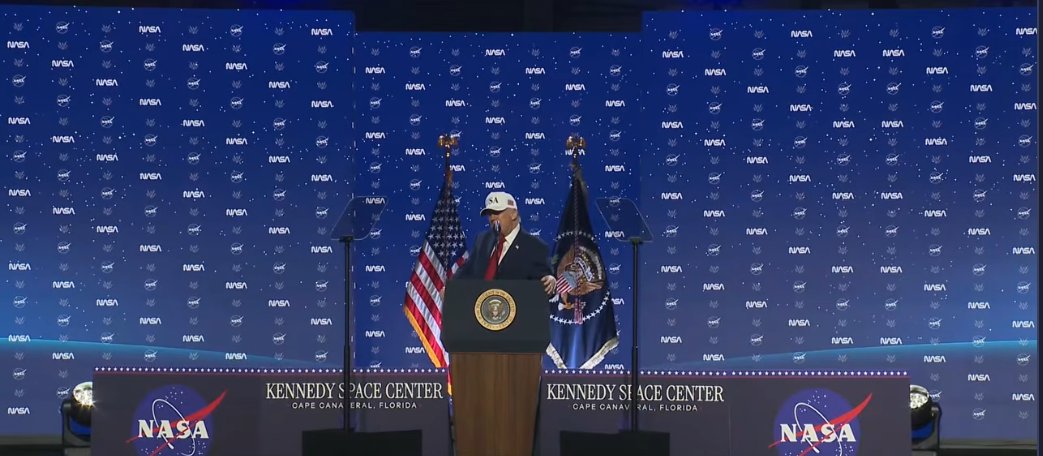
The only thing President Trump said at @NASA Kennedy that was newsworthy was that there will be a giant Air Show at KSC within 2 years. NASA gave him a plaque with his name on it that will be on the runway at KSC. Then they played "YMCA" as he left the stage.
Today (6 November 2026) on https://t.co/FPMlmsewKS
*Note* we have a new calendar function https://t.co/c14vu5RZTS
Astrobiologist Dale Andersen’s Antarctic Field Report: 5 November 2026: Traverse to Lake Untersee
https://t.co/hupuiBlEKT
Scott Base: Lessons For A Mars Exploration Program
https://t.co/VrLvNOLc8c
Pre-Accretion Formation of Sulfuric Acid in Interstellar Ice Analogs: Implications for Sulfate in Ryugu and Bennu
https://t.co/jh6cvBFvJf
Microbes Can Grow In Mars-like Conditions. What That Means For The Search For Life
https://t.co/lnBZ98nrO7
On The Detectability of Compact Multi-Planet Systems via Gravitational Microlensing
https://t.co/si6TuVZCfN
The Impact of M Dwarf Stellar Convection on Exoplanetary Atmospheric Signatures. A 3D Radiation-hydrodynamics Simulation Analysis for High-resolution Spectroscopy
https://t.co/pEmyP83tgQ
Cometary Impacts An Unlikely Pathway Towards The Origins Of Life On Earth
https://t.co/lNJQTexGPk
Are Habitable-zone TESS Objects of Interest really there? Period Resolution From The Full Archive
https://t.co/got8wGWJuV
Cometary Dust Activity As A Proxy For Refractory Organic Material Release
https://t.co/Vg00IJFZt2
Deep Evolutionary History Of Land Plants’ Closest Algal Relatives
https://t.co/iHRwAnG4Bf
#astrobiology #botany #evolution #astrochemistry #interstellar #comet #OriginOfLife #exoplanet #spaceweather #interstellar #StellarCartography #astronomy
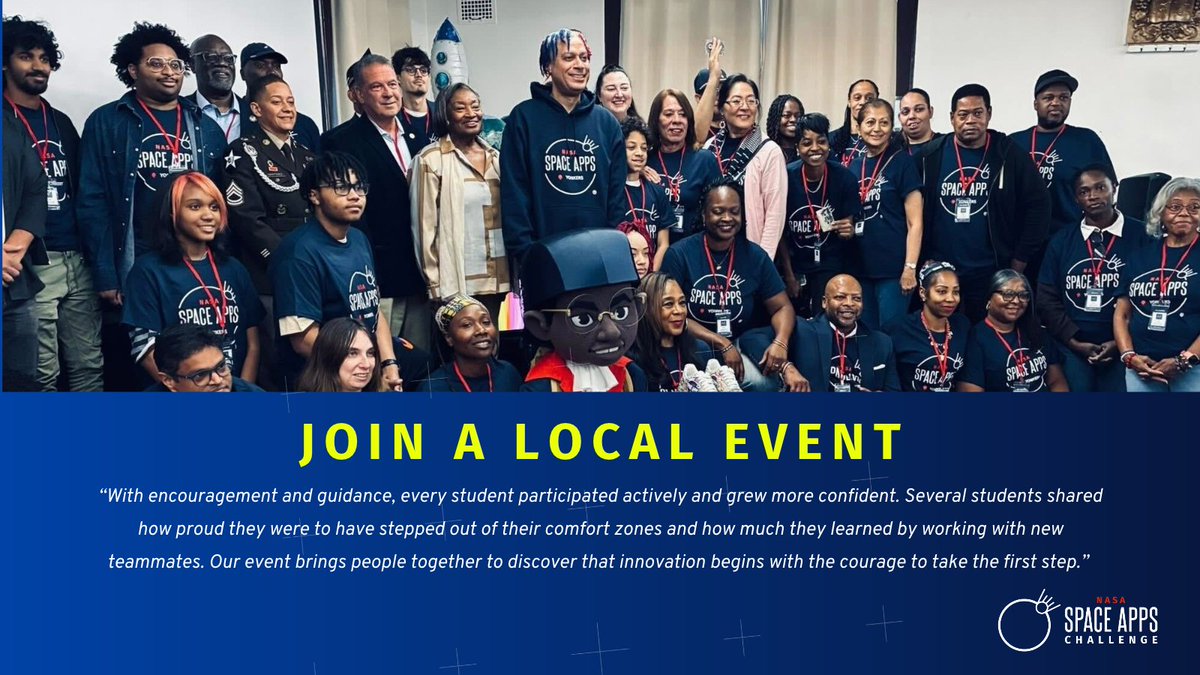
This @SpaceApps activity is an amazing projection of @NASA's #softpower potential - it is true #MaxPower - space leadership. But NASA SMD and Public Affairs plans ZERO national media briefings or access until January 2027. Baffling @NASAAdmin
The 2026 @NASA Space Apps Challenge is just 1 week away! There's still time to register and choose a Local Event to experience an unforgettable hackathon journey.📍
✅ Register: https://t.co/266t7DB1Lj
✅ Choose a Local Event or the virtual Universal Event
✅ Join or create a team
✅ Join Space Apps Connect