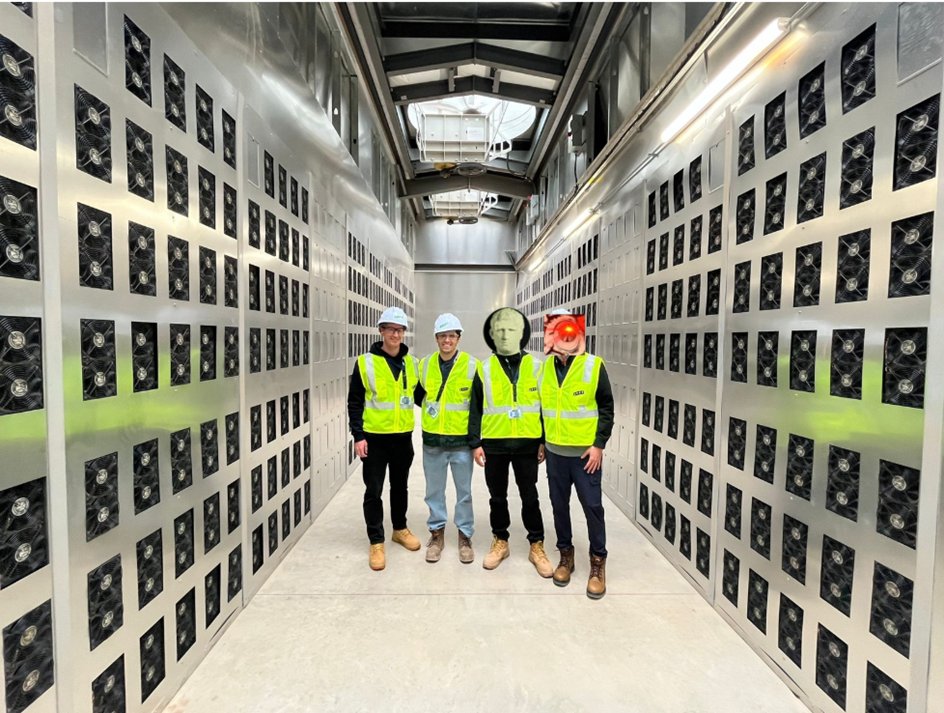
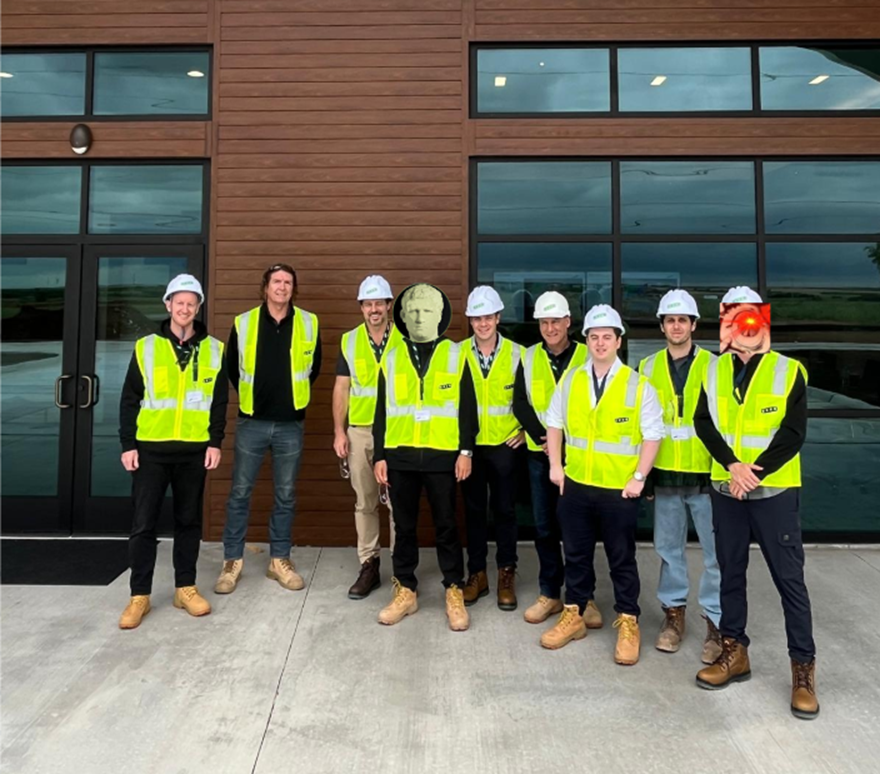
Great to welcome Kambiz and Michael to IREN. Two exceptional operators joining as we scale across all three layers: data centers, compute and software. Excited to build alongside them.
The market also needs to learn to differentiate among the business models of companies in “data centers”.
If the largest companies in the world now want to sell compute, that would logically increase demand for hard-to-find megawatts in an already constrained market. If a company has a 4.2GW portfolio of development sites and builds turnkey data centers for tenants (so the tenant can manufacture and sell compute), recent headlines seem very positive for such a company.
@CipherInc $CIFR
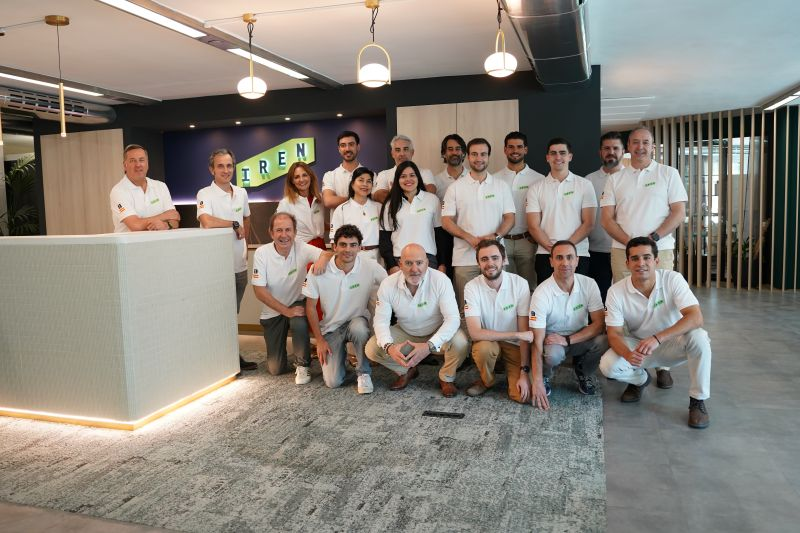
🇪🇸 IREN’s Spain team is officially suited up.
Former Nostrum Group PR Director Lidia Curto Pablos and the broader team were spotted wearing $IREN gear at the company’s new Spain office.
@IREN_Ltd European expansion, now with a team photo.
NVIDIA independently validated our B300 training performance across their benchmark suite, a status only a few achieve. Design, networking, software and operations tuned as one system. Owning the data centers, not renting them, helps keep cloud performance repeatable at scale.
IREN has achieved @nvidia Exemplar Cloud status on NVIDIA HGX B300 for training workloads.
This status confirms that IREN's infrastructure performs within NVIDIA's reference performance targets across its full suite of benchmarking recipes, validated against NVIDIA reference architecture.
"IREN's achievement of NVIDIA Exemplar Cloud status reflects deep engineering collaboration between our teams and the quality of infrastructure behind IREN's AI Cloud, giving enterprises confidence to run their most demanding training workloads at scale." — Warren Barkley, VP Product Management, NVIDIA
Read full blog: https://t.co/GbdlTB3v79
Welcome to Dub Nation, @IREN_Ltd 👏
Golden State and IREN announced today a landmark multi-year global partnership that will include the IREN badge on all Golden State Warriors jerseys beginning with the 2026-27 season.
Definition of sounding a bear argument instead of actually making one
$IREN’s Open ATM is great for no debt financing and their already existing debt financing has been better than $NBIS
This is acretive and the market has clearly like what they have been doing so far with it.
Dont let the big accounts like this fool you, they have a hidden agenda.
They have yet to talk about Nebius’s terrible unit economics from bare-metal deals and costly/risky datacenter buildout’s.
$IREN 🚀
$IREN A West Texas Road Trip 🧵
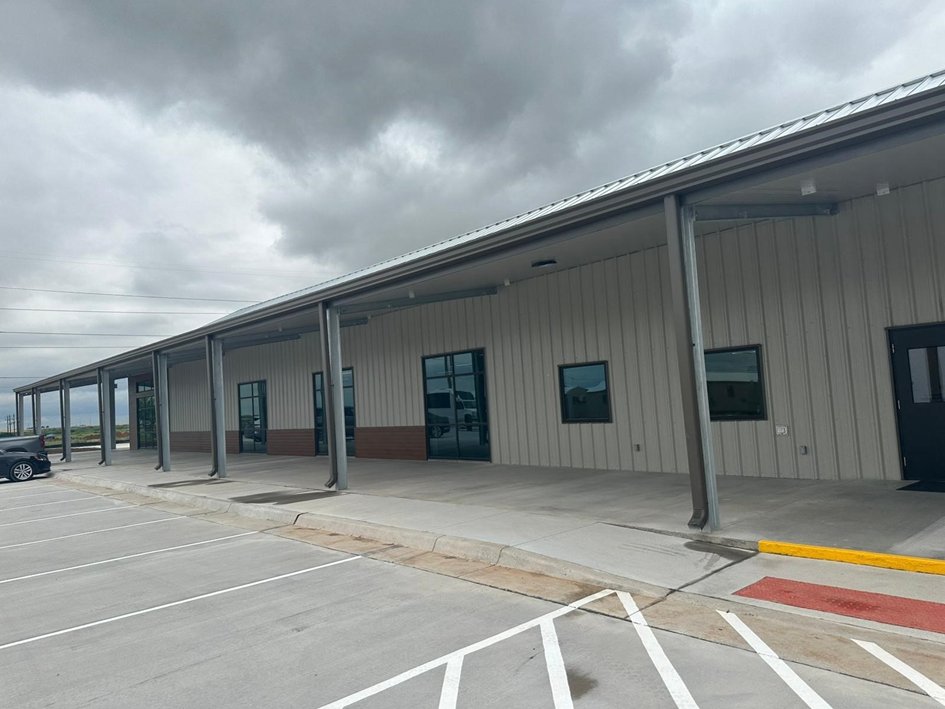
On Monday, I had the privilege of visiting @IREN_Ltd's two sites in Texas. After an 18-hour flight and a 3.5-hour drive, we arrived in Childress—just in time to hop on the Sky Limousine and tour the nearly deserted data center campus.
Since it was Memorial Day, there were no workers on site, aside from a handful of people from the management team.
I was accompanied on this trip by the distinguished @Agrippa_Inv, @alanbialo, and @nanotitan28.
We were also joined by IREN’s largest shareholders from Germany, and we became the first group to visit the new office, which had just been energized last week.
After an hour touring the site, we sat down for a presentation and Q&A session—topped off with some authentic Texas barbecue.
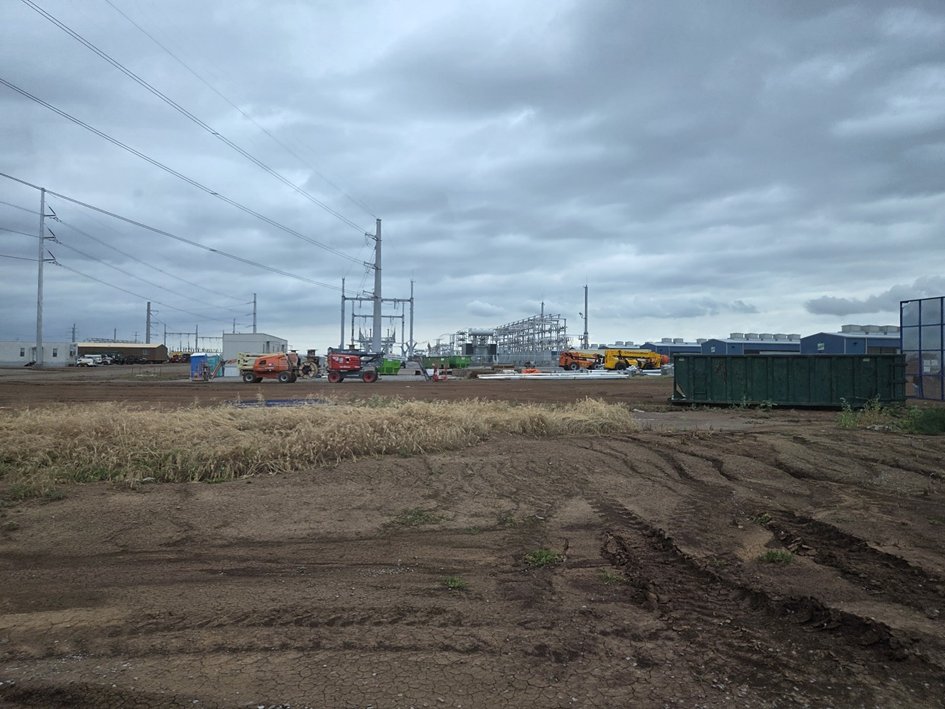
Following a group photo, we hit the road again and headed toward Sweetwater.
$IREN: The cloud market's dark horse
I bet most $IREN bulls are starting to get increasingly exhausted by the price action. I certainly am.
However, as long-term investors, we should see day-to-day price action as nothing more than noise.
$IREN is particularly "noisy," which makes it an especially difficult hold. Yet in times like these, it's important to step back and refocus on the company's fundamentals rather than let price action sway one's emotions.
And the way I see it, $IREN's competitive standing is rapidly improving.
I recently came across an interesting research report by Goldman Sachs that highlighted the discrepancy between planned data center capacity and realized capacity.
Out of the ~18 GW planned to be commissioned over the past 6 quarters, only about ~11 GW actually got built.
Not only is the gap between planned and realized capacity rapidly widening, but the rate at which new capacity is coming online has actually declined over the past couple of quarters.
Much of this discrepancy comes down to power continuing to be a major bottleneck.
As grids get more and more constrained with lead times reaching 5+ years, many developers are moving toward behind-the-meter (BTM) generation (on site power generation), circumventing the need for grid connectivity.
Yet that comes with its own set of problems and bottlenecks. The end result is an increasing amount of delays and outright project cancellations.
This industry backdrop plays directly into the hands of $IREN, which now has 5.8 GW of secured grid-connected power across global jurisdictions.
The only reason the industry is switching toward BTM is that it's the only option if you don't want to wait in multi-year queues to secure grid connections. But don't get it twisted, grid-connected power remains the preferred option.
$IREN is in a unique position to capitalize on this structural bottleneck and become one of the few cloud providers that can actually bring on 5+ GW of compute capacity over the coming years.
I'd even go as far as saying that this structural advantage is the primary reason the $NVDA partnership came to be.
While $NVDA undoubtedly remains king of the hill, even they face a real dilemma that could cause cracks in their growth trajectory.
On the supply side, they have to come to terms with the fact that the gap between planned and realized data center capacity is widening, while the trend of new capacity coming online is actually decelerating.
This is the issue I just flagged, and it could act as a potential growth bottleneck for $NVDA, since fewer builds means fewer GPU sales.
Layered on top of this is the demand side. It's perfectly clear that demand for $NVDA's AI hardware remains insatiable. However, when looking closer, it's also apparent that competition is increasing.
Pretty much every hyperscaler is working on their custom chips (TPU, Trainium, Maia, MTIA), and not exclusively for internal use cases anymore, but increasingly to service the compute needs of large AI labs. Anthropic alone has signed deals worth billions for Google TPU and AWS Trainium capacity.
Then you obviously have the likes of AMD and Cerebras directly competing against the AI giant, trying to claim market share.
Taken in aggregate, these two issues could gradually lead to a growth problem for $NVDA if not addressed.
This is exactly where $IREN comes in.
They've got the largest secured power portfolio of any neo-cloud at 5.8 GW and growing fast, they develop 100% of their data centers themselves, and they're not building competing silicon.
That makes them the most reliable demand outlet $NVDA can partner with at scale.
The Sweetwater partnership, positioning the 2 GW campus as a "flagship DSX deployment," isn't $NVDA doing $IREN a favor. It's $NVDA solving its two biggest problems at once.
I'm sure you know the popular saying that "history never repeats, but often rhymes." I think today's neo-cloud market is somewhat similar to the dot com era search engine war.
Back then, the front-runners leading the race were AltaVista, Excite, and Yahoo, while Google was a latecomer that ultimately came out on top.
Today, the vast majority of investors in this space are declaring either $CRWV or $NBIS the obvious winners in the race to become the next hyperscaler.
However, I believe the real dark horse that the mainstream doesn't give much credit to is $IREN.
I believe they have all the ingredients to leapfrog every competitor in a short amount of time, in large part due to their structural advantages and pursuing the right long-term strategy from the get go.
The asset-light model, which both $CRWV and $NBIS have been leaning into, doesn't work well in capital-intensive industries, at least not over the long run.
It's somewhat of an oxymoron, since it seems intuitive that one way to circumvent some of the CapEx burden is to outsource from colocation providers.
Yet that approach leaves you with less control, less flexibility, and ultimately higher costs in aggregate in the form of operating expenses (the landlord also has to earn $).
I studied the Bitcoin mining industry for years, and the asset-light model was once a popular strategy around the 2021 bull market. While it proved to be a strong growth lever, it ultimately ended up being a disaster for anyone who adopted it.
Companies like $MARA are the perfect example.
$MARA heavily adopted the asset-light model and grew to become the largest $BTC miner, yet ended up as one of the most unprofitable public miners of all, leading to significant value destruction for shareholders over time.
Once it became obvious that asset-light wasn't a sustainable strategy, $MARA tried to pivot away from it by increasing self-deployments. But developing infrastructure in-house is a much harder discipline to master, and you don't simply switch into it overnight.
$IREN ultimately won the mining race last cycle by doing the exact opposite of $MARA from the start.
They developed all of their data center infrastructure in-house, backed by a seemingly unlimited pipeline of secured power, which ended up making them the fastest growing and most profitable miner of all time.
While the cloud sector has significant differences from the mining industry, the primary drawbacks of the asset-light model carry over.
Over time, it will become obvious to Wall Street and the broader market that this strategy sounds great in theory, but in practice leads to a stack of operational issues and severe margin compression.
Out of the two current front-runners, $CRWV and $NBIS, I think Nebius will do better. They've at least started moving toward a more diversified mix of self-owned capacity rather than purely relying on hosted colocation, which is the right direction even if they're still early in that pivot.
That said, as the $MARA example showed, developing in-house gigawatt projects at scale is not something you learn overnight.
It's clear to me that a player like $IREN, which has been building this discipline from day one, has the most realistic pathway toward sustained, profitable growth in this space.
In my view, $IREN is the dark horse that will end up winning the race. Thus overthinking today’s price action wouldn't do me any favors.
Cheers guys, have a great weekend! ✌️
$CIFR CEO Tyler Page says the company may generate its own power on-site to move faster on AI data center demand.
Hyperscalers need power faster and Cipher may be able to “tap the pipeline” instead of waiting years on the grid.
🚨 LMAO!! President Trump just dropped this absolute GEM: He's filling the newly improved Lincoln Memorial Reflecting Pool with leftist tears
Straight from the source 🤣🤣
📽️ @TheRicanMemes
$IREN - Analyst ratings.
> Canaccord raises PT from $70 to $79.
> B.Riley raises PT from $88 to $96.
> Cantor Fitzgerald raises PT from $77 to $99.
> BTIG maintains PT at $80.
> Bernstein maintains PT at $100.
> Macquarie maintains PT at $90.
> Compass Point maintains PT at $105.
Source: TipRanks.
$IREN: Rapidly Rising Cost of BTM Gas Turbine
Gas turbines and associated pipeline and equipment are now 3m-4m/MW based off Wells Farm research from @ShanuMathew93! That's not even including the cost of natural gas. Without a major pipeline or source of natural gas nearby, liquified natural gas is needed which is 15 cents/kWH.
The market has rewarded $BE for producing MWs in the form of fuel cells which are good for 5 years and BE sells them in 10 year service contracts aka fuel cells as a service. Eventually IREN's MWs will be valued too. I mean why pay 4B/GW in BTM Gas Turbine equipment when you can get grid connected power at rates opex same or lower than generating from natural gas in many states?
Margin calculation wise, grid connected datacenter build is 10m/MW so BTM Gas Turbines is an increase of 30-40% on upfront capex which eats directly into profits.
Heavy Redundancy Factor
With a redundancy factor of 30-40% needed, many MWs of capacity can't even be used. Who cares if you have a 1.1 PUE datacenter if you are BTM Gas Turbines? The 1.1 PUE datacenter effectively became 1.1 * 1.4 = 1.54 PUE. And yes it's multiplicative because you need redundancy in the gas turbines for the AUX load like cooling too.
People will figure out this is much more important than the cost of electricity. BTM is a very expensive solution.
I never believed in the tokens/MW metric because really it should be tokens/(GPU+HBM) because cost of GPUs and HBM which is still the dominant factor here but BTM screws over any token/MW metric too once you factor in redundancy needed.
Why were Gas Turbines considered before $BE Fuel Cells and Smaller Engines like Reciprocal Engines?
Gas power plants last 25 years. In the case of NBIS's 2.6B for 328MW, BE Fuel Cells are 7.4m/MW for 10 years only. When normalized to 20 lifetime of datacenter, gas turbines are 2.8m/MW-20yrs while BE Fuel Cells are 14.4m/MW-20yrs!
Fuel Cells also have a redundancy factor 31% as NBIS is getting 250MW of usable power and 78MW of the fuel cells are for redundancy. That makes a 1.1 PUE datacenter effectively 1.1 * 1.31 = 1.44!
Smaller engines are in-between cost curve of Gas Turbines and Fuel Cells which is why NBIS attempted to use Bergen Cruise Ship Engines before they switch to $BE Fuel Cells.
Impact on IREN
Market doesn't reward IREN for hoarding GWs. When IREN converts the GWs to compute and the cost effectiveness of grid connected power over BTM Gas Turbines or Fuel Cells is apparent, IREN will be rewarded. Jane Street Algos and Wall Street Analyst rewards hard metrics like revenue, margins, and profit, not capacity to be built in the future like MWs.
IREN is seeing painful delays now on GPU deliveries which back up their entire datacenter bring up schedule. On the backend, however, having this huge power portfolio will allow IREN to build out the fastest unburdened by BTM buildout time on top of DC buildout time.
Thanks to @alanbialo for pointing out this post to me.
$IREN 🔥🔥🔥
🚀 Press the REPOST button if you think IREN will hit $100 this year
🚀🚀 Press the LIKE button if you think IREN will hit $150 this year
🚀🚀 🚀 Press BOTH buttons if you think IREN will hit $200 this year
IREN has now secured 5.8GW of power … AND MUCH MORE TO COME 👀
The big question now is, if/when will IREN and ANTHROPIC do a deal? 👀👀👀
“It became clear that we weren’t just witnessing another technology cycle. We were witnessing the emergence of a new industrial demand class. For the first time in a very long time, demand growth wasn’t being constrained by capital. It was being constrained by physical infrastructure. That was the real “aha” moment for me.
Power wasn’t just part of the AI story, it was becoming the story.”
Read the full conversation with @PaulBPrager 👉