@ANI Why would you provide food and shelter to someone who was going to be arrested? Not just questioned,but arrested. What does that make you? Co-conspirator or accomplice to a crime
@ShereenBhan 2-3 months more? After this month's fall? So price hike should also have come after the crude prices being high for 2-3 months, i.e by end of June or July. What kind of ultra capitalism is this? That too for the inefficient blended mixture sold as petrol @HardeepSPuri
@cricinfo Doesn't matter. Someone else will come up if one or more of these core bowlers get hurt. That's the beauty of NZ cricket. Always some one stands up for the team. No superstardom no fanfare. Comes up, gets the job done, gets back into obscurity
@sidhant Let us presume every point raised is nice and well. The question remains WHY? WHY restore ties? What are we losing? What will we gain? More importantly, what will these signatories gain?
@cricinfo Strategy,approach, players all are moulded into ODI style. T20 needs different roles and actions that this team is yet to unleash for unexplained reasons.
ISBHF Ball Hockey World Championship 🏒
Indian Boys defeat the French in Group B Finals to Win Gold🏆
Dominant Campaign by India:
7 Matches - 7 Wins
Best Offense - 53 Goals Scored
Best Defense - 13 Goals Conceded
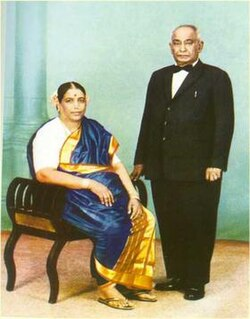
In 1922, Western colonial cartels told P. Ayya Nadar that a drought-prone, uneducated village in South India could never compete with Europe’s advanced industrial manufacturing. Ayya Nadar responded by traveling across the country, collecting the secrets of mechanized match production & returning to build a cottage industry that broke the Swedish match monopoly forever.
This is the story of how a Tiny Spark built a Great Nation. In the early 1900s, India was 1 of the largest consumers of matches in the world, but every single strike of fire was controlled by foreign giants. A Swedish billionaire named Ivar Kreuger known globally as the "Match King" had established an absolute, suffocating monopoly over the global market.
Foreign-aligned giants like WIMCO flooded India with imported matches, making massive profits off the daily needs of ordinary Indians. The narrative was carefully maintained: Complex chemical formulations & high-precision splints require European machinery; the Indian villager is only meant to be a consumer.
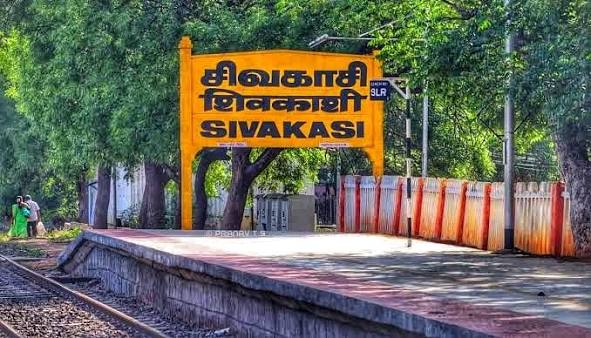
While European corporate lords grew unimaginably wealthy, rural regions in India like Sivakasi were dying of drought & poverty. The land grew nothing & the people had no jobs. They were living on a literal powder keg of potential, but lived in absolute poverty.
P. Ayya Nadar had no foreign degree/massive inheritance, but he had a PhD in Survival. Seeing his hometown of Sivakasi starving due to failed monsoons, he refused to accept that destiny. He approached traditional elite financiers for loans to import Western matchmaking machinery. They laughed him out of the room. The narrative was that uneducated, rural Indians could not handle hazardous volatile chemicals like phosphorus & potassium chlorate, nor could they manage industrial balance sheets.
Ayya Nadar did not look for foreign machinery. He went to find the secret process himself. Ayya Nadar & his partner undertook a journey to Calcutta, where a few primitive, highly secretive match factories existed. To bypass corporate espionage guards, they worked in disguise as low-level laborers, observing the exact chemical ratios, drying times & wood-slicing techniques with laser-sharp focus.
He did not come back with heavy, imported machines; he came back to Sivakasi with a simple, handwritten blueprint for a decentralized, hand-made cottage industry. The Pitch to his drought-stricken townspeople was simple: "Give me your labor, not your money. We do not need automated European factories; we will build this with our own hands."
Poor villagers, who had lost all hope due to dried-up farms, dug into their meager savings & offered their sweat. They built simple wooden hand-frames & mixing tables because Ayya Nadar promised them they would no longer import their fire from Europe, they would manufacture it.
Against all odds, in the 1920s, the indigenous match factories of Sivakasi were born. To fight the massive marketing budget of the Swedish cartel, Ayya Nadar engineered a brilliant, highly localized weapon: Patriotic Branding.
He plastered images of Indian freedom fighters, local deities & national symbols onto the matchboxes. For the 1st time in history, the profits from a matchbox did not cross the Atlantic to line the pockets of a Swedish billionaire; they stayed entirely within the community. Striking a local matchbox became a daily act of defiance against colonial rule.
The dusty, barren outpost of Sivakasi completely transformed into a booming industrial powerhouse of fireworks, printing presses & safety matches, funded entirely by indigenous match money. Ayya Nadar’s decentralized model created the blueprint for India's cottage industry revolution.
This model of labor-intensive, localized manufacturing was so wildly successful that it forced the govt to place high excise duties on foreign mechanized matches to protect Indian hands. W/o Ayya Nadar's "Tiny Spark" victory, India’s massive home-grown printing & fireworks sectors would simply not exist.
Today, Sivakasi fulfills ~90% of India's fireworks & safety match demands, employing 100s of 1000s of rural families. P. Ayya Nadar proved that industrialization does not have to be Top-Down (from heavy Western machines to the poor); it can be Bottom-Up.
He showed that a community of determined human hands is vastly more powerful than a million-dollar automated factory from a European cartel. P. Ayya Nadar built a Backbone. He proved that a drought-stricken Indian villager could spark an industrial revolution that could burn down a global monopoly.