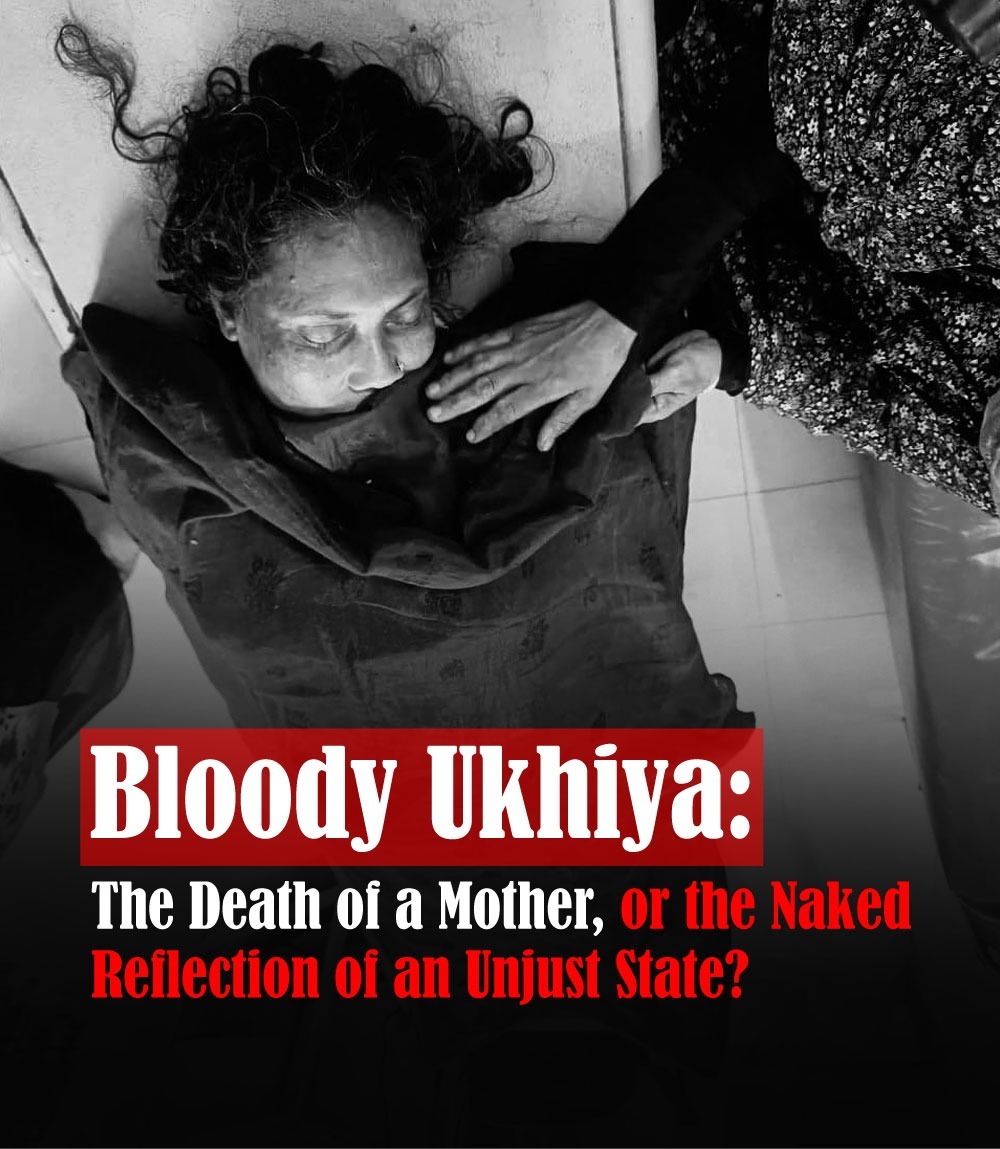
Bloody Ukhiya: The Death of a Mother, or the Blunt Reflection of an Unjust State?
——
Ukhiya in Cox’s Bazar - once known for tourism, border politics, and the Rohingya crisis - is once again making headlines over allegations of horrific political violence.
On Saturday night, May 16, 2026, around 9:30 PM, an incident unfolded in the Thaingkhali-Thaipalong area of Ukhiya that has shaken not just one family, but the entire community. According to reports published in various media outlets, leaders and activists of the #BNP were accused of abducting Chhatra League activist Abdur Rahman over the slogan “Joy Bangla.” When his mother, Chhaiyada Khatun (50), attempted to rescue him, she reportedly came under attack. She later died from her severe injuries.
A political slogan — “Joy Bangla.”
A phrase deeply tied to Bangladesh’s Liberation War history. If those words can now become a threat to someone’s life, then this is no isolated incident; rather, it symbolizes a terrifying collapse of political tolerance within the state.
From a legal and political perspective, the incident raises allegations of several serious crimes:
- First, intimidation and persecution based on political identity or ideology.
- Second, abduction.
- Third, a coordinated assault on a woman and a mother.
- Fourth, death resulting from that assault.
In other words, this single event appears to contain a complete blueprint of violence.
Perhaps the cruelest aspect is that at the center of this tragedy was a mother.
She was not a frontline political activist, nor a leader of rallies or demonstrations. She was simply a mother trying to save her child - and she lost her life doing so. Such a scene is shameful for any civilized society.
The cries of Abdur Rahman’s sister after losing her mother have already spread across social media. The atmosphere of grief, fear, and anger now surrounding Ukhiya reflects not just the tragedy of one family, but the growing insecurity felt by ordinary citizens.
Ukhiya has long struggled with instability. For years, various reports have raised allegations involving weapons, drugs, extortion, and violence surrounding the Rohingya camps.
Political rivalry in the region has also frequently turned violent. As a result, ordinary people are increasingly asking: is the state truly capable of maintaining law and order?
The government’s responsibility is not merely to issue statements. It must ensure impartial investigations, bring perpetrators to justice regardless of political affiliation, and take a visible stand against political violence. Otherwise, every new death will become just another statistic.
This incident in Ukhiya once again forces the nation to confront an old and painful question:
Is Bangladesh becoming a state where a person’s political identity determines whether they are safe?
The answer to that question - written in the blood of a mother - now remains a debt owed to the entire nation.
#Bangladesh #BangladeshCrisis
During the period of the interim government from August 2024 to February 2026, however, the mass measles vaccination campaign which normally happens every four years was missed. The last one was in 2020.
Stockpiles of vaccines became depleted as the procurement process slowed down and tens of thousands of health worker roles were left vacant.
https://t.co/WnV7lalkez
#Bangladesh
From vaccine success story to massive measles outbreak
Prior to this outbreak, Bangladesh was making progress toward eliminating measles with its robust, community-led vaccine program and was held up as a model for lower resource counties.
In 2019, then-Prime Minister Sheikh Hasina Wazed received The Vaccine Hero Award from Gavi, the Vaccine Alliance in recognition of the country's "tremendous strides."
Then came 2024.
The long-time regime was ousted and an interim government took charge. During its 18 months in power, the temporary leaders decided to revamp the vaccination system. The new plan did not go smoothly.
There were bureaucratic delays. Soon, the country's vaccine supply was disrupted. The shots became unavailable; immunization campaigns were postponed.
This did not go unnoticed. Rana Flowers — the @UNICEF representative to Bangladesh – said in a press conference on May 20 that she had repeatedly warned the government over the past two years that the delays could trigger a crisis. "I sat with the interim adviser and the staff on at least 10 occasions saying, 'We are worried. Look at my face. I am worried. You're going to face a mountain,' " recounted Flowers.
Other groups — including the @WHO and @gavi — also publicly urged the government last year to take action!
Read ➡️
https://t.co/5RzjqfYSMS
#Bangladesh #BangladeshCrisis
From leading the Language Movement, the Six-Point Movement, and the Liberation War to transforming Bangladesh through unprecedented economic growth and infrastructure development, Awami League helped shape the nation’s modern identity. Yet on its 77th anniversary, the party faces bans, arrests, exile, and repression. History will judge whether Bangladesh chose democratic inclusion or political vengeance at this defining moment.
🔗https://t.co/DG0hGGta8L
#AwamiLeague #77thAnniversary
The Gopalganj Tragedy: Remembering July 16, 2025
Five lives were lost. Families were left searching for answers. Questions about accountability remain.
For those affected, July 16, 2025 is not just another date. It is a day marked by grief, unanswered questions, and an enduring call for truth and justice.
Remember the victims. Honor their memory. Support accountability, transparency, and justice for every life lost.
#Gopalganj #July16 #Justice #HumanRights #Accountability
On 16 July 2025, in Gopalganj District, activists of the BNP, Jamaat-e-Islami, and the NCP carried out a premeditated killing with the backing of the #YunusRegime. Law enforcement agencies and the military, while armed to the teeth, attacked unarmed civilians and vandalized people's homes. The violence left five people dead and hundreds injured.
Today, to commemorate the Gopalganj killings, thousands of courageous activists of the Awami League and its affiliated organizations held protest marches across the country. Despite continuous repression by the government and the threat of mob attacks and false cases, the Awami League successfully carried out nationwide demonstrations today.
#GopalganjMassacre #Bangladesh #AwamiLeague
In order to impose a ban on Awami League, the Interim Govt had to pass a new Ordinance amending the Anti-Terrorism 2009 to arrogate the power of banning activities of a political party and then published S.R.O. 137Ain/2025 on the basis of new power.
Article 93(2) of the Constitution requires the new BNP Govt to lay this Anti Terrorism Ordinance before Parliament at its first meeting.
The Ordinance shall cease to have effect at the expiration of thirty days after it is so laid unless a validating Act is passed within that period.
Within this thirty-day constitutional window, the BNP-led government may either allow it to lapse or approve the Ordinance through legislation (thereby incorporating the ordinance and the S.R.O.-based powers into the permanent text of the Anti-Terrorism Act, 2009), in the latter case the Ordinance and all executive measures that depend on it—including the proscription of the Awami League as an “entity” and the derivative Election Commission deregistration, would be unconstitutional and shall be subject to judicial review.
Should the BNP government secure parliamentary approval of the amendment in its existing form, this would signify an intention to endorse and continue the interim administration’s abuse of anti-terrorism law as a basis for banning political parties and undermine democracy, thereby normalising an extraordinary proscription regime and entrenching the exclusion of the Bangladesh Awami League from political and electoral process. Conversely, if the BNP Govt. does not take step for endorsing the Ordinance, this would indicate a positive stance on their part to distance them from the hostile interim government’s approach, to restore a narrower, rights-compatible anti-terrorism framework. To reopen space for pluralistic party competition and inclusive democracy, BNP must not allow endorsement of the Ordinance by the new Parliament and let it lapse after 30 days of first sitting of Parliament.
#Bangladesh
Can a nation heal by rewriting its history?
The proposed July Gazette is not a document of reconciliation, but an attempt to institutionalize a one-sided political narrative through official state records. History belongs to the people - not to any government.
https://t.co/3QhNowSLBX
#JulyConspiracy #julymovement #Bangladesh
"৮১ সালে জিয়াউর রহমান বাধা দিয়েছিলো, সেই বাধা অতিক্রম করে আমি বাংলাদেশে ফিরেছিলাম; ২০০৭ সালে বাধা দিয়েছিলো, আমি সেটাও মোকাবেলা করে দেশে ফিরেছিলাম; এবারও আমি ইনশাআল্লাহ যাবো"
–জননেত্রী শেখ হাসিনা
#SheikhHasina#SheikhHasinaSpeech
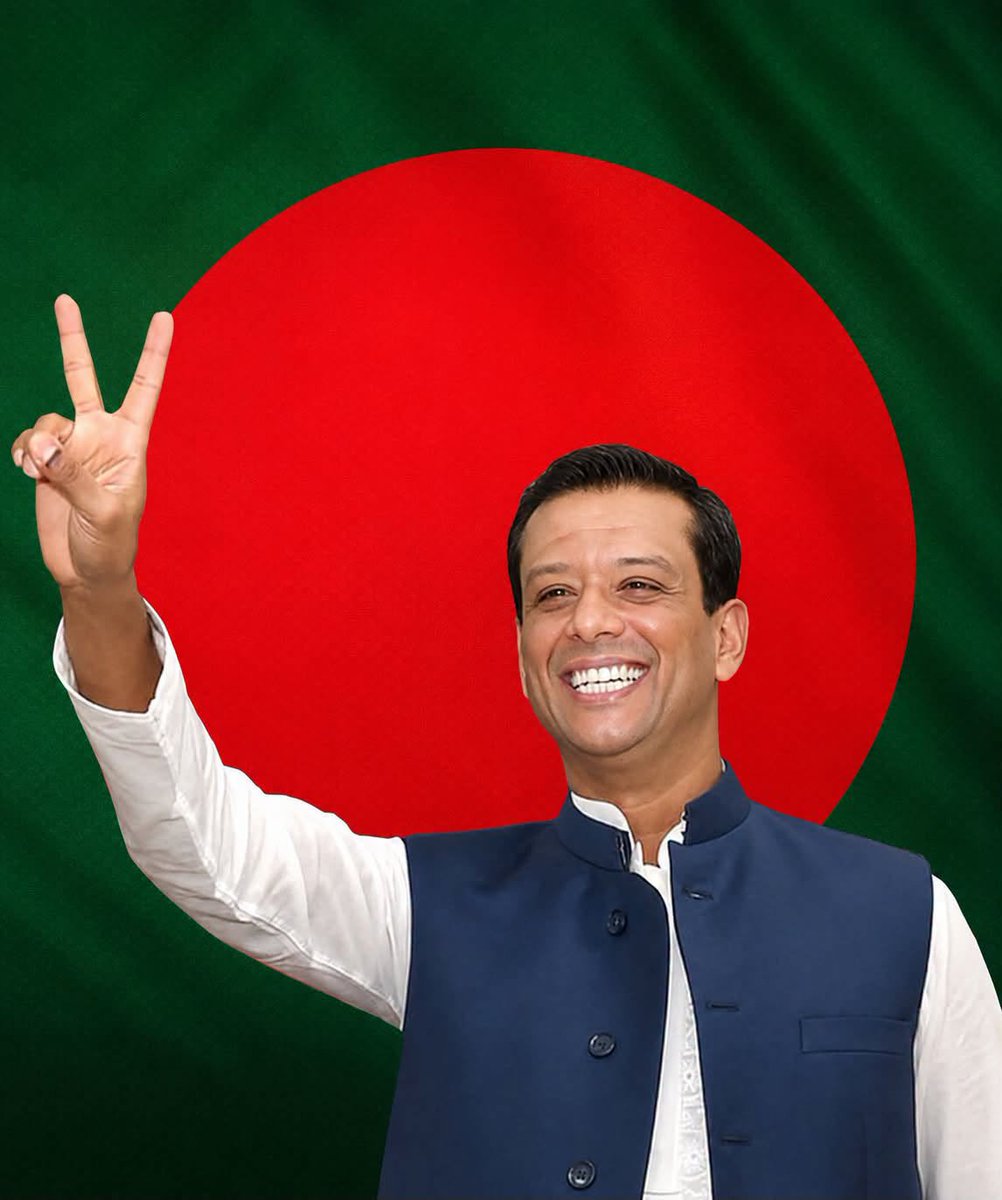
Happy birthday
The heroism of Bangabandhu, the shape of digital Bangladesh, the image of a prosperous future, the pride of youth
Sajeeb Wazed Joy.
@sajeebwazed
Two Years Later: Was the July Movement About Democracy — or the Destruction of a Nation
The promises of democracy, reform, and prosperity have given way to deep political polarization, economic hardship, institutional instability, and growing insecurity, according to this report. It argues that Bangladesh has paid a heavy price through weakened democratic institutions, a struggling economy, attacks on minority communities, and declining public trust.
Read the full report and decide for yourself:
https://t.co/IjDXc3eim6
#Bangladesh #Democracy #HumanRights #RuleOfLaw #Politics #SouthAsia