A utility merger can lower financing costs and create economies of scale. It can also raise concerns about competition and regulatory oversight.
@kchan55 explains why merger review should weigh both sides and remain focused on consumer outcomes.
https://t.co/fHvjbTDaa0
When protest turns violent, the conversation can quickly shift from why people are protesting to how they are protesting.
That can cost movements public support, political leverage and control of their own message.
Read more: https://t.co/aJnbbU5zfo
Illicit opioid use carries risks well beyond overdose, including infection and other serious health consequences.
The goal should be simple: Proven treatment should be easier to access than illicit drugs.
Read more here:
https://t.co/2ICARp11Kc
Recovery from opioid addiction doesn’t look like the movies. Effective treatment often requires sustained support and medication, and different options work for different people.
Policy should make proven treatments easier to access:
https://t.co/i7WXrq3XyX
#25YearsStillNeeded #IOAD2026 #EndOverdose
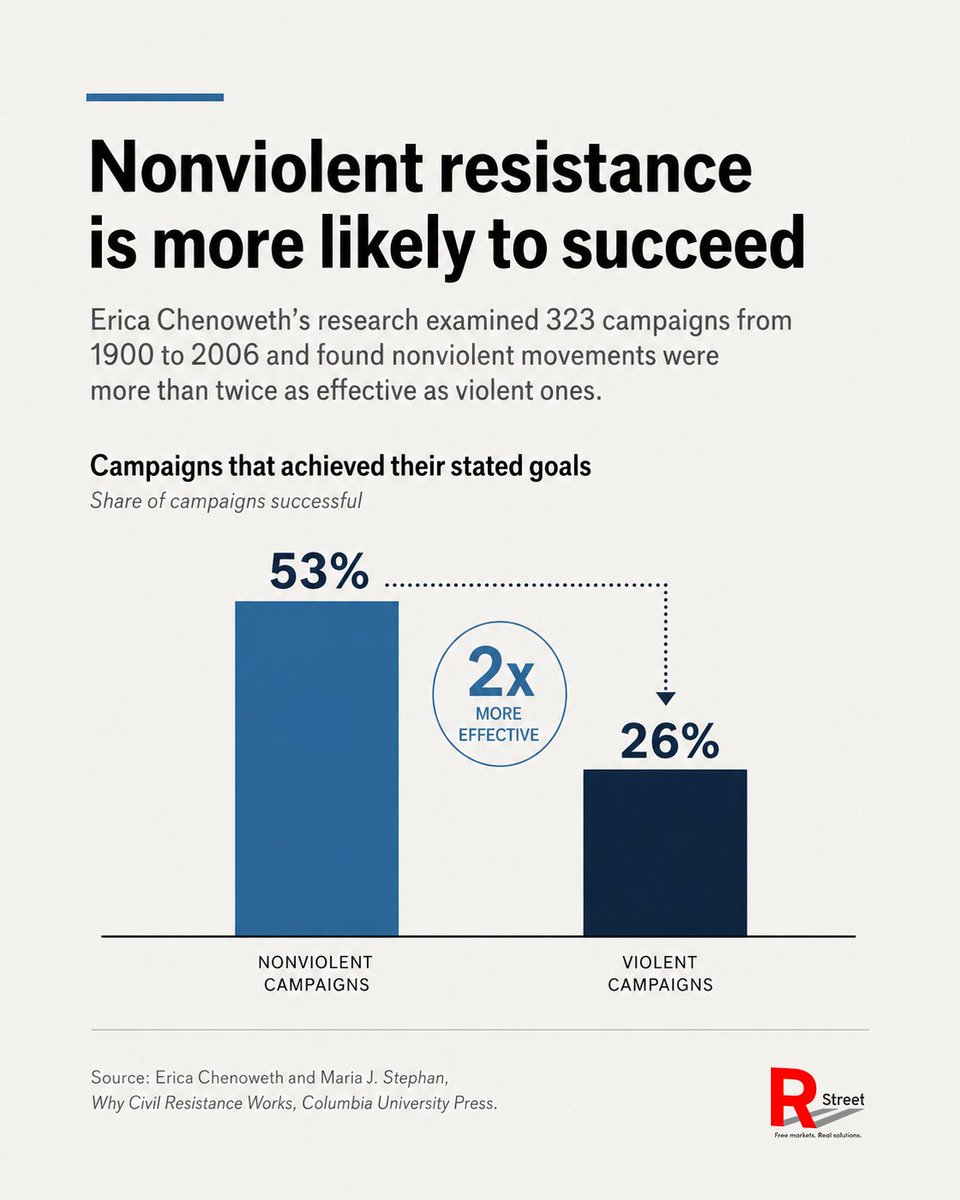
The evidence is striking: Nonviolent resistance has historically been more than twice as effective as violent resistance.
The lesson isn’t that protest should be quiet. It’s that strategy can determine whether a movement expands its coalition or pushes people away.
Read more: https://t.co/fwSQ1GCzn0
We have excellent medications to treat opioid addiction, but they can be harder to access than illicit drugs themselves. That doesn’t make sense if we want to help people get well.
Jessica Shortall and Stacey McKenna explain how regulation can improve access:
https://t.co/i7WXrq3XyX
#25YearsStillNeeded #IOAD2026 #EndOverdose
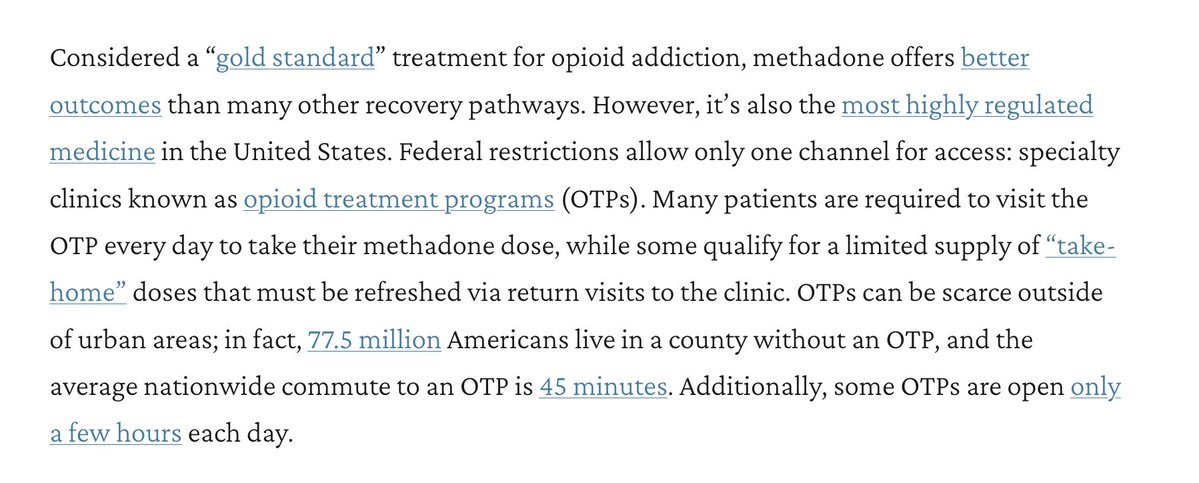
Methadone produces better outcomes than many other recovery pathways.
Yet federal rules restrict access almost entirely to specialized opioid treatment programs. That disconnect deserves greater scrutiny.
Read more: https://t.co/n3mgTuT3uf
International Overdose Awareness Day is a reminder that every overdose statistic represents a person, a family and a community.
Reducing overdose means making effective treatment easier to access and meeting people with solutions that work.
#25YearsStillNeeded#IOAD2026 #EndOverdose
Real stories can help us understand what happens when illicit opioids are available on demand, while proven medications to treat addiction remain difficult or impossible to access.
For Overdose Awareness Day, Jessica Shortall and Stacey McKenna explain why those stories matter:
https://t.co/i7WXrq3XyX
#25YearsStillNeeded #IOAD2026 #EndOverdose
Utility consolidation isn’t inherently good or bad. Larger utilities can access cheaper capital, spread costs across more customers and bring greater operational resources.
But as @kchan55 explains, the real test is whether those benefits actually reach consumers.
https://t.co/VM2sV9QZnT
Regulatory whiplash imposes costs even when rules are later overturned or rescinded. Financial institutions must respond to changing requirements, while consumers are left navigating policies that may disappear with the next court ruling or administration.
A more stable CFPB would be better for consumers and markets alike.
Read the study by @CarolineMelear here:
https://t.co/tVje3EO8aG
More anger doesn’t necessarily mean more impact.
Successful protest movements pair urgency with discipline, keeping attention focused on the cause rather than allowing violence or destruction to overshadow it.
Read more: https://t.co/dzOx8DUDNo
A treatment can only work if patients can actually access it.
The average nationwide commute to an opioid treatment program is 45 minutes, and many patients must make that trip every day just to receive their medication.
Read more: https://t.co/mU8dFbgIVT
Cryptocurrency mixers can protect legitimate financial privacy. They can also make it harder for law enforcement to trace stolen funds.
The challenge for Congress is regulating the risk without criminalizing the underlying technology.
New from Brian Shia: https://t.co/ujutEgEwO5
Effective juvenile justice should be about more than punishment.
Family therapy, restorative justice and age-appropriate interventions can improve public safety while costing taxpayers far less than incarceration.
More from @LoganSeacrest: https://t.co/G4kFNg11rQ
Regulation becomes less predictable when agencies can substantially expand statutory language through guidance and enforcement.
Congress can reduce that uncertainty by more clearly defining the CFPB’s UDAAP authority and establishing firmer boundaries around agency discretion.
Read the study by @CarolineMelear here:
https://t.co/OZFQwdHorR
A multistate utility merger raises an important regulatory question: How do you prevent Virginia ratepayers from becoming responsible for financial risks incurred elsewhere?
@kchan55 discusses the role of financial “ring-fencing” and state oversight in the NextEra–Dominion review.
Watch the full testimony here: https://t.co/anCVxeVKKN
77.5 million Americans live in a county without an opioid treatment program.
When methadone can only be accessed through specialized clinics, geography itself can become a barrier to recovery.
Read more: https://t.co/FURKV1rOJi
Rehabilitation incentives are only meaningful if incarcerated people know they exist.
If education, treatment, work or good conduct can affect future opportunities, the rules should be understandable from the beginning rather than discovered years into a sentence.
Read @smayranderson:
https://t.co/RizTg5vwoL
Does bail reform increase crime? Does wealth determine who stays behind bars before trial? And what does the evidence say about public safety?
Join R Street’s Lisel Petis for Understanding Bail Reform: Myths & Misconceptions in Hawai‘i.
Register: https://t.co/yy04YzZjGR