Regulation, regulation, regulation. Also a bit of biofilm. Postdoc at the @McCarthy_Ronan lab University of Southampton 🏳️🌈 Editor #AccessMicro @MicrobioSoc
On our way to Niagara Falls for the Acinetobacter Conference 2025 after a fantastic stay-over in lovely Toronto with @LHarkova. We will miss the pancakes with maple syrup 🥞
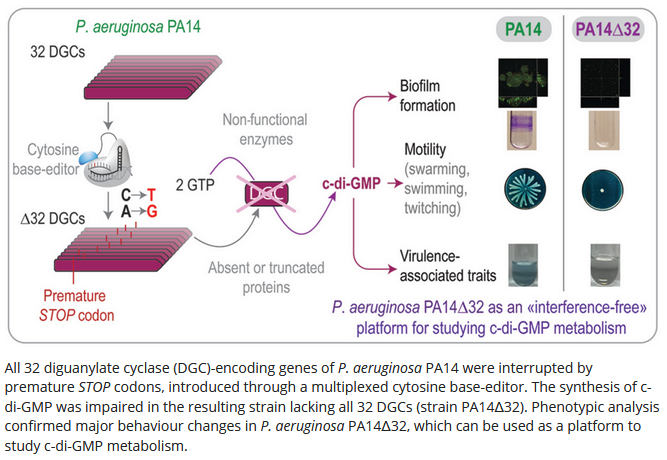
A new P. aeruginosa model strain! Martino et al knocked out all 32 diguanylate cyclases in PA14 using a multiplexed cytosine base editor, halting c-di-GMP synthesis. The strain, PA14Δ32, shows major behavioral shifts. https://t.co/tYy8b6jx2V
So happy to be able to finally share this story:
Can pathogens degrade plastic? Yes (some!)
Does this impact virulence? Yes
Read the full story below:
https://t.co/etyGPXTkgt
Genetic dissection of cyclic di-GMP signalling in Pseudomonas aeruginosa via systematic diguanylate cyclase disruption—led by @martino_RA & @Daniel__Volke@MicrobialBiote1#OpenAccess
https://t.co/YgOtPoFlgY
I will be presenting a poster today at #Microbio25 on the antibacterial effects of the artificial sweetener saccharin… which happens to have been published this very morning in @EMBO Molecular Medicine! Further details to follow!
https://t.co/3y0wZhbiif
Special thanks to @YERUN_EU for awarding me a Young Researcher Mobility Award to visit @ChristianSLentz in lovely Tromso and do some fantastic flow cytometry with fluorescent antibiotics!
As promised, a follow-up. Our work showing that saccharin alters the cell envelop permeability and DNA replication dynamics is live! Its mechanism of action re-sensitises CRAB to carbapenems, and we show its effectiveness in a hydrogel vehicle. Thanks to all co-authors!
On my way to Liverpool for #Microbio25. Superexcited to present our latest results on the cyclic di-GMP regulation of Acinetobacter baumannii this afternoon!
Excited to share with you the story that enabled me to start my own lab: what happens when the bacterial DNA replication machinery encounters single-strand discontinuities on template DNA? What is required for DNA break repair and replication restart? https://t.co/6TpedBjudf
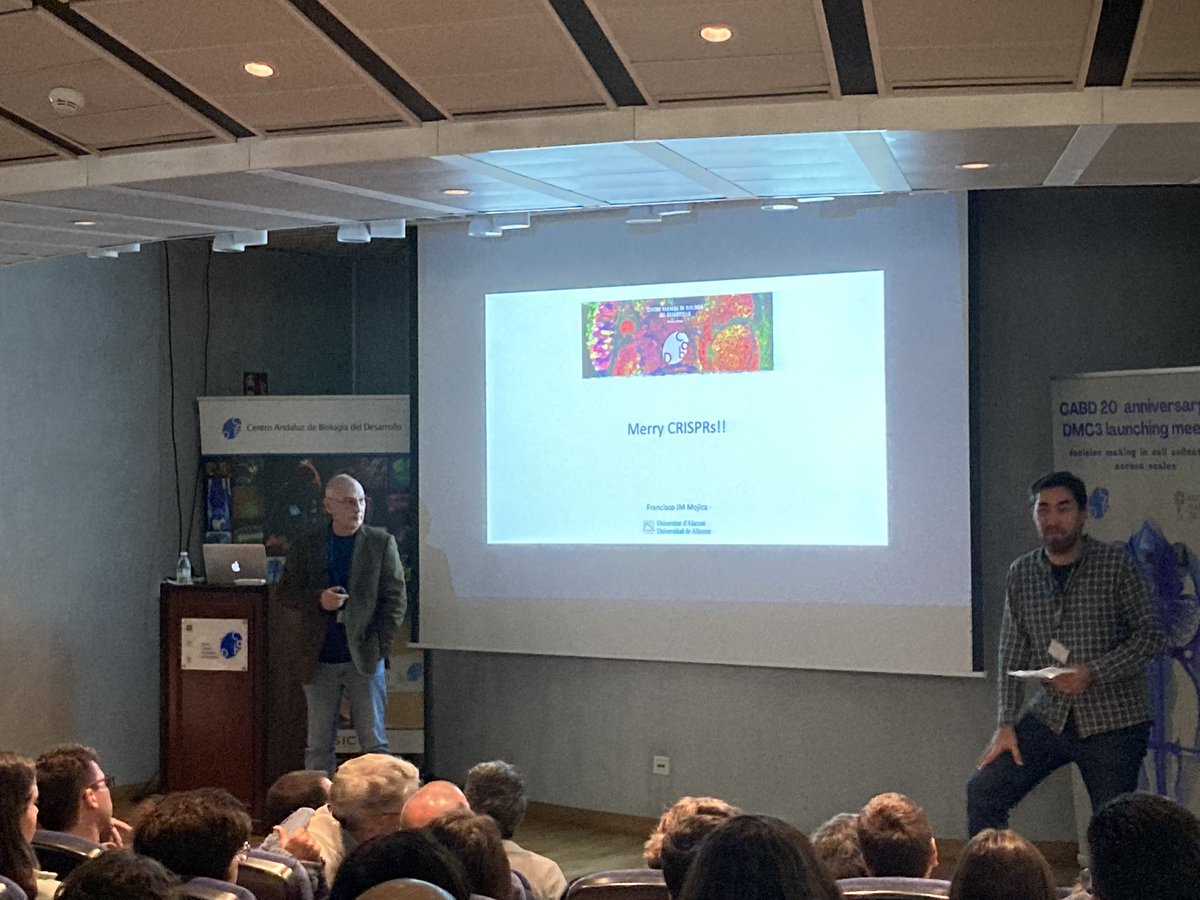
Coming back to Seville for my Christmas break, visiting @CABD_UPO_CSIC for their Christmas party and attending a seminar on the origins of CRISPR by such a living legend of Microbiology as Francis Mojica. That’s a great start of a holiday!
🤫 Silencio, pérdida de prestigio y una inflación de artículos científicos: "Hemos entrado en la época de las revistas depredadoras"
https://t.co/wKEFRm2VYn
Our open research platform, Access Microbiology, publishes a range of sound science research that might not have a home elsewhere – including negative results, case reports and pedagogy. Find out more in our short video: https://t.co/gxh5Mq4jvI
#ACMI
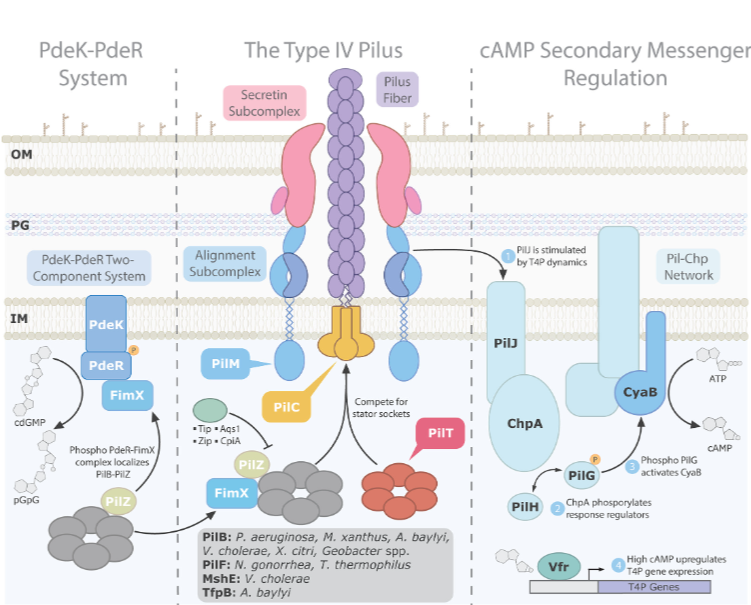
Type IV pili (T4P) are important virulence factors in many bacterial pathogens. This #JBacteriology review explores the mechanisms regulating T4p motor function, which could be harnessed to disable the pili in pathogenic bacteria. Get the full story: https://t.co/bBRYn6YmjY
#AccessMicro is recruiting more Editors and Editor Mentees across all fields of general and clinical microbiology! Applications close on 19 December. For more information and details on how to apply, visit here: https://t.co/ySlJPiyj4G
Fully-funded @DiMeN_DTP PhD opportunity available in my lab to investigate novel DNA damage repair processes using next generation sequencing and microscopy techniques (co-supervised by @acdarby & @MicKasia). Please RT and contact me if interested.
https://t.co/7a9TYDiHNl
Happy to share our lastest preprint on circadian rhythms in the critical bacterial pathogen Acinetobacter baumannii, which can contribute to establish a new paradigm in pathogenesis and treatment of infectious diseases.
Access Microbiology Deputy Editor-in-Chief Seána Duggan & Editor Justine Rudkin discuss how the Society’s #OpenAccess platform, #AcessMicro, is bridging the gap between science and our community. Read the full article in #MicrobiologyToday - https://t.co/zr9IZsbCzg