This is the first project in my PhD that’s ready to be shared with the world! It’s been great working together with Dominika and Dirk on the incentives that Country-by-Country Reporting creates for profit-shifting multinationals. Read Dominika’s thread below!
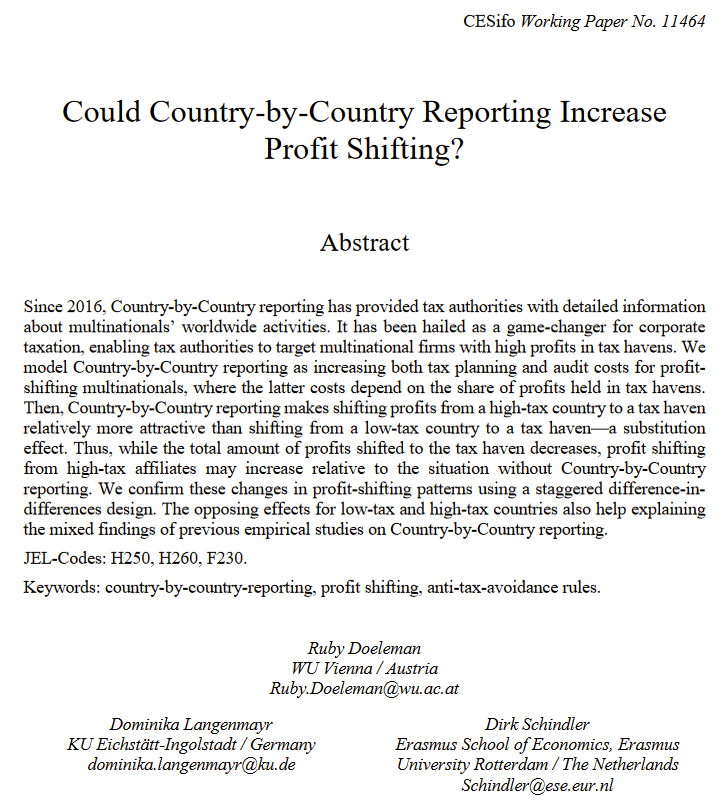
How does transparency impact corporate tax avoidance? In a new working paper, @RubyDoeleman, Dirk Schindler (@erasmusuni) and I explore how Country-by-CountryReporting (CbCR)—meant to curb tax avoidance—might unintentionally increase profit shifting. A 🧵 on our findings: 1/10
@hanna_schwank This works because the class is relatively small (less than 20 students). I’ve found that most students don’t have time for “self-help resources”, so in-class works best. I also share the data and code with them afterwards, so they have an example do-file to work with. (2/2)
@hanna_schwank How big is the class? I have a very similar issue in a very similar course I am teaching. I found that the only thing that helps students is do a “workshop” style class where I open a relevant dataset with them and show them how to do some basic descriptives / analysis. (1/2)
Da es quasi überall außerhalb von #Taxtwitter falsch steht: Die EU-Kommission hat nicht Apple verklagt, weil die zu wenig Steuern zahlen, sondern Irland, weil es Steuervorteile gewährt hat. Irland erhält jetzt Steuerzahlungen von Apple, die es nicht wollte.
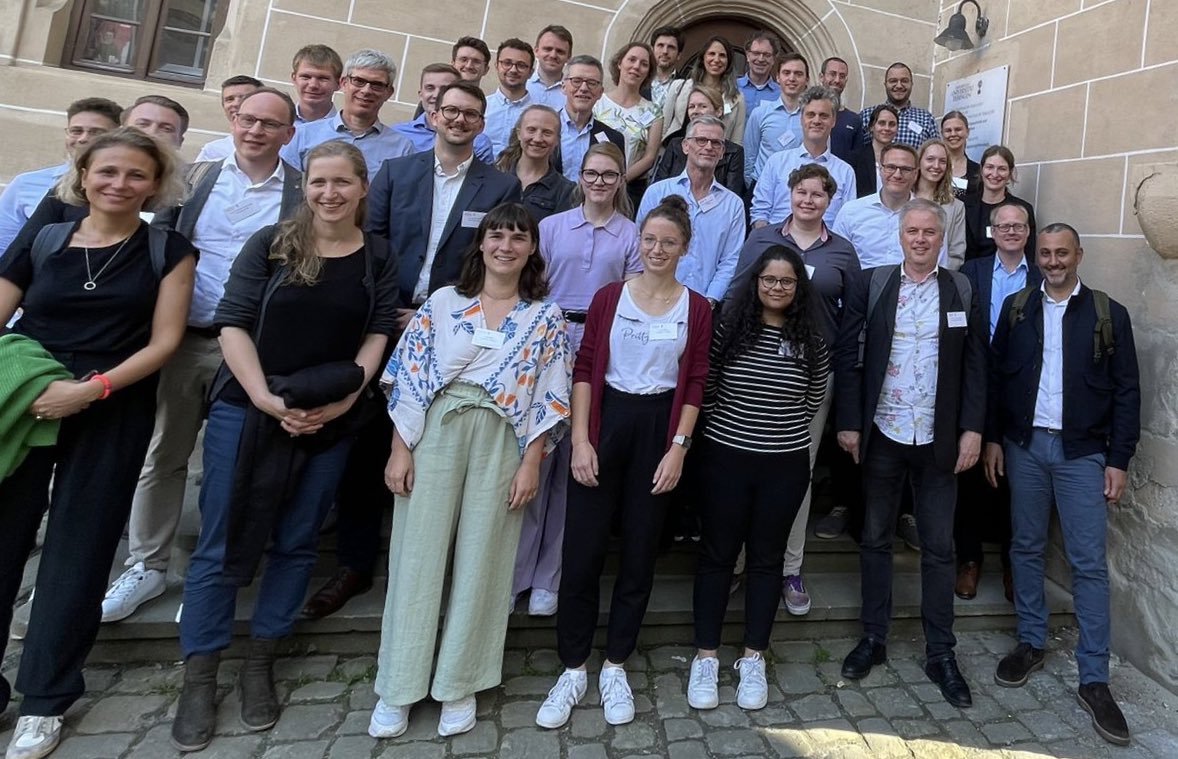
The #IIPF2024 congress was one of the largest ever, with 420 papers and 450 participants.
Thanks to all who submitted, presented, attended... and smiled for the camera!
Thanks to organizers @miropalansky + @CinglLubomir in the first row and to chairs @D_Langenmayr +@danhreck!
The #IIPF2024 in Prague was awesome! With the theme International Tax Sheltering and Inequality, it was so difficult to pick a parallel session, since there were so many cool papers on corporate tax!
“We need twitter proof, let’s take a mirror selfie!”
Thanks for having me at the Max Planck Institute for Institute for Tax Law and Public Finance @GeorgThunecke, and for taking me on the obligatory rainy-Sunday-museum-tour at the Munich Residenz!
This year's @IIPF_org congress will have a fantastic program! You can check out the full program at https://t.co/S8YUYh8dt0
Registration is still open until August 1st - come join us in Prague, it will be so much fun! To register, visit https://t.co/g71et8WClY
The 2024 RSIT conference is officially over! 💰🌍🎓
What a couple of days: cutting edge international tax research, insightful and thoughtful comments, AND great company — all in a fantastic location 🏰
Truly a blast.
Thanks to everyone who participated!!
@D_Langenmayr@UlrichSteinbach The Dutch system is weird. Currently, it takes the value of net wealth (assets - liabilities) on 1 January, and multiplies this with a notional return: 0.92% for savings, 6.17% for investments and 2.46% for liabilities. This is "income", which is taxed at 32%.
@D_Langenmayr@UlrichSteinbach If it works, it would be a good system, though. Taxing both realized and unrealized capital income would be neutral with respect to type of wealth and anti-cyclic, in theory.
@D_Langenmayr@UlrichSteinbach There’s a large discussion in NL. There used to be a notional income tax, which presumed a fixed return to wealth: highly regressive. The proposed system (from 2027) is supposed to look like this: https://t.co/YYxTrDvhZu