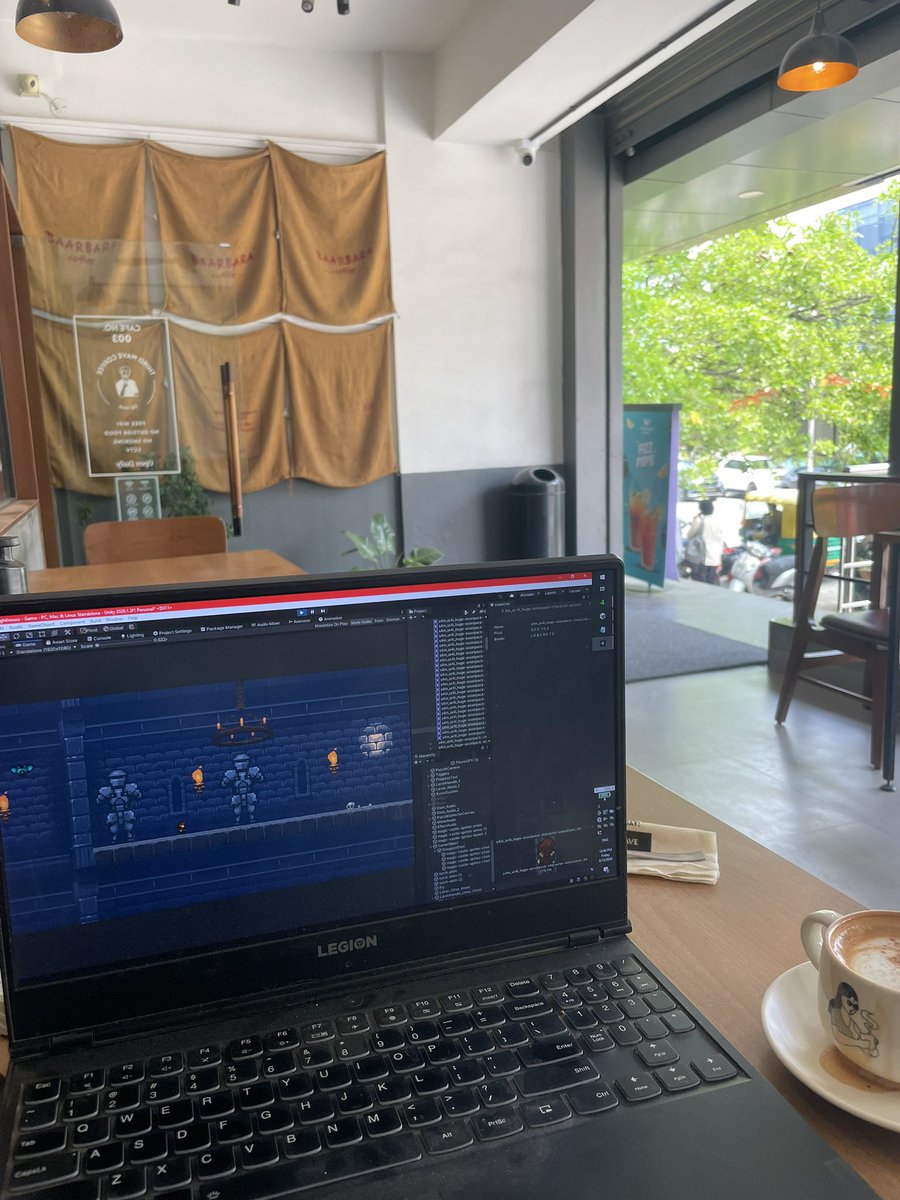
Jai is a systems programming language which started around 10 years back. It’s in closed beta currently, but the author streams the development regularly online. Some of the newer languages like Zig/Odin were inspired by it to have similar philosophy when they started.
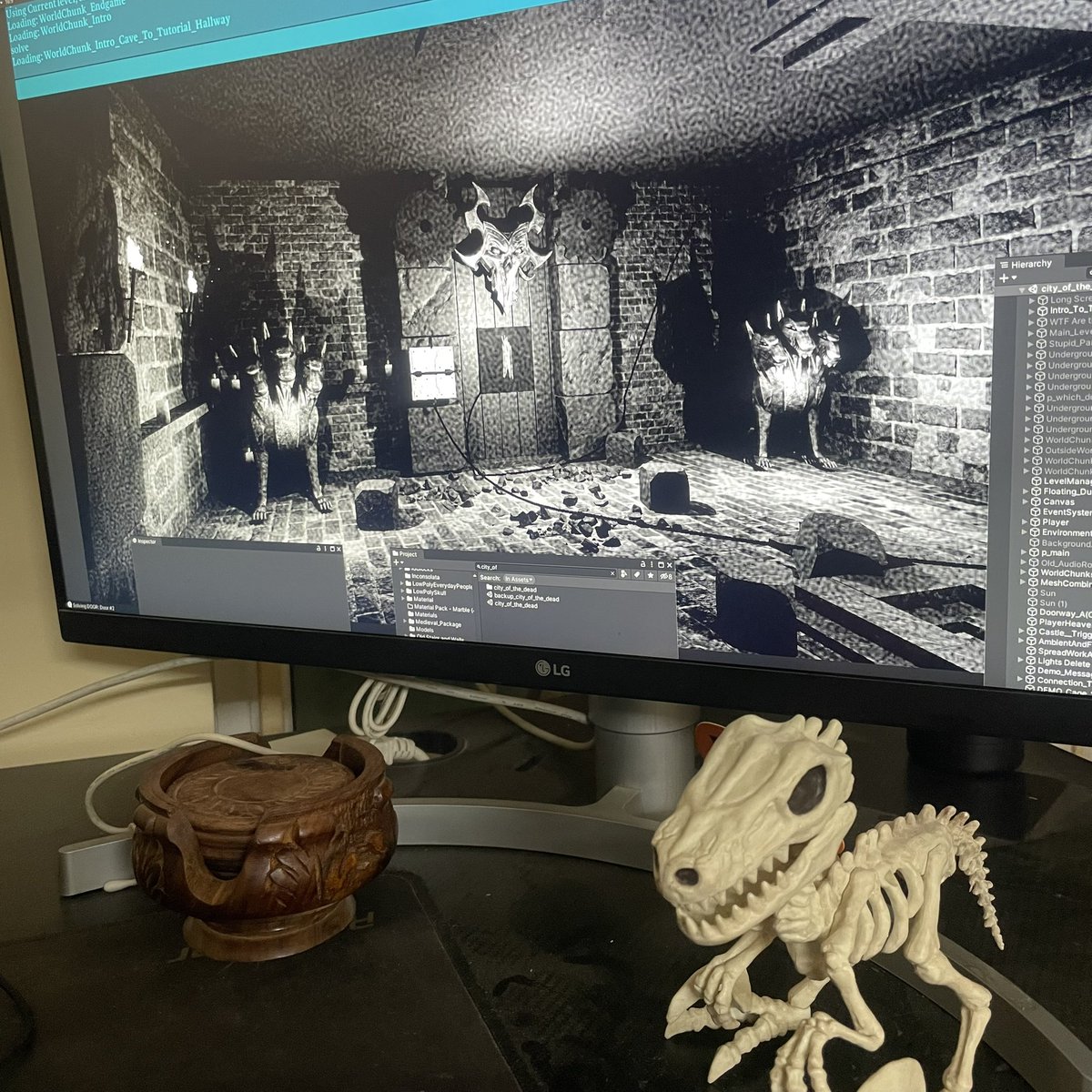
Order of the Sinking star is a game written on written on the Jai language which started as a proof of concept of the language by the language creator, which is scheduled to come later this year. The game’s demo came out last month, and the demo is larger than most fully released games.
(We saw one of the talks back when we used to listen to tech talks at HackerRank)
Links:
https://t.co/dD9UI6fBZ9
https://t.co/DUTkpDpUYp
https://t.co/qn3p1ApGF6
@Jonathan_Blow Congrats! Finally being able to play the demo after following the livestream for so many years was quite the experience.
(I’d vote to keep the demo up, had to rush through the final few puzzles since I never got good at solving puzzles)
> The Order of the Sinking Star Demo
Personal stories of the genre "this book changed my life" often sound pretentious and misguided: I was young and lacked life experience and had read little and seen less, so each new artistic wonder was a huge delta in comparison.
But it's no exaggeration to say that "The Witness" (2016) saved me from … almost certain self-annihilation. I would have been de-mapped, to borrow DFW's phrasing. Everything that mattered to me was suddenly stripped away and I was ostracized from the people I valued most. Marriage imploded, career incinerated, tale-of-woe, etc etc.
Anyway, somehow I ended up installing a strange indie game that I was told was about solitude and "the inner product" of personal spiritual struggle and man's quest for meaning. A vague description indeed and yet, a day later, I was sure "The Witness" was the greatest piece of art ever created and that I had to keep exploring it. I'm still certain it is.
I'm profoundly grateful that the author of that magisterial work is now giving us another.
Thank you in advance, Jonathan Blow. Thanks also to your inexhaustible collaborators (including your young genius protégé, who, sadly, passed away but will be remembered always), and Thekla. 🙏
Game on!!!
The SURPRISE is:
https://t.co/pn3jJHINVu
Order of the Sinking Star will have a free demo on Steam, for NextFest, Monday.
Because the game is HUGE, the demo is huge: it's bigger than most entire paid puzzle games, and you get to try it out for free.
@miless_15 Disagree and commit was a very useful idea when I first heared about it
https://t.co/XdtfaHobXC
It’s from the perspective of working as a team, but is surprisingly useful when making individual decisions as well
The personality traits are the byproduct of mastering the fundamentals though.
While the advent of machines might have reduced the importance of physical strength to a point where it is not essential for survival, people who are physically fit have a much better grasp of the above mentioned personality traits than those who are not (all other variables being equal)
Observing people who have been physically active since childhood vs those who haven't makes the difference very clear.
While I mostly agree with not going depth-first on hardcore performance optimisation before a product is built/finalised, I'd push back on the idea that "Performance is almost always the last thing you should be thinking about", even for software that doesn't fall under the exceptions list.
Performance being the last thing to think about almost always translates to performance not being considered in the picture at all, until it reaches a certain critical mass, and hopefully by that time enough time has passed and it becomes someone else's headache to deal with it. Thinking about performance doesn't have to mean immediately going down a rabbit hole to get the maximum performance out of the system at every opportunity: it starts with not making decisions early on that will make the system unnecessarily slow and a nightmare to optimise once similar decisions have been made 10/15/20 times. Most of the coding "best practices" completely ignore this aspect altogether and it is very evident on the final product that comes out.
And these directly affect the consumer of the product. IDEs/Debuggers being orders of magnitude slower than what they should be negatively affect the general quality of life of the programmers using them, especially considering how often and for how many hours a typical programmer uses these tools. How much frustration would be reduced and how much QoL would improve globally (and how much more of a productivity boost it'd lead to) if basic performance was not considered the last priority when designing these tools?
While reading/exploring others work is helpful, I think a good part of developing good taste is to not ignore the voice at the back of your head and to pay attention to it especially when the gut says something that goes against conventional wisdom.
Really questioning why something doesn’t feel right while not accepting the first few answers just because it kinda answers the question is a very useful (and sometimes very difficult) exercise
🚨 CRITICAL: Active supply chain attack on axios -- one of npm's most depended-on packages.
The latest [email protected] now pulls in [email protected], a package that did not exist before today. This is a live compromise.
This is textbook supply chain installer malware. axios has 100M+ weekly downloads. Every npm install pulling the latest version is potentially compromised right now.
Socket AI analysis confirms this is malware. plain-crypto-js is an obfuscated dropper/loader that:
• Deobfuscates embedded payloads and operational strings at runtime
• Dynamically loads fs, os, and execSync to evade static analysis
• Executes decoded shell commands
• Stages and copies payload files into OS temp and Windows ProgramData directories
• Deletes and renames artifacts post-execution to destroy forensic evidence
If you use axios, pin your version immediately and audit your lockfiles. Do not upgrade.
It’s been a long time since I did a non-technical speech.
After this game ships I’ll do a talk called Surviving Long Projects. It will be good and useful.
(Not sure if there will be a suitable conference or I will do it from home. To Be Decided…!)