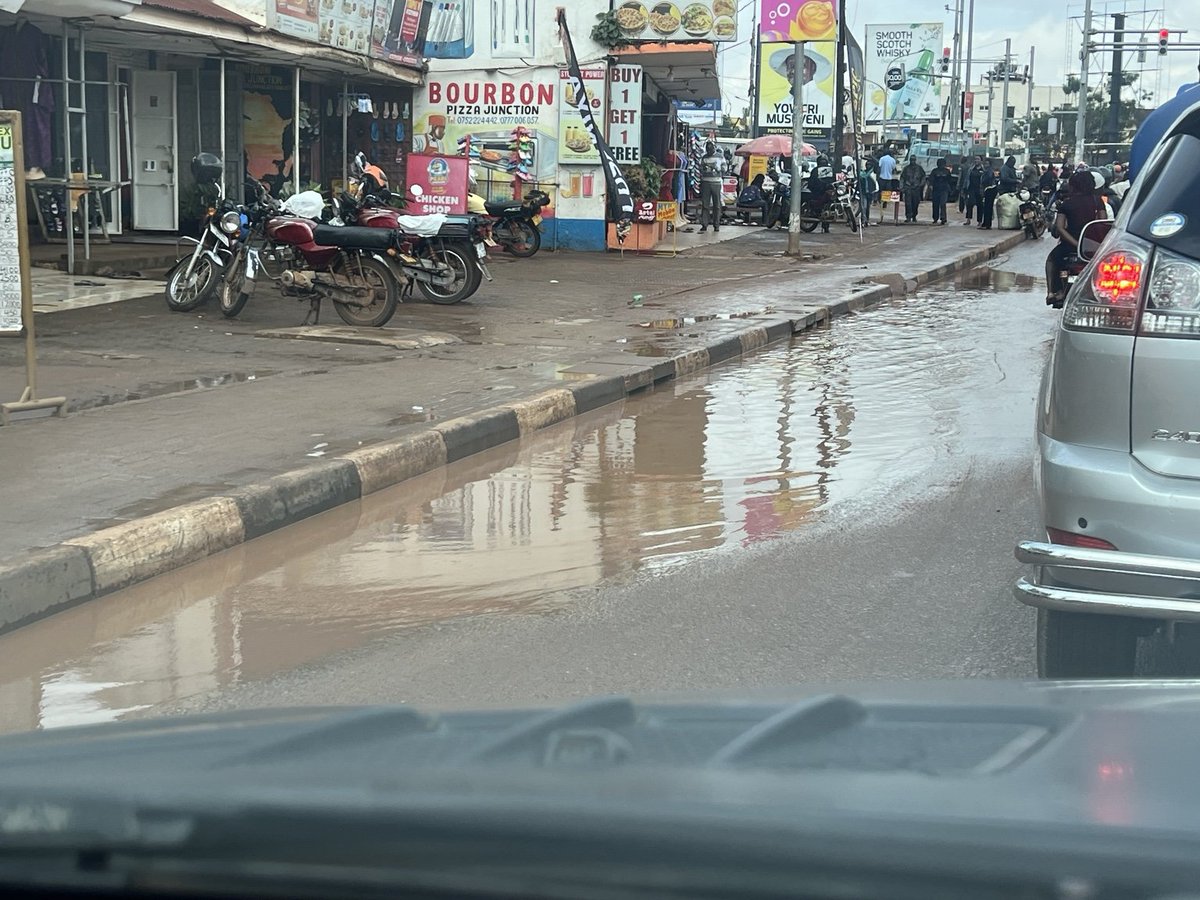
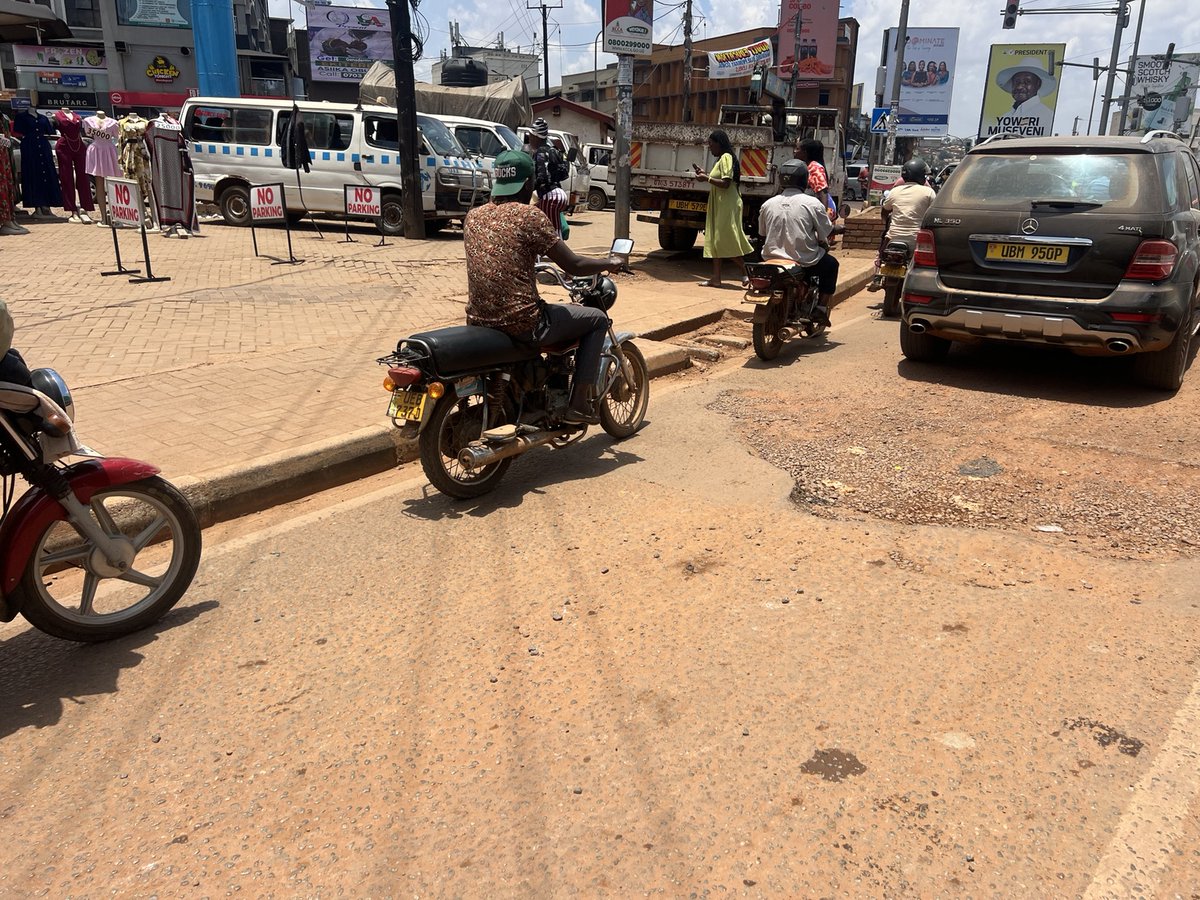
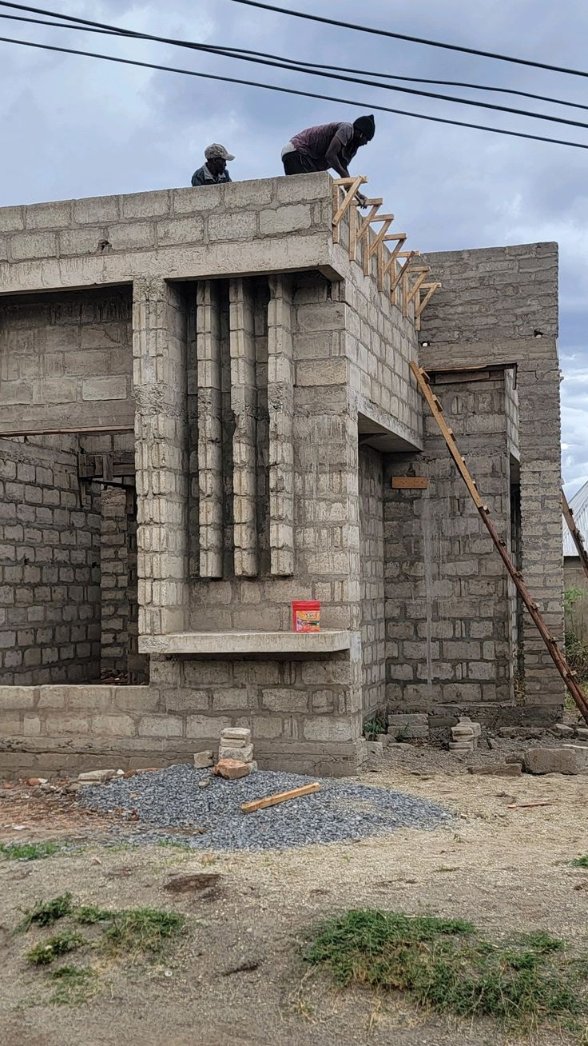
@sussiekats@tumwebazealbert@MoWT_Uganda@GovUganda I use this road regularly. The said section of hoima -kiboga is a small part of hoima- busunju. The 35% only applies to hoima - kiboga. But the 4 years people are mentioning apply to hoima- busunju whose progress is much more than 35%. Hope this clarifies something.
The submission by @NBRBug shifts the discussion from structural design alone to construction process management.
That is important because a building under construction is not yet the final building designed by the structural engineer. It is a temporary structural system whose safety depends on sequencing, concrete strength gain, formwork, shoring, material loading, workmanship, and supervision.
If a structure reached the 4th floor within 8 to 10 weeks, and workers were removing formwork for reuse in casting the 4th floor slab, then the key technical questions become very serious. Had the lower slabs gained enough strength? Was reshoring properly done? Were construction loads properly managed? Were materials being stored on immature slabs? Was there a competent professional supervising the sequence of works?
Concrete does not gain strength because the developer is in a hurry. It gains strength through chemistry, curing, and time.
A building can be structurally designed correctly and still fail if the construction process is poorly managed. This is why construction technology matters. Drawings alone do not build safely. Safe buildings require competent supervision, proper sequencing, quality control, and respect for material behaviour.
The NBRB findings should therefore help the public understand that building safety is not only about approvals. It is also about what happens every day on site.
@Hbamulinde@TotalEnergiesUG One of those local contractors here ✋. I remember the excitement after signing that contract ohh, but here now 200M in debt even though the project was completed and handed over successfully. Tilenga girabe, duka!
lol, these guys think they're sleek
there's no such thing as "read-only" access for source code repositories
if i give you a github link (whether public or private with access) you can still clone or download the code locally and modify it
read-only only stops someone from editin' or pushin' changes to the repo itself
as an innovator, unless you're sharin' compiled code (which can also be reverse engineered), don't casually share your source code
also, why is sharin' full system architecture bein' mandatory?
architecture diagrams, workflows, and implementation logic can reveal a lot about how a system works
and with these ai dev tools, experienced teams can reproduce large parts of a system much faster once they understand the architecture
yes, the call says intellectual property remains vested in the applicant, but innovators should still exercise caution about how much proprietary information they disclose durin' these so-called early-stage evaluations
unless your software, architecture, or processes are properly protected through patents, trademarks, licenses, or strong contracts, share carefully and only what is necessary for evaluation
there's nothin' wrong with participatin'
just understand the technical and intellectual property realities before givin' your life's work to the government in the name of bein' listed on some registry
Colleagues, when you get some time, board one of these Kayoola EV Buses moving about in town. It’s just 2k and you pay via MTN & Airtel Mobile money. It’s got free WIFI and the AC is to die for. 100% recommended.
Want to transcribe Luganda speech with AI? This fine-tuned Whisper model does exactly that. It's a small, efficient model trained on 400 hours of Luganda audio. Perfect for developers and researchers working on African language tech.
I know we have AI to design everything but a human touch feels different. If you have a business or personal brand and you want a professional website at just 250K, please contact Levi on +256 705 940270 … the fee includes everything including web design, development and hosting .. He designed me and I feel it’s just right that I endorse him for his amazing services. Check out my website.
https://t.co/V0JOEvWNCR
Instagram growth gurus are so funny.
He can’t use his laptop because he’s holding a drink.
He can’t drink because he has a cigar in his mouth.
He can’t smoke his cigar because both hands are occupied. 😭
@CallMeKulubya I am going all in on solar. Installed a 5kva unit in the village. Working on getting a 10kva unit in the city.
Imagine what this setup can do for you if you own a PHEV.
How Kampala Designs Its Own Potholes.
=======
At Wandegeya junction, the story does not begin with a pothole. It begins with trapped water. The drain is there, but it is closed, hidden beneath concrete covers. On paper, it looks modern, clean, and efficient. In reality, it is inaccessible. Once silt, plastics, and organic waste enter the system, as they inevitably do in Kampala, the drain gradually loses its ability to receive and evacuate runoff. What follows is not dramatic failure, but something more subtle and more dangerous. Water begins to stagnate along the road edge.
That stagnation is where the real problem starts. Water remains in prolonged contact with the pavement, seeping into small cracks and weak points. It reaches the base layers and softens the support structure beneath. Traffic then completes the process. What begins as a sound pavement slowly loses integrity from below, until one day, a defect appears. Weeks later, we call it a pothole. But the pothole is not the problem. It is the evidence of a failure that has already taken place.
The mistake is not simply technical. It is conceptual. We are designing for appearance instead of performance. We are also copying drainage ideas from cleaner, wealthier, and more organized cities without paying enough attention to our own reality. There are cities where stormwater channels carry relatively clean runoff, where waste management works, where sediment loads are lower, and where drainage lines are so clean and stable that fish can live safely in them. Kampala is not that city. Our catchments are different. Our runoff carries silt, plastics, organic matter, and all the evidence of a city still struggling with waste discipline, exposed soils, informal discharge paths, and uneven maintenance. Our urban hydrology is not a copy of theirs. Yet too often, our drainage choices suggest we are designing for another environment, not our own.
Closed drainage is not wrong in itself, but it assumes clean flows, disciplined waste management, and consistent maintenance. Kampala operates under different conditions. Access is critical. When a system is closed without making cleaning easy and routine, it does not fail immediately. It fails gradually, then completely.
What follows is a cycle we have normalized. The pothole is patched. The drainage remains blocked. Water returns. The patch fails. Another repair is funded. The same location consumes resources again and again. This is not maintenance. It is repetition driven by design oversight.
The most expensive roads in Kampala are not the ones we build. They are the ones we keep repairing.
If we are serious about durable infrastructure, then design must reflect reality. Water will carry waste. Systems must be accessible. Maintenance must be designed into the structure, not assumed after the fact. Our catchment conditions, waste streams, and urban hydrology must shape our engineering decisions more than imported aesthetics do. Until then, every pothole we fix will simply be another one we designed in advance.
🚨 LOST:
Car key, around Kyanja, Kulambiro, Najjera, Buwate or Kungu.
PS: Key has a GOLD rubber cover - Mercedes GLE.
Reward: 1,000,000/= UGX for return.
Call/WhatsApp 0703420715 or DM me.