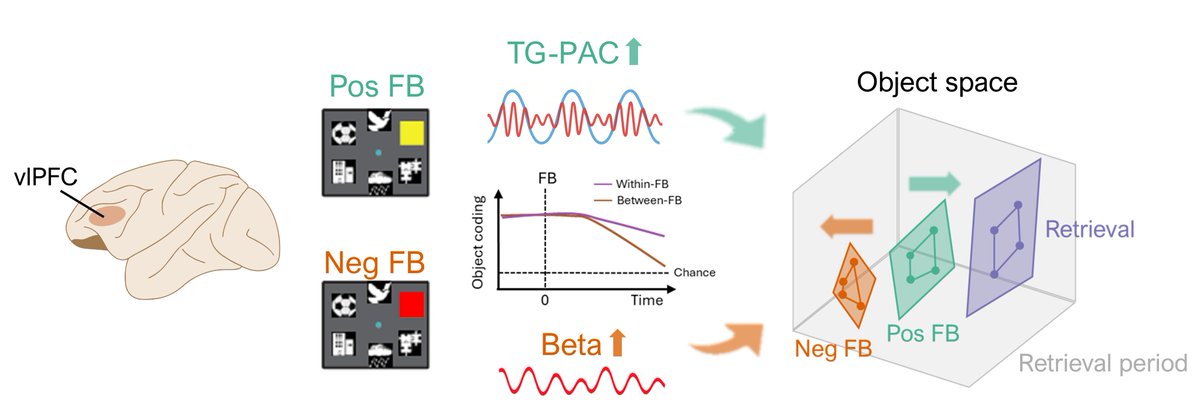
🚨New Results! Really excited to share this: Not just signal right or wrong, feedback reorganizes population geometry of learning targets in vlPFC, moving representations toward future retrieval states. Notably, oscillations (TG-PAC & beta) gate when this transformation occurs.
New paper in Imaging Neuroscience by Runhao Lu, Elizabeth Pollitt & Alexandra Woolgar:
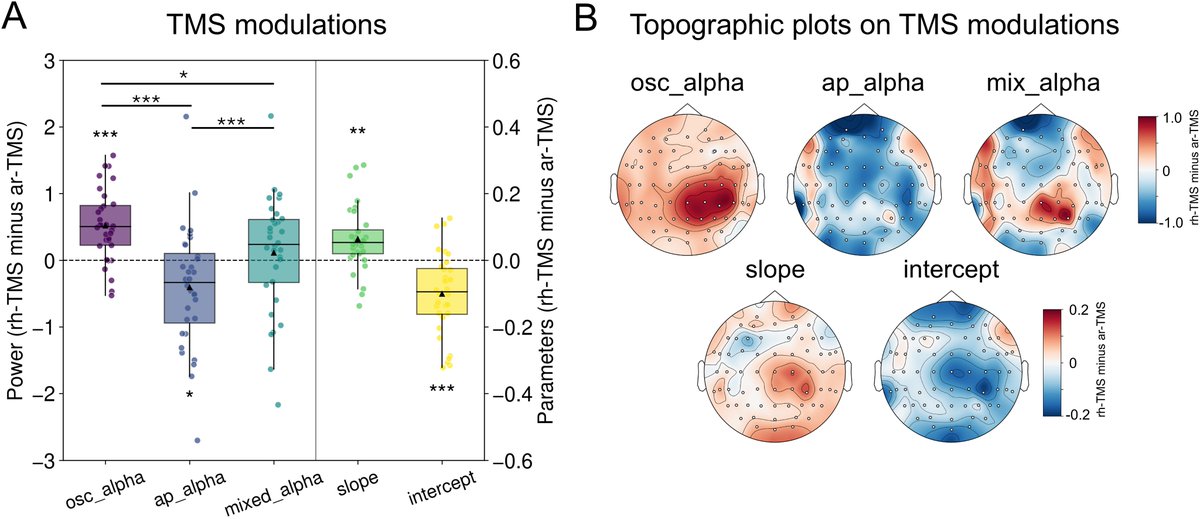
Distinct and complementary mechanisms of oscillatory and aperiodic alpha activity in visuospatial attention
https://t.co/h3wzfEkfnH
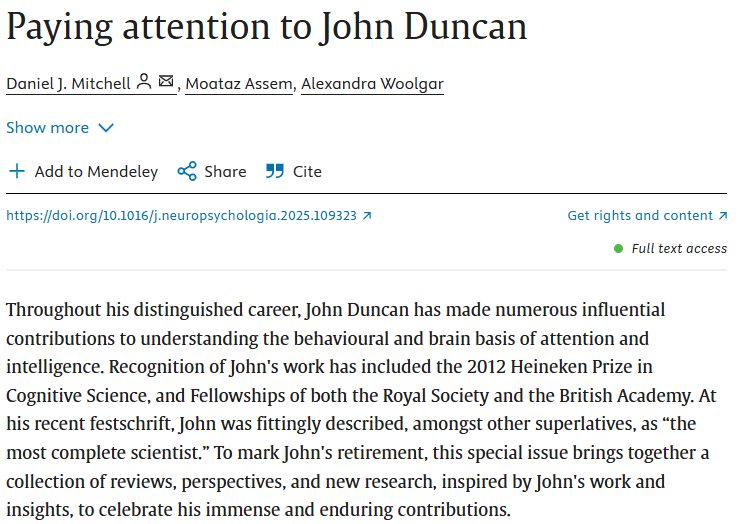
The special issue celebrating John Duncan's retirement is now out! Check out all the gem articles here:
https://t.co/K8MilBFAQP
and the editorial (see next figure in the thread for an entertaining analysis)
https://t.co/es6CowpSG4
@RaviMill This study is now peer reviewed and published at Nature Communications! Congratulations to first author @RaviMill Check out the paper here (open access): https://t.co/ovPwXmxTHF
Now out in Imaging Neuroscience! https://t.co/MkTec8X787 Using TMS-EEG, we showed that alpha rh-TMS could differentiatially modulate alpha oscillations and aperiodic activity, and then improve representation of visuospatial attention.
Is alpha in spatial attention pure oscillatory - or aperiodic? New results based on 3 EEG datasets + TMS-EEG: relative to arrhythmic-TMS, alpha rh-TMS ↑ oscillatory but ↓ aperiodic alpha - yet both supported spatial attention via distinct mechanisms.⚡🧠🌊 #neuroscince
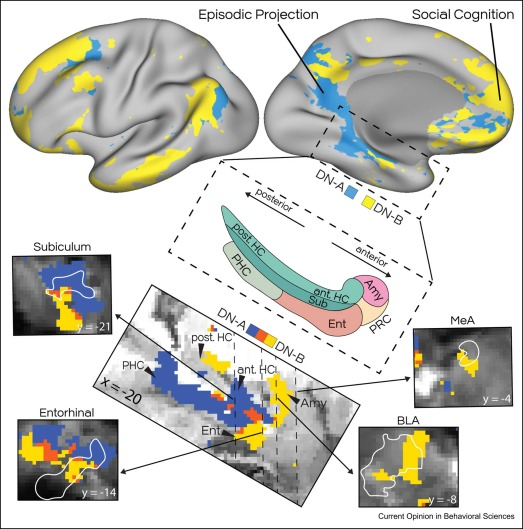
How can the "default network" support many forms of introspective thought? Our new review argues these functions rely on distinct MTL connections:
https://t.co/H9JiOgMHM9
Thanks to Deniz Vatansever & Jess Andrews-Hanna for the invitation to this Special Issue!
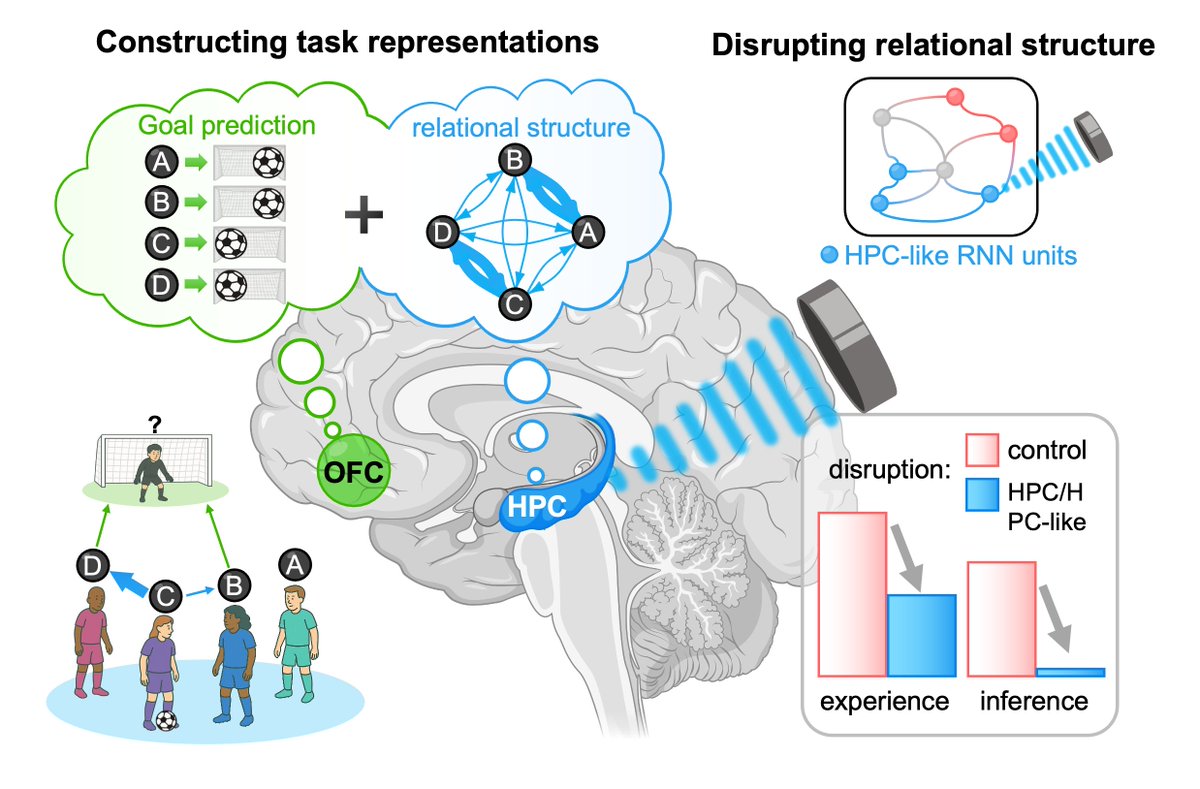
🚨We believe this is a major step forward in how we study hippocampus function in healthy humans.
Using novel behavioral tasks, fMRI, RL & RNN modeling, and transcranial ultrasound stimulation (TUS), we demonstrate the causal role of hippocampus in relational structure learning.
New results! We tested 3 control conditions for rh-TMS entrainment and showed ar-TMS performs best (matching sensory without inducing oscillatory effects). Also explored how rh-TMS/ar-TMS/sham-TMS differentially impact Oscillatory and Aperiodic activity! https://t.co/BjQR1PH1zs
Great conference on cognitive/neuro science, AI, and modeling at Cambridge! Call for abstracts &registrations now 🚨
https://t.co/uetYDUsrOa
@Selwyn1882@mrccbu@CamNeuro@AccelerateSci
Is alpha in spatial attention pure oscillatory - or aperiodic? New results based on 3 EEG datasets + TMS-EEG: relative to arrhythmic-TMS, alpha rh-TMS ↑ oscillatory but ↓ aperiodic alpha - yet both supported spatial attention via distinct mechanisms.⚡🧠🌊 #neuroscince
New article proposes a framework for the electrophysiological basis of the multiple-demand network. Aperiodic activity may reflect local excitability & MD activation, while low-freq oscillations enable large-scale communication: https://t.co/Y7nSbTdKYS
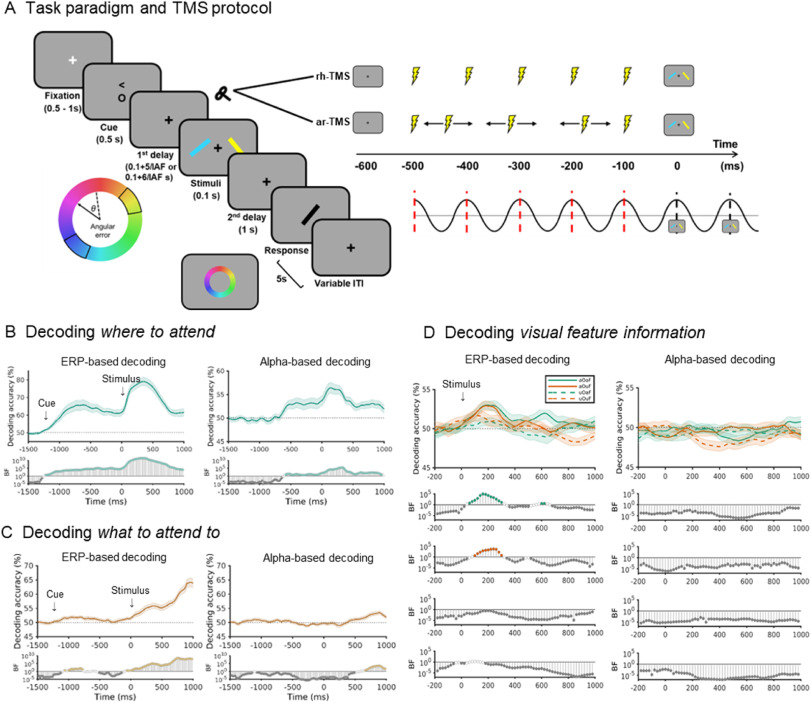
New paper alert! Runhao Lu (@runhao_lu) and colleagues @brainstimj show alpha rTMS boosts decoding of where to attend during selective attention, using cutting-edge TMS-EEG. No effects on what to attend or feature info. Fascinating insights: https://t.co/qWQb2JAXOt
🎉Paper alert! Using multimodal MRI and multi-approach analysis, we provide robust, in-vivo evidence of brain hyper-excitability in #TLE patients, and links to microcircuit dysfunctions, clinical severity & cognitive impairment. 🧠🧲 @IPNMcGill@mcgillu
➡️https://t.co/agr86rD2mC
Huge thanks to @AlexWoolgar for making this work possible - we started this proj and set up the TMS-EEG from scratch at @mrccbu 3 years ago (!) Also big thanks to @catrionascriv , @Jade_BJackson, Lizzie Michael, & John Duncan for an amazing collab!
🚨New paper @brainstimj !⚡Using TMS-EEG & MVPA in a selec attention task, we show parietal alpha rh-TMS (entrainment) specifically and causally enhances spatial attention ('where' info) coded by ERPs & alpha power, but not 'what' info or visual features. https://t.co/jtXDGO4a7E