In response to the eMudhra / emSign certificate security incident we've published guidance for Python users to update CA certificates: https://t.co/tjBrJM4iTZ
#security#Python#pki
https://t.co/tjBrJM4iTZ
The human brain contains about 86 billion neurons, each with thousands of synapses which connect them together. This is how these countless microscopic junctions transfer signals between cells.
📽️: Helix Animations
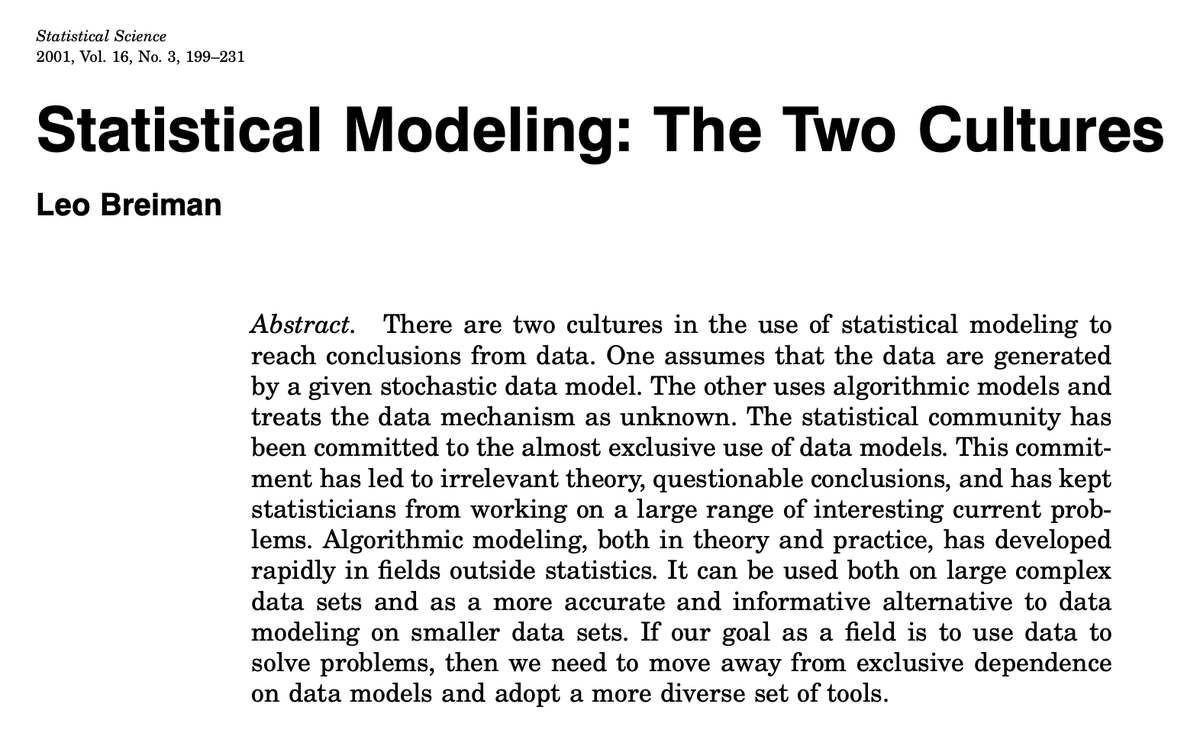
I would like to draw attention to this excellent text by Leo Breiman, one of the inventors of random forests and the creator of bagging, titled “Statistical Modeling: The Two Cultures”.
In it, Breiman challenges the traditional statistical emphasis on specifying probabilistic models of data generation, advocating instead for a greater focus on predictive performance and algorithmic approaches. More than two decades later, his arguments remain remarkably relevant to the relationship between statistics and machine learning.
Link: https://t.co/2PgqOfPeIc
🚨🚨WOW! This is absolutely amazing to see that Karl Deisseroth, Peter Hegemann and Georg Nagel have won the Nobel prize in medicine for their optogenetic research! Visual optogenetics is a therapeutic modality that uses Gene Therapy to deliver a light-sensitive protein to cells in the retina. This mechanism of entering light to the eye can then stimulate these cells to produce a visual signal that is sent to the brain and thus “overriding” the retinal cells and to restore vision to vision impaired patients. This mechanism is already in clinical development and the most advanced optogenetic therapy is currently Nanoscope Therapeutics’ MOGENRY (formally known MCO-010) - an Optogenetic Gene Therapy aimed to restore vision in Retinitis Pigmentosa (RP) patients with a severe vision loss which is waiting for an FDA approval! Absolutely amazing!
Yann LeCun's latest talk at ETH Zürich
"You should not work on LLM. At least if you're in academia, you should absolutely not work on LLMs. There is nothing you can bring to the table.
If you're interested in making real progress in AI, in sort of grounded AI for the real world, if you want physical AI, don't work on LLMs, and don't work on generative models either.
So, as you can probably guess, this does not make me very popular in Silicon Valley."
----
From "Perfology Clips" YouTube channel, (link in comment)
This 9.8K-star GitHub repo is basically an entire LLM engineering course hiding inside one codebase.
It starts with raw text and builds the Transformer in plain PyTorch, then keeps going through pretraining, SFT, reward modeling, DPO, PPO and GRPO. No transformers, trl or peft hiding the training loops.
The smallest model is only 13M parameters, so you can run the whole thing on a single GPU and actually see what changes at every stage.
https://t.co/G1p0pGShwO
Everyone is fine-tuning LLMs. Almost nobody understands what is actually being updated inside the model.
That distinction matters because LoRA, QLoRA, LoRA-FA, VeRA, Delta-LoRA and LoRA+ are usually discussed as if they were small variations of the same method. They are not. Some reduce trainable parameters, some reduce activation memory, some reduce the memory occupied by the frozen model, and some change the way the adapter itself is optimized.
I'm actually sharing 6 techniques.
1/ LoRA
Suppose a layer contains a pretrained weight matrix W. Full fine-tuning would update W directly. LoRA leaves W frozen and represents the update using two much smaller matrices, A and B, so that ΔW = BA.
For a square d × d weight matrix, full fine-tuning has d² parameters available to update. A rank-r LoRA adapter has roughly 2dr trainable parameters instead, where r is normally much smaller than d. This is the basic reason LoRA can adapt very large models without training every parameter in them.
2/ LoRA-FA
Standard LoRA trains both A and B. LoRA-FA freezes A and trains only B.
There is a useful reason for doing this beyond simply reducing the number of trainable parameters. Computing the gradient for A requires retaining the layer input activation. If A is fixed, that gradient is no longer required, which allows LoRA-FA to reduce activation memory as the LoRA rank grows.
3/ QLoRA
QLoRA attacks a different part of the memory problem. LoRA makes the adapter small, but the frozen base model can still occupy tens of gigabytes.
QLoRA keeps the base model frozen in 4-bit form and trains LoRA adapters through it. The original work used NF4, double quantization and paged optimizers, and demonstrated fine-tuning a 65B model on a single 48GB GPU.
This is an important distinction: QLoRA is not simply "LoRA with smaller adapters." The large memory saving comes from quantizing the frozen base model.
4/ VeRA
VeRA reduces the adapter itself further. Instead of learning a separate A and B for every adapted layer, it uses frozen random low-rank matrices that can be shared across layers, while learning much smaller scaling vectors.
The low-rank basis is therefore fixed. Training mainly determines how strongly different parts of that basis should contribute. This is why VeRA can use considerably fewer trainable parameters than ordinary LoRA.
5/ Delta-LoRA
Ordinary LoRA treats W as fixed throughout training. Delta-LoRA relaxes that constraint.
A and B are still trained, but the change in their product from one training step to the next is also used to update W. The base weights can therefore move without maintaining the ordinary gradients and optimizer states that full fine-tuning would require for W.
6/ LoRA+
LoRA+ does not introduce another adapter structure. It keeps W frozen and still trains A and B.
Its change is in the optimizer: A and B use different learning rates, with B receiving a larger rate. The motivation is that the two LoRA matrices do not behave identically during optimization, so forcing them to use the same learning rate is not necessarily the best choice.
Once these are separated by what they actually change, the family becomes much easier to understand.
LoRA reduces the number of weights being trained. LoRA-FA also targets activation memory. QLoRA compresses the frozen base model. VeRA reduces the learned adapter parameters further. Delta-LoRA allows the pretrained weights themselves to evolve through low-rank changes, while LoRA+ keeps the LoRA structure and changes its optimization.
That is really what PEFT is about => deciding which parts of a very large model actually need to move during adaptation, and which parts can remain fixed.
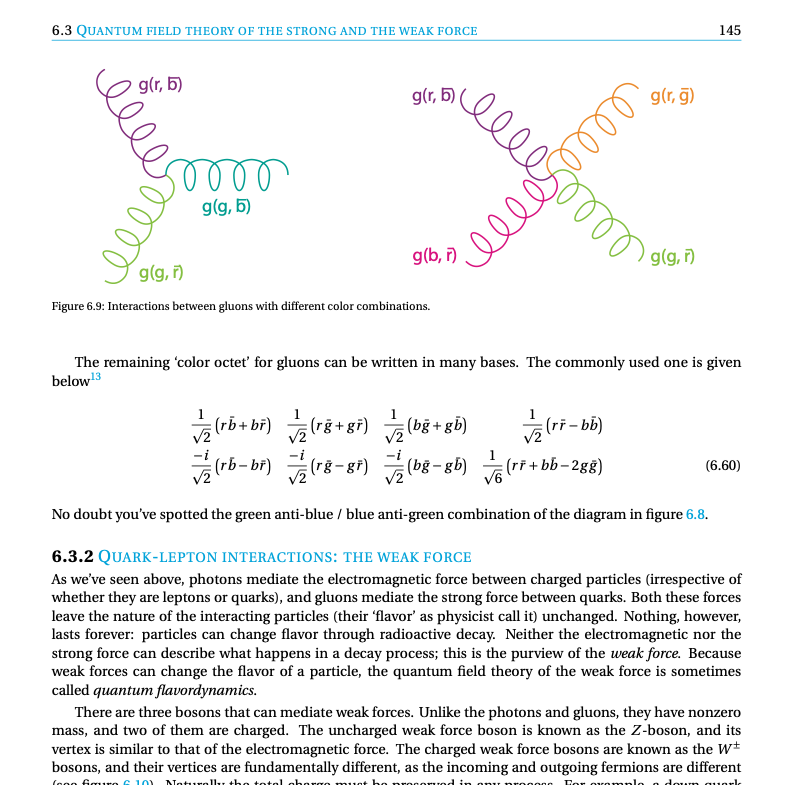
"Introduction to Quantum Mechanics" is a free textbook that clearly introduces the mathematical foundations of quantum mechanics. Despite the subject's complexity, it is quite accessible if you already have a strong background in calculus, linear algebra, and differential equations.
The book covers the origins of quantum mechanics and develops the Schrödinger equation, Hilbert spaces, operators and eigenvalues, Dirac notation, the uncertainty principle, and symmetry and conservation laws. It then moves on to solutions of the Schrödinger equation, finite and infinite square wells, tunneling, the harmonic potential, the hydrogen atom, angular momentum, spin, entanglement and Bell's inequality, perturbation theory, and the electronic structure of atoms, molecules, and solids.
I think it's an interesting read if you want to explore the mathematics behind quantum mechanics, one of the most fascinating areas of modern physics.
https://t.co/mvjCcY23ja
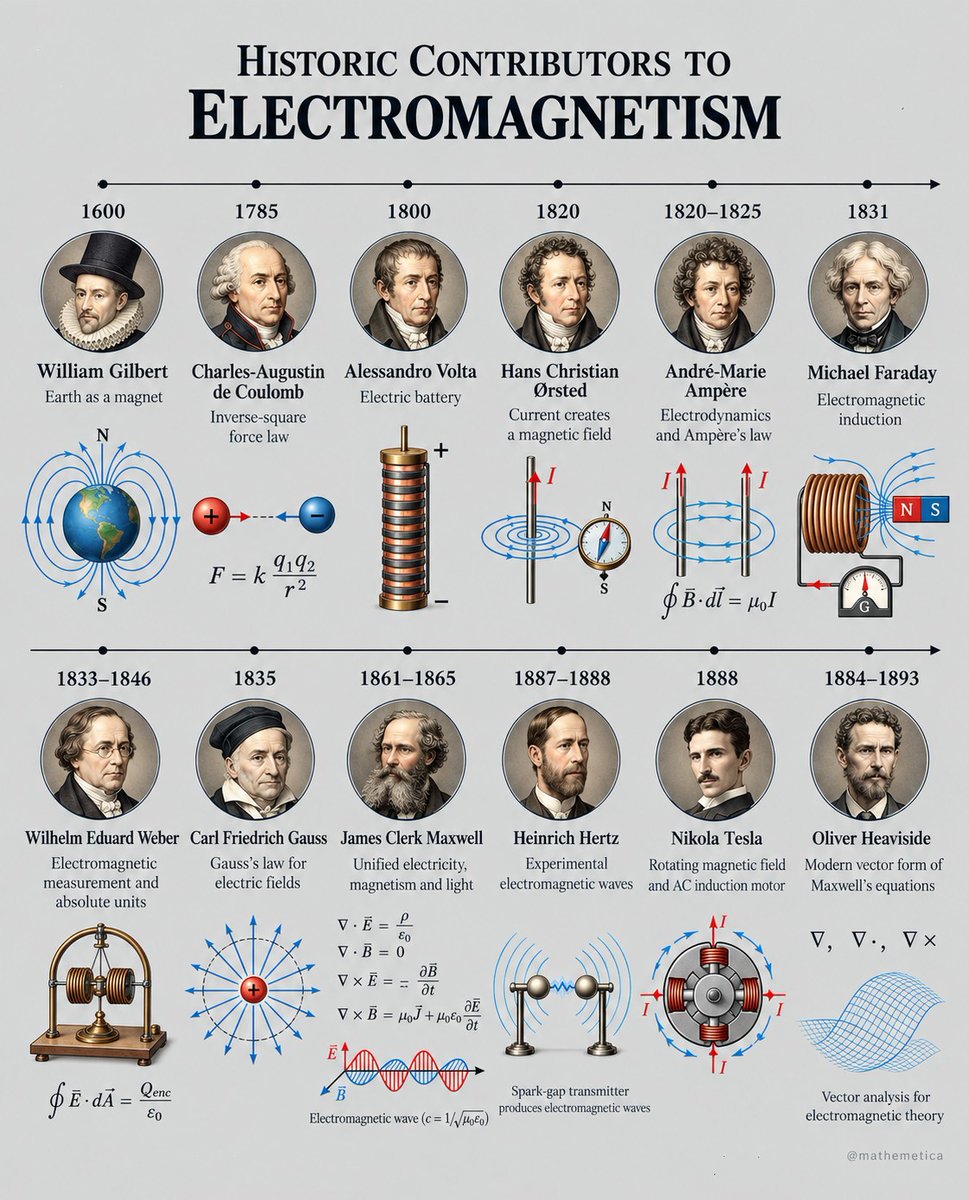
Four lines of vector calculus contain the whole of classical electromagnetism:
∇·E = ρ/ε₀
∇·B = 0
∇×E = −∂B/∂t
∇×B = μ₀J + μ₀ε₀ ∂E/∂t
Charge is the source of electric field; magnetic charge is forbidden. The two curl equations lock the fields together in time, so that a changing electric field begets a magnetic field and a changing magnetic field begets an electric field.
The same two vacuum constants that appear in those equations fix the speed of the resulting wave at c = 1/√(μ₀ε₀), already known to be the speed of light.
Maxwell assembled the theory in 1865; Hertz produced the waves two decades later; Heaviside gave the equations the compact vector form still written today.
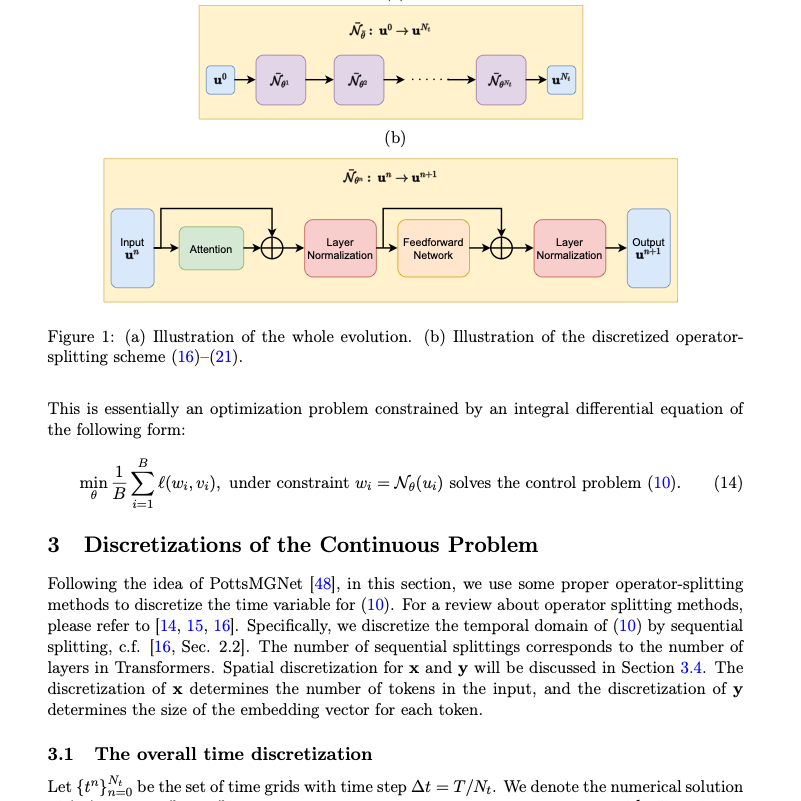
"A Mathematical Explanation of Transformers" is a recent paper that develops a rigorous mathematical framework for understanding the architecture behind Transformers and large language models.
It interprets the Transformer as a discretization of a continuous integro-differential equation, with self-attention represented as a non-local integral operator, layer normalization as a projection onto a constrained set, and feedforward layers and activation functions incorporated into the same mathematical framework, then uses operator splitting and numerical discretization to recover the standard Transformer architecture and extend the formulation to multi-head attention, Vision Transformers, and convolutional Transformers.
I've already shared several resources on the mathematics behind neural networks, Transformers, and LLMs, but there always seems to be something new and interesting to explore in this area.
https://t.co/18IZwRRDZS
Gradient descent doesn't find the global minimum - it finds whatever valley it falls into first. Every LLM trained today gets stuck in a local minimum and nobody can prove the solution it found is anywhere near optimal. The loss landscape of GPT-4 has more dimensions than atoms in the observable universe.
Convex optimization guarantees a global minimum exists and gradient descent finds it. Non-convex optimization - the kind every neural network uses - offers no such guarantee. The entire field of deep learning is built on the empirical observation that local minima are good enough.
22 minutes. Bookmark & watch today. The math behind every AI training run - and why nobody fully understands why it works.
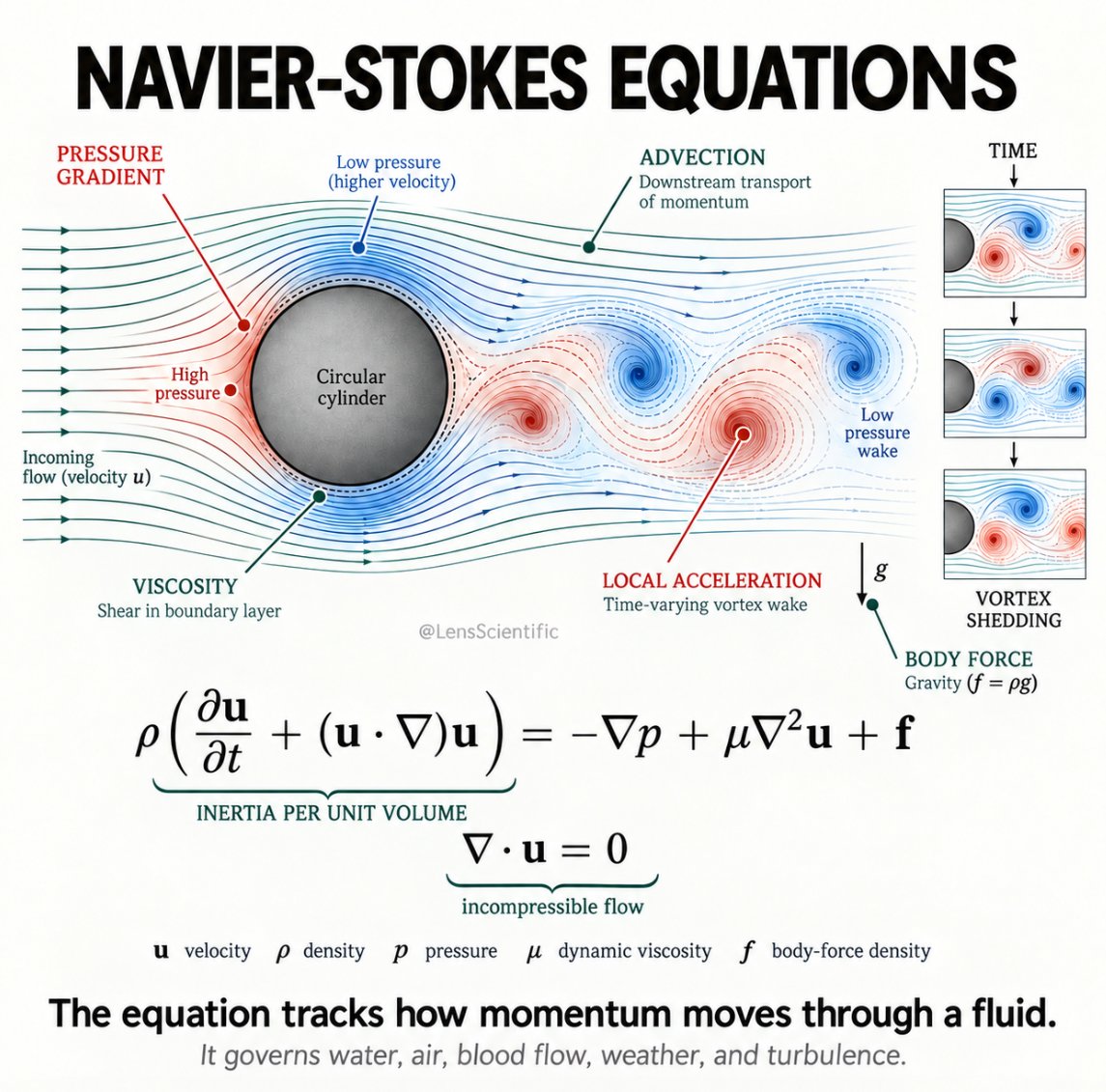
The Navier-Stokes equations describe how pressure, viscosity, inertia and external forces move a fluid. They govern airflow, oceans, blood circulation, weather and turbulence, yet their three-dimensional behavior can still resist exact prediction.
The pressure that empty space exerts on two perfectly conducting plates is
F/A = −π²ħc / 240d⁴.
The inverse-fourth-power law and the purely kinematic constants ħ and c are all that remain after an infinite vacuum energy is subtracted from another.
Modes whose wavelengths cannot fit between the plates are simply absent; the resulting drop in zero-point energy grows as the gap shrinks, producing an attraction that becomes measurable only at sub-micrometre separations.
Casimir extracted the finite remainder in 1948. The same regularisation that isolates the number 240 also shows that the vacuum is not a passive backdrop: its energy density depends on the boundaries that contain it.