Ray Dalio's interview with Tucker Carlson just went viral.
And he's NOT just talking about market predictions.
Instead, he exposed a dark truth most Americans don't want to admit.
Here are his 7 shocking claims about 'America's new Civil War': 🧵
BREAKING: Representative Mike Collins just bought up to another $15K of a cryptocurrency called "Ski Mask Dog".
It appears to have a market cap of just over $200M.
The last time he bought the coin, it rose 280% in three days.
Track politicians' portfolios on Quiver.
Boeing Seeks Financial Lift with $8 Billion Bond Sale Amid Turbulence
Introduction
Boeing (BA) is venturing into the bond market with plans to raise approximately $8 billion. This significant financial move comes at a time when the aerospace giant is grappling with severe economic pressures, including a sharp quarterly loss and continuous cash burn. These financial challenges are largely attributed to ongoing safety crises and intense regulatory investigations, including recent examinations by the SEC over Boeing’s safety practice disclosures. This bond sale marks Boeing's first financial outreach since its credit rating was edged down to just above junk status by Moody's, highlighting the risks and stakes involved.
Financial Strain and Strategic Response
Over the past quarters, Boeing has faced an uphill battle in maintaining its financial health. Struggles with production issues and the aftermath of the pandemic have led to a precarious financial state. In response, Boeing's strategy involves issuing multiple tranches of bonds with maturities ranging from three to forty years. The long-term 40-year bonds are set at yields about 2.65 percentage points above Treasuries, a rate that reflects the high-risk nature of an investment close to junk status.
Key Points to Consider
Credit Challenges: Recent downgrades have pushed Boeing’s credit rating perilously close to junk status, reflecting ongoing financial challenges and market skepticism.
High Yield Attraction: Despite the risks, Boeing’s bond offering could lure investors seeking higher returns, mirroring yields typically associated with high-risk, junk bonds.
Looking Forward
Market Watch: The investor response to this bond sale will be a critical indicator of market confidence in Boeing’s ability to rebound.
Operational Milestones: Boeing must meet production targets and manage its finances effectively to improve its credit standing and stabilize its market position.
Conclusion
Handled by financial titans such as Citigroup (C), Bank of America (BAC), JPMorgan Chase (JPM), and Wells Fargo (WFC), the success of this bond issuance is crucial. As Boeing aims to stabilize its operations, the aerospace sector watches closely. The outcome will not only affect Boeing's operational strategy but also signal to the market how industry giants might navigate financial distress and recovery in challenging economic climates.
Visual Insight:
@ryokuresearch Great analysis! It’s impressive how TSMC’s strategic moves keep them at the forefront despite market and geopolitical challenges. Thanks for the detailed breakdown!
Taiwan Semiconductor Manufacturing - $TSM
Introduction
TSMC’s semiconductor chips are everywhere, found in a wide array of products from iPhones to F-35 fighter jets, marking its near-monopoly with a staggering 92% market share in chip manufacturing. Despite a Smart Score of 3.2, which is relatively low, the company’s early pricing strategy, pioneered by founder Morris Chang, aimed at capturing market share through aggressive pricing, even at the cost of initial losses. This approach, primarily used in the company’s formative years, paid off spectacularly during the dotcom bubble but faced challenges during subsequent recessions. Additionally, TSMC was an early adopter in the AI sector and benefited from the surge in Bitcoin prices, which increased demand for its mining chips.
Executives
Founded in 1987, TSMC has become essential to major tech companies like Apple, Intel, Qualcomm, AMD, Nvidia, Huawei, and Tesla, all of whom depend on its advanced semiconductor technology.
Recent News Analysis
Tech Stock Trends: The tech sector faces headwinds due to delays in interest rate cuts and mixed corporate earnings guidance, compounded by growing geopolitical tensions.
Earnings Overview: TSMC’s earnings, released on April 18, exceeded expectations by 3.15%.
Financial Metrics & Indicators
Stock Price: Current at $127.7 USD
Year-to-Date Range: 24.89% (from $101.53 to $127.7)
Market Capitalization: $599.449 billion
Trading Volume: 28,284,021
Dividend Yield: 1.27%
P/E Ratio: 25.1785
EV/EBITDA: 11.8063
PEG Ratio: 1.30
Debt-to-Equity Ratio: 0.2663
Beta: 1.3886 (1Y)
Sharpe Ratio: 1.48, compared to a benchmark of 1.66
RSI (Relative Strength Index): 32.33 (indicative of being potentially undervalued)
Economic Factors
Microeconomic Trends: TSM was mentioned significantly often in recent months, with mentions reaching up to 714 times a day. This increased attention coincides with major sell-offs in bonds and comments from Federal Reserve officials suggesting that interest rate cuts might be delayed, impacting tech stocks.
Macroeconomic Trends: Advances in electric vehicles, AI, and 5G technologies are driving demand for TSMC’s chips. Geopolitical tensions and increasing environmental regulations present both challenges and opportunities, as does the global push for more localized semiconductor production.
Financial Outlook Short-term
A linear regression model predicts a closing price of $106.62 based on the past week’s data, though this should be considered with other market analyses.
Political Factors
Global Dynamics: Nancy Pelosi's 2022 visit to Taiwan and meetings with TSMC officials highlight the strategic importance of semiconductors in US-China relations.
Legislative Influence: Recent transactions by Congressman Josh Gottheimer indicate a low congressional holding score, reflecting political dynamics affecting stock perceptions.
Conclusions:
TSMC is positioned as a compelling long-term investment given the increasing demand for semiconductors. The company’s ethical and sustainable production practices, coupled with its technological superiority, make it a difficult competitor to rival.
#TSMC #tech #investing #Finance #Analytics #Nvidia #NVDA #TSM #chips
@MMCrypto The problem with this analysis is you had institutions selling to other institutions during the ETP launch so it wasn’t long term selling to short term. It’s was long term MOVING assets to lower fee ETP’s
Alibaba Group Holding Ltd - $BABA
Introduction
Alibaba, a Chinese multinational conglomerate founded by Jack Ma in 1999, specializes in e-commerce, retail, internet, and technology. It operates various businesses, from online shopping platforms like Taobao and Tmall to cloud computing services like Alibaba Cloud, digital media, entertainment, and logistics services. Alibaba's record-breaking IPO on the NYSE in 2014 underscores its global influence. With a mission to facilitate business everywhere, it fosters digital economy growth and connects consumers and businesses globally.
Recent News
Alibaba recently restructured into six business groups to enhance agility and responsiveness, marking its largest organizational change in 24 years. The company also invested heavily in AI, leading a $600 million financing round for AI startup MiniMax, signifying its ambition to lead in generative AI technology. Additionally, Daniel Zhang stepped down as CEO of Alibaba's cloud business, causing a 3.5% drop in shares. Eddie Wu will temporarily assume his responsibilities. These changes reflect Alibaba's strategy to withstand regulatory scrutiny, market challenges, and technological advancements.
Financial Metrics & Indicators
Stock Price: 72.36 USD (1.10%)
YTD: -2.40% | $68.05 - $78.23
1 Year: -27.56% | $103.38 - $68.05
Market Capitalization: 184.04B USD
AVG Volume: 14.02M
Dividend Yield (TTM): 1.37%
P/E Ratio: 13.42
EV/EBITDA: 6.92
PEG Ratio: 1.68
D/E Ratio: 0.1642
Micro Economics
Alibaba Group Holding Limited ($BABA), a leading figure in the e-commerce and tech world, operates within a complex microeconomic landscape. It maintains a strong market presence alongside competitors like Tencent and JD. Alibaba's competitive edge is honed through innovative strategies such as dynamic pricing, product differentiation, and customer service, targeting the high price elasticity of demand in the e-commerce sector.
To optimize both the consumer experience and operational efficiency, Alibaba utilizes its expansive logistics network, Cainiao. This network significantly reduces delivery times and costs. Combined with the company's ability to achieve economies of scale, it greatly influences supply chain dynamics and cost structures in the digital marketplace.
However, Alibaba faces challenges, notably from the increased regulatory inquiry in China over tech giants. Concerns range from anticompetitive behavior to data security, greatly impacting Alibaba's operations. A clear example of this is the 2020 regulatory halt of Ant Group's IPO, highlighting the difficulties Alibaba encounters in its financial services ventures.
Despite these challenges, Alibaba continues to innovate in response to market demands and regulatory pressures. Its recent ventures into new technologies and market sectors, combined with strategic partnerships and expansions, highlight Alibaba's resilience and adaptability in a rapidly evolving digital economy.
By examining Alibaba's microeconomic environment, from its market structure and consumer behavior strategies to its supply chain efficiencies and regulatory challenges, we gain a comprehensive understanding of the multifaceted approach necessary to sustain growth and competitiveness in the global e-commerce sector.
Conclusion:
Established by Jack Ma in 1999, the Alibaba Group has made a substantial impact on the worldwide e-commerce and technology sectors through its diverse services. Even though the company is under regulatory difficulties, it continues to pave the way in innovation, demonstrated by its most significant restructuring in 24 years and considerable investment in AI. Despite a recent dip in its stock price, the company's focus on enhancing consumer experience, improving operational efficiency, and navigating regulatory obstacles, along with its crucial position in the digital marketplace, indicates a potential for bouncing back and advancing.
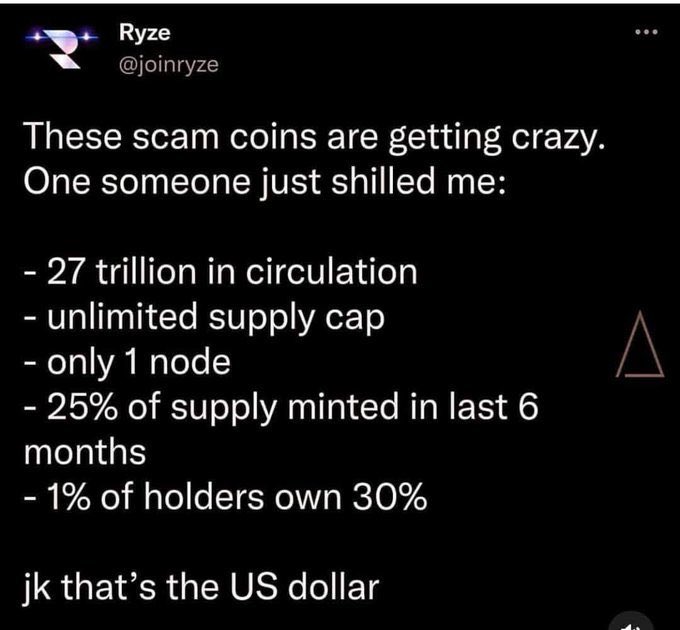
@theRealKiyosaki Government: but Bitcoin and cryptocurrencies are used for money laundering
Also Government: corrupt in almost all metric, using the US dollars as a tool
Ironic
AI Reshaping Tech Titans: The Rise of Nvidia and Meta in the 'Magnificent Seven' Era
For over a decade, tech giants like Alphabet, Amazon, Apple, Meta, Microsoft, and Tesla ruled the market, shaping portfolios under acronyms like FANG and FAANG. Last year, Nvidia joined the elite club, sparking the emergence of the "Magnificent Seven.”
But this year, the Seven has splintered. While Nvidia and Meta surged, Microsoft and Amazon held steady, leaving others in the dust. The key? AI dominance. Companies without it struggle to catch investors' eyes, per Kim Forrest of Bokeh Capital Partners.
Tesla's challenges in the AI and electric vehicle markets precipitated a significant decline, while Apple and Alphabet experienced subdued performance. Despite notable advancements in AI, such as Apple's discussions with Google's Gemini AI engine, skepticism remains regarding their proficiency in AI, particularly highlighted by Gemini's image accuracy concerns.
As AI reshapes the corporate landscape, Microsoft's OpenAI partnership made it the world's most valuable company at nearly $3.2 trillion. Apple promises AI breakthroughs, but investors favor stocks like Microsoft and Nvidia with clearer AI paths.
Investors await Apple's AI news at its developer's conference, highlighting AI's role in market shifts.
#TechStocks #AI #Investing #MarketTrends #InvestmentInsights #MagnificentSeven #TechLeadership #Innovation #StockMarket #Investing #ArtificialIntelligence #MarketTrends #TechInvestments
@ryokuresearch How does the Swiss National Bank's early interest rate cuts reflect its broader economic strategy amidst changing inflation forecasts and global trade challenges?
SNB Initiates Interest Rate Shift 🇨🇭💼
The Swiss National Bank (SNB)'s decision to initiate interest rate cuts ahead of other central banks is a strategic move that stands out in the current global economic environment. The SNB plans to commence lowering interest rates in June, with additional reductions expected in September and December, bringing the key rate down to 1.5%. This decision is notable for being initiated a quarter earlier than previously anticipated, signalling a proactive stance towards easing monetary policy
This move comes amidst adjusted inflation forecasts, with economists predicting a decrease in consumer-price growth to 1.4% this year and 1.2% in 2025, from earlier forecasts of 1.5% and 1.4%, respectively. Such adjustments reflect a broader expectation of subdued inflationary pressures.
Furthermore, the decision by the SNB to lower interest rates reflects a sophisticated understanding of the Swiss economy's needs. Despite inflationary pressures, the Swiss economy benefits from a strong Swiss franc and low inflation in the Eurozone, contributing to the expected ease in inflationary pressures. UBS has revised its inflation forecast for Switzerland in 2024 to 1.6%, down from 2.0%, highlighting a trend towards lower inflationary expectations.
📈 Market Response: The Swiss franc responded to the rate cut with further depreciation against major currencies, benefiting export-oriented sectors. However, challenges persist, particularly amidst sluggish demand in key trading partners like Germany. Following the announcement by the Swiss National Bank (SNB), the Swiss Market Index (SMI) ended the trading day with a gain of 0.73%.
#SNB #InterestRates #EconomicShifts #SwissEconomy #MonetaryPolicy #FinancialNews #EconomicOutlook #Inflation #CurrencyMarket #GlobalEconomy
BlackRock CEO, Larry Fink, is literally on Fox Business arguing with the host about why #Bitcoin is the modern day digital gold, how it protects you from inflation and removes counter party risk associated with governments.
The narrative is changing! 🤯
https://t.co/VY97YEYiDB
Nvidia, $NVDA, the 3rd biggest company in the world, just fell 10% in 30 minutes.
That's a company with $2.3 trillion in market cap trading like a penny stock.
Is it weird that this feels completely normal now?
Can Covid leave you chronically infected?
The virus can remain in different parts of the body for months after infection, according to research published in @nature. @nih's Dr. Daniel Chertow explains https://t.co/wBkxHpBfLV
There was massive hype and fanfare leading up to the #Bitcoin spot-ETF launch.
Yet, the launch didn't quite live up to expectations. There wasn't a tsunami of capital inflow, and there was no 'God Candle'
So, was the #Bitcoin ETF launch a failure?
Time for an ETF 🧵👇