The Hidden Catalyst: The Debt Buyback Thesis
While most people are focused on the potential GME $2 billion share buyback (and potential eBay acquisition), there may be a more strategic move flying under the radar that few are looking at: The possibility of GameStop buying back and retiring its 0% convertible notes.
Buying back and retiring even a fraction of these notes could serve as a major catalyst for upside price movement. Here's why:
1. Unwinds the Arb Short Trade
Hedge funds in the arbitrage short trade bought the convertible notes and shorted GME shares at the same time to hedge their risk. If GameStop retires the notes, those funds are forced to buy GME on the open market to close out their short positions.
2. Kills Dynamic Hedging
Because the funds want to remain market neutral, they constantly adjust their short position based on the stock's price. As GameStop's stock price goes up, the bond behaves more like equity, and to keep their hedge perfectly balanced, the arbitrage funds are forced to short more shares on the open market. This creates an automated wall of short selling that steps in to choke off upward momentum whenever the stock starts to run. Retiring the debt removes this selling pressure.
3. Destroys the Future "Dilution Trapdoor"
The current outstanding notes can convert into tens of millions of new shares in the future as the stock price rises above conversion price, creating an artificial ceiling on the stock through dilution. Retiring the debt permanently destroys this "dilution trapdoor". It's economically similar to a targeted anti-dilution move.
4. No Daily Volume Limits or Authorized Caps
Stock buybacks are limited by the board's authorization ($2B here) and practical factors (liquidity, 10b-18 rules, etc.). A company can retire debt much faster than it could execute an equivalent open-market stock buyback.
5. Strengthens the Stock for M&A
When pursuing a massive acquisition like eBay, a company's stock is its most potent currency. As mentioned above, retiring the convertible debt forces the hedge funds engaged in convertible arbitrage to unwind their short positions. This forced buying would likely drive GameStop's stock price higher. A higher stock price makes any equity-based portion of an eBay buyout much cheaper and less dilutive for GameStop.
6. Provides Strategic Flexibility During Takeover
Regulation M and safe harbor rules restrict share repurchases during a formal "distribution" (like mailing official merger or tender offer materials), which has not occurred yet with the rejected, non-binding eBay proposal. But even if a formal deal later triggers these regulations, debt retirement remains permitted, while share buybacks become heavily restricted and require rigorous compliance to avoid market manipulation claims.
A Hypothetical Scenario
GameStop currently has over $4.16 billion in total outstanding convertible debt. For a clean example, let's look at what happens if they retire just $1 billion of it.
GameStop's notes convert at roughly 34 shares per $1,000 note, meaning $1 billion in debt represents about 34 million underlying shares. Because arbitrage funds typically hedge at a ~60% "delta," they are currently short roughly 20 million shares just to hedge that $1 billion tranche.
If GameStop buys back that $1 billion in debt, the arbitrage funds suddenly have to unwind their hedge. They are immediately forced to buy back those 20 million shares. This could (emphasis on "could") trigger a gamma squeeze, pushing the stock price up significantly in short period of time.
By removing this debt, GameStop not only removes the active short-hedging that suppresses upward momentum, but it also clears the runway for the company to deploy its newly approved $2 billion share repurchase program into a more illiquid market.
TLDR: Retiring convertible debt triggers buying pressure from funds (unwinding their hedges), eliminates the dilution "trapdoor", and clears the runway for upside price movement when the share buybacks hit.
Disclaimer: GameStop may never end up retiring any convertible debt and I might be overlooking some market/legal nuances. BUT if I’m understanding the mechanics correctly, this is a powerhouse of a tool sitting in their arsenal.
Don’t listen to me though, I just had crayons for breakfast.
$GME
I was digging through old articles and found something that changes the $GME conversation.
Take a second. Read it.
https://t.co/4qir9vcdie
May 5th, 2026. Two days after the bid goes public.
EnterpriseAM - a Gulf Cooperation Council business daily out of the UAE - publishes a piece on the eBay acquisition.
The headline: “GameStop is turning to the GCC to fund its USD 55.5 bn bid for eBay.”
This publication has direct sourcing into Gulf sovereign wealth funds.
This is not Bloomberg speculating.
This is not CNBC asking pundits what they think.
This is a regional outlet reporting what SWFs are actually doing.
And their reporting looks NOTHING like Western coverage.
First, they NEVER MENTION the stock component.
Not once.
They model the deal as pure cash from day one:
- $9.4B GameStop cash
- $20B TD Securities debt
- ~$26B in SWF equity
That’s it.
No “half cash half stock.”
No “can GameStop even afford this?”
None of it.
They just did the math on what needs to be filled and reported who’s filling it.
Think about that.
While every Western analyst spent three months asking how a company 4x smaller than its target could possibly close this deal, the Arab financial press already had the answer.
The money was in the room before the bid was announced. GCC publications don’t speculate about sovereign wealth fund involvement.
If they published this two days after the bid, those conversations were happening BEFORE May 3rd.
The financing was pre-arranged.
It gets deeper.
They name PIF directly.
They compare this deal to PIF’s $55B leveraged buyout of EA through Savvy Games Group and its minority position in Nintendo.
PIF. EA. Nintendo.
Now eBay through GameStop.
A publication with Gulf sourcing doesn’t drop that comp casually.
That’s pattern recognition from people who watch these funds deploy capital every week.
Now connect TD Securities.
TD provides the $20B debt commitment on the eBay bid.
TD Bank is also the counterparty on the put/call pairs Cohen used to accumulate his eBay stake.
That’s not two separate relationships.
That’s the deal bank.
The debt, the derivatives, and the equity bridge all running through the same architecture.
So what did the Arab press actually tell us three months ago?
The stock component was never real.
The financing was locked before the bid went public.
And this is a pre-structured all-cash.
The answer was sitting in a UAE morning newsletter the entire time and nobody in Western markets was reading it.
$GME
-Shorts opened in 2014
at ~$40 per share (10$ post split)
-Shares haven’t been $10
since April 2024, going on 2 years now.
-he said they were never naked short😂
SHORTS NEVER CLOSED
💥💎🙌🏽🚀♾️
New w/ @PranjalDrall: Private Credit's State Backstop: How Private Equity Socializes Risk Through Insurers. It's about how insurance insolvency, tax, and financial-regulation law have subsidized PE's takeover of life insurance and become the submerged law of private credit.
🚨 BREAKING: The House has just PASSED a bill to BAN members of Congress and their spouses from trading individual stocks, 232-198
There's also a national voter ID requirement attached to the bill 👀
This is LONG overdue! Sorry Pelosi!
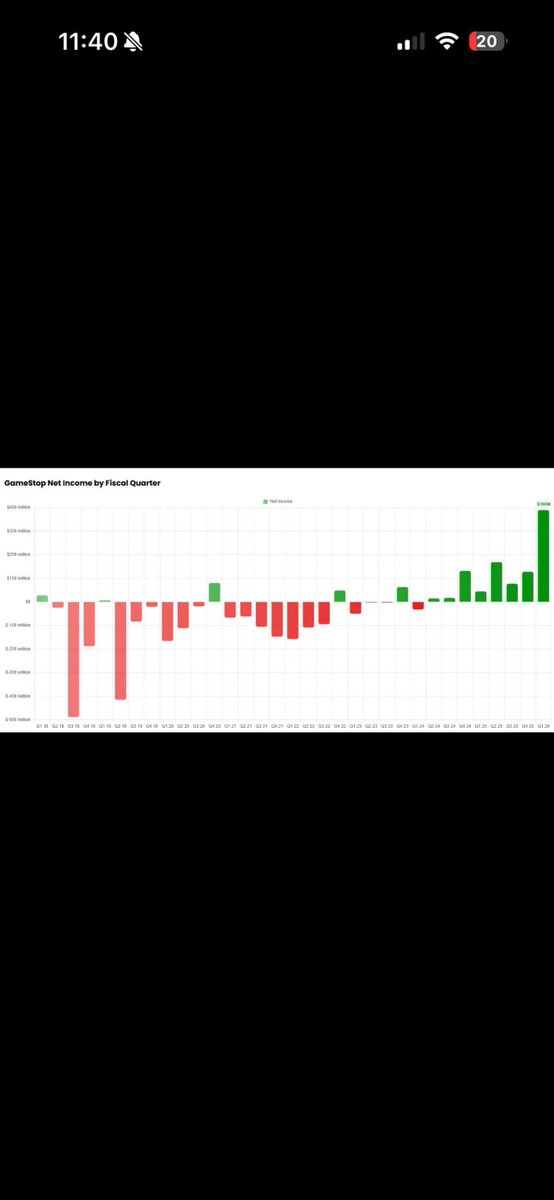
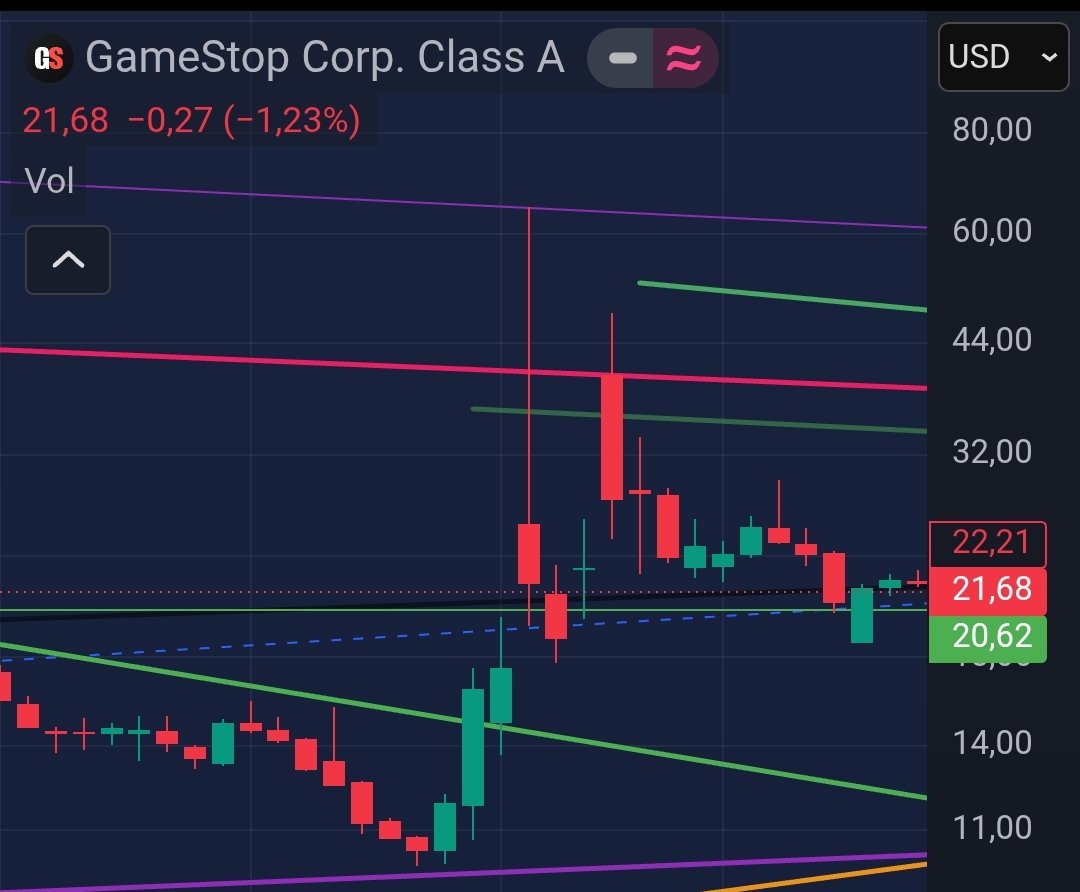
Imagine $GME stock price steadily declining then trading sideways for five full years while the company’s net income has been steadily climbing higher and higher.
You can’t make this up...
GameStop stock price is fake.
The last time GameStop volume was this low was in spring 2024. 👀
This is completely insane because the float is bigger now than it was in early 2024. 🤯
$GME is completely illiquid. 💎🙌
Ryan Cohen comments on the hate towards GameStop by mainstream media and the general public
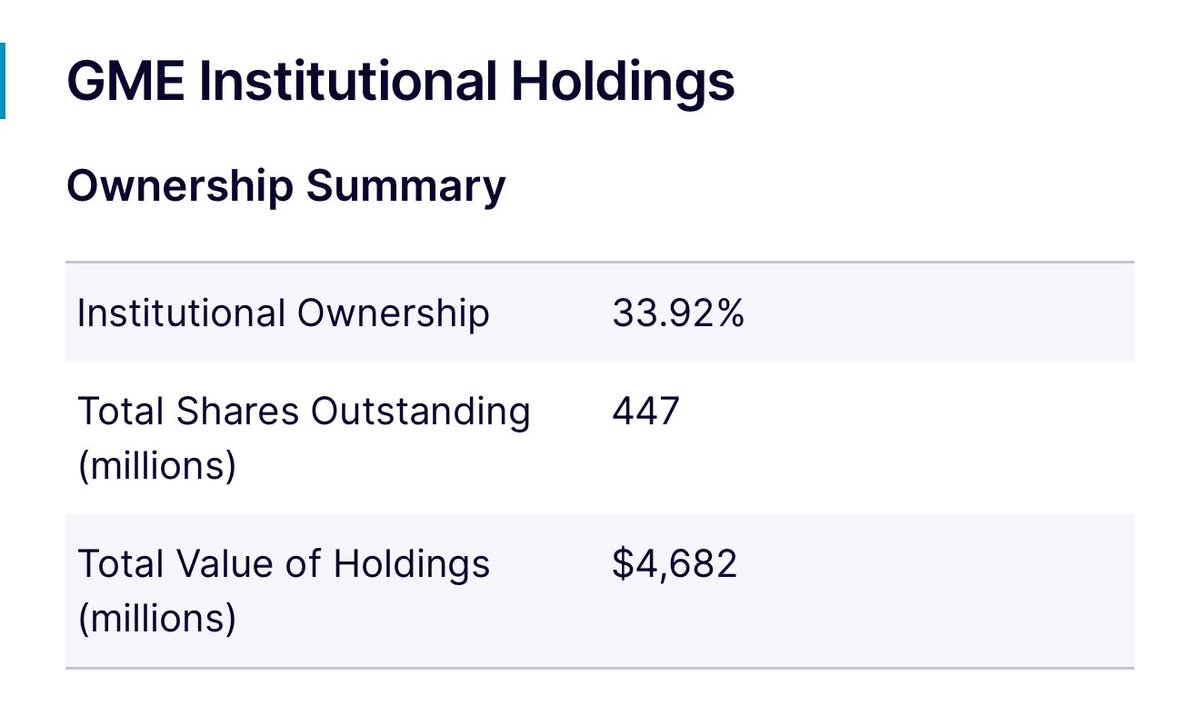
The negative sentiment is manufactured because short sellers made $GME an idiosyncratic risk during 2020 and are still holding heavy bags of naked short positions.
MOASS 💥
The Ultimate 4D Chess Move: Why Ryan Cohen’s Rejected eBay Bid is the Greatest Customer Acquisition Strategy of the Decade ♟️🧵
Let’s look at the market forensics.
GameStop didn't launch a $55.5B hostile takeover of eBay just to get a rejection letter. What if they did it to hijack the global news cycle, weaponize eBay's own market cap, and build a war chest for the ultimate Trojan horse.
As someone with a background in marketing and building, my thoughts immediately go to user acquisition. Breaking people away from an entrenched legacy system requires immense friction or massive incentive.
Look past the headlines at the real data, and you’ll see the ultimate reverse playing out in front of us. This is purely my own speculation, but the chess pieces align perfectly.
Here is the playbook. 👇
1. The Impossible Bid
GameStop (a ~$10B company) bids $125/share for eBay (a ~$48B company), requiring an insane $20B in debt and massive stock dilution.
Cohen knew the eBay board would immediately reject it as "neither credible nor attractive." But acquiring eBay was never the actual goal.
From a marketing perspective, the goal was the spotlight.
2. The Loaded Gun (The 9% Leverage)
GameStop quietly accumulated a ~9% economic stake in eBay through a complex web of stock and derivatives.
With the HSR antitrust waiting period expiring in early June, those derivatives are eligible for physical share settlement. That 9% block is a loaded gun aimed directly at the eBay board.
If the board stonewalls him, Cohen can dump that massive position into the open market.
He pockets hundreds of millions in profit, tanks eBay's stock, and leaves their board to face furious shareholders—all while using eBay’s own valuation to fund his next move. It is the ultimate "heads I win, tails you lose" scenario.
3. The Trojan Horse
Notice how there has been absolute, deafening silence from Cohen and his team on why https://t.co/B6hHE2921A is currently down and "under construction"?
Look at the real data in the SEC and trademark filings. Teddy Holdings laid the legal groundwork for an "online marketplace" back in 2021.
Just a few months ago, in March 2026, they added "Insurance and Finance."
Teddy isn't just a children's book storefront anymore — the infrastructure is being quietly built for a massive, multi-vertical marketplace.
4. Weaponizing Seller Fatigue
If you move high-value TCG slabs or handle serious volume, you already know how broken the legacy marketplace model is. The exorbitant fees, the algorithm changes, the held funds.
Cohen is playing into this exhaustion perfectly.
He's currently selling his own stuff on eBay to "fund the deal" and highlighting the friction at every turn. He is loudly exposing eBay’s flaws on a global stage, positioning himself as the pro-seller alternative.
5. The Flip
When https://t.co/B6hHE2921A goes live as a seller-first marketplace, it won't launch to crickets. It will launch at the absolute peak of this media frenzy.
Any growth marketer will tell you that user acquisition is the hardest hurdle, but Cohen doesn't need to spend billions on marketing. He just acquired millions of disgruntled sellers and retail investors for free.
This isn't a failed acquisition.
In my view, it’s the most aggressive, brutalist marketing campaign in retail history, completely funded by the target company. People are going to leave eBay in droves.
Watch closely. 🐺