Chief Market Strategist at @CarsonGroupLLC
🔎 for the perfect BBQ
Host to the Facts vs Feelings podcast
CNBC Contributor
Portfolio Manager to +$8B in AUM
Last week was historic in a lot of way, but what hasn't changed is this is still a 🐂 market.
Here are my latest thoughts on it all 👇 👇
https://t.co/ugBaimrkqt
Ep 213 of Facts vs Feelings is live 🔥
@sonusvarghese and I sat down with Blake Anderson and @gilbert3142 on our team after one of the wildest weeks of the year.
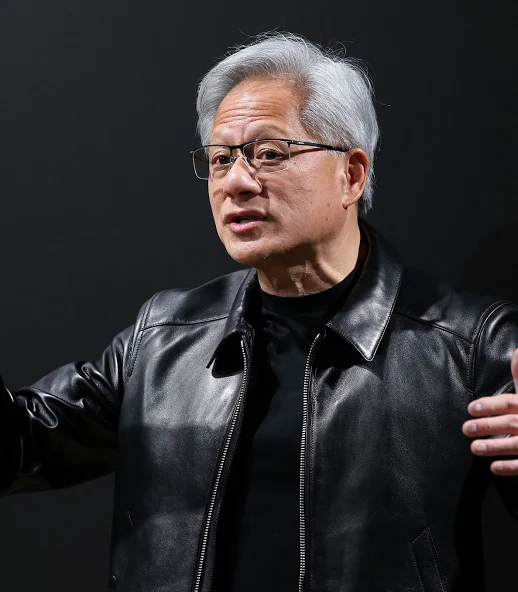
📉 Nvidia fell nearly 10% on reports linking Jensen Huang to an alleged Chinese spy. Hearings look likely, with earnings on the 17th and Huang invited to testify on the 18th. Chip demand shifts toward other semis, similar to Dell's run while Supermicro struggled.
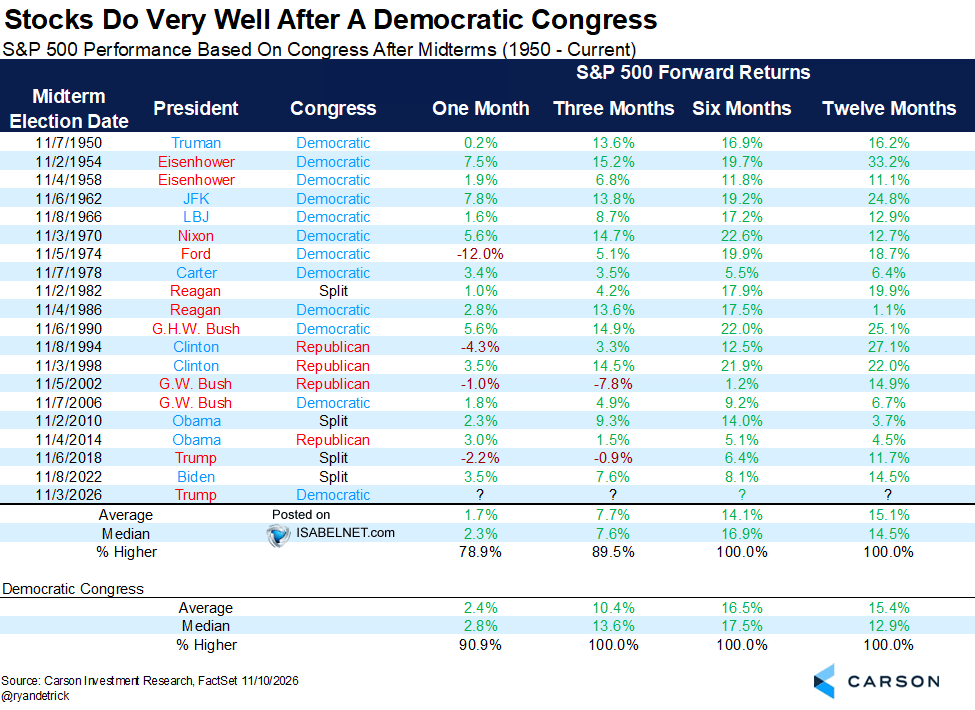
🗳️ Barry called the midterms a blue wave driven by voters' focus on prices. In the six months after a midterm, the S&P 500 has been higher 19 for 19, up 14.1% on average.
🔌 Data center restrictions passed in 44 of 45 ballot measures. Power is the biggest limiter for AI builders, and higher costs plus longer timelines could cut equity returns from about 15% to near 5%.
🏦 Waller said he'd back a 50 bp hike if core CPI topped 0.3%, and it came in at exactly 0.3%. Real yields have held up better than nominal yields, which points to a bond market expecting continued growth and a tighter Fed.
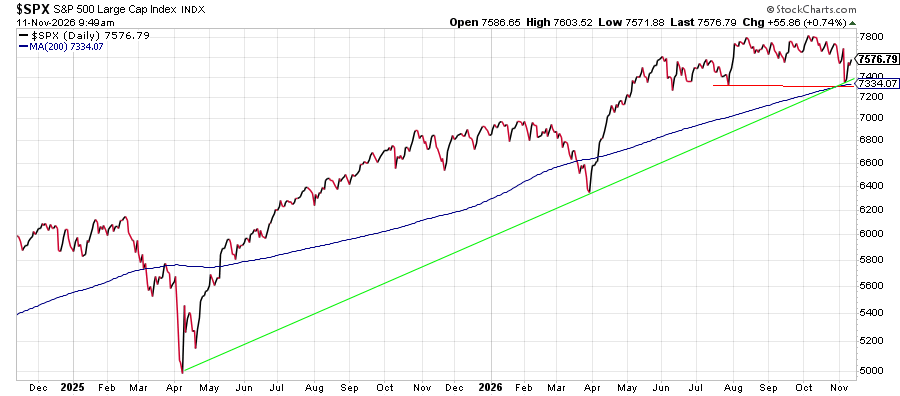
🤖 After a 4.4% drop in the S&P 500, a 12%+ drop in the SOX, and a sharp bounce off the 200-day, Blake and Barry explain how they manage AI risk through diversification, watching for rotation, and respecting the cost of falling behind.
Watch the full episode 👇
https://t.co/tKxpY9X4Oi
As of Friday, the S&P 500 was up about 8% for the year, which is close to an average year.
But remember, only four times out of the past 76 years did the S&P 500 gain between 8-10%.
Bottom line, a big move the rest of this year is likely and we continue to expect that move to be higher.
🇺🇸 S&P 500
History favors the bulls. In every instance since 1950 when Democrats held both chambers of Congress following a midterm election, the S&P 500 was higher three, six, and 12 months later. The average one-year gain: 15.4%. Not bad
👉https://t.co/yIk7SZYWVX
@RyanDetrick
Yes, these next six months are historically quite bullish, but when Congress is fully to the Democrats it turns out the S&P 500 does even better.
Never lower six months later (11 for 11 higher) and up 16.5% on average.
@twinsight_x@RyanDetrick Was looking back to what I wrote at the start of the year (before the Iran war) ... 10 months later, and its the same story
https://t.co/Tk2DmcbetO
Inflation once again came in 🔥 than expected.
@sonusvarghese has said all year that inflation would remain hot and as a result yields would likely stay higher than most expected.
Here are his latest thoughts 👇 👇
https://t.co/IAd6qo4UHj