@FranVezz What gets me is more the open profit giveback, even if the position has a stop in the money. But that open profit was never mine. Only what I protect through stops is truly mine.
Follow-up to yesterday’s post about testing different entries.
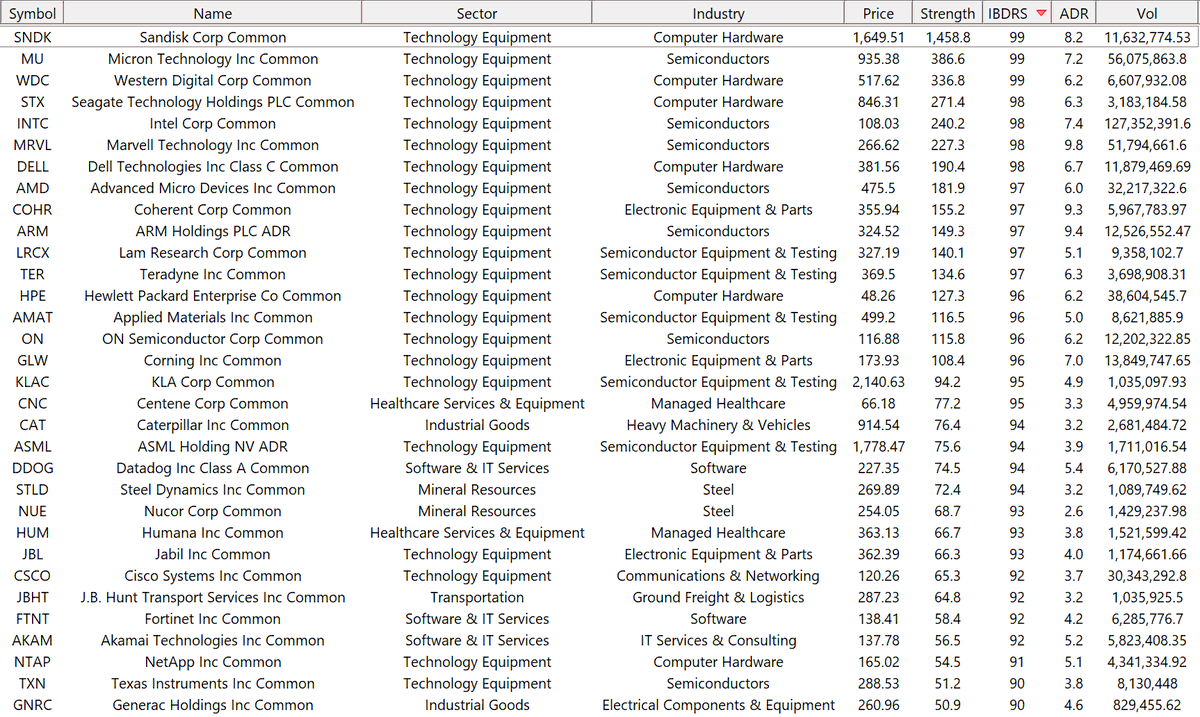
I tested multiple ways of entering the same relative strength universe using the same basic trade management, and the results were interesting.
Forced larger pullback
This made the results worse. My read is that the system did not want me to wait for a “better” dip. By forcing more weakness before entry, I was probably filtering out too much strength.
Breakout entry
This was still profitable, but not as good as the Slingshot entry. That also makes sense. A breakout requires more confirmation, but confirmation usually means entering later. Sometimes that is useful, but other times it gives up too much of the move.
Rotation / no real entry tactic
This was the most interesting test.
When capital became available, the system simply rotated into the next highest relative strength name with no additional entry signal at all. It performed very well, but looking through the trades, it often entered during weakness because another holding had just stopped out. In that sense, it almost behaved like a mean reversion system inside a relative strength universe.
All of these entry ideas were profitable.
The edge does not seem to come from one magic entry pattern. It seems to come from the combination of a strong relative strength universe, ranking toward leadership, disciplined stops, trailing exit management, position sizing, and recycling capital back into strong names.
But the entry still matters. It changes the character of the system.
Rotation buys weakness in leaders, but it can keep buying falling knives. That would have been nasty on a day like today. Breakout waits for more proof, but often enters later. Slingshot sits somewhere in the middle. It waits for short-term weakness, but does not blindly buy weakness. It waits for price to show that buyers are stepping back in.
The Slingshot entry is not the entire edge. But I like that it keeps some of the mean-reversion character that showed up in the rotational test while acting like trend following otherwise.
I used to think the entry was the edge.
The more I test and trade, the more I think entries might be one of the least important parts of a trading system.
I remember reading about @basso_tom testing a coin-flip entry system where the exits, position sizing, and trade management still drove the results.
Tomorrow I’m going to test some random entry variations on my intraday system and see how much of the edge is really coming from everything after the entry.
Daily Update
Absolutely brutal day today. Lots of damage across the board.
The intraday strategy is now fully in cash and de-risked. The daily strategy does not react intraday and waits for the close, but with several names now closing below their stops, there will be 3 exits on Monday.
Risk controls are also starting to kick in for new positions. Open heat limits and risk per trade are now reduced to 75% levels until conditions improve.
Daily Portfolio — 64% invested
Current: $VLO $LSCC $VSXY $GLW $CIEN $WDC $LCRX $BE $AMAT $MU $LITE $RKLB $APLD $MRVL $IONQ $AMD
Added: None
Exited: None
Intraday Portfolio — 0% invested
Current: None
Added: None
Exited: $SNDK $WDC $NVDA $INTC $CAT $FTNT
Intraday chart showing the entries/exits for the swing position. Got the slingshot signal at EOD on 5/18, entered at the open on 5/19, and today's gap down gapped below my live stop, taking me out. That orange line shows my stop location along the way.
Exited my $WDC swing position on this morning’s flush.
The original trend-following position is still intact.
This is a good example of why I like pairing a slower core trend-following system with a faster swing system on the same type of leadership stock.
The trend-following position entered much earlier and is still giving the larger move room to work.
The swing position entered after the mid-May consolidation, captured the next leg higher, and exited when short-term momentum broke.
The goal is to let the core position stay with the trend, while the swing layer gives me a way to harvest shorter-term strength along the way.
Not every trade is clean in real time.
$CAT was a good example today. I got stopped out in my brokerage account even though TradingView, where I manage my trades, did not show price reaching my stop level. Then a new slingshot signal triggered and I bought it back higher.
That is frustrating. Sell lower, buy back higher, and the chart does not even perfectly match what happened in the account.
But this is also part of live systematic trading. Backtests and charts are clean. The brokerage account is where the messy details show up. Different data feeds, stop handling, spreads, intraday prints, and execution mechanics can all create small mismatches.
In this case, the stop triggered, the setup reappeared, and I re-entered. Annoying, but process-consistent. I’m not sure there is a perfect way around this when live execution and charting tools don’t line up exactly.
I used to think the entry was the edge.
The more I test and trade, the more I think entries might be one of the least important parts of a trading system.
I remember reading about @basso_tom testing a coin-flip entry system where the exits, position sizing, and trade management still drove the results.
Tomorrow I’m going to test some random entry variations on my intraday system and see how much of the edge is really coming from everything after the entry.
Intraday chart showing the Swing entries. I actually entered a bit late vs. what TradingView shows on a subsequent Slingshot candle. Sometimes I do that if I get room to buy a new position and I'm not too far away from the original entry.
This $MU trade is a good example of why I combine trend following with shorter-term swing trading.
The original trend-following entry triggered on 4/9/26 and has stayed in the trade through the entire move. After the consolidation, my swing system triggered a new buy just before the recent push higher, and today that swing trade exited for a nice gain.
But the original trend-following position is still open.
That’s the part I like. The swing system can capture shorter-term moves inside the trend, while the trend-following system keeps me involved in the larger move.
Same stock, two timeframes, two different jobs.
One captures the swings. One rides the trend.