Here's a video of the Test Track Design Studio experience recreated in Minecraft -- we tried to match the game mechanics as best we could, so if you know how to get a high score in real life you should fare pretty well on here!
🚗Attention on the Sim Track! 🚗
🚘#TestTrack is now open on MCParks 🚘
🖥️Connect at https://t.co/kPZ7wCYzah (Java Edition) to design and test your perfect car! 🖥️
Around the time Google Maps rolled out the "Most energy efficient" driving route option, I started thinking it'd be really cool to let users define their own heuristics for navigation!
This seems pretty possible now!
today I discovered a walking route to work that’s 2 minutes longer than the maps default, but takes me past a park, beautiful architecture, and a street full of cafés and life. such a huge upgrade to a journey I make every morning
I want Alive Maps, a version of Google Maps that optimises for beauty, serendipity, and aliveness instead of speed
Whatever you may think of the reasoning from Google that routing pedestrians through "nice areas" is not inclusive: I'd love to get more granular than "avoid tolls" and "avoid highways" for driving directions and say "bias for nice seaside routes, small town main streets, etc"
@Themountainkin1@ScottGustin@P0hov_ Also, in every failure, there are still things to learn! While the public may say Starcruiser and the interaction experiences in Galaxy's Edge "didn't work," I'm sure the guest surveys and experience data from those gave great data to folks in game design, software, etc
@Themountainkin1@ScottGustin@P0hov_ That's why you keep trying different things! On each iteration, the tech is slightly different, the audience is slightly different...all the variables are a little different!
WDI is, among other things, an R&D firm. Trying stuff like this is their job!
I'll never be against experiments! You never know when you'll accidentally stumble upon a hit.
Also, from the piece:
> Disney says the goal is to let guests interact with the digital assistant while walking around the parks without constantly needing to look at their phone.
Gotta walk before you can run!
@ScottGustin > Currently only available on iOS
C'mon guys, it's never been cheaper to launch things cross-platform!
The ghost of Steve Jobs still looming large I guess 😅
@JimShull We're doing this pretty effectively in more forward-looking parts of the software industry today. Curious what you think are the things that make it difficult to transfer into the construction world!
@jfwong I really wish the anti-AI-art movement would find a different word than the already technically defined "Gen-AI." The "gen" stands for "generative." Text/code counts! But I agree that it should be judged by different standards! https://t.co/NqpSbCGlxx
NEW: Walt Disney Imagineering just launched a new app that lets Disneyland guests playtest digital experiences that are still in development. First up is an AR game in Galaxy’s Edge. An interactive park guide is coming soon, too.
Magic Key holders get first access, and Disney wants feedback to help shape what comes next. The app will launch for all Disneyland guests in early 2027.
More: https://t.co/SC43Xgj7v2
NIL is about literal identity -- it only applies if we're talking about them using Rohde or Baxter's faces/names/physical likenesses. It doesn't transfer to their artistic style/"blueprint." That isn't copyrightable; anyone is allowed to make work imitating one's style /technique.
They couldn't market the process used to generate it as "AI Baxter concept art." That would require NIL rights they might not have (although, they might! Even I as an individual contributor nobody PM am often asked to give employers the right to market the things I work on with my likeness).
As for training models based on their work: "Older contracts didn't anticipate AI" is about licensed rights, not work done by employees. People who are employees of WDI are producing "works for hire" whose ownership is assigned to Disney. As far as the law is concerned, Disney is the author, not Joe Rohde.
When you're an employee, your employer OWNS what you produce for the job. That means, as far as copyright, they can do WHATEVER they want with it, with whatever technology is available today or at any point into the future.
I'm assuming, because I'm unfamiliar with them, that the "new AI clauses" you're referencing are either aimed at contractors/freelancers/union workers, or else are a legal CYA to prevent hypothetical future challenge...employment contracts often have language that clarifies something the law would already assume to be true.
So from a legal perspective: there's nothing stopping Disney from training on work their employees, past or present, produced for their jobs.
From an ethical perspective: SHOULD artists get residuals for new value created from their work via AI/ML? I'd argue yes! In fact, I think _all of humanity_ should share in the value created by AI output, since foundation models were trained on the sum total of human knowledge. But this will require new IP legislation/bargaining agreements with unions/etc.
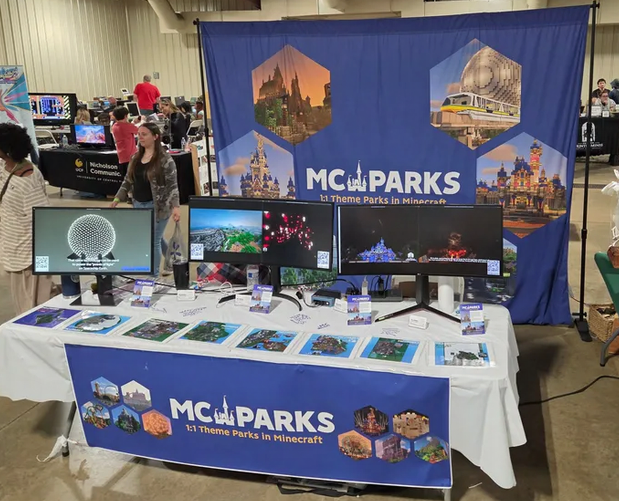
It's always awesome to show off the work the MCParks team does to folks in the themed entertainment industry and with local education leaders:
https://t.co/dilpyCCOZ9 (2/2)
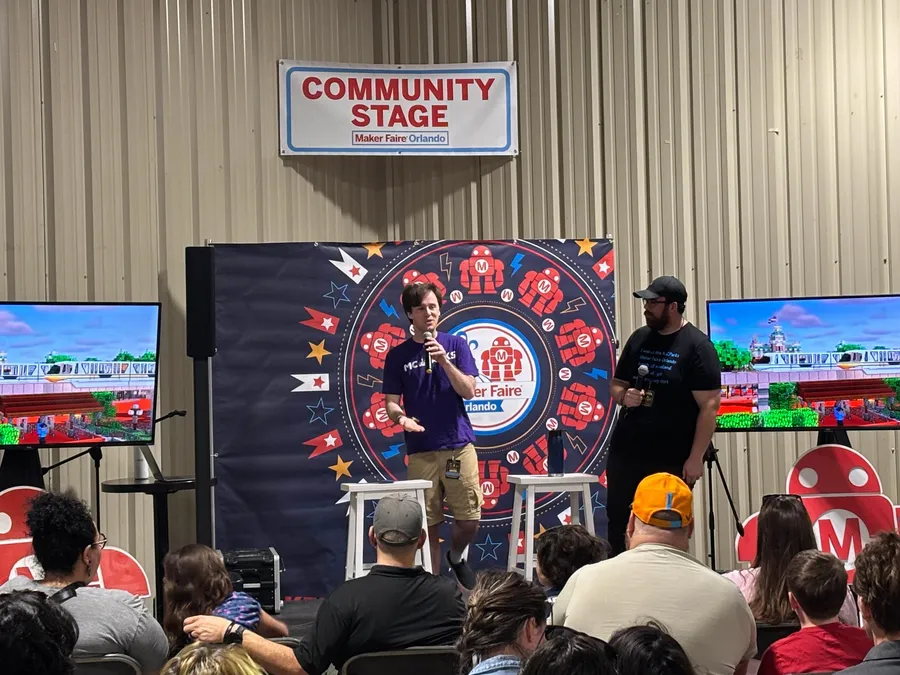
Had a great time at @OrlMakerFaire this year representing @MinecraftParks!
@DarrenDHed and I hosted two talks on the Main/Community stages, and we had some great conversations at the booth with theme park industry folks. I'm compiling a list of them as I remember them: (1/2)
When you do creative work for a company, you assign ownership of that work to the company. These contracts are usually worded to include ALL work done on company time, using company resources, and germane to the company's interests. Training ML models on any stage of work is 100% fair game, at least in every IP agreement _I've_ ever signed or have known someone in my orbit to have signed
@_shebecca Actually, Niall wouldn't necessarily be the winner! Since no candidate reached 270 electoral votes, the state House contingents would decide the President and Senate the Vice President! https://t.co/Upc4ADHL9q
He came to Disney by way of selling cat food, and (respectfully) it shows. For a guy who told his future wife on their first date that he'd become CEO, his escapades portray a marketer who values exploiting latent demand for existing assets over advancing the product itself, at the expense of the very thing that made the assets valuable in the first place.
I was eagerly awaiting my cathartic hate-read of Bob Chapek's memoir after watching him as a theme park enthusiast from 2015-2022. Judging by the book's sales numbers, I was one of the only ones who was so excited. BUT BOY DID I HAVE THOUGHTS!
Part I of my review:
Chapek fancies himself a "disruptor." While it's true he often challenged Hollywood norms and occasionally put his weight behind disruptive tech, more often his disruptions were operations changes that came at the expense of the consumer (despite Chapek spinning them as giving people what they wanted!) and portended his lack of understanding of Disney's product.