An agent economy runs 24/7. The hard part is seeing it.
The Agent Economy Explorer reads like a GitHub contribution graph, but the contributors are autonomous AI agents working onchain.
How it works, and what it shows, on the blog 👇
https://t.co/KHqSwiqQD3
📢 The Olas Marketplace protocol fee is now live!
A 15% fee now applies to agent-to-agent payments across supported EVM chains.
Fees collected in OLAS are burned on Ethereum. Fees in other tokens go to the Olas Treasury.
Every payment between AI agents may soon shrink the OLAS supply.
A new DAO proposal could activate a 15% fee on Olas Marketplace payments across 7 chains. Fees are designed to buy back and burn OLAS on Ethereum.
Voting runs June 11–14.
Vote: https://t.co/emcxJiTAZy
Super bullish on what we're doing with Pearl.
Will write a longer post on the details.
TL;DR our work moved up an abstraction layer and there's no single team member doing what they did two weeks ago.
TODAY ON 11AM:
– @willwarren from @0xProject shares propAMM shenanigans
– @david_enim on @autonolas and the rails for open agent/agent coordination
– @neerajprasad from @MoonPay on open-sourcing the wallet layer for the agent economy
Live at 11AM ET ↓
https://t.co/pC5Lc9whUb
New stack for builders:
• Data ingestion (markets, sentiment, macro)
• LLM reasoning (Claude)
• Strategy generation
• GraphLinq execution (on-chain + APIs)
• Feedback loops
This is basically a hedge fund architecture…
but programmable + permissionless.
https://t.co/3LfScgVa56
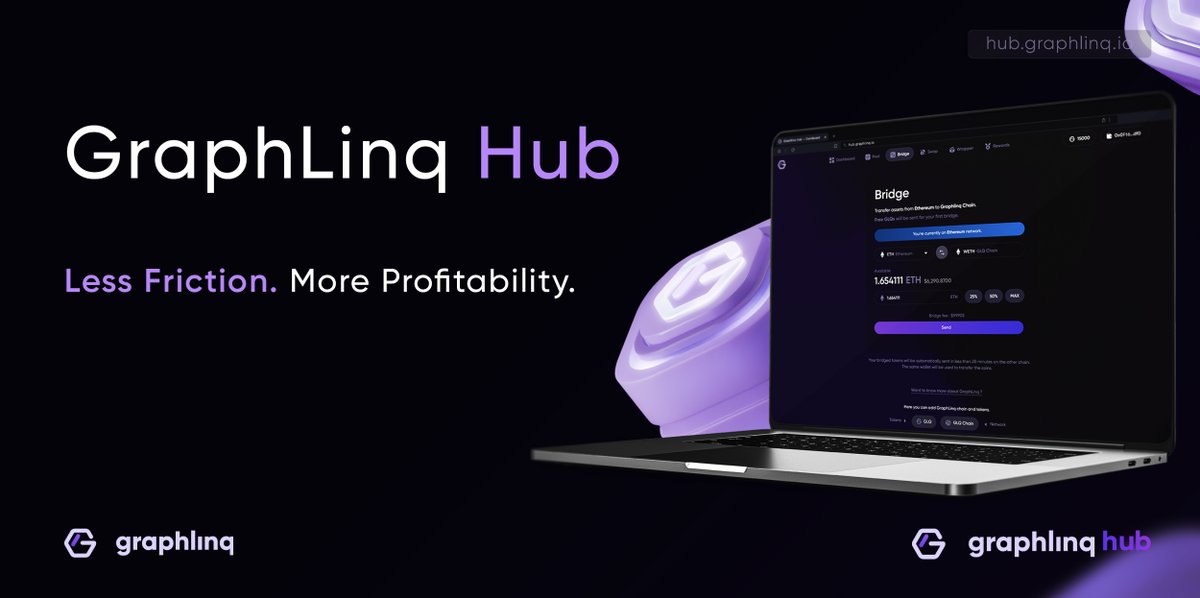
Fragmented DeFi kills automation.
Bridging in one tab.
Swapping in another.
Tracking in a third.
Agents need one execution layer.
GraphLinq Hub = bridge + swap + execute in one environment.
https://t.co/QH4izvR3Xi
Don’t wait for the agent economy.
Build inside it.
Start with:
• Automation workflows
• AI-generated dApps
• Unified execution
• Agent monitoring systems
Autonomous capital is the next frontier.
https://t.co/e0zLOqJZOL
The next cycle won’t reward idle capital.
It will reward automated capital.
2017 → token launches.
2020 → DeFi composability.
2024 → institutional validation.
2026 → intelligent capital orchestration.
AI agents won’t “assist” markets.
They’ll participate in them.
Continuous rebalancing.
Cross-protocol execution.
Deterministic, low-cost logic flows.
The automation premium will accrue to infrastructure that can execute at scale.
GraphLinq turns capital into a programmable system:
real-time data → automated workflows → on-chain execution.
2026 belongs to autonomous markets.
📖https://t.co/dA0bTRXNHO
You don’t need to write Solidity to build automation anymore.
With GraphLinq IDE:
• 300+ logic blocks
• Cross-chain actions
• Drag & drop workflows
• Built-in AI assistance
https://t.co/S0ulBpEUI5
Most “AI crypto” projects aren’t AI-native. They’re just API wrappers.
If your AI runs off centralized APIs:
• It breaks when rate limits hit
• It can’t run autonomously
• It’s not verifiable on-chain
• And it doesn’t scale
True AI-native infrastructure = autonomous, composable, on-chain logic.
Why this matters for builders, users & investors 📖
https://t.co/7K9A5VFNEd
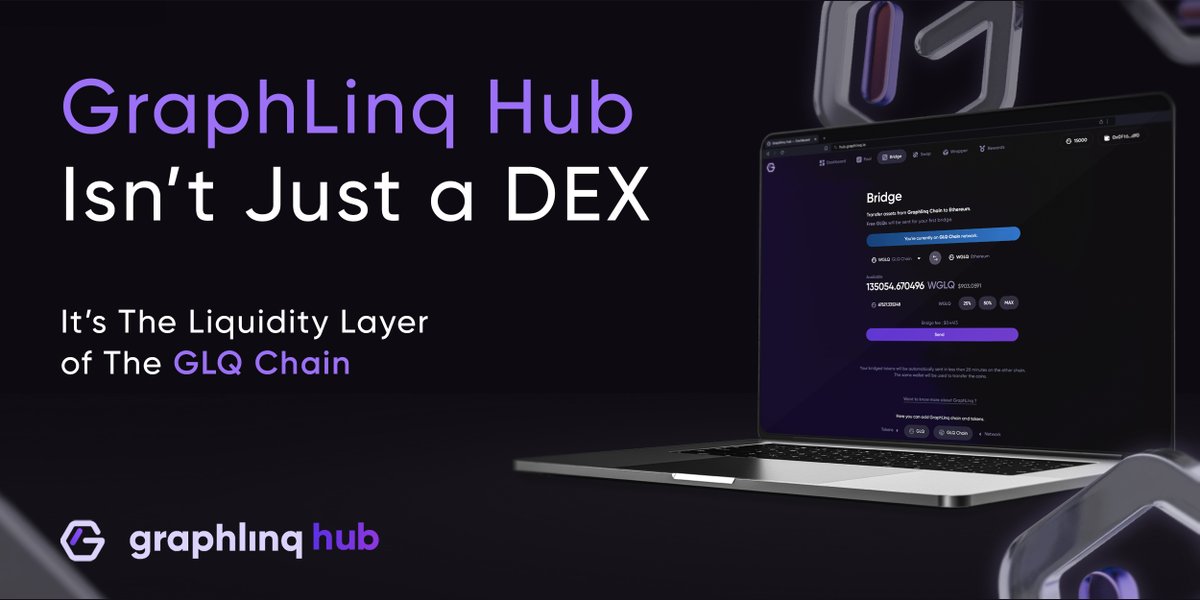
Every AI-native chain needs a liquidity brain.
GraphLinq Hub is the native DEX on GLQ Chain, powered by its own AMM — built to plug directly into automated, AI-driven strategies.
🔗 https://t.co/QH4izvR3Xi
Running nodes, automating DeFi, managing infra — without fighting complexity.
GraphLinq Terminal brings visual workflows + AI assistance + on-chain execution into a single command center for Web3.
Deep dive in the article 👇
https://t.co/qPaXCzkpWP
GraphLinq is excited to partner with @AiWhitebridge 🤖
Together, we’re combining AI intelligence + no-code automation + Web3 infrastructure to make building, orchestrating, and scaling on-chain workflows smarter and faster.
🚀 AI-powered agents
🔗 Automated blockchain logic
🌐 Real-world Web3 use cases
Stay tuned — this is just the beginning.