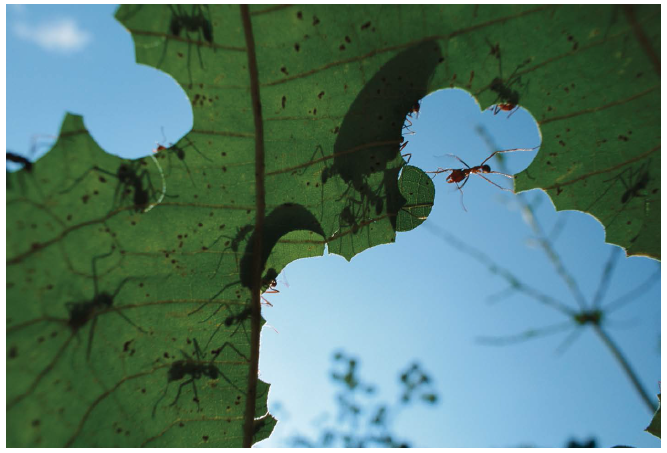
Super excited to share our study led by @Eeekology in @Nature where we found that animal herbivores prefer to eat nitrogen-fixing trees. This presents a major cost, constraining nitrogen-fixing species in tropical forests.
Download: https://t.co/Kf0jnQGhI2
https://t.co/CA9DvTUto2
Plants are powerful -- the geographical range of plants influenced long-term climate. Fun study to be involved in led by @KhushGr with @bjwmills & @KatieField4
Do herbivores prefer nitrogen-fixing plants over non-nitrogen-fixing plants? The answer might help to explain the limited nitrogen availability on land https://t.co/4gMK8MUGdW
Super excited to share our study led by @Eeekology in @Nature where we found that animal herbivores prefer to eat nitrogen-fixing trees. This presents a major cost, constraining nitrogen-fixing species in tropical forests.
Download: https://t.co/Kf0jnQGhI2
https://t.co/CA9DvTUto2
"Herbivores can limit nitrogen availability on land" -- super cool analysis and questions raised by @joywinbourne and @lmcculloch9 in their News & Views on our article.
https://t.co/A1J4cgOnru
Christmas has come early for ecosystem science this week
https://t.co/yurzxJh3C7
https://t.co/4opI39sEHp
https://t.co/phpeQfB8cw
https://t.co/5dwy53I9wO
https://t.co/Nk9rz46rpw
Herbivory costs drive the scarcity of nitrogen-fixing tropical trees.
N-fixers are preferentially hit by herbivores, potentially limiting the tropical carbon sink.
@Nature#WillBarker@SABatterman with @LSComita #JoeWright#BrianSedio#OliverPhillips
https://t.co/ZmHAH0xtnQ
Just out in @Nature: Herbivory on nitrogen-fixing trees limits the ability of tropical forests to grow & store carbon; constrains the tropical forest carbon sink. @SABatterman @LSComita #WillBarker@stri_panama
https://t.co/6jFX0OGEPC
https://t.co/PwP5FmxiPs
Super excited to share our study led by @Eeekology in @Nature where we found that animal herbivores prefer to eat nitrogen-fixing trees. This presents a major cost, constraining nitrogen-fixing species in tropical forests.
Download: https://t.co/Kf0jnQGhI2
https://t.co/CA9DvTUto2
These windows were driven by continental dispersion, paleolatitude of continental area and a lack of glaciation. Their timing coincides with initial land plant expansion 🌿and later radiation of angiosperms 🌼🌻🌹🌺 3/3
Using a new dynamic vegetation model, @KhushGr shows that there were *two* major climate windows of opportunity during the Ordovician and Jurassic-Paleogene for plant biomass expansion... 2/3
@KhushGr et al. link climate with a new dynamic vegetation model to identify two windows of opportunity for plant biomass expansion, corresponding with the expansion of land plants and the angiosperm radiation https://t.co/wvFCl7fWgq
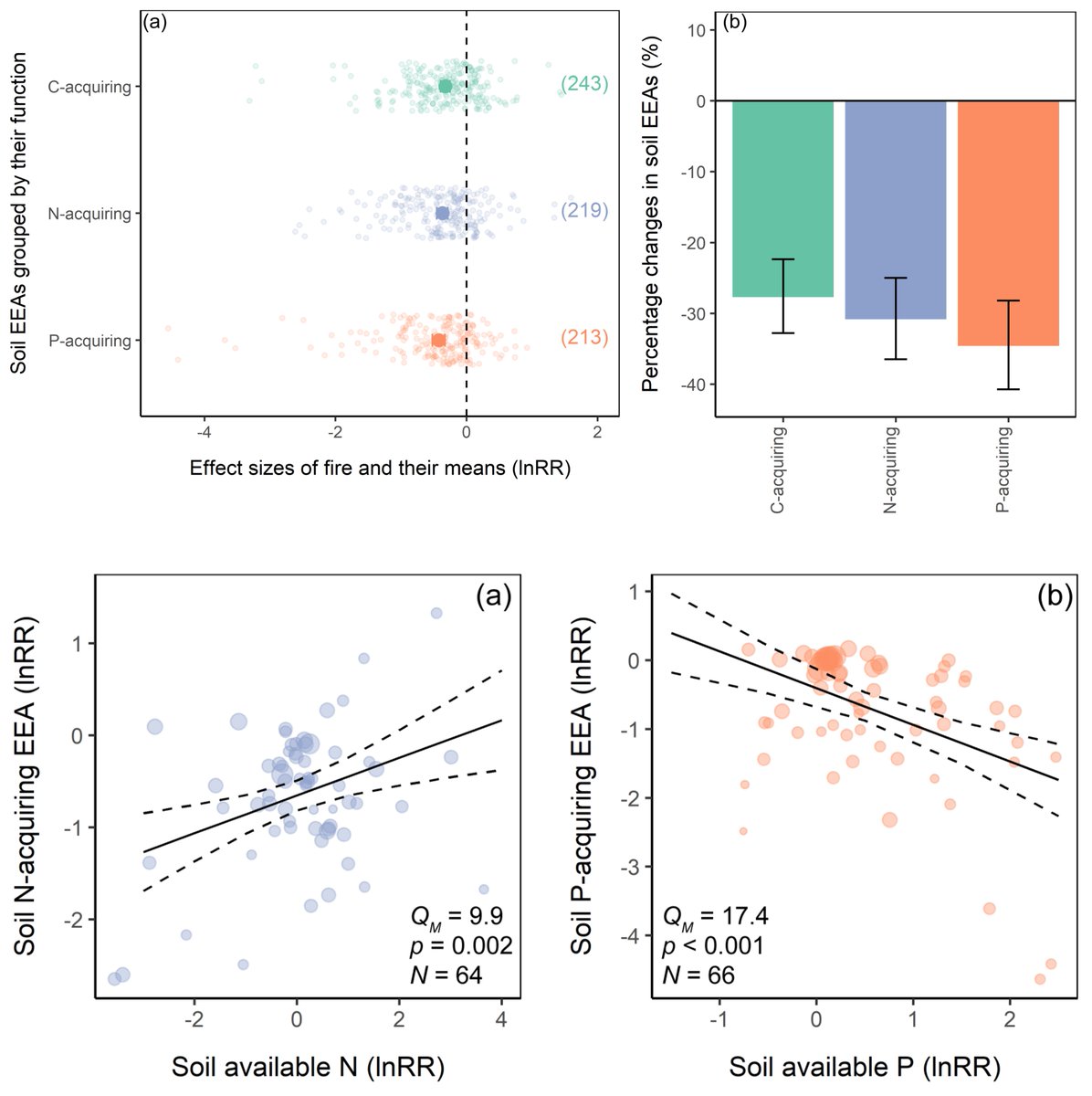
Check our recent paper @ESAEcology, we synthesized available data from the literature and found that🔥fire🔥reduces soil enzyme activities and reorganizes microbially-mediated nutrient cycles
https://t.co/d4PZeooBSY
with @ArielleBiro @michellewongca @SABatterman @stavercarla
The work of amazing researchers like @KateClancy has shown that ~64% of field researchers report harassment while in the field, and 22% —ONE IN FIVE-- report assault. Sexual misconduct is pervasive and systemic in fieldwork.