'Charts I found interesting lately' is back after a brief hiatus.
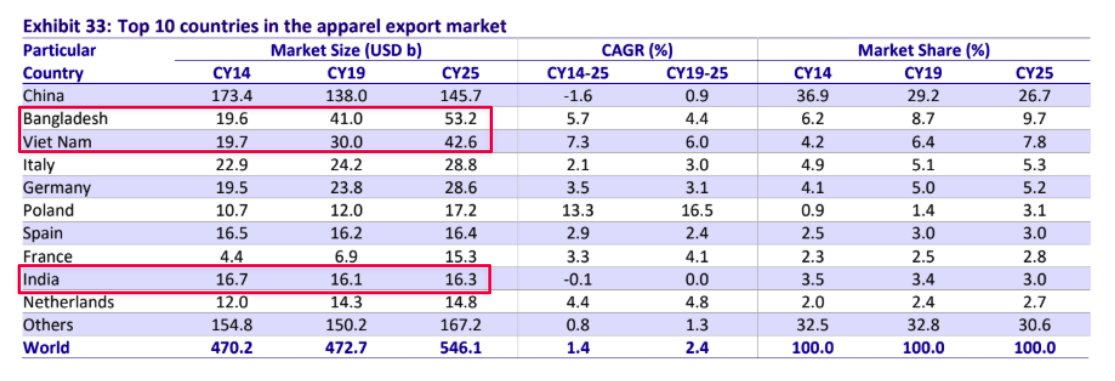
This chart, of India's apparel exports stagnating is fascinating and horrifying. What do you mean our exports havent grown in the last decade? Why? Meanwhile look at Bangladesh and Vietnam (via Motilal Oswal's reports on textiles sector).
@AshishDhawanTCF gives a brief explanation of the causes in his podcast episode with @monikahalan
Been exactly a year since we launched water purifiers
We now have TDS data from tens of thousands of Atomberg water purifiers installed across the country
And we combined that with publicly available data from different government sources like central pollution control board, jal jeevan mission and central ground water board
And built a free tool where you can enter your pincode and check your water quality- TDS levels, TDS variance, chemicals present etc
Your calendar was full at 21 and empty at 26 for a reason MIT discovered in 1950.
Researchers studied a housing complex called Westgate and found friendship was predicted by one variable above everything else: physical distance between front doors. Students living near stairwells and mailboxes made the most friends. Shared interests, values, personality? All downstream of foot traffic. They named it the propinquity effect.
Researcher Rebecca Adams later distilled friendship formation into three conditions: proximity, repeated unplanned interactions, and settings where people let their guard down. A college campus delivers all three automatically, dozens of hours a week of engineered collisions. Adult life delivers zero by default.
That's the entire mechanism behind days blending together. Your brain registers novelty from unplanned human contact. Remove the collisions and time loses its texture.
The fix is repetition. One dinner party changes nothing. The same gym class, same coffee shop, same pickup game at the same time every week rebuilds the structure school gave you for free. Friendship grows from accumulated accidental contact, so frequency wins.
College handed you a collision machine. Adults who stay social just rebuilt one.
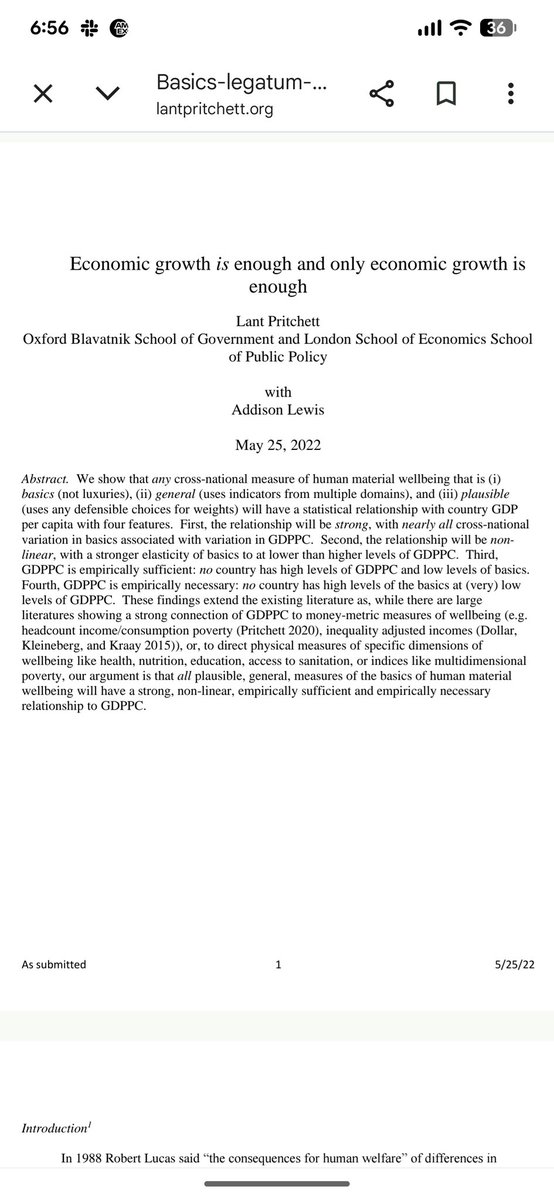
At this point, I am just going to repeat Lant Pritchett like a broken record.
Economic growth is enough and only economic growth is enough.
Banerjee is a Nobel winning economist and I don't disagree lightly.
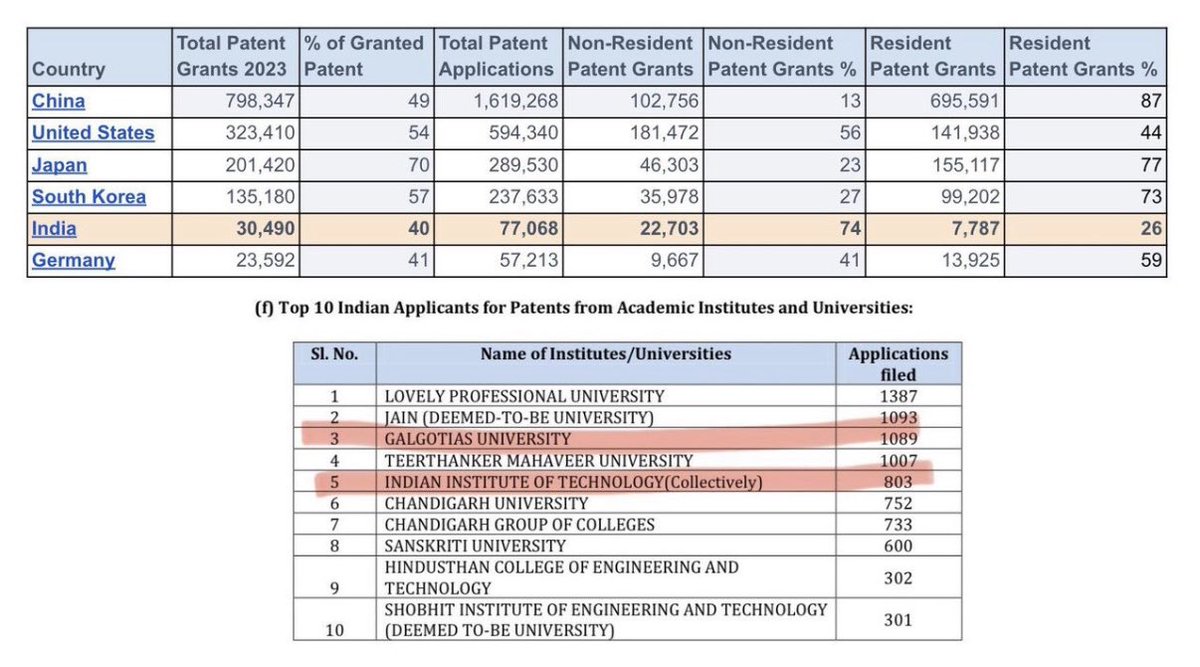
TIL galgotias university files more patents than all IITs combined.
not because they’re innovating. bcz they figured out the cheat code.
filing a patent in india costs ₹1,600.
govt reimburses up to ₹2 lakh per filing.
that’s a 125x return. before the patent does anything.
so universities found the playbook:
file 1000 patents → collect ₹20cr → boost NIRF rank → attract more students → collect fees → repeat
the patents? take a guess 🤡
india ranks 5th globally in patent applications.
last among the top 6 in grant rate.
japan converts 70% of filings into grants.
we convert 40%.
we ain’t building but chasing wrong metrics.
and the worst part? the system rewards it.
NIRF counts raw filings, not grants. so the incentive is to file garbage at scale, not build real IP.
this is what happens when you optimize for the scoreboard instead of the game.
we’re really good at looking innovative.
not as good at being it.
fix is simple btw:
reimburse at grant stage, not filing stage. tie incentives to commercialization. weight NIRF on grants, not applications.
but simple fixes don’t happen when the people gaming the system are also the ones writing the policy. need young + smart policy makers
innovation isn’t a form you fill. it’s a product you build. 🫡
Every ~10 years, the Indian consumer resets. A new generation enters the consumption class, older cohorts move up the ladder and suddenly the entire consumer stack is ready to be re-imagined.
Here are the next $1B+ ideas hiding in plain sight 👇🏽
1. Men-only e-commerce
Look around. Indian men have leveled up. Grooming, apparel, footwear, the 2-shirt/2-pant era is dead. A vertical, premium, men-first commerce brand is overdue.
2. Ed-Tech 2.0 (AI-native learning)
Gen Alpha/Beta won’t “learn AI”, they’ll learn with AI. A K-12 platform built around AI tutors, copilots and personalized mastery paths is the highest-LTV wedge in ed-tech.
3. AI-powered dating
Swipe-based dating is shallow and broken. AI can finally match on depth - personality, values, compatibility, not just photos. Think: “an AI that knows you better than your friends.”
4. AI-first Policybazaar
PB won with call centres. The next PB wins with AI. Needs-profiling via AI, voice agents for advice, instant plan comparison. Same trust, 10x better UX.
5. AI-driven personal finance
India is entering its wealth-creation era. Advisory today is full of moral hazard. An AI wealth OS - Perplexity-style discovery + a fiduciary AI advisor is a massive opportunity.
6. AI fitness & nutrition coach
Fitness is exploding, but confusion is everywhere. A Whoop-style AI coach for diet, training, recovery personalized and affordable is inevitable.
If you are building a new age consumer internet business and want to spar, I will be happy to meet over the best Indiranagar coffee :)
Google just turned every Gmail user into an AI training dataset by default, and the two-location opt-out tells you exactly how they view consent.
This is consent architecture in action. The friction is perfectly asymmetric. Opt-in happens automatically while you sleep. Opt-out requires navigating to two separate settings menus, understanding the language Google uses to describe these features, and remembering to check both locations.
They know most users will see this warning, think “I should fix that,” and then forget which settings menu to open. The design exploit is that intention decays faster than menu navigation completes.
What makes this revealing is the contrast. When Google wants adoption, they make features one-click. When they want your data, they make opting out require multiple steps across different interfaces. The difficulty is the signal.
The interesting part? This pattern shows up everywhere in privacy settings. Default opt-in with multi-step opt-out. Because user behavior research proved years ago that 90%+ of people never change defaults, and adding even one extra navigation step cuts opt-out rates by 40-60%.
Google isn’t hiding this feature. They’re just making the path to stopping it slightly more tedious than your tolerance for menu diving.
And that gap is the entire business model.
In 2000, UK top 10% incomes were no 3 in the world, but they’ve since gradually fallen and are now behind the rest of the Anglosphere and northwestern Europe; just above Spain and Italy.
We're testing a new link experience, starting on iOS -- to make it easier for your followers to engage with your post while browsing links.
For creators, a common complaint is that posts with links tend to get lower reach. This is because the web browser covers the post and people forget to Like or Reply. So X doesn't get a clear signal whether the content is any good.
To help get better signal, posts will now collapse to the bottom of the page so people can react while you're reading.
As always, remember: the post should stand alone as great content so write a solid caption.
@nikitabier Thats such a cool feature.. was always an issue where i went to read an article from the post and forgot to give credits/ engage with the posts..
Dear @svembu
Just thought I will share a few notes watching many india centric consumer apps rise and die over the last many years
First of all, I have a lot of respect for you - you inspire a whole lot of bootstrappers like me. Your recent hustle has been all the more inspiring !
Notes on @Arattai
In the past, India has seen many companies which has played on Nationalism-as-a-GTM strategy, notable ones include Koo, Ola (Krutrim/Maps), and the entire TikTok clones (Josh, Chingari).
Here is the ultimate reality → Nationalism-as-a-GTM only attracts downloads and a certain set of people — who (am guessing) aren’t your TG at all.
Their presence ends up corrupting the product team’s mindset (“heck! massive downloads → must be doing something right”).
The hard truth:
- These users rarely convert into long-term loyalists.
- They push the narrative towards ideology, not product excellence.
- Eventually, they drain focus away from solving for the actual mass-market user.
Arattai has the potential to be a genuinely India-first product in infrastructure, scale, and philosophy.
My only note: don’t fall for the easy applause economy. Build for the harder, more silent majority who will stick around.
That’s where enduring success lies.