Back in the day, we didn’t have lukewarm holders like now. Chads aped into projects that actually worked for their bags while the devs kept pushing.
This new wave of Web3 onboarding is too focused on “how not to lose” instead of “how to contribute.”.
gm everybody, TGIF!!!
been busy in IRL for the past few days and today it's clean friday with @futurepost
- has clean up and unfollowed around 121 accounts today
- schedule some posts on futurepost
enjoy your wonderful friday y'all 🧡
@abbdulwahaab A profitable trade isn't just about getting the direction right. Managing funding costs is equally important. An AI agent that understands when to enter, hold, or exit is what makes the difference.
you can predict the market correctly and still make less money than you expected
one thing i've noticed is how people get excited about perpetual trading but barely talk about funding rates.
when you hold a perp position, funding payments happen between long and short traders. depending on the rate, you either pay or receive them.
for example, if you're holding a $5,000 position and the funding rate is 0.01%, that's $0.50 per settlement if you're on the paying side.
sounds small, but those payments can add up.
now that @meetmotes has announced its integration with @Aster_DEX, there's something i'd really like to see from its NFT-owned AI agents.
◆ can the agent factor funding costs into its strategy?
↳ can it recognise when holding a position is becoming too expensive?
◇ and can owners see those costs alongside their actual trading performance?
because finding a good entry is only part of the job.
i'd want my agent to understand when staying in a trade no longer makes sense, even if the original prediction looked promising.
that's the kind of decision-making i'd love to see Motes demonstrate.
otherwise, imagine your AI celebrating a winning trade while funding quietly eats into the profit
@Linh19931993@Elyon_Chain The best creator programs reward value, not just volume. Real education, honest feedback and genuine engagement are what turn audiences into active communities.
Elyon — When Creators Become Part of the Ecosystem
I think Web3 communities grow stronger when creators are rewarded for explaining real products, not just repeating announcements.
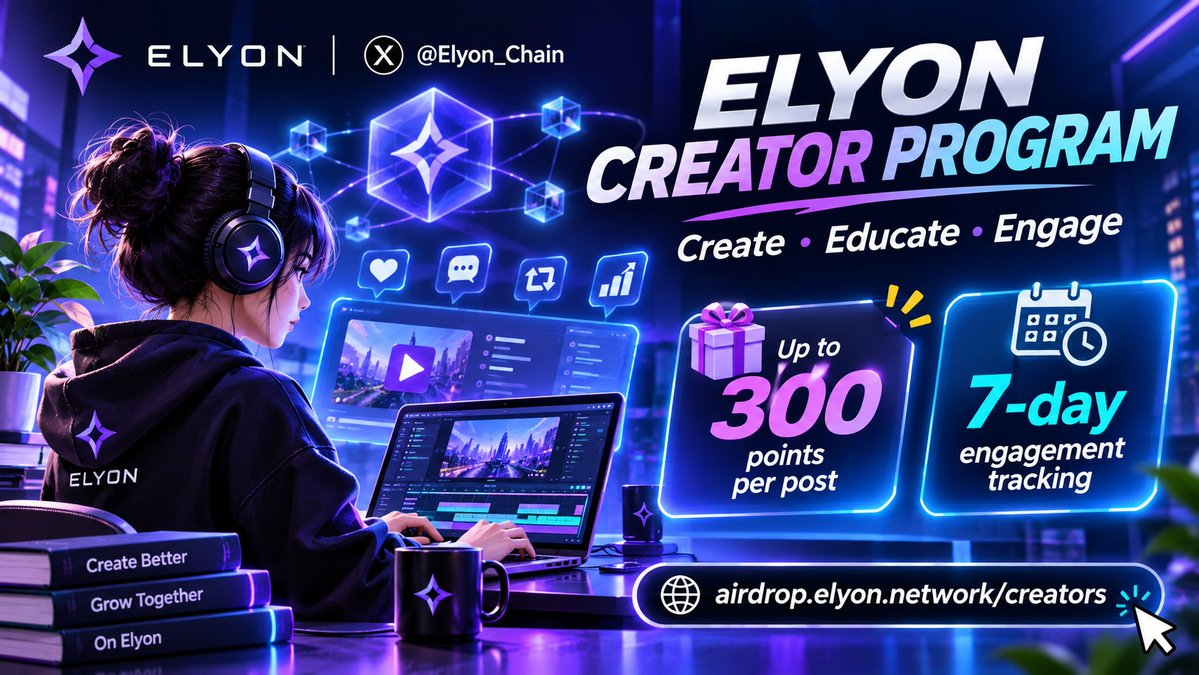
That's why the Creator Program from @Elyon_Chain caught my attention.
It measures engagement over seven days, with up to 300 airdrop points per accepted post.
But the interesting part isn't the point ceiling. It's the opportunity to turn useful content into measurable participation.
I'd like to see more creators sharing testnet walkthroughs, honest product feedback and practical explanations of $ELN.
For me, a good creator program should reward curiosity, consistency and genuine audience interest.
Explore: https://t.co/Xh8IwuJ11N
@Lynketh2@Acurast This is an underrated but important feature. DePIN shouldn't come at the cost of device safety. Battery health monitoring should be a priority for anyone running phones 24/7.
leaving an old phone plugged in 24/7 kinda worried me... like what happens to the battery after months of that
link if you wanna set one up: https://t.co/LUEKXRZ9dK
so i checked the @Acurast docs. the hub can show battery health for each phone, but it's off by default. go to phones, flip on advanced, turn on the "management endpoint" (basically lets the hub read the phone's status). it can take up to 2 check ins to show up
they're honest about why too... some people running phones nonstop saw batteries swell. no fires reported, but keep phones off anything flammable and pull a swollen one
anyone actually turned on battery monitoring on @Acurast yet?
@kingblissweb3 This is an important reminder that wallet security goes beyond protecting your seed phrase. Blindly signing transactions and granting approvals can be just as dangerous. DYOR before every click.
Your crypto wallet can be drained without you ever sharing your recovery phrase.
That's one of the most misunderstood parts of Web3 security.
A wallet drainer is malicious software or a malicious workflow designed to trick users into authorizing actions that transfer their assets to an attacker's address.
The attack often begins with something that looks familiar.
A fake airdrop claim, a phishing website, an imitation mint page or a message promising access to an exclusive opportunity.
The website may ask users to connect their wallets, approve token spending or sign a message.
The danger is in what happens next.
𝗠𝗮𝗹𝗶𝗰𝗶𝗼𝘂𝘀 𝘁𝗼𝗸𝗲𝗻 𝗮𝗽𝗽𝗿𝗼𝘃𝗮𝗹𝘀
An attacker may trick a user into approving a malicious spender to move specific tokens from their wallet.
Depending on the approval and token standard, the attacker may be able to transfer eligible assets without requesting another approval.
𝗗𝗲𝗰𝗲𝗽𝘁𝗶𝘃𝗲 𝘀𝗶𝗴𝗻𝗮𝘁𝘂𝗿𝗲𝘀
Some signatures authorize actions that users don't fully understand.
For example, permit-based signatures can authorize token spending without requiring the user to submit a conventional approval transaction first.
A signature request that appears harmless can therefore carry significant consequences.
𝗖𝗼𝗺𝗽𝗿𝗼𝗺𝗶𝘀𝗲𝗱 𝗽𝗿𝗶𝘃𝗮𝘁𝗲 𝗸𝗲𝘆𝘀
This is a different attack mechanism.
If an attacker obtains a wallet's private key or recovery phrase, they can potentially control the account and transfer its assets.
They don't need to trick the owner into approving every individual transfer.
𝗔𝘂𝘁𝗼𝗺𝗮𝘁𝗲𝗱 𝘄𝗮𝗹𝗹𝗲𝘁 𝗱𝗿𝗮𝗶𝗻𝗲𝗿𝘀
Some attackers monitor compromised wallets and automatically move assets when funds arrive.
This can explain why deposits sometimes disappear almost immediately.
However, an immediate drain alone doesn't prove which attack occurred. The underlying authorization and transaction history must be examined.
The important distinction is that wallet drainers don't all work the same way.
Some exploit token permissions. Others exploit signatures or steal wallet credentials entirely.
A few practical habits can reduce exposure:
• Verify URLs before connecting your wallet.
• Read transaction and signature requests before approving them.
• Avoid unnecessary unlimited token allowances.
• Use separate wallets for experimental dApps and long-term holdings.
• Review existing token approvals regularly.
• Never enter your recovery phrase into a website claiming to verify, synchronize or unlock your wallet.
In Web3, a familiar-looking website doesn't guarantee a legitimate interaction.
Understanding what you're authorizing is one of the most important parts of protecting your assets.
@KaiBGR@MMIX_io The real value isn't just owning digital land, but what people can create and build together on it. That's where the long-term potential lies.
MMIX Districts isn't just owning a piece of virtual land, but discovering what can be built on it
3,000 isometric districts, free to mint on Ethereum. A new way to explore digital ownership and virtual worlds.
Curious to see how this city develops
@MMIX_io
@LyTran1510@rntprotocol Relative strength is interesting, but sustainable utility and real adoption are what will determine whether $RNT can maintain that momentum.
markets can be quite revealing when everything starts moving in different directions.
according to the latest CoinGecko comparison shared by @rntprotocol:
• BTC: -22.5% over 30 days
• ETH: -26.1%
• RNT: +5.4%
even over the last 7 days, while the global crypto market declined 11% and RWA tokens fell 5.4%, RNT remained relatively stable.
what makes this interesting to me is the RWA narrative behind the project.
real-world assets bring a different dimension to crypto, connecting blockchain infrastructure with assets outside the digital market.
solana:2fUFhZyd47Mapv9wcfXh5gnQwFXtqcYu9xAN4THBpump is up 106% over 12 months, but performance alone doesn't tell the whole story.
the real question is whether this relative strength can be supported by sustainable ecosystem growth.