Escalating hostilities in the #StraitOfHormuz have severely disrupted global maritime trade, with Iranian forces reporting that four oil tankers caught fire after striking naval mines while attempting unauthorized passages, despite heavy US air and naval escorts. Alongside these kinetic strikes, which have hit over 25 vessels in the past week and driven overall waterway traffic down by more than 40 percent, Washington is investigating #Iran over a wave of #CyberAttacks targeting dozens of energy carriers, while simultaneously tightening its economic chokehold through sweeping new #Sanctions on Iran's shadow banking networks. This asymmetric maritime and digital campaign shows Tehran's strategic effort to manage one of the world's most critical energy chokepoints as direct leverage against the US naval blockade of Iranian ports and ongoing military pressure. Yet, despite the sharp drop in transits and heightened regional instability, global #OilPrices have paradoxically cooled toward the $88–$89 per barrel range as rebounding Russian exports and broader regional supply adjustments temporarily cushion the market against Tehran's coercive tactics. #MiddleEast #GlobalTrade #EnergyCrisis #Shipping #Geopolitics
Business confidence in Pakistan has plunged into deep negative territory, exposing a critical disconnect between the government's macroeconomic stabilization and ground-level operational realities. According to the Overseas Investors Chamber of Commerce and Industry (OICCI) survey covering nearly 80% of GDP, overall sentiment dropped 36 percentage points to -23%, while confidence among established foreign investors suffered an unprecedented 55-point collapse to -27%—reversing their historical optimism relative to local peers. This downturn spans retail (-25%), manufacturing (-25%), and services (-17%), dragging capital investment (-14%) and hiring expectations (-6%) into contraction. While external shocks like the US-Iran war and a 12% policy rate hike have inflated global energy costs, the core crisis is structural and domestic: 84% and 81% of businesses cite inflation and punitive taxation (exceeding 46%–54% effective rates) as primary growth killers, alongside region-high industrial power tariffs (13–15 cents/kWh). Ultimately, despite State Bank reserves reaching $21.5 billion, capital continues to flee—evidenced by 25 multinational exits since 2022 and FY26 net FDI dropping 34% to $1.64 billion—because abrupt policy reversals on net metering, captive gas levies, and sovereign IPP contracts have shattered institutional predictability. #OICCI #PakistanEconomy #BusinessConfidence #Taxation #SuperTax #EnergyCrisis #NetMetering #FDI #EmergingMarkets #ForeignInvestment #Inflation #Geopolitics #MiddleEast
#Macroeconomics
عمران خان کی گورنمنٹ کے گرنے کا اور جو کچھ غزہ میں ہوا اور آج تک ہورہا اسکا ایک تعلق تھا۔ میراذاتی تجزیہ ہے کہ امریکہ نہی چاہتا تھا جب غزہ پر ایکشن ہو اسوقت عمران خان پاور میں نہ ہو۔ امریکہ کی ہمیشہ ایسے بندوں سے ڈیل کرتا ہے جن سے ڈیل کرنے میں کرنے آسانی ہو۔ شبر زیدی
یہ فلسطین نہیں پاکستان ہے جہاں 26 نومبر، 2024 کو رینجرز کلاشنکوف، ایس ایم جیز اور سنائپر رائفلز سے 3 دن سے فسطائیت کا مقابلہ کرتے تھکن سے چور بھوکے پیاسے تحریکِ انصاف کے نہتے کارکنان کے سروں اور سینوں پر اپنے نشانے چیک کرتی رہی۔
#IslamabadMassacre
یہ پہلی حکومت دیکھی ہے جس میں حفاظتی ضمانت پر بھی گرفتاری ہو گئی ہے۔
اور ایسا ایسا بندہ گرفتار ہو رہا ہے جو کبھی ملک کے لئے بہت بڑا اثاثہ قرار دیا جاتا تھا۔
تیمور جھگڑا PTI میں شمولیت اختیار کرنے سے پہلے شہباز شریف کی 2013 - 2018 والے پنجاب حکومت دور میں انہی کی حکومت کے Consultant تھے۔
اور اچھا خاصا لائق بندہ ہے۔ آج وہ کچھ لوگوں کی نظر میں "قومی مجرم" بن گیا ہے۔ کیا بات ہے۔
👏👏👏
🚨🚨 بریکینگ نیوز : عمران خان کی رہائی کیلئے حکومت پر عالمی پریشر,!!!🔥🔥🛑
میری انفارمیشن کیمطابق, اقوام متحدہ کے ہیومن رائٹس کمیشن کی جانب سے پاکستان حکومت پر پس پردہ پریشر ڈالا جا رہا تھا ۔ کہ آپ ہیومین رائٹس کے اندر عمران خان کے کیس کا دوبارہ جائزہ لیں ۔ کرسٹین امانپور نے ایک انٹرویو دی ہے ۔ اس انٹرویو میں انہوں نے کہا کہ ہم کچھ عرصے سے کہہ رہے ہیں کہ, عمران خان کو رہا کریں ۔ اور میری انفارمیشن کیمطابق, عالمی دباؤ کا پریشر آنے کی وجہ سے حکومت نے ملاقاتیں اور یہ خط وغیرہ باہر آنے دیا ۔ نجم سیٹھی 🚨
The 2023–2026 era has completely rewritten the rules of #Geopolitics. The weaponization of the Strait of Hormuz and Bab al-Mandeb has turned these vital commercial shipping routes into highly volatile conflict zones. #GlobalSecurity#MaritimeTrade#MiddleEast Conflict 🚢🌍
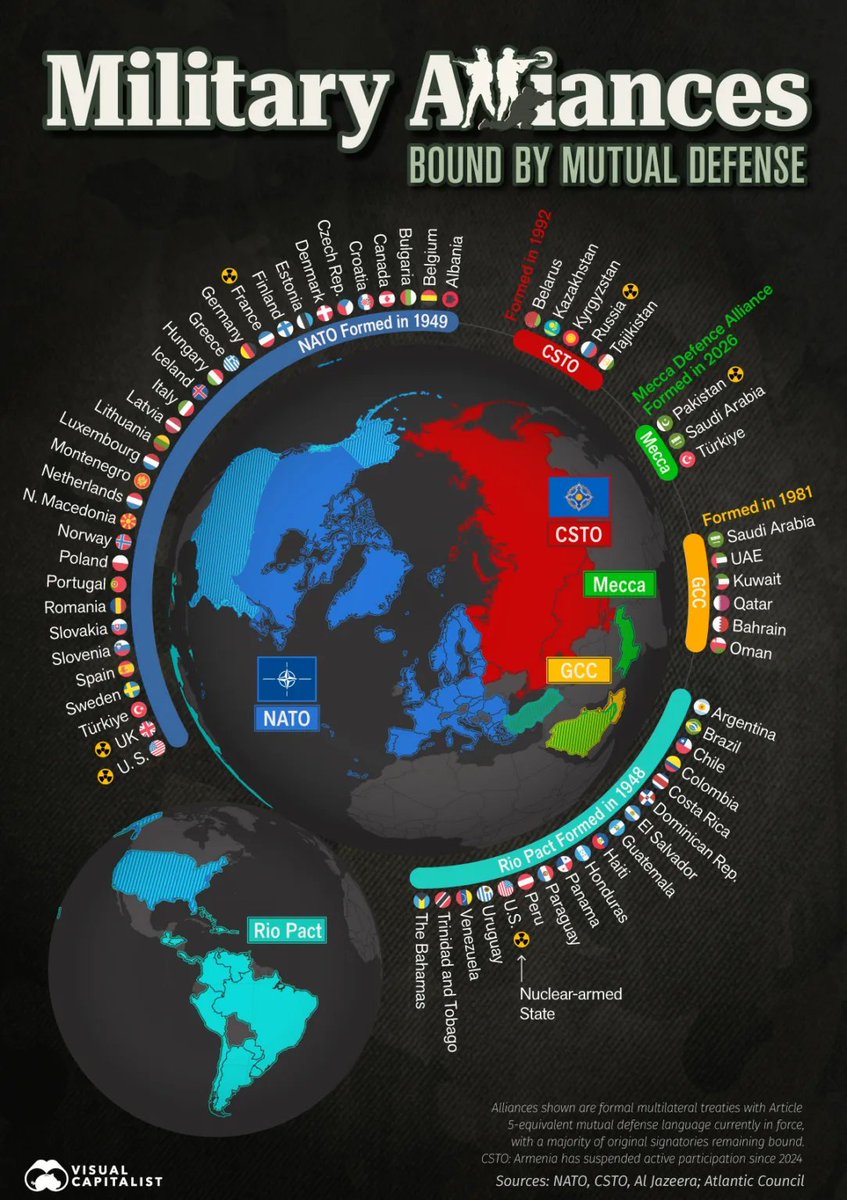
The contemporary landscape of international security is anchored by five major mutual defense alliances, each operating under strict collective defense agreements where an attack on one member constitutes an attack on all. Geographically distributed across the globe, these formal treaties include the Rio Pact (1948) in the Americas, NATO (1949) covering North America and Europe, the Gulf Cooperation Council (GCC) (1981) in the Middle East, the Russian-led Collective Security Treaty Organization (CSTO) (1992), and the newly formed Mecca Defence Alliance (2026), which unites Pakistan, Saudi Arabia, and Türkiye. These strategic blocs fundamentally shape global geopolitics by establishing clear boundaries of deterrence, integrating the military capabilities of both non-nuclear nations and major nuclear-armed powers—such as the United States, the United Kingdom, France, Russia, and Pakistan—to maintain regional and global balance.
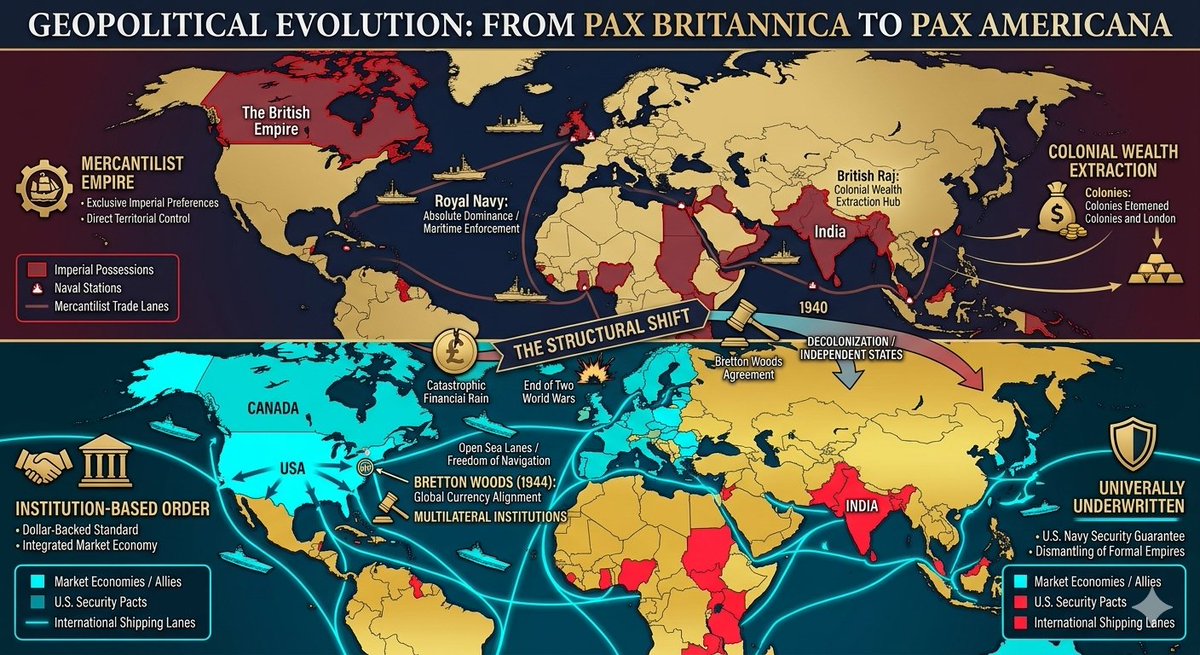
The transition from Pax Britannica to Pax Americana marked a structural shift from a colonial, mercantilist empire to a globalized, institution-based financial order. Under British hegemony, global trade relied on a network of exclusive imperial preferences, direct territorial control, and bilateral colonial wealth extraction, all secured by the absolute dominance of the Royal Navy. Following the catastrophic financial ruin of the British Empire after two World Wars, the United States assumed the role of global guarantor, establishing a new order codified at Bretton Woods (1944). This American-led framework replaced colonial monopolies with a system of open sea lanes, dollar-backed global currency alignment, and multilateral institutions like the IMF and World Bank. Ultimately, this shift dismantled formal European empires in favor of a highly integrated, market-driven global economy where freedom of navigation was universally underwritten by the U.S. Navy. #PaxBritannica #PaxAmericana #Geopolitics #GlobalOrder #BrettonWoods #MaritimeHistory #EconomicHistory
#NavalPower
Transit corridors act as the central nervous system of global commerce, shifting beyond mere physical infrastructure to become highly dynamic geopolitical and economic levers #SupplyChain. Driven by the imperative to reduce transit times and secure supply chains against chokepoint vulnerabilities, the landscape is rapidly evolving through massive multimodal investments #GlobalTrade. Coastal gateways are increasingly linked to landlocked regions via integrated rail, highway, and digital networks, turning passive transit routes into active economic corridors that foster regional manufacturing hubs #Logistics. However, their ultimate efficiency is highly volatile—heavily dictated by border friction, trade agreements, and fluctuating geopolitical alliances that can instantly reroute global trade flows #Geopolitics #Connectivity #Maritime.
The historical timeline of the Israeli-Palestinian conflict neither began nor ended on October 7, 2023 - the subsequent years of devastation to catastrophic miscalculations by all parties involved. Israel long maintained a blockade to strangle Gaza while paradoxically allowing funding to Hamas to manage the territory and fracture unified Palestinian peace leadership. Concurrently, Hamas relied on a facade of resistance through primitive rocket fire despite the inevitable, disproportionate civilian toll, while the United States largely ignored the volatile, deteriorating landscape in pursuit of a broader regional peace framework. Why the Biden administration and Israel failed to act on early diplomatic warnings regarding the impending cross-border assault, and the US refusing to rein in Israel once its military actions evolved into the systemic destruction of Gaza's essential infrastructure.
#Gaza #MiddleEastGeopolitics #USForeignPolicy #PalestineWillBeFree #Palestine
In IR, Immanuel Wallerstein’s World-Systems Theory argues that the economic disparity between the Global North and Global South is a structural, historical product of global capitalism rather than domestic failure.
The theory divides the world economy into a rigid three-tiered hierarchy: the wealthy, industrialized Core (Global North), the resource-exporting Periphery (Global South), and a stabilizing buffer of emerging economies known as the Semi-Periphery.
Rooted in 16th-century European colonialism, this system locks in inequality through unequal trade, where the Global South sells cheap raw materials and buys expensive manufactured goods, alongside heavy debt burdens, technological monopolies, and Western-dominated financial institutions. While individual states can occasionally shift tiers, the overarching system permanently transfers wealth from the periphery to the core, making global inequality an inescapable feature of the modern capitalist world order