@orielgb1 I’m very glad to hear you rear cows & calves in a humane & ethical way, however the case remains that the main model of industrial cow milk agriculture is far from humane or ethical. Not lies or opinions - well established facts.
@SamaHoole Iron in breastmilk - is the normal levels needed by a baby pre solids - it is highly ‘bioavailable’ & regulated by lactoferrin to avoid free iron in the gut being available to proliferate pathogenic bacteria - diarrhoea being one of the main causes of infant mortality
@Krayiim If in doubt..they always find a way to ‘blame’ breastfeeding…the lightening speed of the adoption of the global ‘ban’ on codeine in breastfeeding mothers - undermining breastfeeding & leaving new mothers in pain - is only matched by the snail’s pace of the rescind
@DavidJuurlink At last eh! It’s been rumbling on for years - the lightening speed at which it was adopted & undermined breastfeeding globally is only matched by the snail-like pace to rescind it..
La mujer sabia por naturaleza:
En 2008, la bióloga Katie Hinde descubrió algo que la ciencia había ignorado durante siglos: la leche materna no es una receta fija, es un mensaje en constante cambio.
Mientras estudiaba macacos en California, Hinde notó un patrón extraño. Si la madre tenía un hijo varón, la leche era espesa, rica en grasas y proteínas (combustible de alto octanaje). Si tenía una hija, la leche era más abundante y cargada de calcio. ¿Cómo sabía el cuerpo de la madre cambiar la fórmula química según el sexo del bebé?
Esto la llevó a descubrir el mecanismo más fascinante de la biología humana: el "flujo retrógrado".
Durante años pensamos que la leche solo iba en una dirección (de madre a hijo). Estábamos equivocados. Cuando un bebé amamanta, el vacío creado succiona una pequeña cantidad de saliva del bebé hacia el interior del pezón de la madre.
Aquí ocurre la magia: El tejido mamario de la madre analiza esa saliva. Es un escáner biológico.
Si la saliva contiene señales de que el bebé tiene fiebre o una infección, el cuerpo de la madre comienza a fabricar anticuerpos específicos para esa enfermedad en cuestión de horas.
Si el bebé está estresado, la leche cambia sus niveles hormonales (como el cortisol) para influir en su temperamento.
La leche cambia de la mañana a la noche. Cambia si el bebé está enfermo. Cambia si es niño o niña.
Como concluyó Hinde: "La leche materna es comida, es medicina y es señal". Es el sistema de comunicación más sofisticado de la naturaleza, una conversación silenciosa entre dos cuerpos que ni siquiera la tecnología moderna ha logrado replicar por completo.
Validación histórica y científica, Katie Hinde, PhD - Laboratorio de Lactancia Comparativa, Arizona State University. Este contenido es informativo y educativo. #fblifestyle
Beginning in 2006, Tokyo Medical University began secretly limiting female applicants to ensure that more men became doctors.
Female applicants’ admissions test scores were dropped 10-20% right out of the gate, but that still wasn’t enough, so they automatically added 20 bonus points to the scores of all male applicants who had failed the exam less than four times.
The goal was to keep female enrollment at 30% or less, and when this was uncovered accidentally in 2018, Japanese authorities launched a nationwide audit of 81 medical schools. At least 9 other universities were caught doing the same thing — denying qualified female applicants in favor of less-qualified men. Many other institutions were suspected.
The justifications were, quite frankly, pathetic. TMU claimed that they were doing it because they assumed women would eventually leave the medical profession to marry and have children — you know, because women aren’t capable of balancing motherhood and a career.
Juntendo University claimed they adjusted women’s scores because women have better communications skills and mature faster, giving them an “unfair advantage” over men.
Kitasato University claimed men were more “flexible,” and could better handle the overnight/on call scheduling demanded of student doctors.
Kanazawa Medical University and Iwate Medical University claimed that men were more likely to work in rural areas, where there is a shortage of doctors. There was no statistical evidence to support this statement, but that’s what they said.
St Marianna University School of Medicine flat out denied the charges, even after the government investigation found objective statistical proof that they had consistently marked down the test scores of female applicants. Instead, they blamed “irregularities” in their internal screening criteria. They did not specify the nature of these irregularities.
This scandal proved something that Japanese women had suspected for over a quarter of a century: that they were being deliberately excluded from the medical profession. For decades, the rate of female medical students had hovered in the 30% range. It was referred to as the “40% barrier,” and medical schools always claimed it existed naturally.
They were lying.
In late 2018, the Japanese government ordered medical schools to stop rigging scores. In the very next cycle of entrance exams, women outscored and outperformed men at multiple institutions for the first time in Japanese history. By 2023, the “40% barrier” had been broken.
This scandal didn’t happen 50 years ago. Within the last decade, qualified female applicants were being rejected from major Japanese medical schools in favor of waitlisted men. Their scores were artificially reduced, while male applicants had their scores inflated. As a result, just 23.6% of Japanese doctors are women.
This leaves Japanese women with very limited choices when it comes to female-only medical care. We know that female doctors take female patients more seriously. How many Japanese women are getting substandard medical care because their doctor is a man who was given a high score, and not a woman who actually earned one?
Part 2.
A mother who delivers at 24 weeks does not make the same milk as a mother who delivers at 40.
Researchers have measured it repeatedly. Milk from women who gave birth extremely early carries more protein than milk from women who went to term, and the earlier the birth, the higher it goes. Around 2.7 to 3.0 grams per 100 millilitres at 23 to 24 weeks, falling to 1.8 to 2.3 at 32 to 33 weeks.
The gradient tracks gestational age. Her body appears to be adjusting to how early he arrived.
Energy, fat and carbohydrate all come out higher in preterm milk too. Sodium is elevated in the first week specifically. Several studies have found more of certain immune components, including the antibody that coats his gut and an enzyme that breaks bacteria apart, though the picture there is mixed and some studies find the opposite for particular proteins.
A baby born at 24 weeks weighs around 600 grams and has skin you can see through. He needs more protein per swallow than a term baby, because he is building tissue a term baby finished building months ago. That is what he gets.
She is usually in a corridor when this is happening. Her baby is in a plastic box down the hall with tubes in him, she has been handed a hospital pump, and she is producing millilitres. Not ounces. Millilitres, into a small bottle, several times a night, for a child she may not have held yet.
What is in that bottle differs from what other mothers make, and the difference is aimed at her son specifically. She will probably never be told that.
https://t.co/pqK6hmKQua
On day one, a newborn's stomach holds about a teaspoon.
So a mother does not make milk yet. She makes a few teaspoons of thick yellow fluid over the whole first day, and every woman who has fed a baby remembers the panic of thinking that cannot possibly be enough.
It is exactly enough. His stomach on day one is the size of a marble, and by day three it has grown to roughly a cherry, so the volume shows up precisely when the room for it does.
What sits in those teaspoons is the part nobody explains. Ordinary breast milk carries around half a gram of antibodies in a litre. This carries between 50 and 100 grams. She is handing over her immune system, concentrated a hundredfold, in a dose that fits inside a marble.
Most of it is one antibody doing one job. It coats the inside of his gut and his airways, laying a film across every surface a germ would need to cross. He arrives with almost no defences, so for those first days he is running on hers.
It does a second job on the way through. The fluid works as a mild laxative, pushing out the dark first stool, which carries away the substance that turns newborns yellow. Feeding early lowers the chance of jaundice.
By day five it has gone, replaced by white milk in far larger amounts, and the window closes. She had a few days of a few days to hand over everything her body had learned about every infection she ever survived. She spent it four teaspoons at a time, convinced she was failing.
https://t.co/jF2gXmLFNN
@RowlandsTweets Several baby emojis available! 👶👶🏻👶🏼👶🏽👶🏾👶🏿 why use a bottle to represent a baby event?
The products displayed are not ‘essential’ but highly questionable - re evidence to support their use & cotton buds??! 😱
PLEASE RT…..
🚨WITNESS APPEAL – TEIGNMOUTH / SHALDON BEACH 🚨
This took place earlier today (27th July) at Shaldon Beach, Teignmouth, Devon.
A member of the public reports seeing the man in the photo below pick up his dog and throw him against a stone wall multiple times. The witness states he then pinned the dog to the ground and punched him repeatedly, while the woman with him stood by and watched.
According to the witness, this happened because the dog didn’t recall immediately and the man got his jeans wet retrieving him.
If you recognise this man or the woman with him, please get in touch with the OP via the link below. .
😡 Please share — this dog needs to be protected.
https://t.co/hkVcKyI8JB
On Hantavirus: a (non-technical) thread.
Disclaimer: I am a biology PhD, but not virology/epidemiology. Husbandman is a virology PhD. But I’m told I’m good at communicating science, so here’s my take.
#Hantavirus
Wales votes tomorrow 🏴
Your mum. Your sister. Your daughter. Your granddaughter.
Which parties on tomorrow's ballot paper will actually show up for them?
We asked - we compared - we published ... so your vote is an informed one.
Here's our fact based results 👉https://t.co/XxKSgZ2QXU
Your vote has power. Use it wisely.
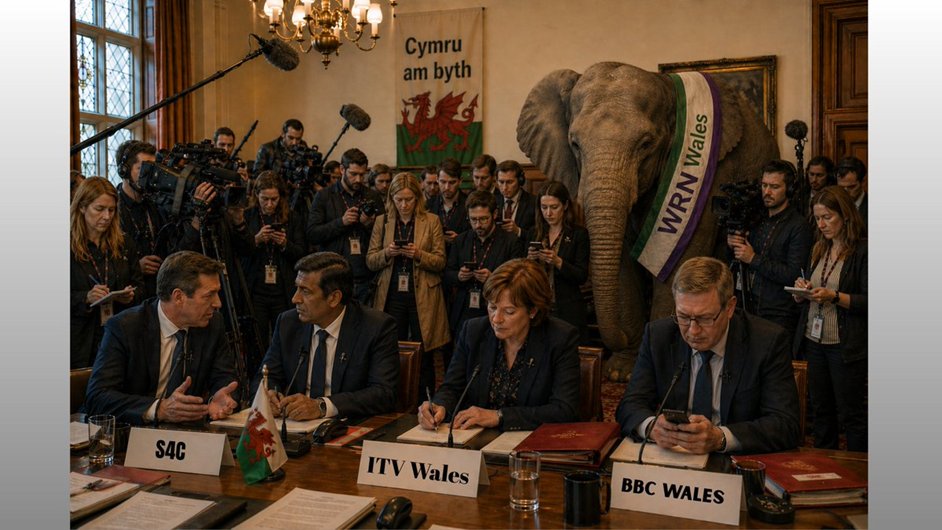
🐘The elephant is still in the room - and still being ignored.
Women are 51% of the Welsh electorate.
At every Senedd broadcast debate women have applied to be in the audience and submitted questions.
Single-sex spaces. The Supreme Court ruling. Men in women's sport. Mixed-sex toilets in schools.
Not one has been put to those seeking our votes.
We know many of the party representatives are scared to face these questions (not a surprise, given certain of their manifesto pledges) - but isn't that exactly WHY our broadcasters should be asking them?
We bet YOU can do better @MichelleDewbs@ThatAlexWoman@JuliaHB1 @DawnNeesomT