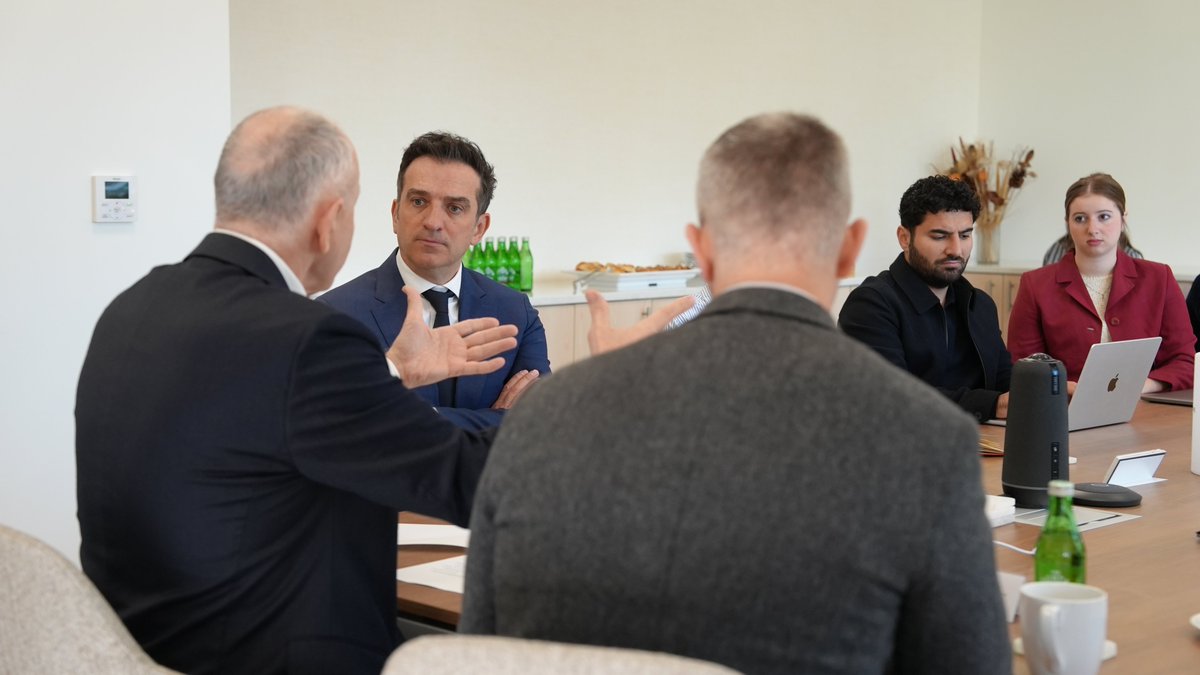
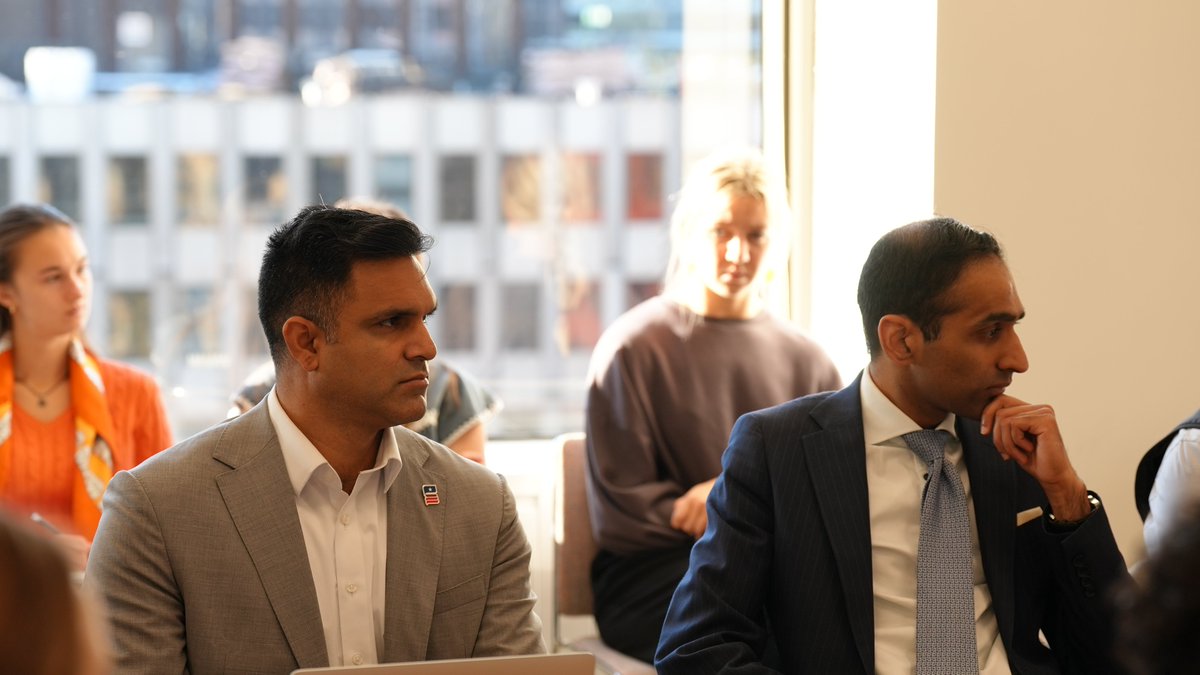
This morning, former NATO Deputy Secretary General and SCSP Expert Advisor @Mircea_Geoana visited SCSP for a conversation on the future of NATO.
He covered how global security dynamics are shifting, what transatlantic reform needs to look like, and which strategic priorities should come first for the Alliance.
Thank you Mircea for your time, insight, and steadfast support.
Attack, deny involvement, and sow doubt.
On the President's Tech Brief, Justin Lynch argues that Russia’s sabotage campaign in Europe follows a familiar pattern: use violence to undermine support for Ukraine, then deny responsibility to delay a response, even when evidence points to Russian involvement.
His warning: these are wartime actions, not ordinary competition.
Today we’re releasing the U.S.–India Tech Bridge Map, an interactive look at how the two countries are building together across AI, semiconductors, quantum, space, and defense.
It’s organized around the four pillars of the U.S.–India AI and Emerging Technology Compact, developed with @ORFAmerica: Applications, Infrastructure, Talent, and Policy. You can toggle layers to trace the flow of technology in each direction, filter by city or sector, and open any initiative to see who’s leading it and what stage it’s at.
What the map documents so far:
- 100M+ people reached by jointly developed or Indian-originated platforms deployed globally
- 30,000+ jobs created or committed across both countries through bilateral technology investment
- 32+ countries reached by U.S.–India co-developed or Indian-originated technology exports
🌎 Explore the map: https://t.co/77KFdkrQoc
Figures reflect initiatives documented in this map and do not represent the full scope of the bilateral relationship. The map captures initiatives that are COMPACT-aligned, primary-source confirmed, and involve substantive U.S. technology involvement beyond commercial employment. It will be updated as additional initiatives are announced and confirmed.
On today’s President’s Tech Brief, @MartijnRasser and Joshua Hodges debate whether U.S. negotiations account for Russia’s actions on the ground.
Hodges supports pursuing peace, but says American negotiators need to recognize Russia’s tactics and adjust their approach.
LIVE 12 PM ET: Who slowed Ukraine's Starlink? The reporting conflicts.
Plus: DHS orders DeepSeek out of civilian agencies, a draft federal AI safety bill, U.S. intel on Putin's NATO sabotage campaign, and Across the Aisle on the midterms.
Live on X, tune in.
What if space became a parking lot for munitions?
This week, Michael Hochberg, founder and president of Periplous LLC, joins #NatSecTech to make the case for pre-positioning military supplies in low Earth orbit. Drawing on his recent Wall Street Journal op-ed, he argues that reusable heavy-lift rockets like Starship could let the U.S. deorbit munitions, drones, and other cargo anywhere on the globe within minutes to a couple of hours.
🎧 https://t.co/GD8Ps0mDUp
🍎 https://t.co/pzKkpPVBeo
📺 https://t.co/lq85TgL87A
What happens when AI meets quantum?
Join us November 10 in Washington, DC for the AI+ Quantum Summit, where leaders from government, industry, and research will discuss how the US can turn quantum science into strategic advantage.
Register for free: https://t.co/WjLJ6BMJKI
In @ForeignAffairs, SCSP Chair Dr. @ericschmidt argues why the AI race may be decided by who can pay for it.
He says that the US and China have each built an empire over knowledge itself, controlling the chips, models, energy, and capital that everyone else depends on. But history says empires rarely fall to challengers. They fall when defending their dominions drains them dry.
Both powers are already pouring hundreds of billions of dollars into data centers. The question isn’t just who gets to AGI first, it’s who can afford to win the race.
Read the full piece:
https://t.co/PpgIHg15Dy
@MartijnRasser raises Ukraine’s former defense minister’s call for an “army of robots,” asking what’s next for AI on the battlefield. Dr. Kimberly Kagan, President of the @TheStudyofWar , predicts continued, fast-moving change — including real drone swarming in the year ahead, even if not yet at massive scale, especially if Ukraine regains key communications capabilities. Her broader read: the next shift in AI warfare will play out in the last mile of human use, not in fully autonomous, end-to-end systems.
Thousands of drones and missiles. A winter designed to test Ukraine’s resolve.
Dr. Kimberly Kagan, founder and president of the @TheStudyofWar , joins the President’s Tech Brief to explain why she believes stalled Russian ground advances have pushed Putin toward a bombing campaign aimed at breaking Ukraine’s will—and why Ukraine can still hold on.
Can Ukraine hold the battleground?
@Ylli_Bajraktari and @MartijnRasser will read the results live on today’s episode of the President’s Tech Brief. Tune in at 12PM ET.
🔴LIVE 12 PM ET, Tuesday
Russia is trying to force Ukraine to surrender and split the alliance. Dr. Kimberly Kagan of ISW on whether it can work, and how Ukraine has adapted and reversed Russian gains.
Then: is Reflection AI’s Beam the West’s answer to China’s AI labs? Michael Ortiz joins us.
Tune in, President's Tech Brief.
Satellite imagery used to be the “ground truth.” Now AI makes it easy to fake and harder to verify.
SCSP’s Abigail Fruhling examines doctored imagery from the 2026 U.S.-Iran conflict and what it means for trust in modern conflict reporting.
https://t.co/TWIFJC07ws
#China deploys over 350,000 robots a year and holds more than half the world’s installations. The US? Roughly 36,000. @Ylli_Bajraktari , @dronelaws (@BostonDynamics ), and Heather Carroll (@PathRobotics ) discuss closing the gap — and why a looming US skilled-labor shortage makes robotics not optional, but necessary.
A hidden recording device at OpenAI. A separate dispute over fired researchers. Drone strikes on Russian data centers.
@Ylli_Bajraktari and former CIA official @ChipUsher examine why defending frontier AI now means protecting the people and infrastructure behind it, not just the models.
Watch the President's Tech Brief every Tuesday & Thursday at 12pm ET!