South Cheshire Astronomical Society has now moved to Bluesky. This account will not longer be active, please follow us at our new home.
https://t.co/THHL66CrpS
@JuliaSurvive Stop being selfish and irresponsible. Only a post- hiatus era Army would even think this could be true. Listen to more experienced Armies who actually have heard them talk about tjis before. The reason Taehyung doesn't ask us to stay home is because he doesn't trust us to listen
The full evolution of today’s mesmerising #SolarFlare, which continued for over 12 hours! This is a very long duration event, as most flares are over well within an hour of onset. Just look at those flare loops grow! Awe-some stuff. #spaceweather#astronomy
Our 2024/2025 season begins today with our first Observation evening. (Surprise, its cloudy 🙃)
Our first Public Talk is on Thursday 19th September at The Holiday Inn Express Crewe starting at 19.30. Topic: Big Bang to Big Rip. Speaker: @Astronomy_Matt from Cambridge University.
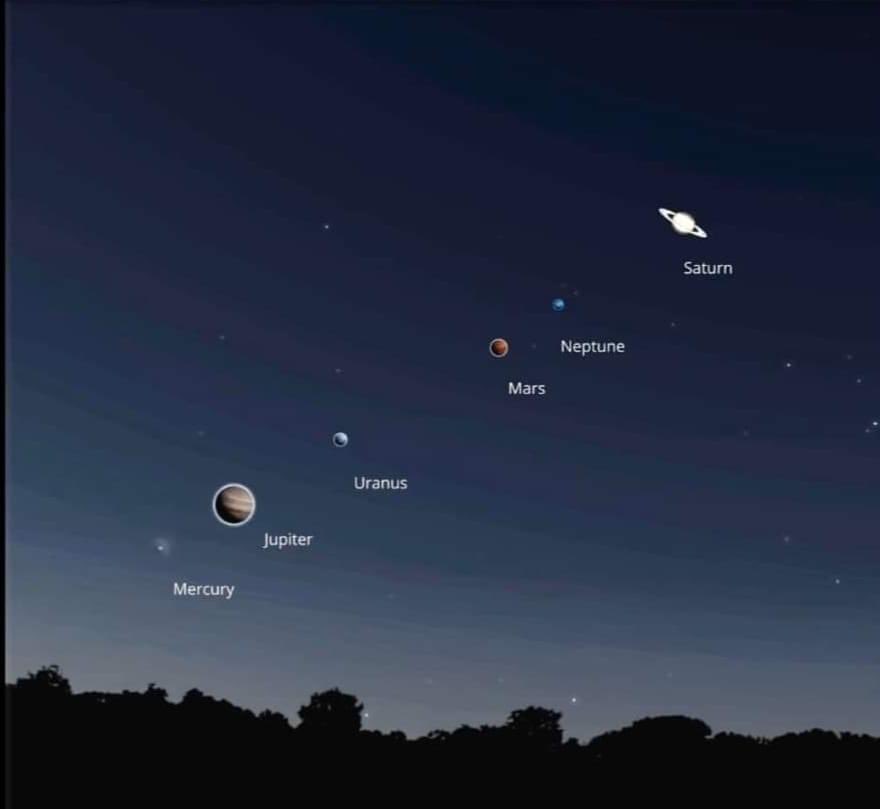
On Monday, June 3rd, a rare event known as the Parade of Planets will occur, where six planets of the solar system will align in a straight line. They will be visible just before sunrise here in the northern hemisphere.
Watch a timelapse of the current solar activity, filmed from my backyard observatory this morning.
The sun is still insanely active, this is all unrelated to the show last week.
Tonight is the final meeting for the 2023-24 season and our AGM. New committee uploading, and planning begins for 2024-25 season! Read more on our website. https://t.co/spf81uDIP6
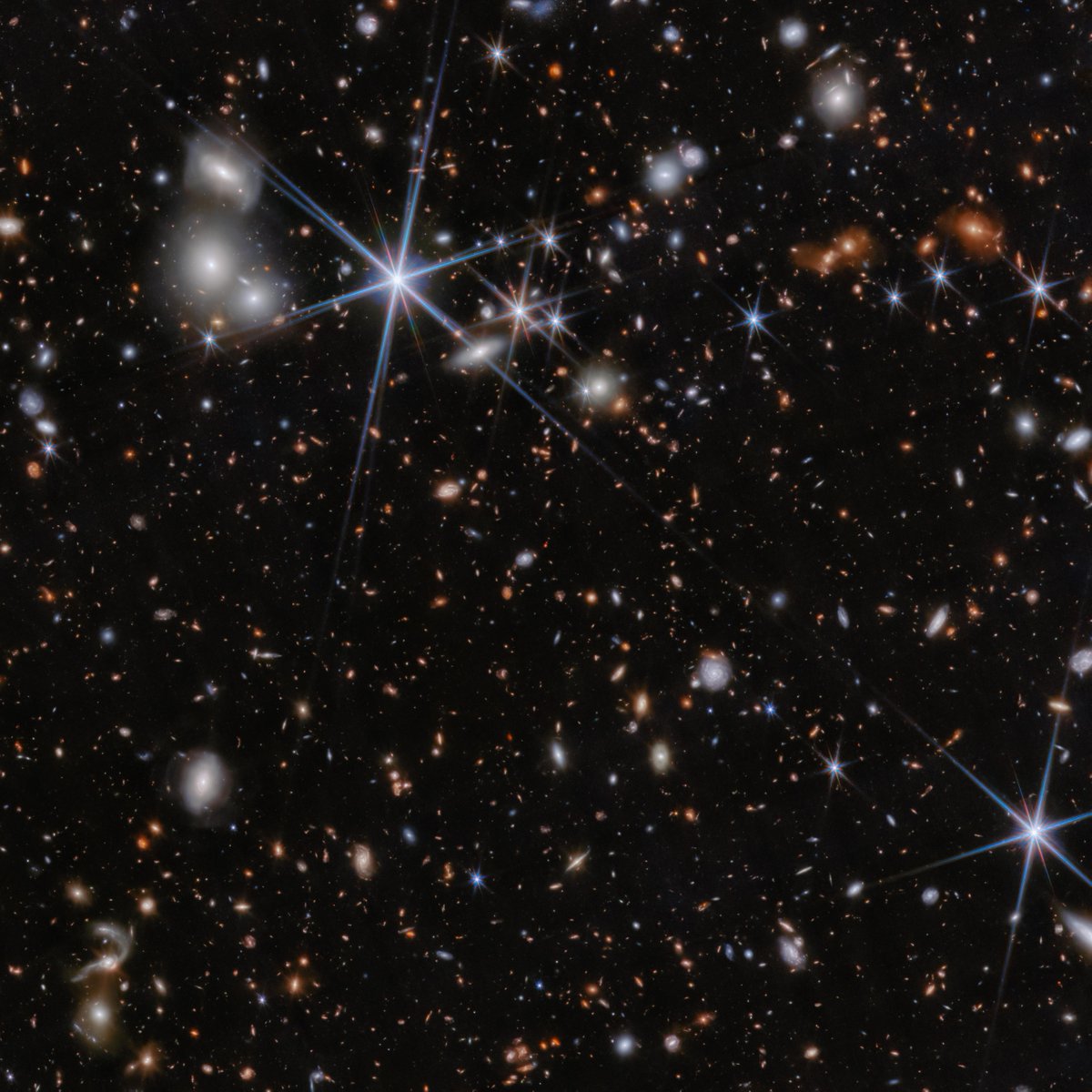
Our earliest, most distant look yet at a black hole merger 👀
Webb detected evidence of a collision between two galaxies and their massive black holes, so far away that we're seeing it as it was when the universe was 740 million years old. More via @ESA: https://t.co/zOrFH80DIZ
Take this simulated plunge and dive into the upper atmosphere of Jupiter, the Solar System's ruling gas giant. The awesome animation is based on image data from JunoCam, and the microwave radiometer on board the Jupiter-orbiting Juno spacecraft. Your view will start about 3,000 kilometers above the southern Jovian cloud tops, and you can track your progress on the display at the left. As altitude decreases, temperature increases while you dive deeper at the location of Jupiter's famous Great Red Spot. In fact, Juno data indicates the Great Red Spot, the Solar System's largest storm system, penetrates some 300 kilometers into the giant planet's atmosphere. For comparison, the deepest point for planet Earth's oceans is just under 11 kilometers down. Don't worry though, you'll fly back out again.
Animated Video Credit: NASA, JPL-Caltech, SwRI, MSSS, Gerald Eichstadt, Justin Cowart
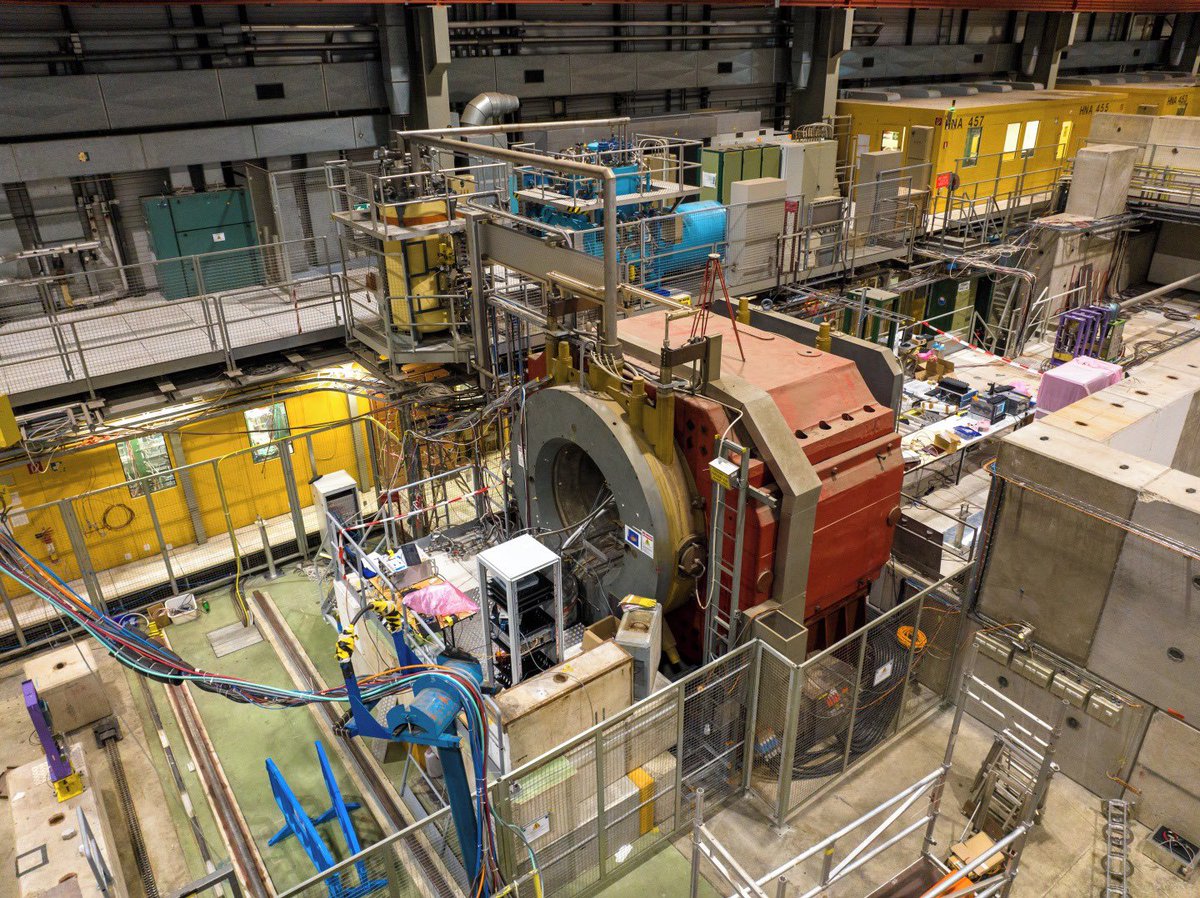
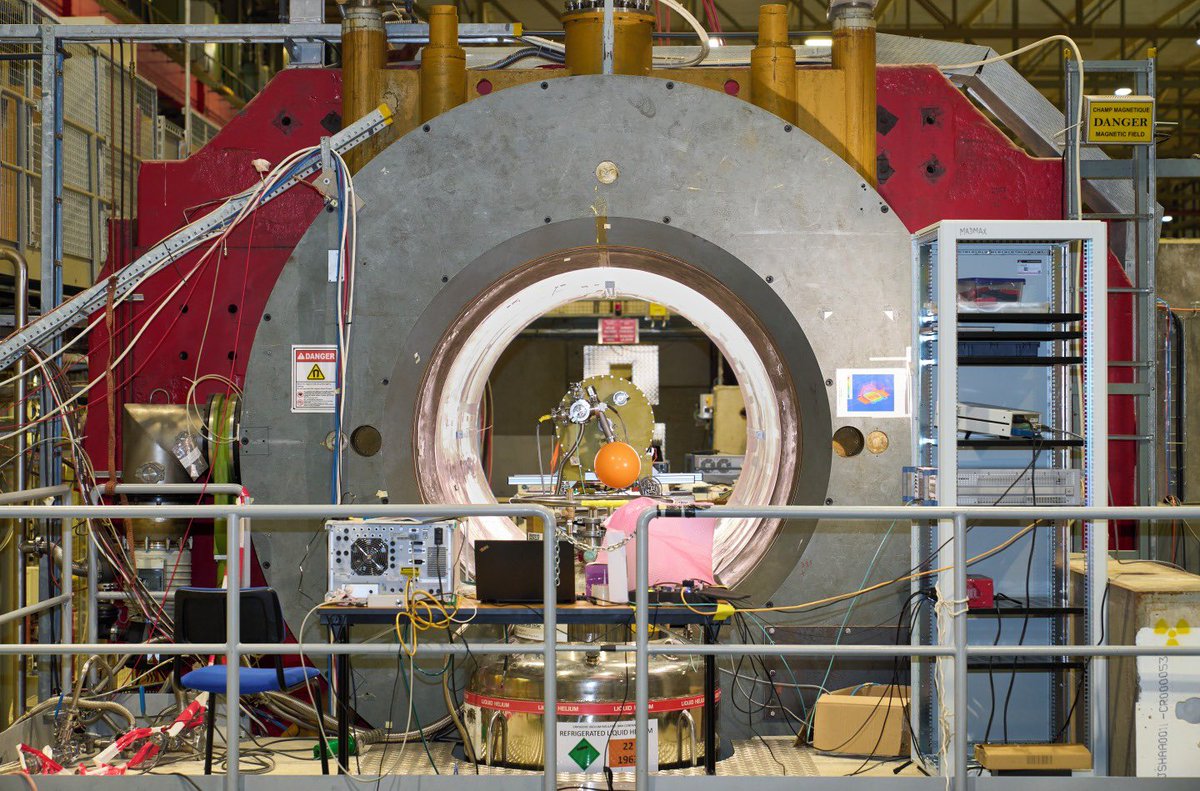
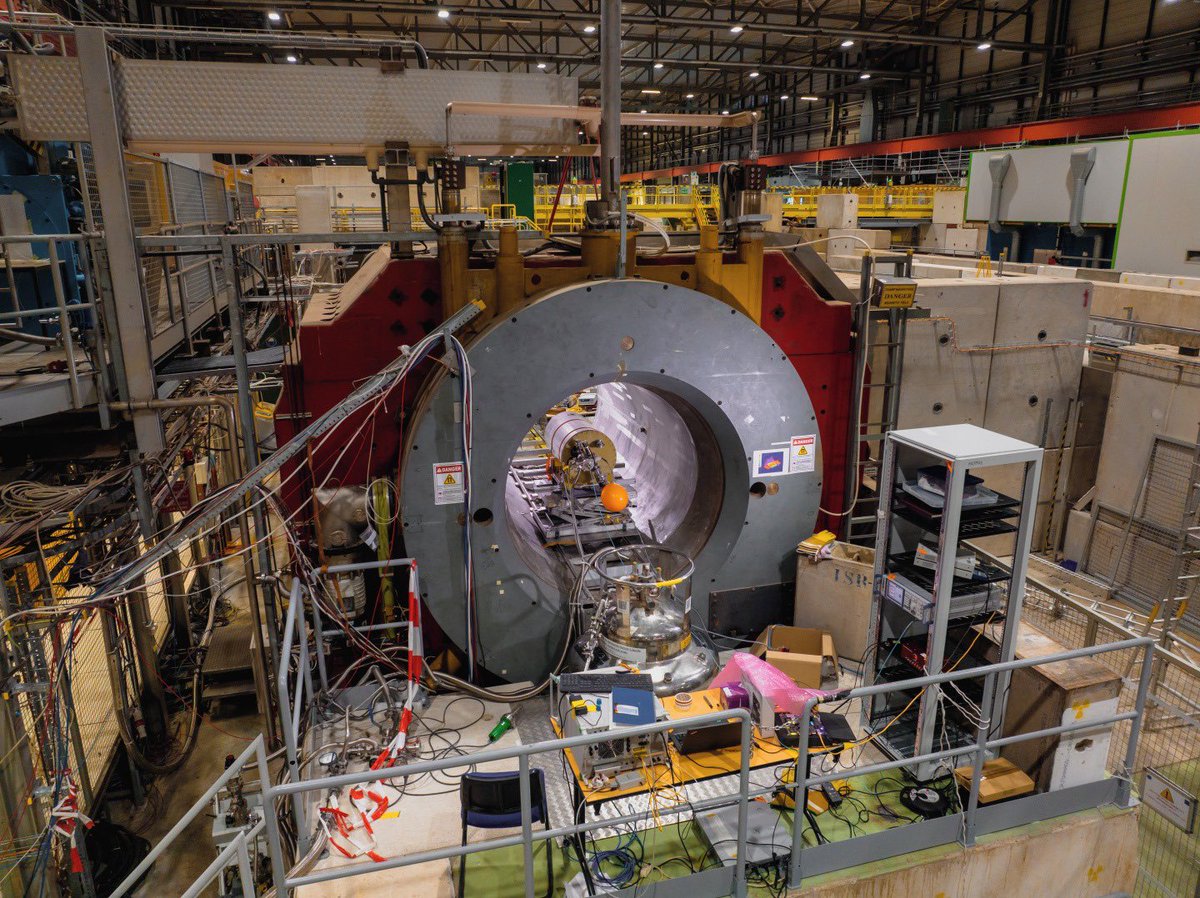
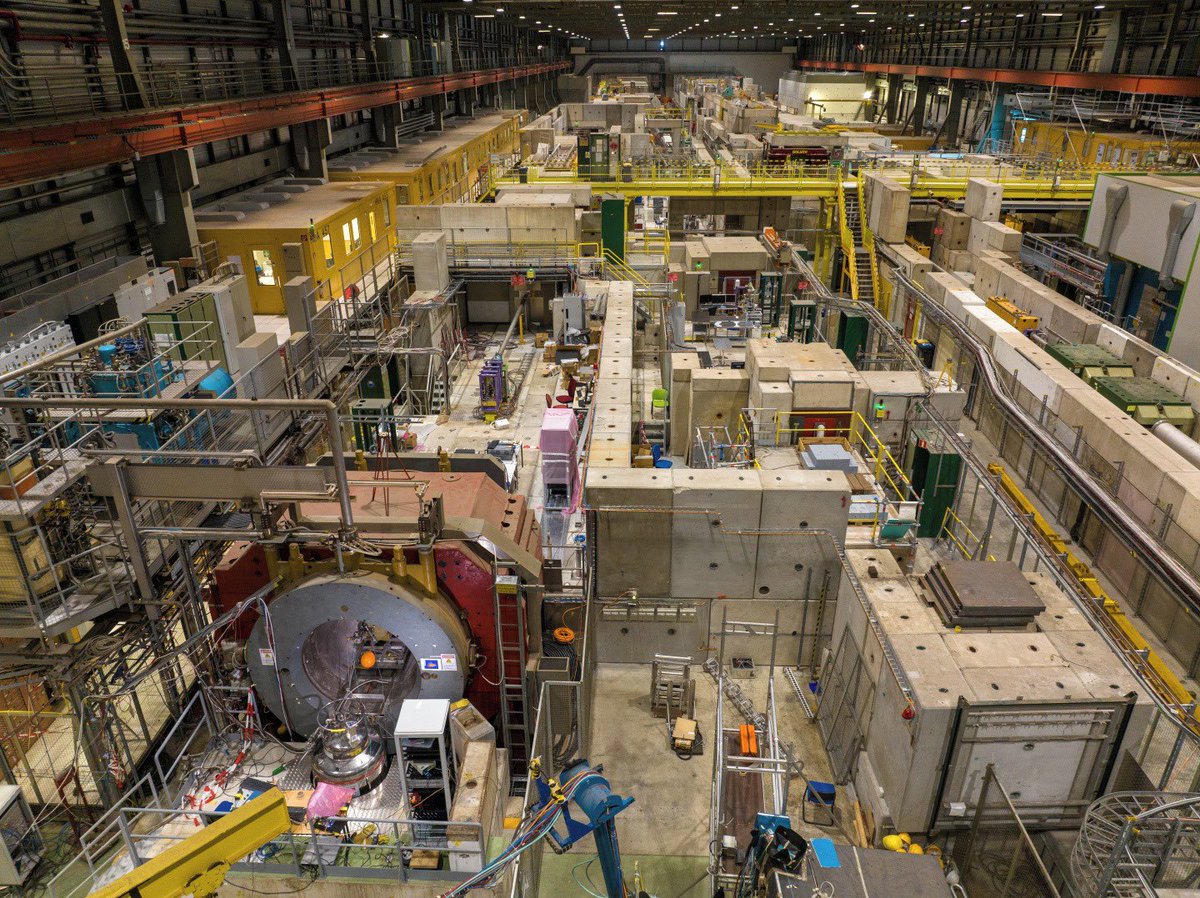
Here we see a prototype of MADMAX, placed in a big, cylindrical magnet at CERN’s largest experimental area, the North Area.
In February and March this year, the two new prototypes of MADMAX came into action to collect physics data at room temperature and, for the first time, at close to liquid helium temperature.
MADMAX stands for Magnetized Disk and Mirror Axion experiment. Once built, the experiment will search for axions, a leading candidate for #darkmatter. Their discovery could provide a direct explanation for the nature of this elusive substance that makes up a significant portion of the Universe.
Find out more: https://t.co/M0Gv873idM
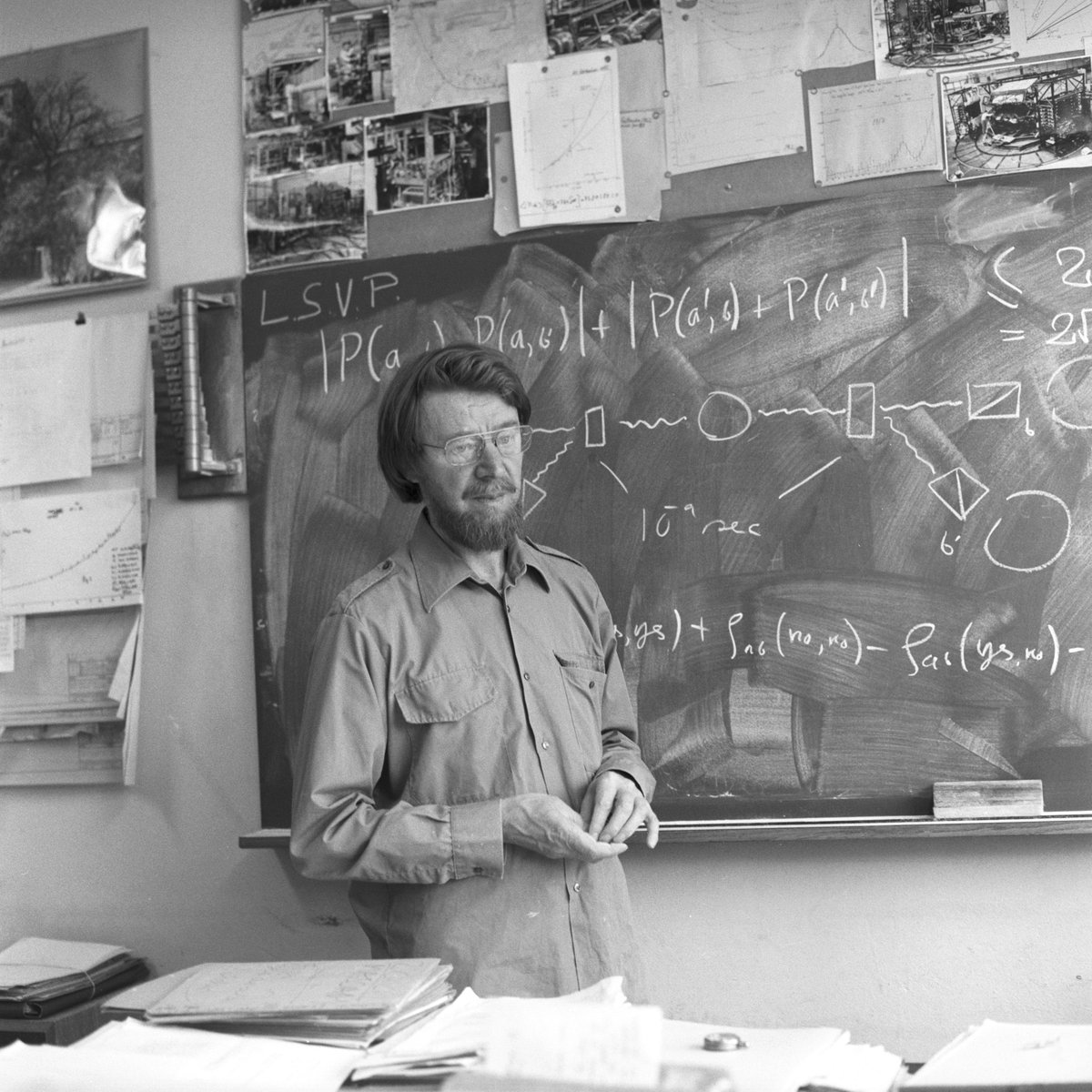
On this #WorldQuantumDay, we feature CERN theorist John Bell who, 60 years ago, formulated a theorem known as Bell's inequalities. It allowed #quantum entanglement to be tested, which is at the root of promising technologies including quantum computing and cryptography.
Bell’s inequalities and their pivotal role in the birth of #quantum information technologies will be one of the topics of the third #CERN70 event “The virtuous circle of knowledge and innovation”.
Join us on 18 April, 19:30 CEST, at CERN Science Gateway as we dive deep into the dynamic relationship between #particlephysics research and technological innovation.
The event will be live-streamed: https://t.co/RNTOfif7nB