Oregon's estate tax exemption threshold remains at $1 million and has not kept pace with inflation or rising property values. Had it been adjusted since 2002, the threshold would now be:
• $1.9 million based on inflation
• $3.15 million based on home values
• $6.74 million based on stock market growth
See what this means for Oregon taxpayers in CSI's full report: https://t.co/eBQALOZFqK
Since January 2020, consumer prices in the Midwest have risen 31.5%, leaving the typical Iowa household spending an estimated $1,567 more per month.
Housing, transportation, and food costs account for much of the increase.
Check out the findings: https://t.co/rNrNQyinwT
BIG NEWS, CENTRAL IOWA!
@AlaskaAir is officially joining the DSM family as our 7th airline, bringing daily nonstop service to Seattle beginning June 24, 2027!
And it doesn't stop in Seattle! This new service opens the door to Alaska Airlines' extensive network, connecting Central Iowa travelers to even more destinations across the West Coast, Pacific Northwest and beyond.
More choices. More connections. More places to go. Welcome to DSM, Alaska Airlines! 💙✈️
#FlyDSM #AlaskaAirlines #Seattle
@HolmesJosh That would be bad news for Iowa’s economy and workforce according to new economic studies by the @CSInstituteIA
https://t.co/xNEzrrUouv
https://t.co/inncTxL4SU
CSI honored four outstanding awardees at last week’s Free Enterprise Summit in Iowa: Ben Hammes and the Master Builders of Iowa, Ryan Lamb of The Weitz Company, Des Moines City Council Member Matt McKinney, and Senator Izaah Knox.
Each has made a meaningful impact on Iowa and its communities. Congratulations to all of our awardees, and thank you for your leadership and commitment to the state.
Iowa’s data center industry is on track to triple in the next five years!
New coverage from KCCI highlights Common Sense Institute Iowa research examining the rapid expansion of data centers and what this growth means for the state’s economy, jobs, and future investment.
Read the full report: https://t.co/hmrl0paLCE
Read the Article: https://t.co/PsXN3uTNFa
This week, Common Sense Institute Iowa brought people together for its Free Enterprise Summit! 🎉
Thank you to everyone who joined us to celebrate the ideas, leadership, and opportunities that make free enterprise thrive in Iowa. And a special congratulations to all of our 2026 Free Enterprise Summit Awardees!
We’re grateful to our speakers, sponsors, and attendees for making it a memorable event!
Could data centers actually lower your property taxes?
In some Iowa communities, the numbers suggest they already have. CSI's new research estimates that homeowners in the Norwalk Community School District saved $631 per household over three years, relative to comparable districts, after Microsoft's Osmium data center entered the tax rolls. In Waukee, estimated savings totaled $269 per household over four years.
CSI's research found that data centers can expand the tax base, but local government decisions determine how much of that benefit reaches taxpayers. Read the full report to learn more: https://t.co/vmN49HXgGc
Iowa's data centers are becoming a major source of local tax revenue.
New CSI research estimates data centers paid $56.1 million in property taxes in 2025, with annual payments projected to reach $292 million by 2040. Dive into the data: https://t.co/2nFmu3x2oW
Iowa's data center industry is booming, with new CSI research estimating $15.1 billion already invested and another $38 billion in announced projects through 2031. That's more than $53 BILLION in combined past investment and planned projects, with the potential to more than triple Iowa's data center capacity by 2031 if those projects move forward.
What's driving this growth, and what could it mean for Iowa's economy?
Read CSI's full report to learn more: https://t.co/hmrl0paLCE
New CSI research finds Iowa ranks FIRST in the Midwest for operating data center capacity per capita and second in total operating capacity. With more projects on the way, Iowa is becoming a major player in one of the country's fastest-growing industries.
Read the report ⬇️
https://t.co/hmrl0paLCE
Energy prices are climbing, and inflation is picking up again.
New CSI's analysis of the latest CPI data finds that across the Pacific region, from September 2025 to September 2026:
⚡ Energy prices rose 16.9%.
🚗 Transportation prices increased 7.7%.
Overall inflation reached 3.5%, up from 3.1% in July.
Rising energy costs are adding new pressure to already stretched household budgets. Learn more ⬇️
https://t.co/bMhOJiUfuQ
The @WellmarkBCBS Foundation is making a difference in student well-being across Iowa. A $5 million grant program supports 37 rural school districts, more than 33,400 students gained access to mental & behavioral health services in its first year.
https://t.co/O234PpdbDh
CSI's Ben Murrey joined WHO Radio to discuss new research revealing the full economic impact of agriculture across the state.
The report found that agriculture supports an estimated 1 in 4 Iowa jobs and roughly one-third of the state's GDP, reaching far beyond the farm into manufacturing, transportation, banking, and more.
Read the full report: https://t.co/Dmx5gzlVlE
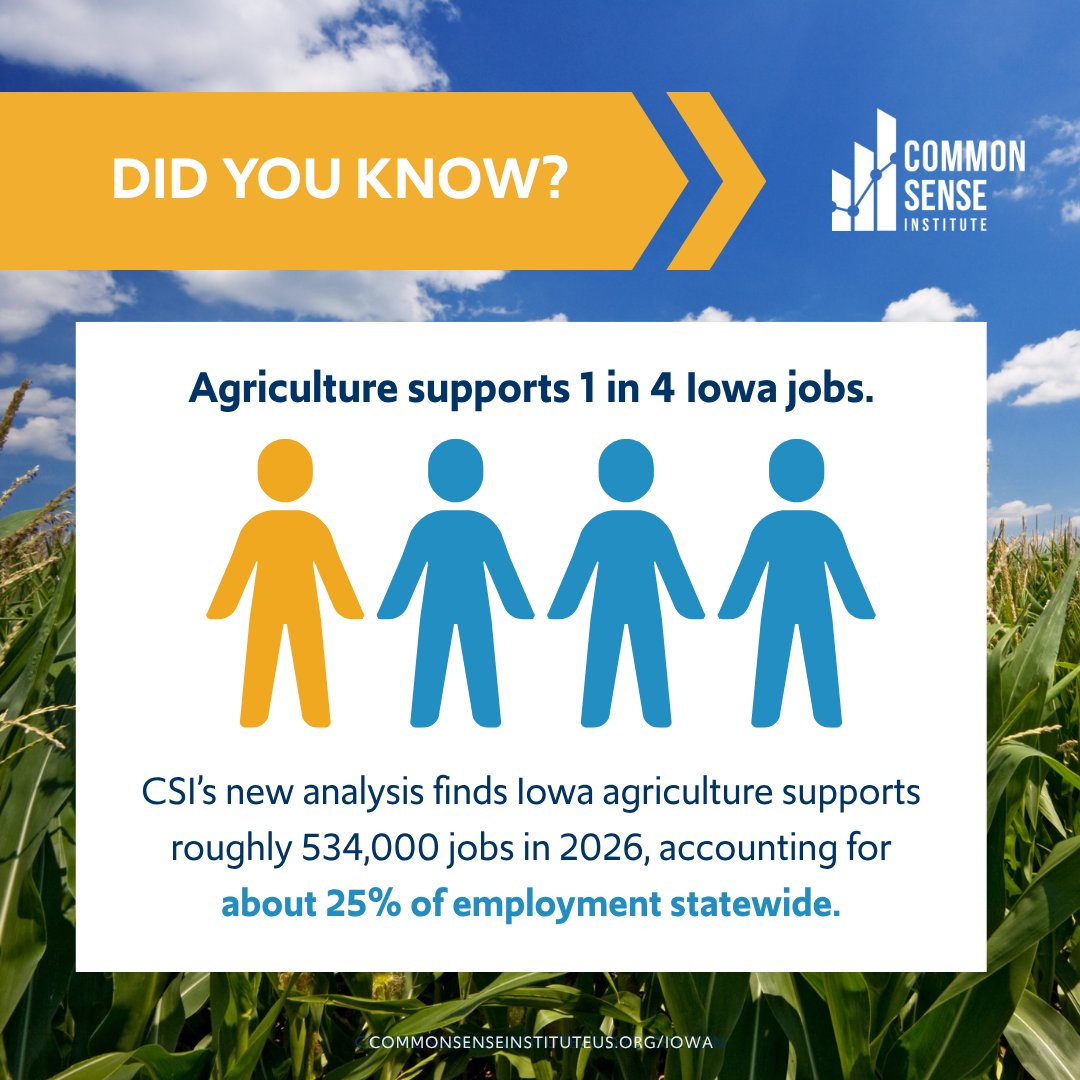
Agriculture supports 1 in 4 Iowa jobs. 🌽
CSI’s new analysis finds Iowa agriculture supports roughly 534,000 jobs in 2026, accounting for about 25% of employment statewide.
Agriculture’s footprint extends far beyond the farm.
See the full impact on Iowa’s economy ⬇️
https://t.co/Dmx5gzlVlE
Iowa agriculture reaches well beyond the farm.
CSI finds agriculture supports:
44.9% of transportation and warehousing jobs
42.6% of wholesale trade jobs
38.2% of manufacturing jobs
That’s nearly 2 in 5 Iowa manufacturing jobs connected to agriculture.
CSI’s latest report maps the full footprint of Iowa’s farm economy. Read more: https://t.co/Dmx5gzlVlE
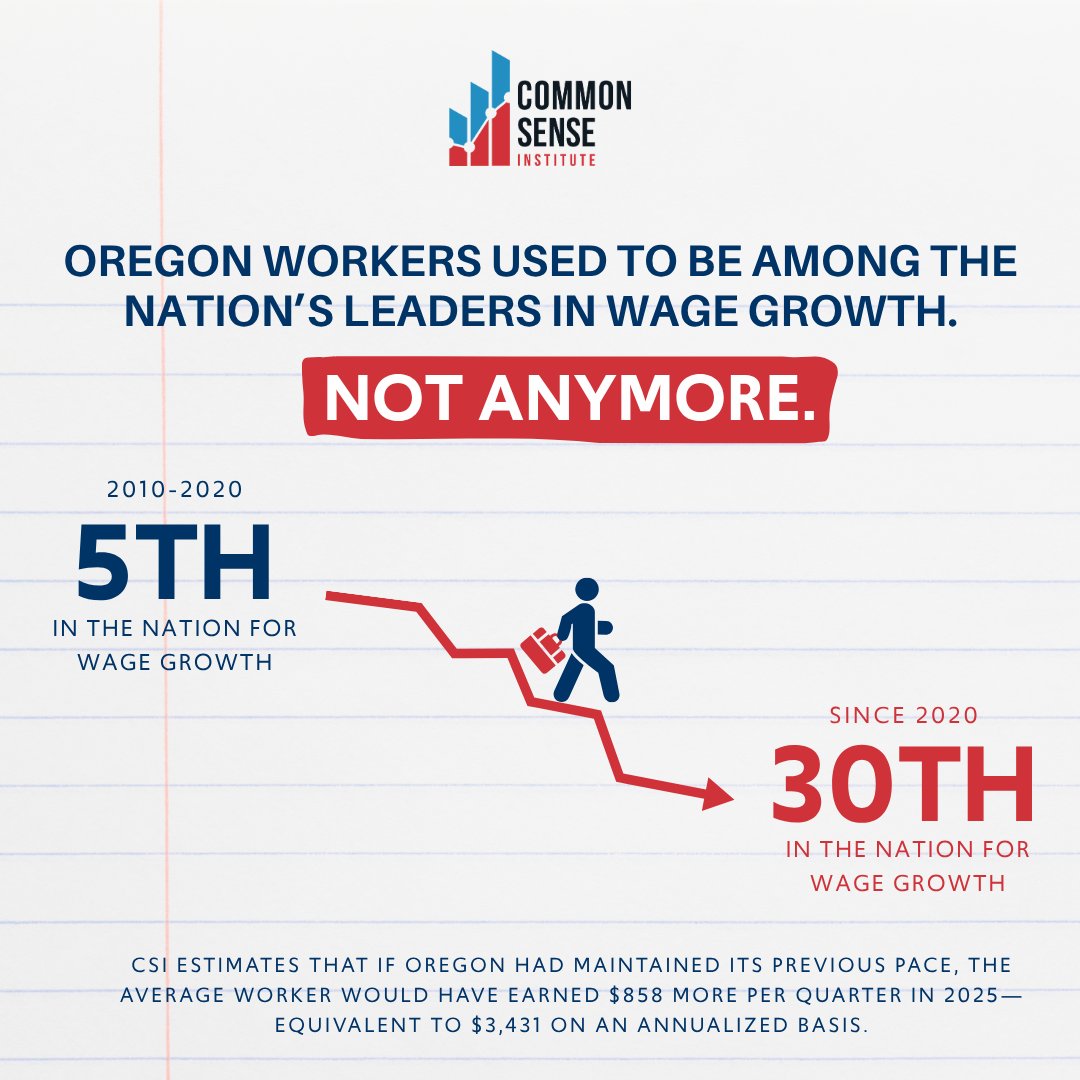
Oregon workers used to be among the nation’s leaders in wage growth. Not anymore. Oregon ranked 5th in the nation for average wage growth from 2010 to 2020. Since 2020, it has fallen to 30th. CSI estimates that if Oregon had maintained its previous pace, the average worker would be earning $3,431 more per year.
What changed for Oregon workers?
GET THE FACTS ⬇️
https://t.co/JMvti0EwIA